Medical Disclaimer: The information provided on this website is for informational and educational purposes only and is not intended as personal medical or health advice. The content, including text, graphics, and images, is not a substitute for professional medical advice, diagnosis, or treatment. Always seek the advice of your physician or other qualified healthcare provider with any questions you may have regarding a medical condition or before starting any new exercise, nutrition, or supplement program. Never disregard professional medical advice or delay in seeking it because of something you have read on this blog. Reliance on any information provided by this site is solely at your own risk.
The 15-Minute Daily Mobility Routine is my go-to fix for desk stiffness and midday slumps. In one short block, you’ll address hips, spine, shoulders, and ankles while calming your nervous system.
Do this 15-minute mobility session every workday to reduce stiffness, improve posture, and move comfortably during and after long sitting.
You’ll learn a step-by-step sequence, simple progressions (beginner to advanced), and how to plug the routine into a complete weekly plan that also supports strength, cardio, and recovery.
Research-backed movement breaks improve posture and performance
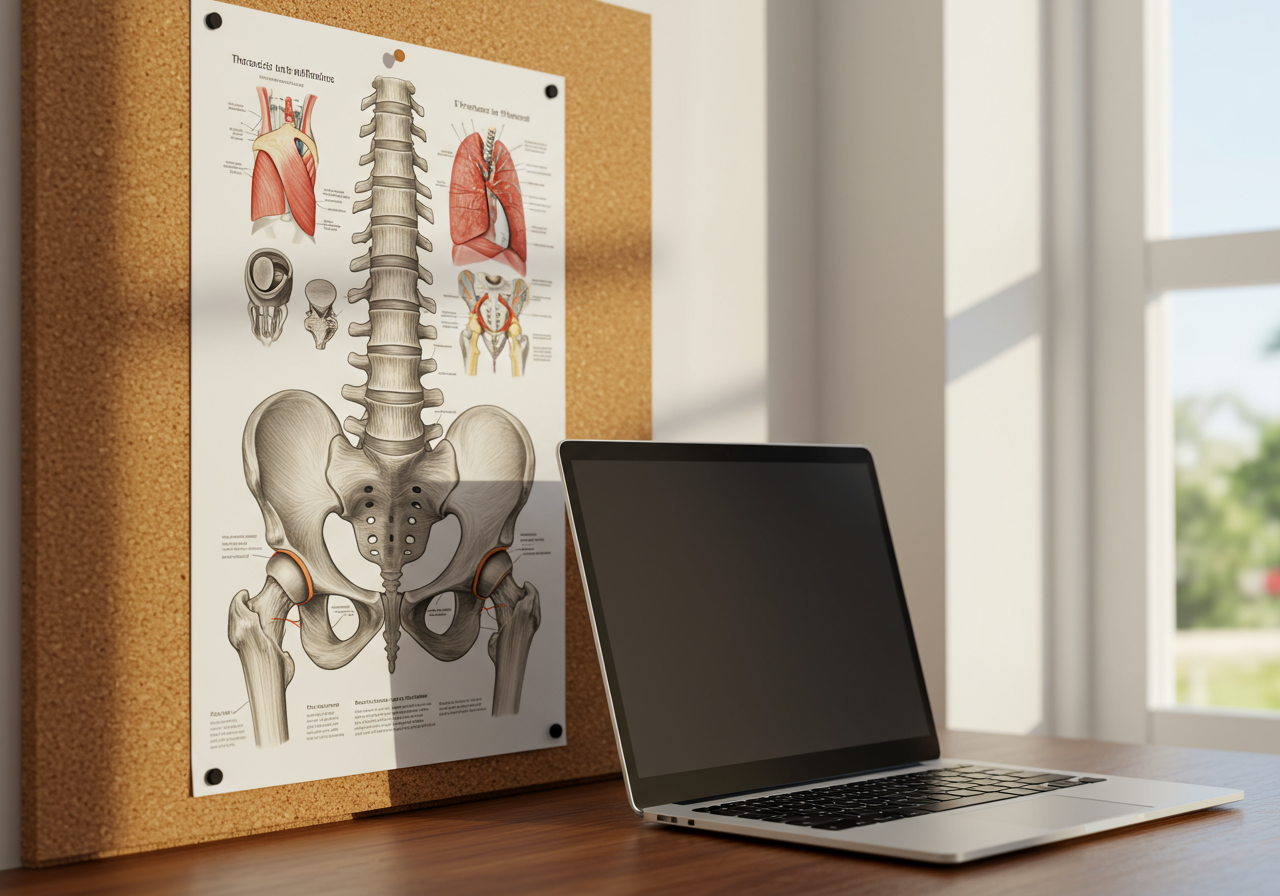
Hours of sitting encourage tight hip flexors, sleepy glutes, rounded upper backs, and forward head posture. Gentle daily mobility circulates synovial fluid, restores muscle length-tension balance, and reduces background stiffness that can sap energy and focus.
In practice and in peer‑reviewed research, breaking up sitting with brief movement lowers perceived discomfort and can improve work performance. Thoracic extension, hip extension, and scapular control also improve how your strength and cardio sessions feel—better positions usually mean safer reps and more efficient breathing.
From my coaching log: when clients consistently complete this routine on workdays, they often report fewer afternoon aches, easier deep breaths, and smoother first sets in the gym. My own desk years taught me the same lesson: one focused 15-minute block outperforms scattered, unfocused stretching.
“By week three I could sit through long design reviews without that nagging low-back ache. The breathing piece made me feel calmer before calls.” — Sam, product designer (shared with permission)
Complete 15-minute sequence from breathing to ankle mobility
Set a 15-minute timer. Breathe through your nose, keep stretches at a comfortable tension (about 4–6/10), and move without rushing. All you need is a chair, a wall, and a towel or strap.
Caption: Minute-by-minute outline of the 15-minute session.
00:00–01:00  Diaphragmatic box breathing (inhale 4, hold 2, exhale 6, hold 2) — reset tension

01:00–02:30  Neck CARs: slow circles both directions, small pain-free range

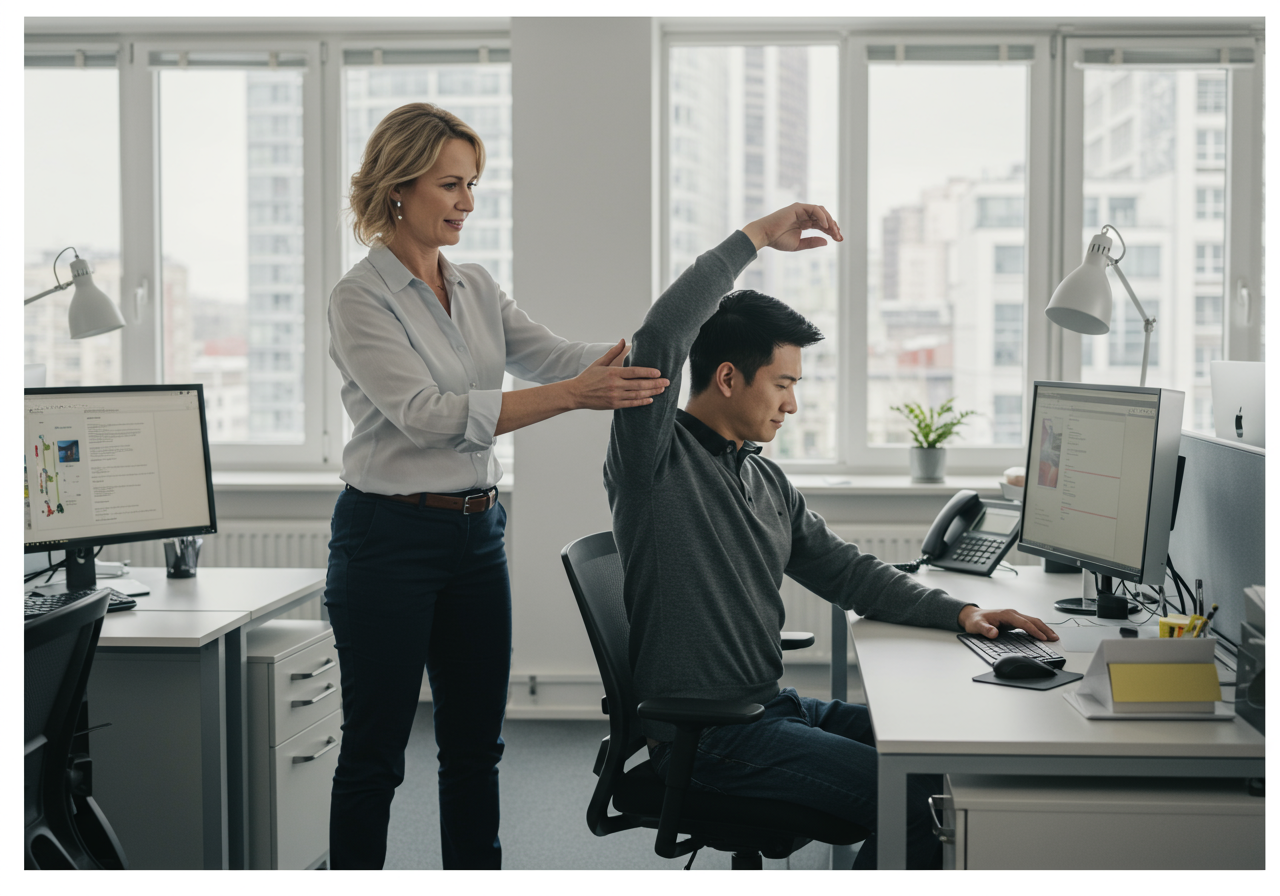
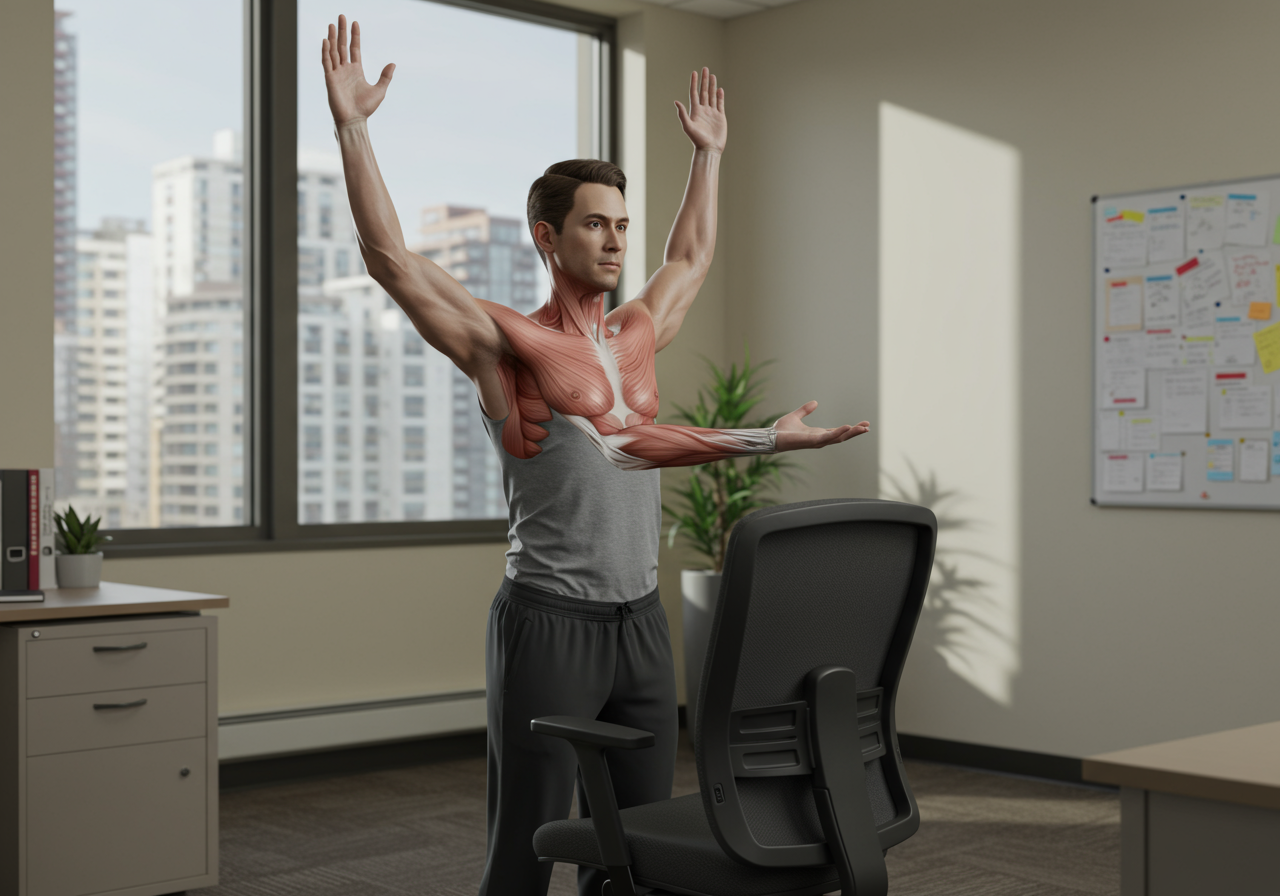
02:30–04:00  Thoracic extension over chair back + overhead reach (3–4 controlled reps)

04:00–05:30  Scapular wall slides or standing shoulder CARs (focus on ribs down)

05:30–07:00  Hip flexor lunge stretch (rear knee padded), glute squeeze 5s x 4

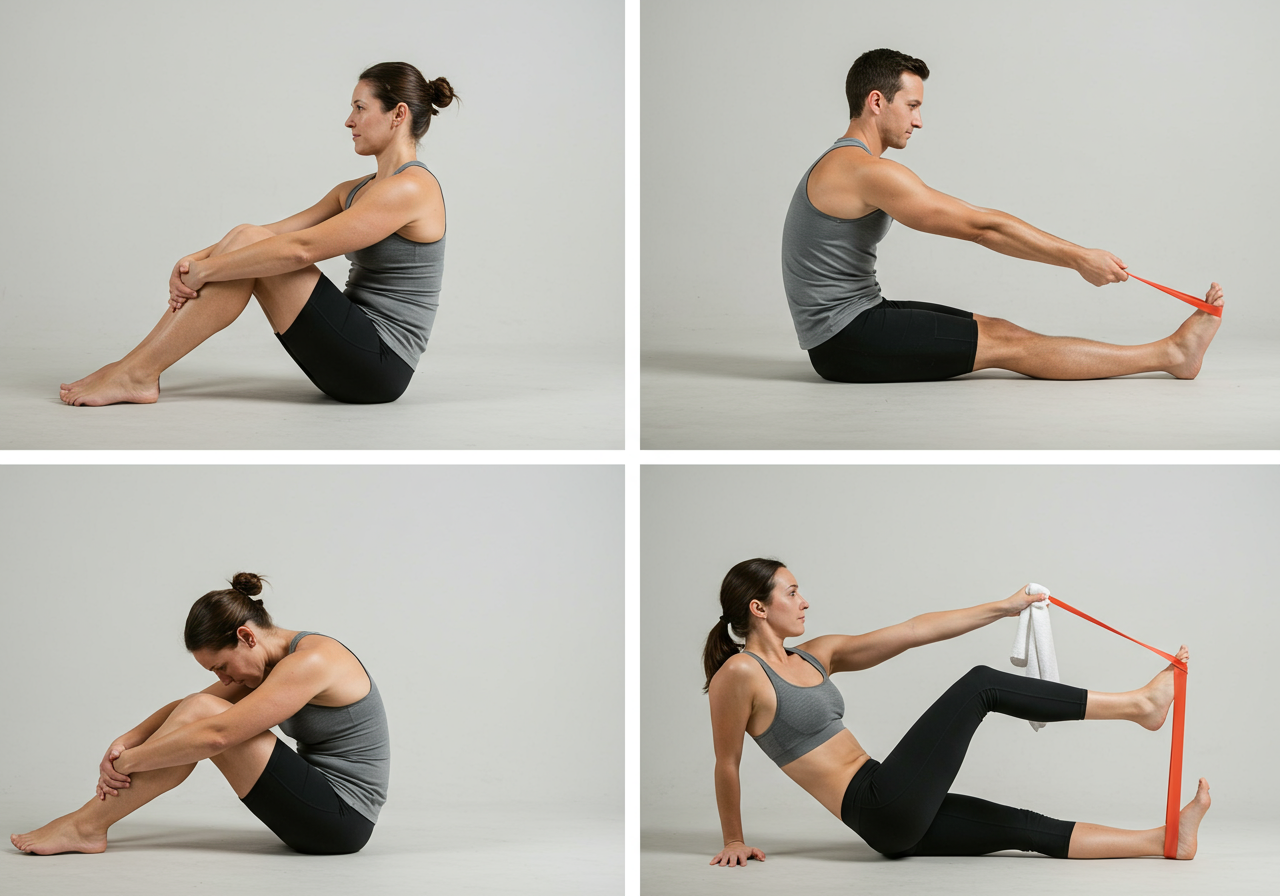
07:00–08:30  Hamstring hinge at desk or with strap, long spine, micro-bend knees

08:30–10:00  90/90 hip switches (slow, chest tall), pause at end range

10:00–11:30  Ankle rocks/knee-to-wall dorsiflexion, heel down, knee tracks toes

11:30–13:00  Cat–Cow x 6 + Thread‑the‑Needle x 2/side, smooth breaths

13:00–14:00  Supported squat sit (hold onto desk/doorframe), heels down

14:00–15:00  Doorway pec stretch or passive hang (partial weight), shake out
Cues that matter:
Exhale fully and let ribs drop before each new position.
“Tension sandwich” for stretches: gentle ramp in, 10–20 seconds steady, gentle ramp out.
Never push through sharp, zapping, or numb sensations—back out and reduce range.
Regressions: Do all kneeling work standing if knees are sensitive; replace passive hang with a doorway pec stretch; chair-assisted squats if ankle mobility is limited.
Optional micro-toolkit: yoga strap or towel, knee pad, lacrosse ball for a brief 30–60 second pec or glute release before the stretch that follows.
Scale intensity with PAILs/RAILs and loaded variations
Weeks 1–2 — Beginner: Keep the exact 15-minute template. Aim for smooth nasal breathing and a relaxed jaw. Hold end ranges lightly; explore, don’t force. If very tight, shorten each station by 10–15 seconds and add a second breath or two between moves.
Weeks 3–4 — Intermediate: Add gentle PAILs/RAILs on the hip flexor and 90/90 positions (5–10 second light contractions into the stretch, then pull deeper with the opposite tissue). Add 15–30 seconds to your two tightest areas. Keep effort at a comfortable stretch, not strain.
Weeks 5–8 — Advanced: Layer in controlled articular rotations: 3–4 slow reps for shoulders, hips, and spine before or after each station. Optionally load the squat hold with a light kettlebell (5–10 kg) for positional strength. If experienced, try a very light Jefferson curl (3–5 slow reps) only in a pain‑free range.
Weekly plug‑in plan (complete system):
Daily: 15-minute mobility block during the workday.
3×/week strength (30–40 min): Push, pull, hinge, squat, carry. RPE 6–8. Progress when you exceed the top rep target twice; add small load. I log with the Strong app.
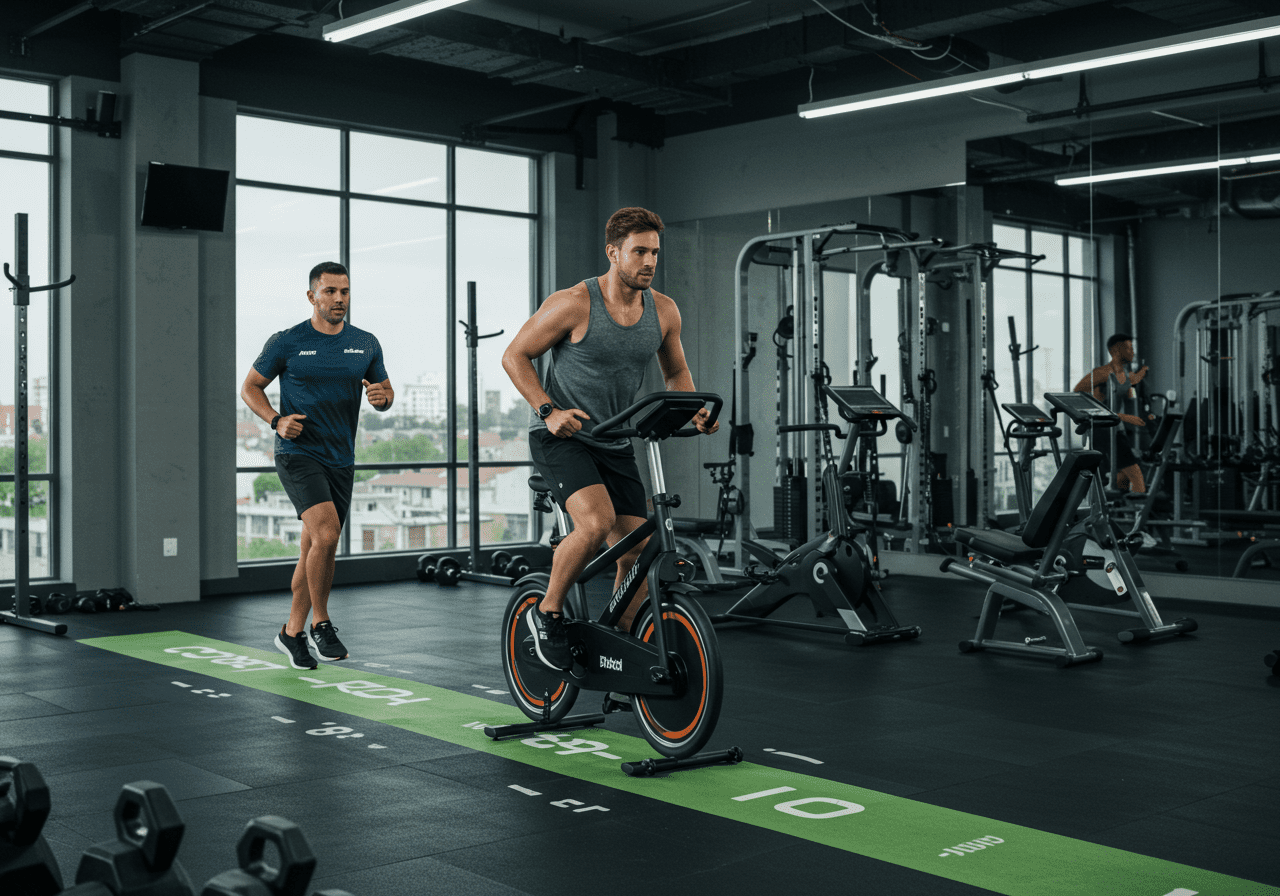
2–3×/week cardio (20–30 min): Zone 2 conversational pace (use talk test or wrist HR). I track on Garmin and Strava to keep honest.
Microbreaks: Every 30–60 minutes, stand and take 5 deep breaths or walk 60–90 seconds.
What results look like: In client check‑ins, we often see easier upright sitting, smoother overhead reach, and fewer post‑work nagging aches by weeks 2–4. Photos, quick ROM screens, and comfort scores usually confirm the changes, though timelines vary.
Daily workday practice with troubleshooting for common issues
Frequency & intensity: Hit the routine on all workdays. Keep stretch intensity at 4–6/10. Move slowly, breathe through your nose, and avoid end‑range bouncing.
Common mistakes: Forcing range, holding the breath, letting ribs flare during shoulder work, skipping glute squeeze in the hip flexor stretch, or chasing nerve sensations (numbness/tingling). If you feel zaps, reduce range or switch exercises.
Troubleshooting:
Knee discomfort in lunge: Pad the knee and shorten the stance.
Hamstring pinch in hinge: Micro‑bend knees, tilt from hips, lengthen the spine.
Shoulder pinch in wall slides: Use scap circles or sidelying open books instead.
Plateau: Add 5–10 seconds PAILs/RAILs to one or two stations, or rotate in a new drill weekly (e.g., calf raise holds for ankles).
Motivation dip: Anchor the routine to coffee time, set a recurring calendar alert, and use a streak app for accountability.
Recovery & nutrition: Prioritize 7–9 hours of sleep, walk daily sunlight minutes, and hydrate steadily. A protein intake around 1.6–2.2 g/kg supports tissue repair. Colorful produce, omega‑3 sources, and magnesium glycinate (if cleared by your clinician) can help recovery.
Tracking ideas:
Desk Discomfort Score (0–10) before/after the workday.
Neck rotation or sit‑and‑reach photos weekly (use your phone’s angle or measure app).
Habit streak on Streaks/Habitify; workouts on Garmin/Strava; food consistency on MyFitnessPal.
Next steps: Save this routine, set a daily reminder, and print a one‑page tracker.
Medical Disclaimer: The information provided on this website is for informational and educational purposes only and is not intended as personal medical or health advice. The content, including text, graphics, and images, is not a substitute for professional medical advice, diagnosis, or treatment. Always seek the advice of your physician or other qualified healthcare provider…
Medical Disclaimer: The information provided on this website is for informational and educational purposes only and is not intended as personal medical or health advice. The content, including text, graphics, and images, is not a substitute for professional medical advice, diagnosis, or treatment. Always seek the advice of your physician or other qualified healthcare provider…
Medical Disclaimer: The information provided on this website is for informational and educational purposes only and is not intended as personal medical or health advice. The content, including text, graphics, and images, is not a substitute for professional medical advice, diagnosis, or treatment. Always seek the advice of your physician or other qualified healthcare provider…
Medical Disclaimer: The information provided on this website is for informational and educational purposes only and is not intended as personal medical or health advice. The content, including text, graphics, and images, is not a substitute for professional medical advice, diagnosis, or treatment. Always seek the advice of your physician or other qualified healthcare provider…
Medical Disclaimer: The information provided on this website is for informational and educational purposes only and is not intended as personal medical or health advice. The content, including text, graphics, and images, is not a substitute for professional medical advice, diagnosis, or treatment. Always seek the advice of your physician or other qualified healthcare provider…
Medical Disclaimer: The information provided on this website is for informational and educational purposes only and is not intended as personal medical or health advice. The content, including text, graphics, and images, is not a substitute for professional medical advice, diagnosis, or treatment. Always seek the advice of your physician or other qualified healthcare provider…