Medical Disclaimer: The information provided on this website is for informational and educational purposes only and is not intended as personal medical or health advice. The content, including text, graphics, and images, is not a substitute for professional medical advice, diagnosis, or treatment. Always seek the advice of your physician or other qualified healthcare provider with any questions you may have regarding a medical condition or before starting any new exercise, nutrition, or supplement program. Never disregard professional medical advice or delay in seeking it because of something you have read on this blog. Reliance on any information provided by this site is solely at your own risk.
Foldable treadmill choices for small spaces can feel overwhelming. This guide shows you how to buy smart and build a full, space‑efficient training system.
Choose a compact deck, sturdy frame, truthful motor rating, quick-fold mechanism, and features that match your stride, noise needs, and space.
You’ll learn: what specs actually matter in tight apartments, how to set up a quiet cardio corner, and a progressive treadmill‑plus‑strength plan for real‑world results.
Aerobic consistency and strength protect joints reliably
In small homes, equipment must earn its footprint. A well‑chosen foldable unit improves adherence by being visible, quick to unfold, and quiet enough for neighbors. When cardio is easy to start, people do more of it—consistency drives results.
Training physiology is straightforward: steady aerobic work (Zone 2) improves mitochondrial density and endurance; brief intervals raise speed and VO2 capacity; strength protects joints and supports running economy. In practice and in peer‑reviewed research, the blend of 2–4 weekly aerobic sessions plus 2–3 short strength sessions yields reliable cardiovascular and musculoskeletal benefits when recovery is respected.
Spec choices matter for performance and injury risk: deck length must match stride to avoid overstriding; a stable frame and honest continuous horsepower (CHP) maintain speed under load; cushioning can lessen joint stress; incline allows intensity without high impact. Choose wisely and the machine becomes a low‑friction habit anchor.
Client snapshot (anecdotal): in my apartment cohort, adding a compact treadmill and a simple plan led to more weekly Zone 2 minutes and steadier sleep patterns within 6–8 weeks. Individual results vary, but adherence jumps when setup is convenient.
Measure space, match stride, check motor specs
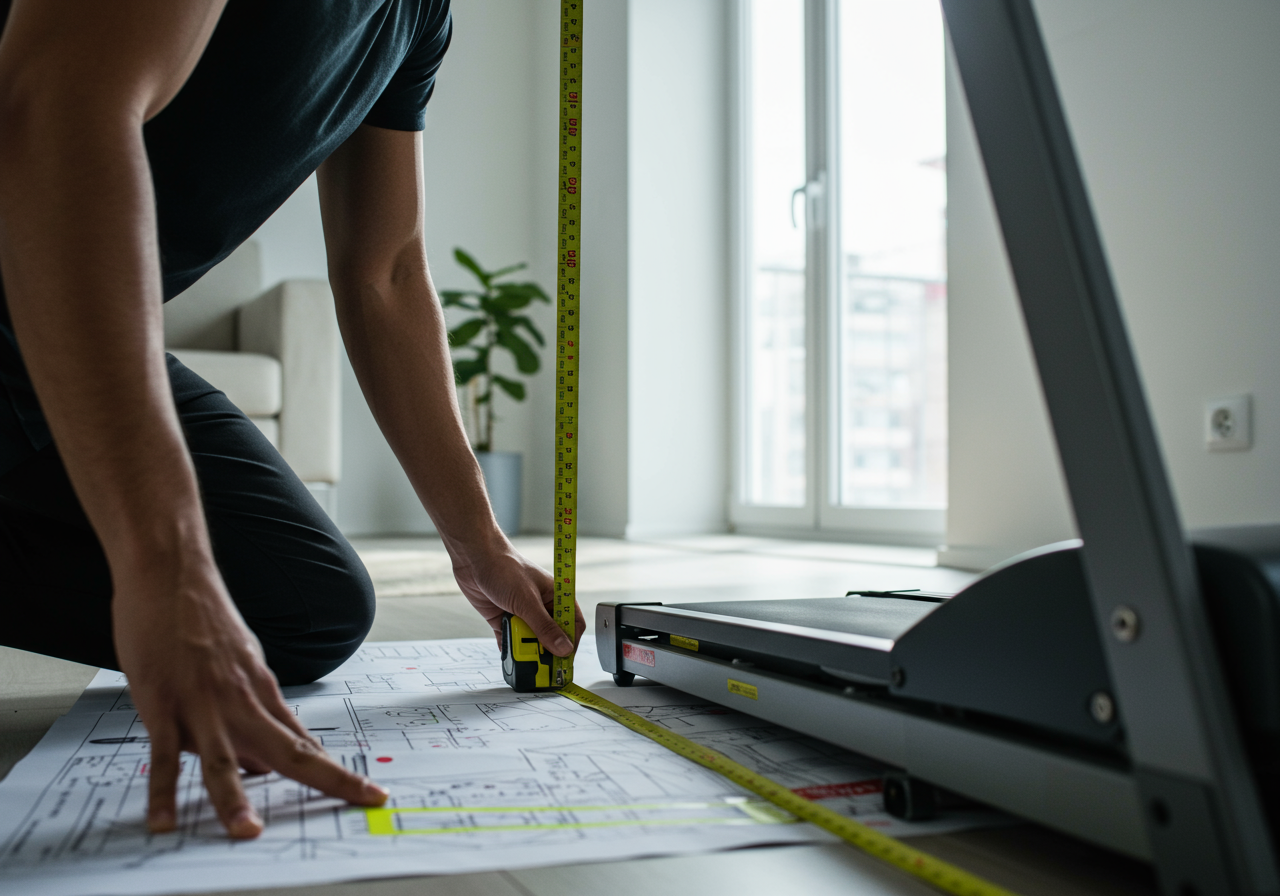
Step 1 — Measure your space. Tape the area where the treadmill will sit and fold. Leave clearance: ~20–24 in on sides, ~48 in behind for safety. Check doorways and elevator dimensions for delivery.
Step 2 — Match deck size to your stride. For walking, many do well with 50–55 in length; for run‑walk or running, 55–60+ in is safer, especially if you’re tall or use longer strides.
Step 3 — Motor and drive. Prefer continuous horsepower (CHP) ratings over peak HP. For walking, ~1.75–2.25 CHP is often adequate; for mixed training, ~2.5–3.0 CHP maintains pace without surging.
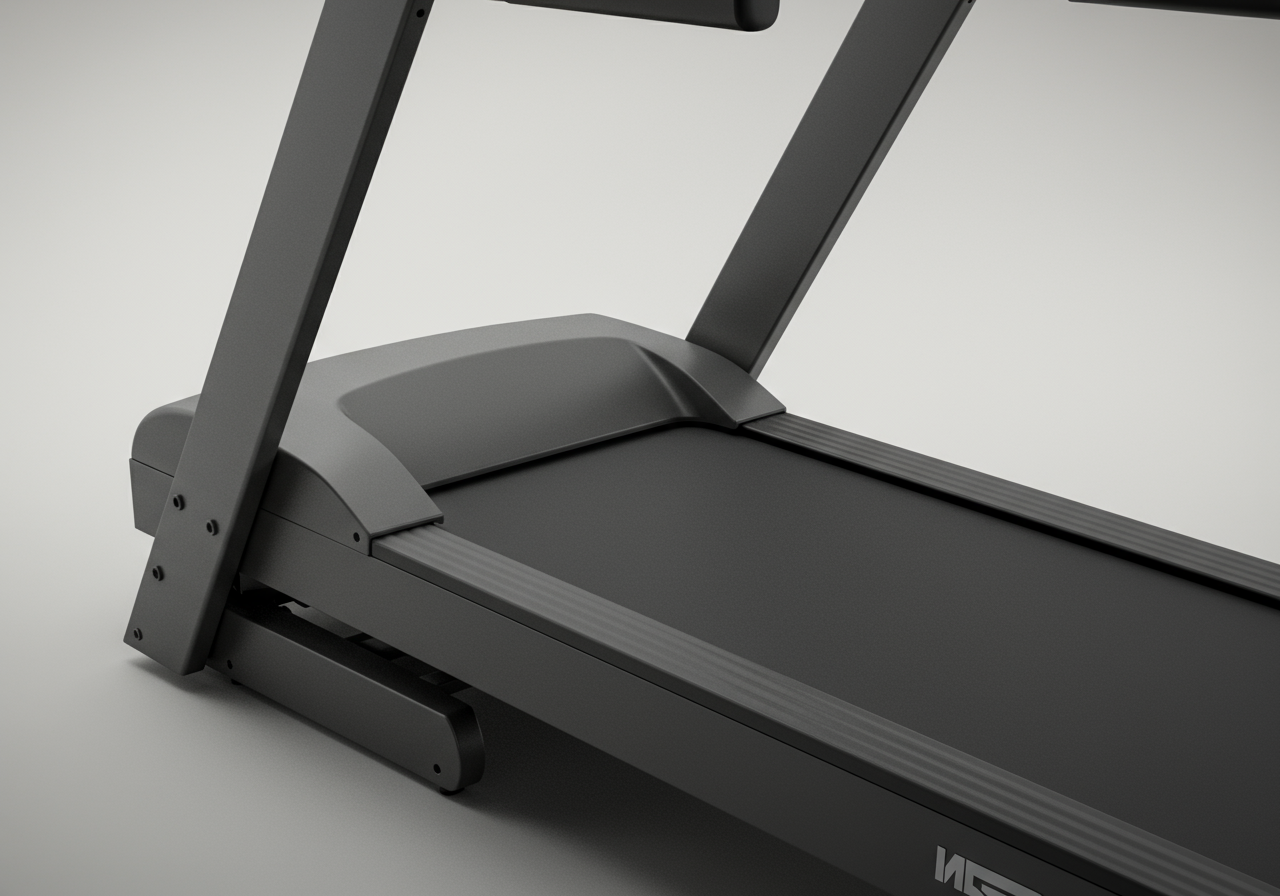
Step 4 — Stability and cushioning. Step on the side rails and run at your target pace. The deck shouldn’t wobble. Cushioning should feel responsive, not marshmallow‑soft.
Step 5 — Controls and safety. Quick keys for common speeds/inclines, a visible emergency stop, and an auto‑pause on dismount reduce mishaps.
Step 6 — Noise and vibration. Quieter units pair a smooth belt with good isolation. Use a dense rubber mat; upstairs, add a small plywood layer under the mat to spread load.
Step 7 — Connectivity. Bluetooth or ANT+ heart‑rate support helps dial Zones. Easy data export to Apple Health, Garmin, Strava, or Fitbit keeps progress visible.
Step 8 — Warranty and service. Favor companies with clear parts availability and in‑home service. Read the fine print on motor and electronics.
Step 9 — Delivery and assembly. Tight stairwells? Request room‑of‑choice delivery. Many foldables weigh 150–200+ lb; plan help.
Checklist: prioritize these specs for small‑space treadmills.
Footprint (folded): ≤ ~70 x 30 x 55 in; stable upright lock

Deck length: Walk 50–55 in; Run 55–60+ in (taller users: lean 60 in)

Belt width: 18–20+ in for shoulder comfort

Motor (CHP): Walk 1.75–2.25; Mixed 2.5–3.0

Incline: 0–10%+ for low‑impact intensity

Cushioning: Multi‑zone elastomers; even feel across deck

Weight capacity: 250–300+ lb; keep ~50 lb margin above user weight

Stability: No rocking at 6 mph; solid handrails

Controls: Quick speed/incline keys; emergency stop

Connectivity: HR strap support; basic app export

Warranty: Frame ≥10y; motor ≥5y; parts ≥2y

Storage: Transport wheels; soft‑drop assist; easy fold

Maintenance: Simple belt lube access; reminder indicator
My field notes. I tested three foldable units in a 650‑sq‑ft apartment. The keeper had a 60‑in deck, 2.75 CHP, quiet drive at 6 mph, and a simple fold with gas assist. Floor mat plus a plywood layer cut vibration further.
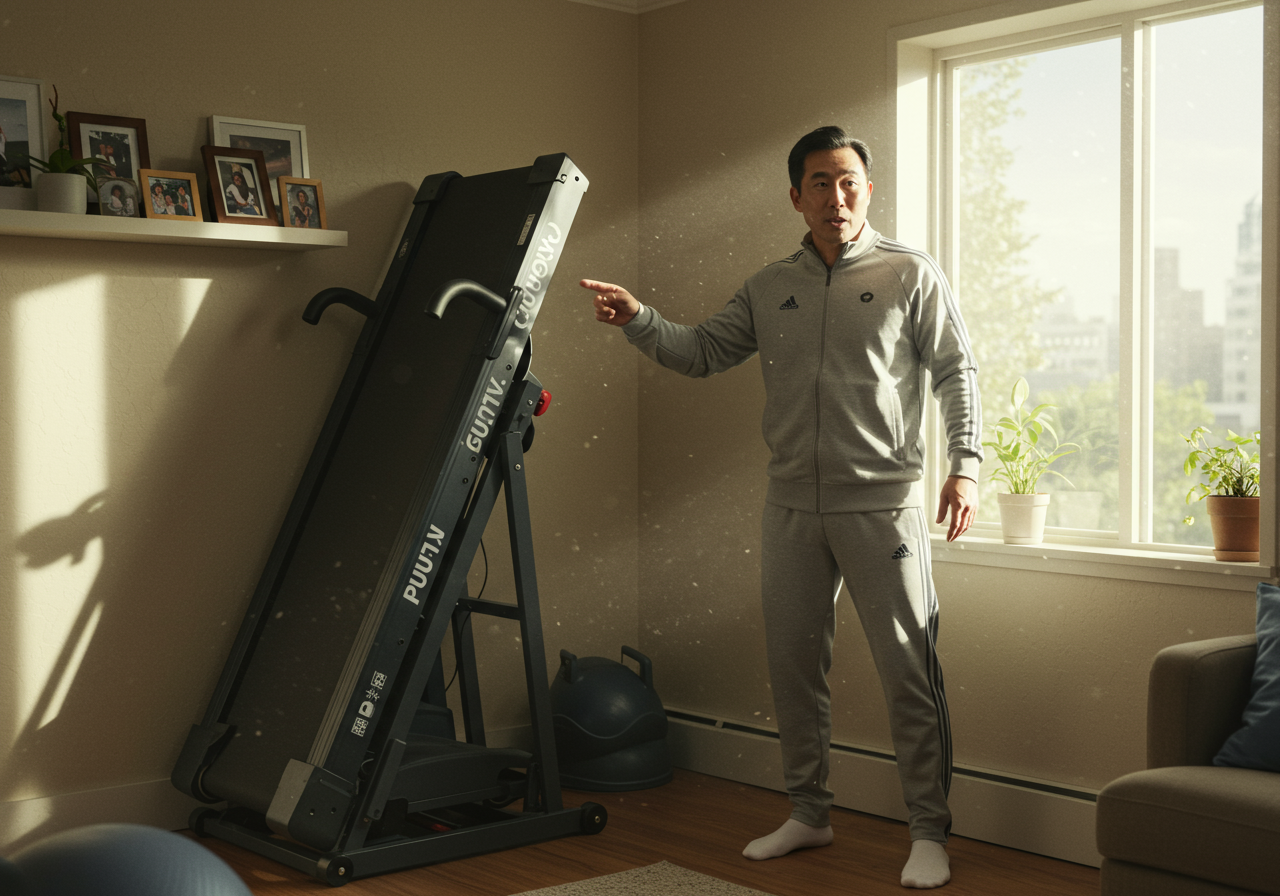
“I thought a foldable would shake the whole building. With the mat and incline walking, my upstairs neighbor never noticed.” — Maya, studio apartment client
Build your small‑space training system (starter session, 30–40 min).
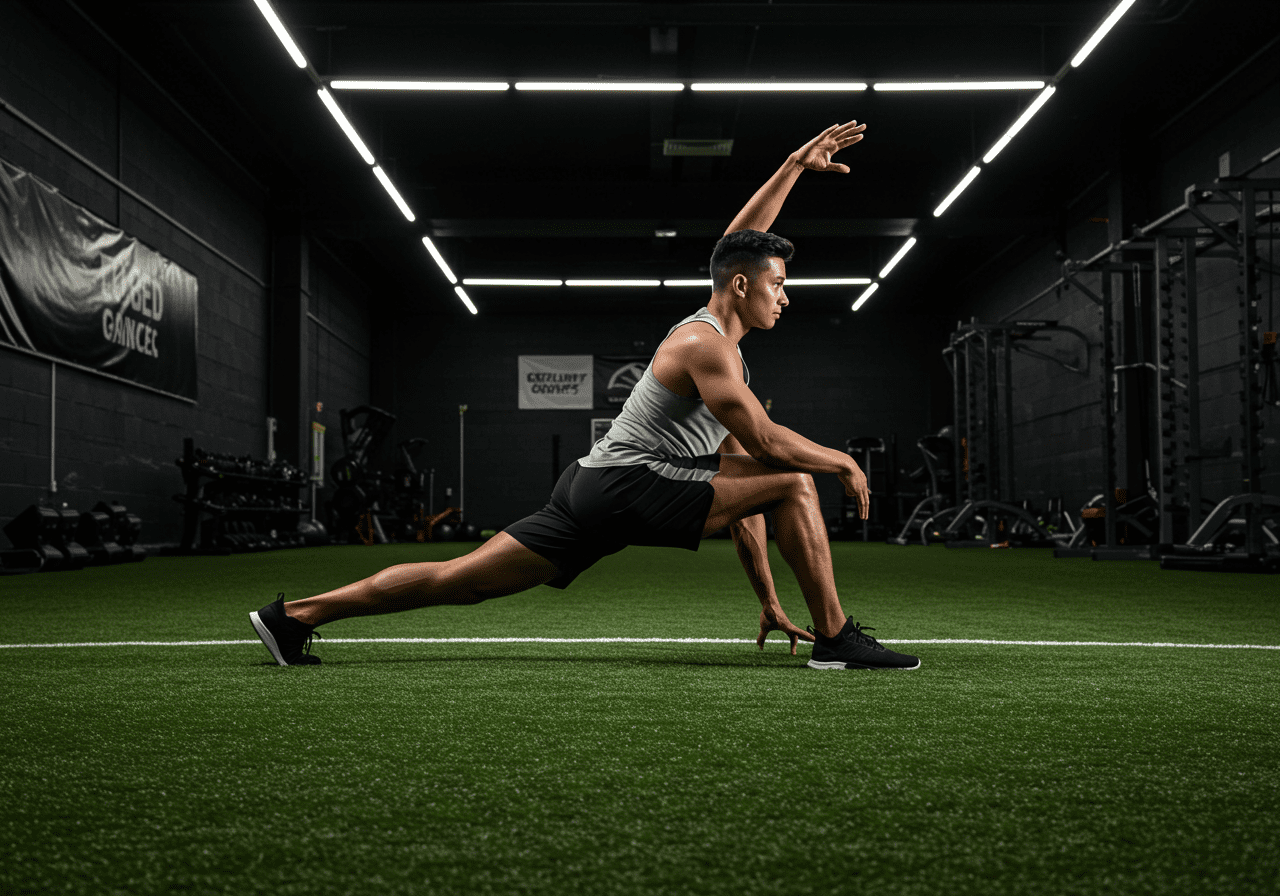
Warm‑up — 5 minutes: easy walk, gentle ankle and hip circles.
Cardio — 10–20 minutes Zone 2: conversational pace (roughly 65–75% max HR). Use slight incline if running is uncomfortable.
Strength circuit — 10 minutes: goblet squat, push‑up (elevated if needed), one‑arm row, dead bug; 2 rounds, RPE 6–7.
Tracking. Log sessions in Strava, Garmin Connect, or Fitbit. Use MyFitnessPal for protein intake. Note RPE and steps; watch weekly minutes in Zone 2 climb.
Zone 2 builds, intervals sharpen, strength supports
Level 1 — Beginner (Weeks 1–4)
Frequency: 3 cardio + 2 strength days (30–40 min each).
Cardio focus: Incline walking, Zone 2. Start 10–15 min; add 3–5 min each session until 25–30 min.
Run‑walk option: 1 min jog / 2–3 min walk × 6–8; keep easy overall.
Intervals (once weekly): 4 × 60 sec brisk walk or gentle jog, RPE 7, with 2–3 min easy between.
Strength: 2 sets of 8–12 reps for squats, rows, hinges, presses; RPE 6–7.
Mobility: 5 min after sessions (calves, hamstrings, hips, T‑spine).
Threshold‑ish: 2 × 8–12 min at comfortably hard, RPE 7–8, with equal easy time; keep total hard time modest to protect recovery in small spaces.
Intervals: 6–8 × 60–90 sec or hill repeats at RPE 8; walk recoveries.
Strength: rotate heavier lower‑body day (RPE 7–8) and lighter full‑body day (RPE 6–7).
Validation and adjustments. Track 3 metrics weekly: total Zone 2 minutes, longest continuous session, and RPE trends. In client practice, we often see longer continuous efforts by week 4–6 and easier breathing on stairs. If fatigue climbs for 7+ days, remove one hard session and add sleep time.
Frequency and intensity. Most beginners thrive on 3–4 cardio days and 2 short strength sessions. Keep most work easy; cap hard intervals to once weekly at first.
Common mistakes. Deck too short for your stride, chasing peak HP instead of CHP, skipping a mat (noise), and ramping volume too fast. Add only 5–10% time per week.
Injury prevention. Warm up 5 minutes. Start with slight incline if running bothers knees. Alternate shoes; keep cadence quick and steps light. Use the safety key.
Recovery and nutrition. Aim for protein around 1.6–2.2 g/kg/day, carbs around training, and steady hydration with a pinch of electrolytes on sweaty days. Sleep 7–9 hours; a 10–20 minute walk or mobility flow on off days speeds recovery.
Tracking tools. Pair a heart‑rate strap for accurate zones. Use Strava or Garmin for graphs; Fitbit or Apple Health for daily activity. A simple RPE note (1–10) after each session helps spot trends.
Troubleshooting.
Plateau in endurance: add one short easy session or extend Zone 2 by 5 minutes.
Overuse niggles: reduce impact (more incline walking), swap one run‑walk for cycling if available, and add calf/hip mobility.
Motivation dips: schedule 20‑minute “minimum viable” sessions and use a podcast “only on the treadmill” rule.
Noise complaints: thicker mat, slower belt speeds for warm‑up/cool‑down, and avoid late‑night intervals.
Results in practice. Client Jay progressed from 12 to 30 minutes continuous Zone 2 over six weeks and reported steadier energy at work; your outcome may differ, but the structure makes progress measurable.
Next steps. Shortlist two models that fit your specs, test them if possible, then start Level 1 for two weeks. If you want my apartment‑friendly templates and gear checklist.
Medical Disclaimer: The information provided on this website is for informational and educational purposes only and is not intended as personal medical or health advice. The content, including text, graphics, and images, is not a substitute for professional medical advice, diagnosis, or treatment. Always seek the advice of your physician or other qualified healthcare provider…
Medical Disclaimer: The information provided on this website is for informational and educational purposes only and is not intended as personal medical or health advice. The content, including text, graphics, and images, is not a substitute for professional medical advice, diagnosis, or treatment. Always seek the advice of your physician or other qualified healthcare provider…
Medical Disclaimer: The information provided on this website is for informational and educational purposes only and is not intended as personal medical or health advice. The content, including text, graphics, and images, is not a substitute for professional medical advice, diagnosis, or treatment. Always seek the advice of your physician or other qualified healthcare provider…
Medical Disclaimer: The information provided on this website is for informational and educational purposes only and is not intended as personal medical or health advice. The content, including text, graphics, and images, is not a substitute for professional medical advice, diagnosis, or treatment. Always seek the advice of your physician or other qualified healthcare provider…
Medical Disclaimer: The information provided on this website is for informational and educational purposes only and is not intended as personal medical or health advice. The content, including text, graphics, and images, is not a substitute for professional medical advice, diagnosis, or treatment. Always seek the advice of your physician or other qualified healthcare provider…
Medical Disclaimer: The information provided on this website is for informational and educational purposes only and is not intended as personal medical or health advice. The content, including text, graphics, and images, is not a substitute for professional medical advice, diagnosis, or treatment. Always seek the advice of your physician or other qualified healthcare provider…