Medical Disclaimer: The information provided on this website is for informational and educational purposes only and is not intended as personal medical or health advice. The content, including text, graphics, and images, is not a substitute for professional medical advice, diagnosis, or treatment. Always seek the advice of your physician or other qualified healthcare provider with any questions you may have regarding a medical condition or before starting any new exercise, nutrition, or supplement program. Never disregard professional medical advice or delay in seeking it because of something you have read on this blog. Reliance on any information provided by this site is solely at your own risk.
Lower Joint Load and Strengthen Supporting Muscles
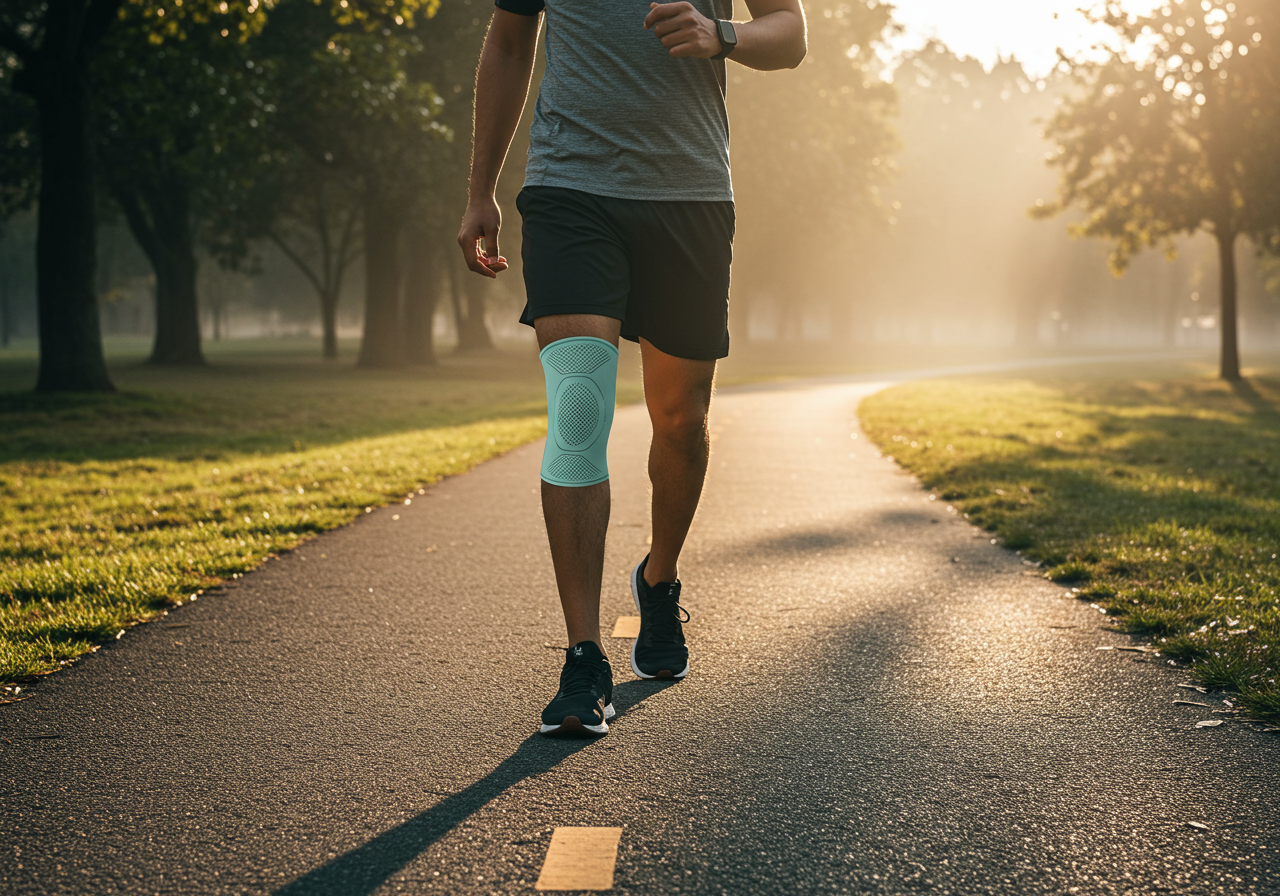
If you want to manage knee pain and keep moving, this guide shows you how. You can stay active with knee pain by lowering joint load, strengthening hips and quads, and progressing within pain-free ranges.
In a few minutes, you’ll learn simple swaps for cardio, a joint-friendly strength plan, mobility that matters, and how to advance without flare-ups. I’ll share what works in my coaching practice and what I use during my own occasional runner’s knee episodes.
Hip Stability and Quad Loading Reduce Knee Symptoms
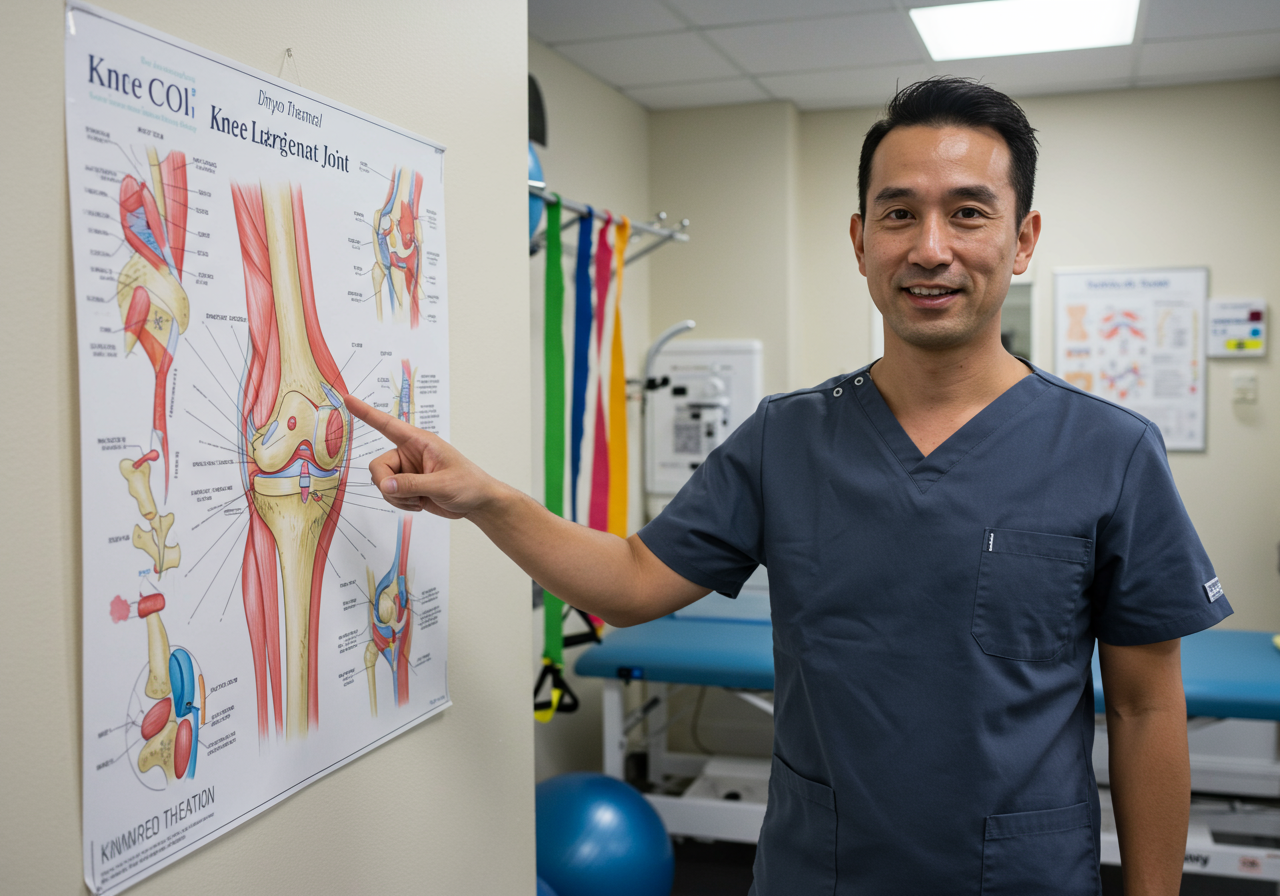
Knee pain often improves when total load is managed and the surrounding muscles share stress better. The knee is a hinge caught between the hip and ankle; if the hip isn’t stable or the ankle is stiff, the knee tends to take the hit. In practice and in multiple clinical studies, gradual loading of the quadriceps and hips reduces symptoms for common issues like patellofemoral pain.
Two levers usually drive success: adjust forces (surface, slope, speed, cadence, depth) and build capacity (strength, endurance, mobility). For example, increasing walking cadence slightly can reduce load per step, and strengthening hip abductors/externals helps control knee valgus. When combined with sleep and nutrition, outcomes improve more consistently.
Follow Pain Rules and Progress Through Controlled Ranges
Pain rules (guiding guardrails)
During exercise, keep pain at 0–3/10 and steady—not escalating.
Pain should return to baseline within 24 hours. If not, reduce volume or intensity next time by ~25–50%.
Prefer smooth, controlled tempos and pain-free ranges. Depth and speed are dials you can turn down.
Warm-up (5–8 minutes)
2–3 minutes easy cardio (flat walk or gentle cycle), then:
Heel slides or knee flexion/extension swings (20–30 reps each side)
Quad sets or short-arc leg extensions (10 slow reps with holds)
Mini-band lateral walks and monster walks (1–2 x 10–15 steps)
Calf raises (2 x 10) and ankle rockers to improve dorsiflexion
Cardio swaps that spare the knee
Best options early: upright cycling, rowing with shins vertical, elliptical, flat-ground walking. If running, stay on flat routes and shorten stride.
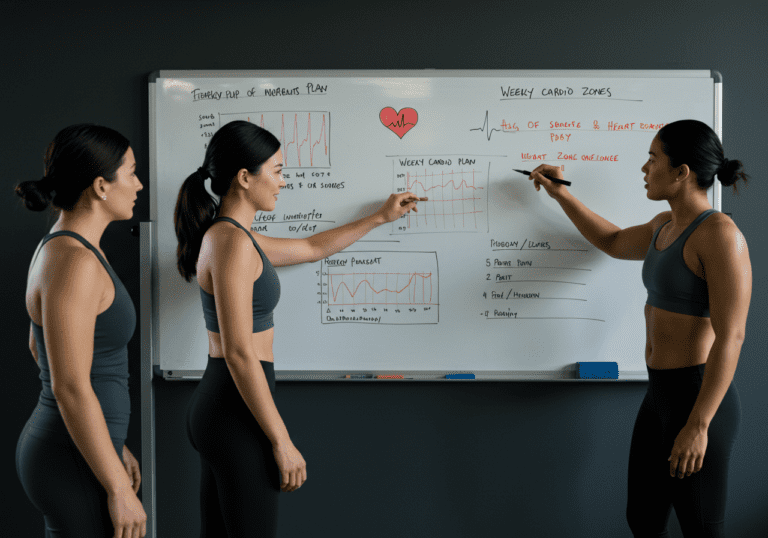
Heart rate guide: Zone 2 = about 60–70% HRmax (RPE 4–5/10); Intervals (later) = Zone 3–4 as tolerated.
Start with 20–30 minutes, 3–4 days/week. Build minutes before intensity.
Strength circuit (2–3 days/week)
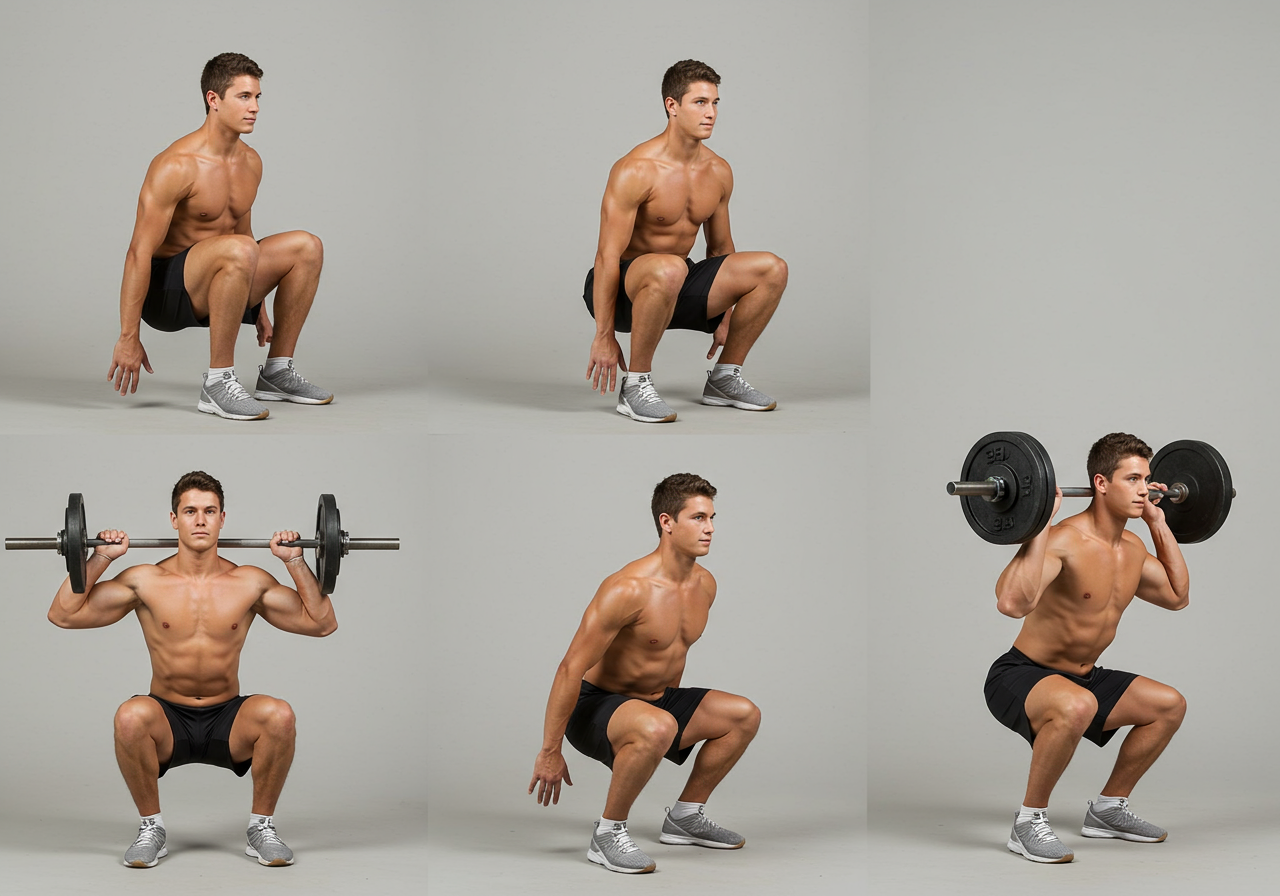
Box Sit-to-Stand or Goblet Squat to box: 2–3 sets of 8–12, stop 2–3 reps before pain or form breakdown.
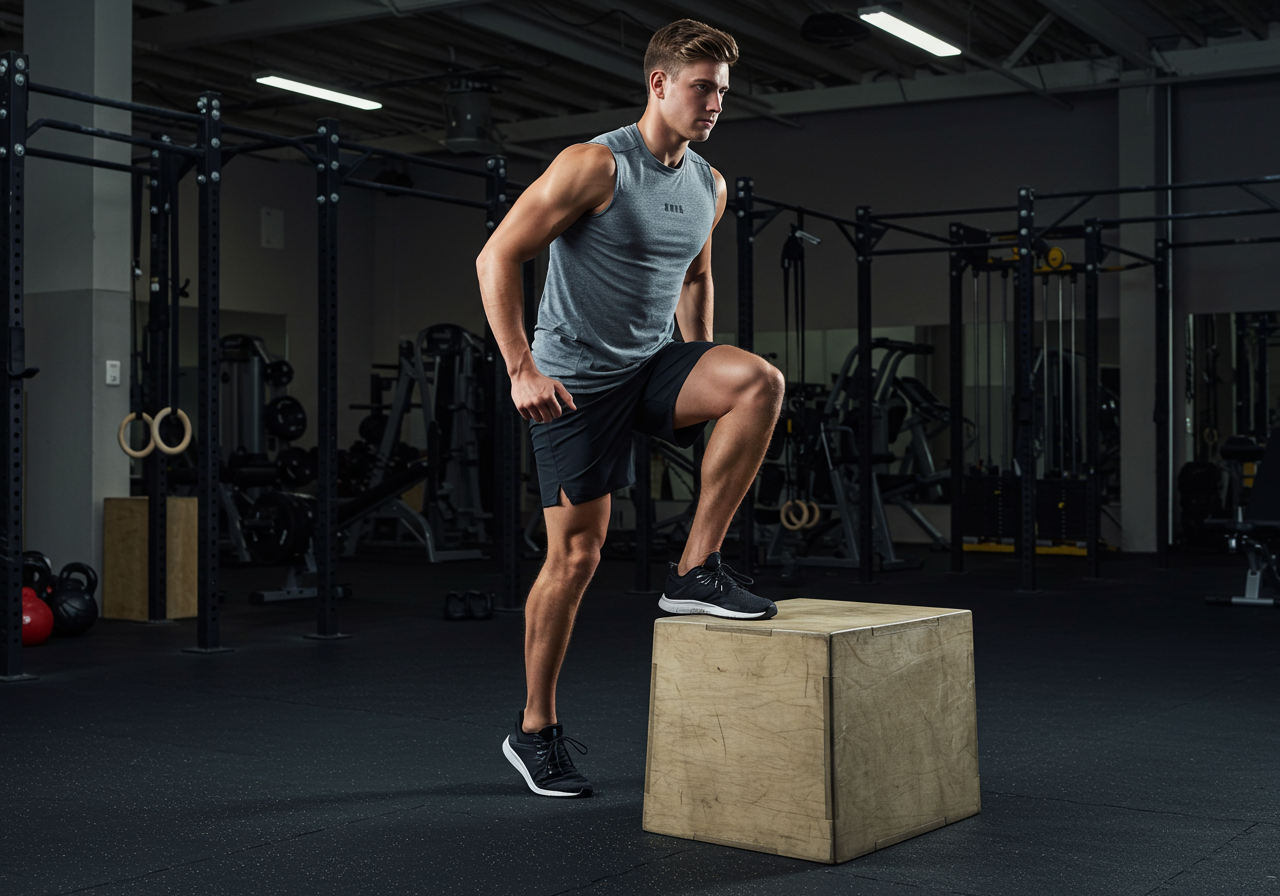
Step-ups (low box) or Reverse Lunges (short range): 2–3 x 6–10/side, slow lower, light push through mid-foot.
Romanian Deadlift or Hip Hinge with dumbbells: 2–3 x 8–12 to train posterior chain support.
Glute Bridge or Hip Thrust: 2–3 x 8–12, pause at the top for 2 seconds.
Terminal Knee Extensions (band) or Spanish Squat holds: 2–3 x 10–15 reps or 20–30s holds if tolerated.
Calf raises (both then single-leg when ready): 2–3 x 10–15.
Mobility and control (3–5 minutes)
Half-kneeling ankle dorsiflexion mobilizations (2 x 10 smooth reps/side).
Hip airplanes or wall-supported single-leg balance (2 x 20–30s/side).
Real-world example
My own deload week after a 10K race flare: Monday—30 minutes Zone 2 cycling (Garmin HR 130–140 bpm), then 3 rounds of step-ups (8/side), Romanian deadlifts (2 x 10 @ 24 kg), and band TKEs (15 reps). Thursday—elliptical 25 minutes, glute bridges 3 x 10, calf raises 2 x 15. Saturday—40-minute flat walk, cadence slightly faster than usual. Pain stayed ≤2/10 and settled overnight.
Client snapshot
“Maya, 52”: “I kept my morning walks by swapping hills for flats and adding banded TKEs. After a few weeks, stairs stopped biting.” In my logs, her step count climbed gradually without next-day spikes.
Nutrition & recovery basics
Protein target: roughly 1.6–2.2 g/kg/day to support tissue repair.
Spread protein across 3–4 meals; hydrate and include colorful produce for micronutrients.
Track calories with an app (MyFitnessPal) if bodyweight change is a goal; avoid aggressive deficits during painful phases.
Sleep 7–9 hours; short walks and light mobility help recovery on rest days.
Eight-Week Plan from Flat Walks to Interval Training
Caption: 8‑week progression summary. Follow pain rules; if symptoms linger >24h, step back one row for 3–5 days.
Beginner W1–2: Cardio 3×20 min Zone 2 (flat); Strength 2x/week (2 sets each); Steps +5–10% weekly; RPE 5–6. Beginner W3–4: Cardio 3–4×25–30 min; Strength 2–3x/week (3 sets key lifts); Add 1 easy interval day (4 x 1 min brisk). Beginner W5–6: Cardio 4×30–35 min; Strength 3x/week; Add small ROM depth increases; Introduce step-downs from low box. Beginner W7–8: Cardio 3×35–45 min + 1 short interval (6 x 1 min); Strength 3x/week; Add goblet squat off box and split squat as tolerated.
Intermediate W1–2: Cardio 3×30–40 min Z2; Strength 3x/week (push/pull/legs split); RPE 6–7; Include single-leg RDLs. Intermediate W3–4: Add intervals 1x/week (6–8 x 60–90s Z3); Progress step height or load by 2–5 kg if pain-free. Intermediate W5–6: Cardio 4 sessions with one 40–50 min long Z2; Strength add tempo eccentrics (3–4s lowers); Include slant-board squats if tolerated. Intermediate W7–8: Intervals 1–2x/week (short); Strength introduce front-foot elevated split squats and Spanish squat holds.
Advanced W1–2: Maintain base (4–5 cardio sessions, mostly Z2); Strength 3–4x/week with unilateral focus and paused reps. Advanced W3–4: Add hill walking or soft-surface strides if running; monitor next-day response; keep heavy lifts RPE ≤8. Advanced W5–6: Introduce plyo prep (pogos, low step hops 2 x 10) only if pain-free 2+ weeks; keep volume low. Advanced W7–8: Return-to-run build or sport drills; increase one variable at a time (speed, distance, or hills), not all three.
What to track
Daily pain (0–10), next-morning stiffness, and 24-hour response.
Cardio minutes and HR zones (Strava or Garmin Connect).
Strength loads, sets, reps, and depth/tempo notes.
Across clients who follow these guardrails, I typically see steadier step counts and fewer flare-ups by week 3–4. One client resumed casual 5Ks by gradually reintroducing flats first, then modest intervals; their logs showed a clear uptick in weekly minutes without next-day soreness spikes. Individual results vary, but the pattern is consistent when load is progressed patiently.
Adjust One Variable at a Time to Avoid Flare-Ups
Frequency & intensity: Most do well with 3–4 cardio sessions and 2–3 strength days weekly. Keep most cardio in Zone 2 and lift with smooth tempos. Add intensity only after two consecutive pain-stable weeks.
Common mistakes: Jumping back to hills too soon, increasing volume and intensity together, ignoring ankle mobility, and letting knees cave in during squats or step-ups.
Troubleshooting:
Flare-up after a session: Next workout cut volume by ~50% and choose the easiest modality (flat walk, easy cycle). Resume normal plan once 24-hour response is stable.
Plateau: Change one lever—add a set to glute/hip work, increase step height slightly, or add 5 minutes to one Z2 session.
Motivation dip: Use a streak tracker, schedule with a friend, or join a local flat-path walk group. Celebrate process goals (sessions completed, pain staying ≤3/10).
Safety: Seek a clinician if pain exceeds 4/10 consistently, swells significantly, locks/gives way, or follows trauma. If you suspect a meniscal or ligament injury, get assessed before progressing.
Recovery extras: Gentle foam rolling around quads/IT band can ease sensitivity; short, frequent movement breaks beat one long session. Consider omega-3s or collagen with vitamin C pre-lift if advised by your provider.
Next steps: Log your first two weeks in Garmin/Strava and a simple spreadsheet.
Medical Disclaimer: The information provided on this website is for informational and educational purposes only and is not intended as personal medical or health advice. The content, including text, graphics, and images, is not a substitute for professional medical advice, diagnosis, or treatment. Always seek the advice of your physician or other qualified healthcare provider…
Medical Disclaimer: The information provided on this website is for informational and educational purposes only and is not intended as personal medical or health advice. The content, including text, graphics, and images, is not a substitute for professional medical advice, diagnosis, or treatment. Always seek the advice of your physician or other qualified healthcare provider…
Medical Disclaimer: The information provided on this website is for informational and educational purposes only and is not intended as personal medical or health advice. The content, including text, graphics, and images, is not a substitute for professional medical advice, diagnosis, or treatment. Always seek the advice of your physician or other qualified healthcare provider…
Medical Disclaimer: The information provided on this website is for informational and educational purposes only and is not intended as personal medical or health advice. The content, including text, graphics, and images, is not a substitute for professional medical advice, diagnosis, or treatment. Always seek the advice of your physician or other qualified healthcare provider…
Medical Disclaimer: The information provided on this website is for informational and educational purposes only and is not intended as personal medical or health advice. The content, including text, graphics, and images, is not a substitute for professional medical advice, diagnosis, or treatment. Always seek the advice of your physician or other qualified healthcare provider…
Medical Disclaimer: The information provided on this website is for informational and educational purposes only and is not intended as personal medical or health advice. The content, including text, graphics, and images, is not a substitute for professional medical advice, diagnosis, or treatment. Always seek the advice of your physician or other qualified healthcare provider…