Medical Disclaimer: The information provided on this website is for informational and educational purposes only and is not intended as personal medical or health advice. The content, including text, graphics, and images, is not a substitute for professional medical advice, diagnosis, or treatment. Always seek the advice of your physician or other qualified healthcare provider with any questions you may have regarding a medical condition or before starting any new exercise, nutrition, or supplement program. Never disregard professional medical advice or delay in seeking it because of something you have read on this blog. Reliance on any information provided by this site is solely at your own risk.
30-Minute Plan Builds Strength With Minimal Equipment
Full-Body Dumbbell Workout for Busy Beginners: a 30-minute, three-day plan that builds strength, cardio, and mobility with minimal equipment.
Direct answer: Train three times per week, using two circuits and a brief finisher, progressing loads or reps weekly while keeping two reps in reserve.
In this guide you’ll learn the exact movement sequence, how to pick starting weights, how to progress from week to week, and how to recover so you keep improving without burning out.
Compound Movements Drive Heart Rate and Muscle Growth
Time is the biggest barrier for new lifters. Full-body, dumbbell-based circuits use compound movements that recruit major muscle groups, drive a useful heart-rate response, and make it easy to be consistent at home.
Strength circuits that stay in a conversational breathing rhythm (roughly zone 2–3) can improve work capacity while building muscle. Major health guidelines recommend at least two days of resistance training; this plan meets that and adds mobility so joints feel better, not beat up.
From coaching logs, beginners who follow a simple, repeatable template tend to stick with it. Many report feeling steadier on stairs, sleeping better, and noticing firmer arms and legs within six to eight weeks. These observations match what practice-based reports note for novice programs.
Client note (shared with permission): “I only had 25 minutes between meetings. The two-circuit layout made it doable, and I still felt my heart rate up without gasping.” — Maya, remote client
Two Circuits Plus Finisher With Progression Guide
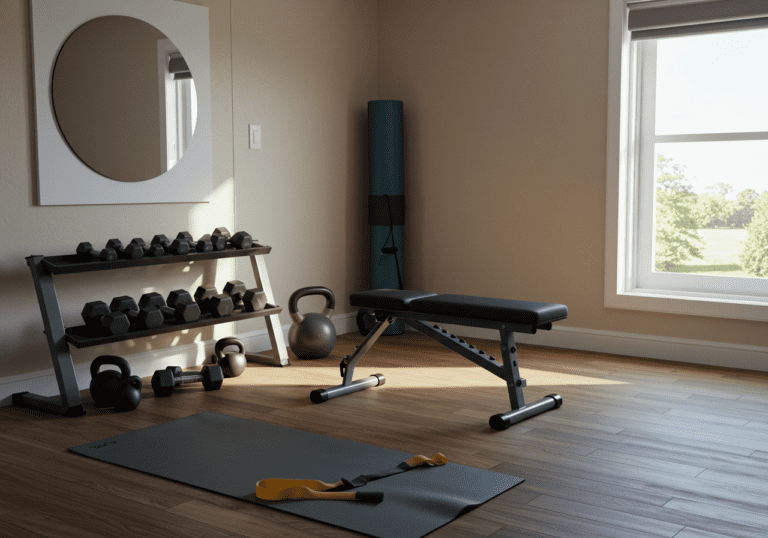
Equipment: A pair of dumbbells (adjustable or two pairs light/medium), a mat, and a timer. Optional: mini-band for warm-up.
Session length: ~30 minutes. Wear a watch or app (Apple Watch, Fitbit, Garmin) to keep rest honest and watch heart rate.
Warm-up — 5 minutes
1 minute brisk marching or step-ups
World’s greatest stretch x 4 each side
Glute bridge x 10 + dead bug x 6 each side
Main Workout — Two Circuits (alternate exercises; move with control; rest 45–75 seconds between rounds)
Suitcase Marches (one dumbbell) 20 steps each side, then fast but tidy Bodyweight Squats × 15; repeat until time.
Cooldown — 3 minutes
Box breathing 2 minutes (inhale 4, hold 4, exhale 4, hold 4)
Kneeling hip flexor stretch and pec doorway stretch, 30 seconds each
Load selection and effort
Pick a weight you can lift with two reps in reserve (RIR 2): your last rep should be challenging but clean.
Tempo: 2 seconds down, slight pause, 1 second up. Smooth is fast.
Form cues
Goblet Squat: exhale as you stand, keep knees tracking over mid-foot.
RDL: push hips back, keep the dumbbells close to thighs, neutral spine.
Row: pull elbow toward back pocket; don’t shrug.
Floor Press: ribs down, forearms vertical at the bottom.
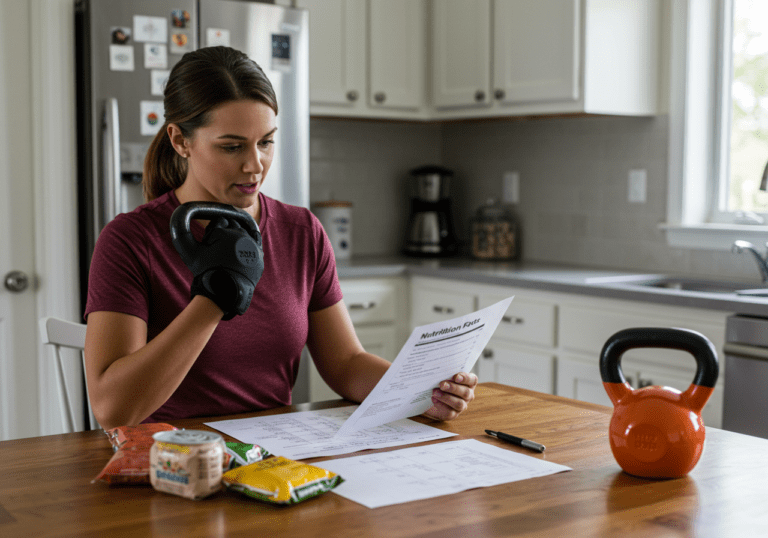
Tracking: Log sets, reps, and dumbbell weights in Strong, Fitbod, or a notes app. Tag RPE 6–8 for work sets and note total session duration and steps carried. I like color-coding days in Google Calendar to cement the habit.
Add Reps First, Then Load Each Week
Train three nonconsecutive days (e.g., Mon/Wed/Fri). Add a little pressure each week by increasing reps first, then load. If you hit the top of a rep range with RIR 2, increase each dumbbell by the smallest available jump next time.
Advanced (time-crunched): 3–4 rounds, 10–12 reps, add tempo pauses or a fourth movement, RPE ~8 on last round
8-Week Roadmap — plain-text table shows how to build volume and load
Week 1–2: Learn form; 2 rounds each circuit; 8–10 reps; RIR 2–3; finisher 2 min

Week 3: Add 1 rep per set where possible; keep RIR 2; finisher 3 min

Week 4: Move to 3 rounds total; maintain reps 8–10; shorten rests by ~10s

Week 5: If all sets hit top reps cleanly, add light load; keep RIR 2; finisher 3–4 min

Week 6: Keep load; push reps back toward top of range; carries slightly longer

Week 7 (consolidate): Same loads/reps; focus on crisp form and breathing; optional 1 extra core set

Week 8 (test week): Choose one main lift/day to reach near top reps at RIR 1–2; then take a light day
Upgrading challenges
No heavier dumbbells? Slow the lowering phase to 3 seconds, add 1–2 second pauses, or extend the carry distance.
Short on time? Do 1 round of each circuit back-to-back for a 15-minute express session.
Deload: Every 6–8 weeks, cut sets by one and reduce load slightly for 1 week.
Three Sessions Weekly at RPE 6-8 Prevents Burnout
Frequency & intensity: Three sessions per week works well for most. Keep work sets mostly at RPE 6–8. You should finish feeling worked, not wrecked.
Common mistakes
Going too heavy too soon. Instead, earn load by hitting the top of the rep range with clean technique.
Skipping warm-ups. Two minutes of mobility often prevents cranky hips and backs.
Rushing rows and RDLs. Quality hinges and pulls protect your back and build actual strength.
Troubleshooting
Plateau: Change one variable—tempo, range of motion, or order of exercises. Or add a fourth round for two weeks.
Overtraining signs: Elevated resting heart rate, poor sleep, irritability. Take a lighter week and walk more.
Motivation dip: Book sessions in your calendar, use a habit tracker, and invite a friend to text you a check-in.
Aches: Swap goblet squats for split squats if knees grumble; replace floor press with push-ups on handles for wrists.
Recovery & nutrition
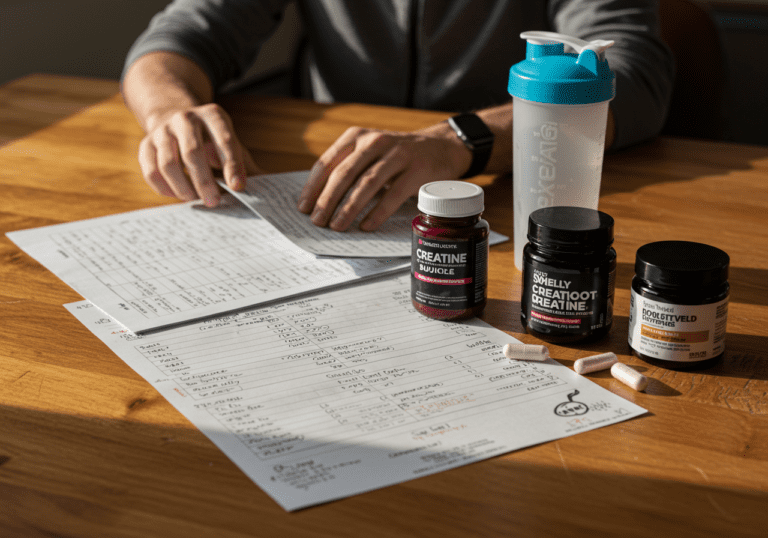
Protein: Aim roughly 1.6–2.2 g/kg/day; spread across 3–4 meals. Track in MyFitnessPal if helpful.
Hydration: A glass of water before training and one after. Add a pinch of salt if you sweat heavily.
Sleep: 7–9 hours when possible; even a consistent 6.5 with a 20-minute nap helps.
Monitoring results
Each week, note weights, reps, RPE, and session length. Many beginners see steadier breathing at the same pace and add small load increases over 4–8 weeks.
Heart rate: Aim to spend most of the session in a comfortable conversational zone; brief spikes during finishers are fine.
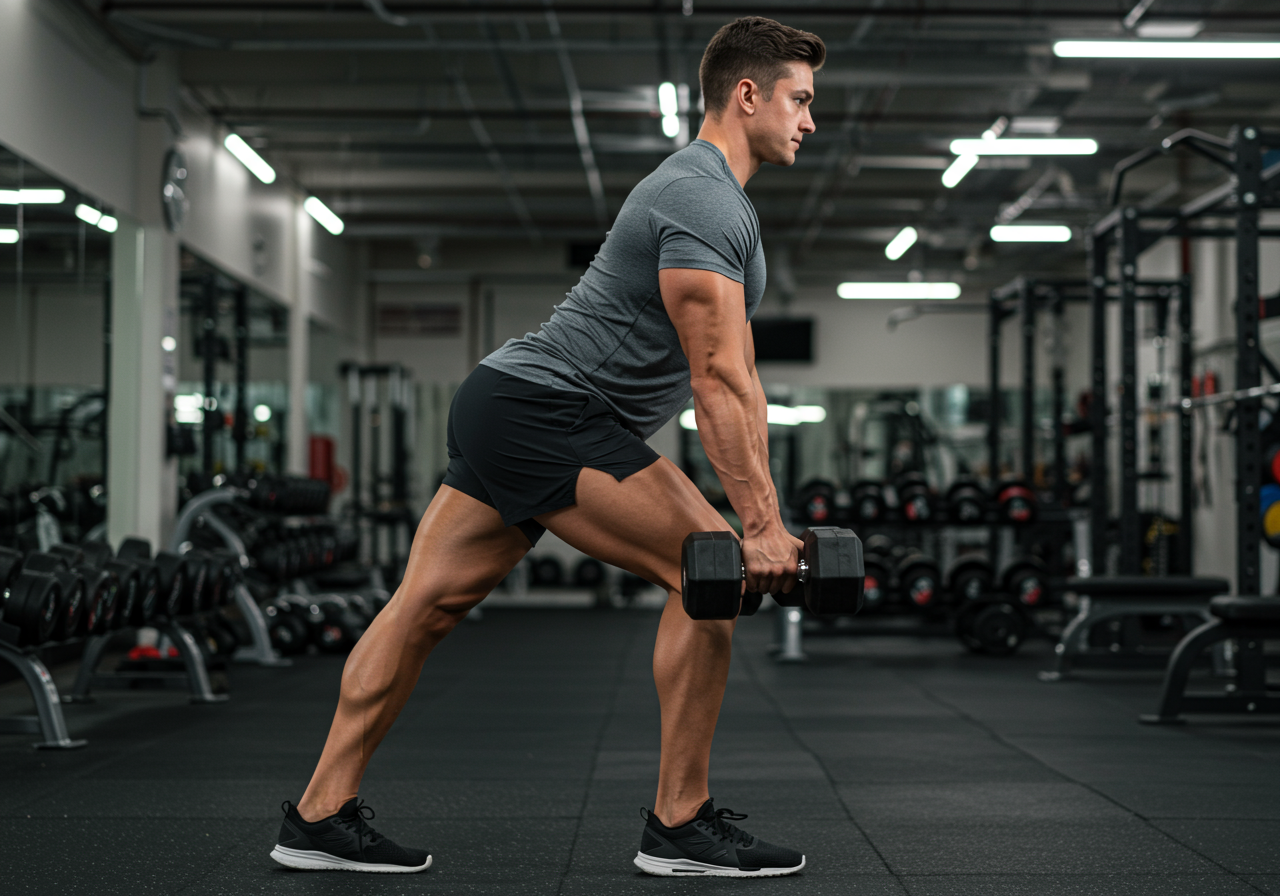
Next steps: When this feels comfortable, add a single-leg move (reverse lunge) to Circuit A and a vertical press (half-kneeling press) to Circuit B.
Medical Disclaimer: The information provided on this website is for informational and educational purposes only and is not intended as personal medical or health advice. The content, including text, graphics, and images, is not a substitute for professional medical advice, diagnosis, or treatment. Always seek the advice of your physician or other qualified healthcare provider…
Medical Disclaimer: The information provided on this website is for informational and educational purposes only and is not intended as personal medical or health advice. The content, including text, graphics, and images, is not a substitute for professional medical advice, diagnosis, or treatment. Always seek the advice of your physician or other qualified healthcare provider…
Medical Disclaimer: The information provided on this website is for informational and educational purposes only and is not intended as personal medical or health advice. The content, including text, graphics, and images, is not a substitute for professional medical advice, diagnosis, or treatment. Always seek the advice of your physician or other qualified healthcare provider…
Medical Disclaimer: The information provided on this website is for informational and educational purposes only and is not intended as personal medical or health advice. The content, including text, graphics, and images, is not a substitute for professional medical advice, diagnosis, or treatment. Always seek the advice of your physician or other qualified healthcare provider…
Medical Disclaimer: The information provided on this website is for informational and educational purposes only and is not intended as personal medical or health advice. The content, including text, graphics, and images, is not a substitute for professional medical advice, diagnosis, or treatment. Always seek the advice of your physician or other qualified healthcare provider…
Medical Disclaimer: The information provided on this website is for informational and educational purposes only and is not intended as personal medical or health advice. The content, including text, graphics, and images, is not a substitute for professional medical advice, diagnosis, or treatment. Always seek the advice of your physician or other qualified healthcare provider…