Medical Disclaimer: The information provided on this website is for informational and educational purposes only and is not intended as personal medical or health advice. The content, including text, graphics, and images, is not a substitute for professional medical advice, diagnosis, or treatment. Always seek the advice of your physician or other qualified healthcare provider with any questions you may have regarding a medical condition or before starting any new exercise, nutrition, or supplement program. Never disregard professional medical advice or delay in seeking it because of something you have read on this blog. Reliance on any information provided by this site is solely at your own risk.
Build Strong Legs with Structure and Measurable Progress
This lower-body strength plan builds powerful quads, hamstrings, and glutes without guesswork. It’s structured, measurable, and friendly to beginners who want lasting results.
Direct answer: Train 2–3 days weekly, add small loads when reps feel smooth, and prioritize recovery to strengthen legs safely.
You’ll learn the essentials: movement prep, the core lifts that matter, weekly progressions (beginner to advanced), nutrition and recovery support, plus simple ways to track progress so your legs get stronger every month.
Quads, Hamstrings, and Glutes Drive Movement and Joint Protection
Strong quads extend the knee and protect it when you squat, climb, or land. Hamstrings control hip hinge and knee flexion, supporting sprinting and deceleration. Glutes stabilize the pelvis and drive hip extension, which reduces back strain and improves walking, running, and lifting mechanics.
In practice and in peer-reviewed work, progressive loading in the 6–12 rep range reliably increases strength and muscle when paired with adequate protein and rest. Eccentric hamstring work (like Nordics or slow RDLs) is linked with better sprint resilience and can support ACL-friendly mechanics. I’ve seen the best results when we focus on consistent form, modest weekly overload, and repeatable sessions over months, not days.
Client M: “My knees stopped aching on stairs, and my jeans fit better. I didn’t chase maxes—just two steady leg sessions a week for three months.”
Client L (coach log): “Added 40 lb to a trap‑bar deadlift over 12 weeks while dropping two belt notches. The biggest win was learning to brace and hinge.”
Why this program works: it balances squat and hinge patterns, includes one single‑leg move for gait symmetry, and sprinkles in posterior‑chain accessories to build capacity without frying your joints.
Warm-Up, Squat Days, and Hinge Days Explained
Warm-up — 5–7 minutes: Easy bike or brisk walk; dynamic leg swings; 10–15 bodyweight squats; 10 hip hinges; 20–30 seconds of ankle rocks and calf pumps. Finish with 2–3 light ramp-up sets for your first lift.
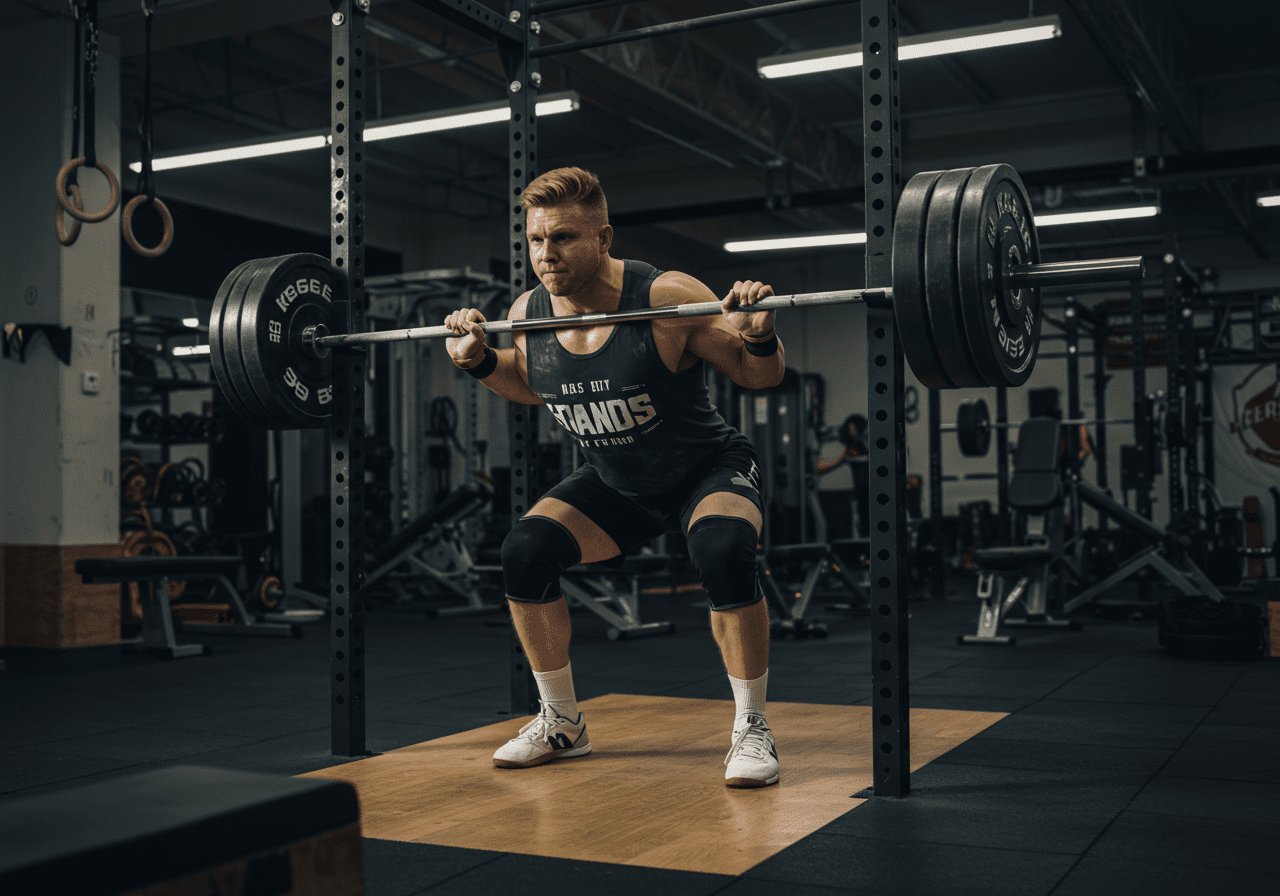
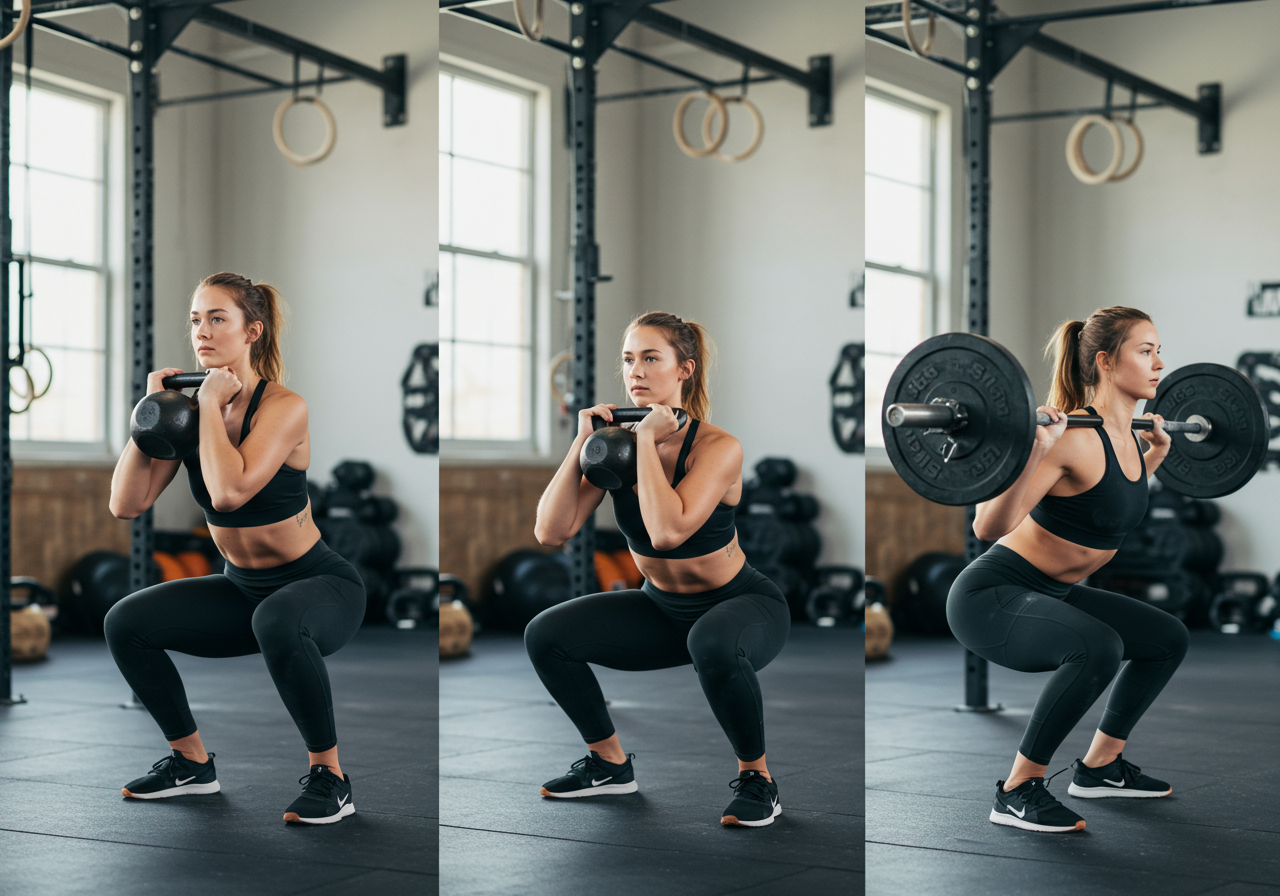
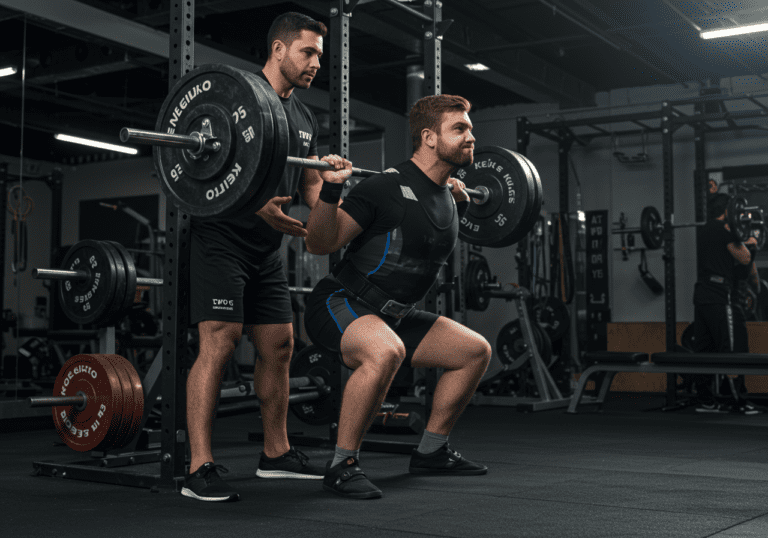
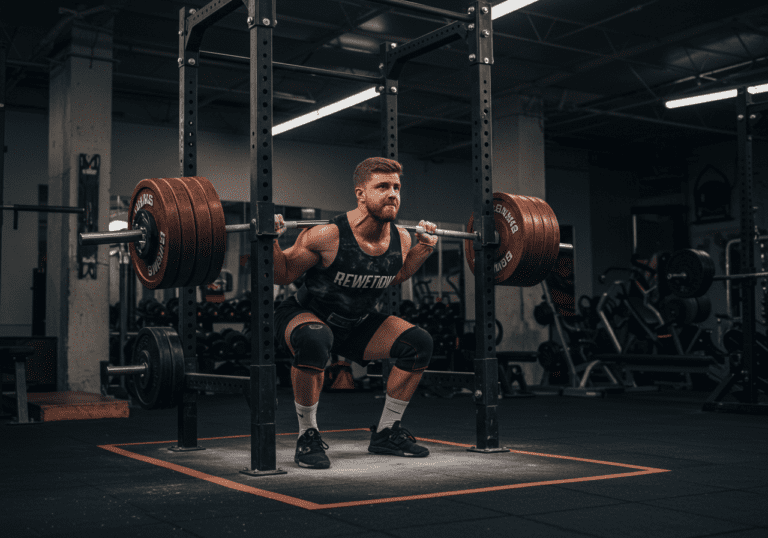
Session A (Squat‑emphasis, 45–60 min) 1) Squat variation (goblet → front/back squat): 3–4 sets × 6–10 reps @ RPE 6–8; rest 2–3 min. 2) Hip hinge (DB/BB RDL or hip thrust): 3–4 × 6–10 @ RPE 6–8. 3) Single‑leg (split squat or step‑up): 2–4 × 8–12 each side @ RPE 6–7. 4) Posterior‑chain accessory (hamstring curl, back extension, or Nordic regression): 2–3 × 8–12. 5) Core (carry or anti‑rotation): 2–3 modest sets. Optional 3–5 min easy bike to finish.
Session B (Hinge‑emphasis, 45–60 min) 1) Trap‑bar deadlift or hip thrust: 3–4 × 5–8 @ RPE 6–8; rest 2–3 min. 2) Squat pattern (goblet/front/back): 3 × 8–10 @ RPE 6–7. 3) Single‑leg RDL or lunge pattern: 2–4 × 8–12 each side. 4) Glute‑med/abductor: 2–3 sets (banded walks or side plank clamshells). 5) Core and brief cool‑down.
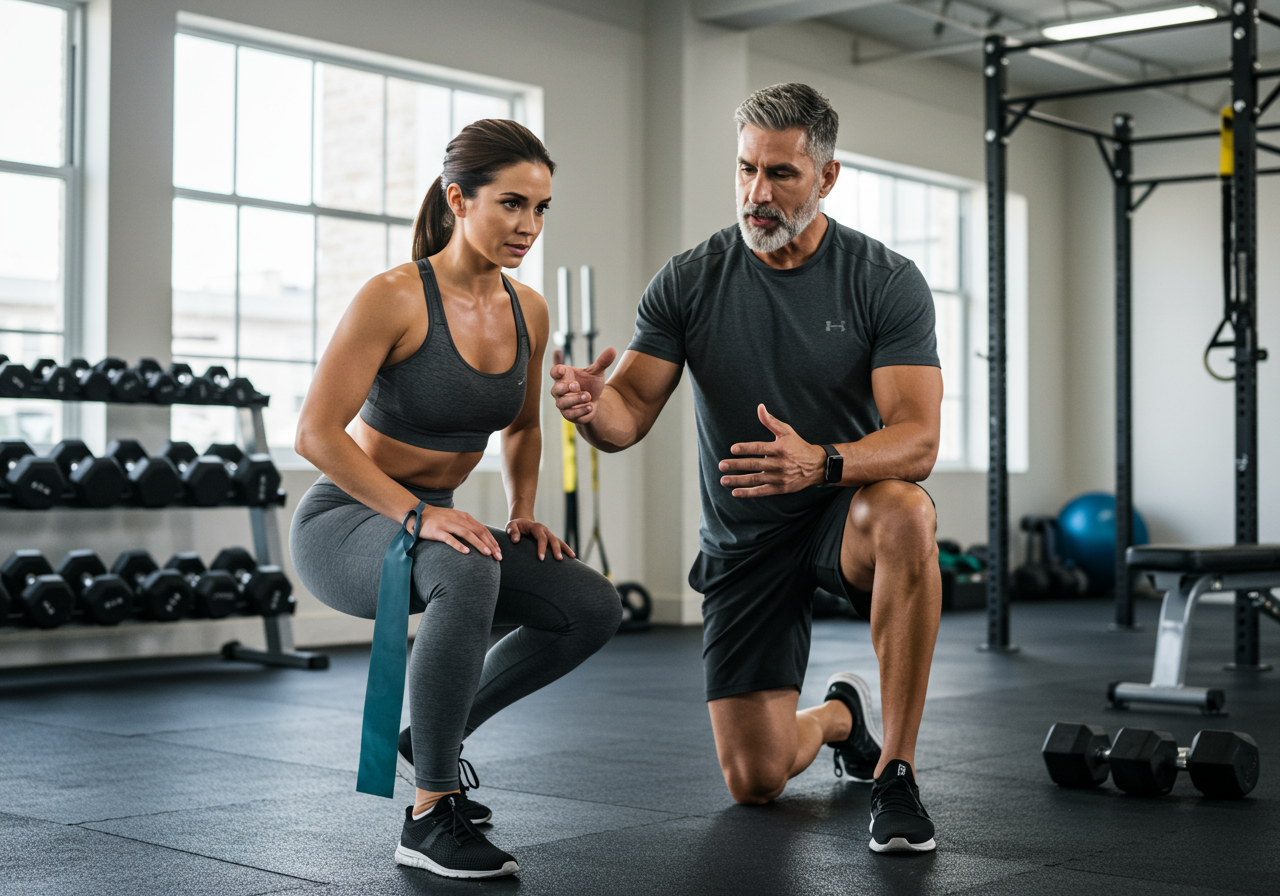
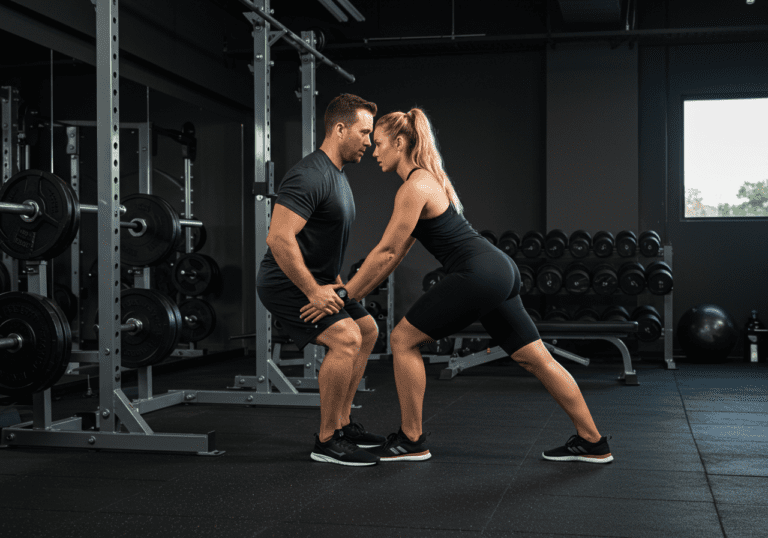
Technique cues – Squat: Inhale and brace, sit between hips, knees track over mid‑foot, keep the whole foot heavy. – Hinge: Push hips back, soft knees, neutral spine, lats engaged, bar/dumbbells close to the body. – Single‑leg: Keep pelvis level; move slow; chase balance, not just reps.
Rest & pacing: Main lifts 2–3 minutes; accessories 60–90 seconds. Stop sets with 1–3 clean reps in reserve. Quality beats grinders.
Personal log (example): 52‑min hinge day; average HR 118 bpm (upper Zone 2 on Garmin), peak 148 (Zone 3). RDL 3×8 @ 80→85→90 kg, RPE 6–7; front squat 3×8 @ 50 kg, RPE 6; split squat 3×10 bodyweight; banded walks 2×20 m. Felt strong; no form breakdown.
Twelve-Week Roadmap from Goblet Squats to Advanced Lifts
Start simple and add complexity only when reps stay crisp and pain‑free. Use RPE to guide load. When last two reps are smooth with stable positions, increase next time by 2.5–5%.
12‑week roadmap for steady gains
Caption: Progression roadmap from beginner to advanced across 12 weeks.

Week 1–2: 2 days/wk (A/B). Goblet Squat 3×8 @ RPE 6; DB RDL 3×8 @ RPE 6; Split Squat 2×10; Hip Thrust 2×12; Core 2 sets.

Week 3–4: Add 1 set to squats/hinges; nudge to RPE 7. Step‑up replaces split squat on B day.

Week 5: Front Squat (if ready) 3–4×6–8 @ RPE 7; Hip Thrust or Trap‑Bar 3–4×6–8 @ RPE 7; Single‑leg RDL 2–3×8–10.

Week 6 (Deload): Reduce volume 30–40% and stop at RPE 6. Keep patterns; move well.

Week 7–8: Back Squat or stay Front (choose best technique) 4×6 @ RPE 7–8; Trap‑Bar 4×5–6 @ RPE 7–8; Lunge 3×8 each.

Week 9–10: Add 1–2s pauses at the bottom of squats; RDLs 3×6–8 heavier; Nordic regression or leg curl 3×8–10.

Week 11: Intensify: 4×6 @ RPE 8 on main lifts; keep accessories lighter 2×10–12.

Week 12: Performance check: 3RM or AMRAP set leaving 1–2 reps in reserve; note vertical jump or 30s sit‑to‑stand score; take easy accessories.

Beginner: stay goblet + DB hinge until technique holds across sets.

Intermediate: rotate front/back squat; trap‑bar or hip thrust for hinge.

Advanced: introduce tempo (3–1–1) and low‑volume heavy doubles while keeping accessories.
When to advance a lift: You hit all prescribed reps for two consecutive sessions at RPE ≤7.5 and video confirms stable depth, neutral spine, and knee tracking. Otherwise, repeat the week and master the groove.
Train Smart with RPE, Nutrition, and Recovery Protocols
Frequency: 2–3 lower‑body sessions weekly works well. Pair with 1–2 upper days or total‑body sessions as time allows.
Intensity & monitoring: Most sets live at RPE 6–8. DOMS should fade within 24–48 hours. Track loads, reps, and RPE in a notes app or spreadsheet. Optional: use Garmin/Fitbit for heart rate and HRV; log nutrition in MyFitnessPal.
Nutrition & recovery: Protein 1.6–2.2 g/kg/day; carbs around training (pre: fruit/oats; post: rice/potatoes) to fuel quads and hamstrings. Hydrate with electrolytes on hot days. Creatine monohydrate 3–5 g daily is well‑supported. Sleep 7–9 hours; short walks aid recovery.
Common mistakes: Chasing weight while losing depth, rounding during hinges, knees collapsing in, skipping single‑leg work, or turning every set into a max. Fix one cue at a time and film from the side and front.
Troubleshooting – Plateau: Repeat the rep scheme with 1 extra top set, or swap variation (front → back squat) and reset 5–10% lighter. – Overreaching: If sleep/HRV tank and joints ache, cut volume by one‑third for 7 days. – Motivation dip: Micro‑goals—”add 1 rep per set”—and use a simple streak calendar.
Injury‑aware tweaks: Sore knees? Try box squats and shorter step‑ups. Sensitive hamstrings? Use slow RDLs or machine curls before Nordics. Hip aches? Add side‑plank clamshells and keep stance slightly narrower.
Coach observation: New lifters who consistently hit 2 sessions/week for 8–12 weeks report easier stairs, steadier balance, and stronger carries. Numbers vary, but movement confidence climbs first.
Next steps: Download a simple tracker, set two training days on your calendar, and start with Week 1. If you want my template and video cues.
Medical Disclaimer: The information provided on this website is for informational and educational purposes only and is not intended as personal medical or health advice. The content, including text, graphics, and images, is not a substitute for professional medical advice, diagnosis, or treatment. Always seek the advice of your physician or other qualified healthcare provider…
Medical Disclaimer: The information provided on this website is for informational and educational purposes only and is not intended as personal medical or health advice. The content, including text, graphics, and images, is not a substitute for professional medical advice, diagnosis, or treatment. Always seek the advice of your physician or other qualified healthcare provider…
Medical Disclaimer: The information provided on this website is for informational and educational purposes only and is not intended as personal medical or health advice. The content, including text, graphics, and images, is not a substitute for professional medical advice, diagnosis, or treatment. Always seek the advice of your physician or other qualified healthcare provider…
Medical Disclaimer: The information provided on this website is for informational and educational purposes only and is not intended as personal medical or health advice. The content, including text, graphics, and images, is not a substitute for professional medical advice, diagnosis, or treatment. Always seek the advice of your physician or other qualified healthcare provider…
Medical Disclaimer: The information provided on this website is for informational and educational purposes only and is not intended as personal medical or health advice. The content, including text, graphics, and images, is not a substitute for professional medical advice, diagnosis, or treatment. Always seek the advice of your physician or other qualified healthcare provider…
Medical Disclaimer: The information provided on this website is for informational and educational purposes only and is not intended as personal medical or health advice. The content, including text, graphics, and images, is not a substitute for professional medical advice, diagnosis, or treatment. Always seek the advice of your physician or other qualified healthcare provider…