Medical Disclaimer: The information provided on this website is for informational and educational purposes only and is not intended as personal medical or health advice. The content, including text, graphics, and images, is not a substitute for professional medical advice, diagnosis, or treatment. Always seek the advice of your physician or other qualified healthcare provider with any questions you may have regarding a medical condition or before starting any new exercise, nutrition, or supplement program. Never disregard professional medical advice or delay in seeking it because of something you have read on this blog. Reliance on any information provided by this site is solely at your own risk.
Prehab exercises reduce common gym injuries by priming joints, tendons, and stabilizers before training. The fastest win is short, targeted work done consistently.
Direct answer: perform 8–12 focused minutes before lifting, plus 2–3 brief mobility snacks on off days.
You will learn a full system that blends mobility, activation, and technique resets into strength or cardio days, with beginner to advanced progressions, progress tracking, and recovery guidance.
Why Stabilizers and Joint Position Prevent Injuries
Most nagging gym issues trace back to controllable factors: poor joint position, weak end ranges, and sudden spikes in training load. Prehab builds capacity where tissues are vulnerable and restores smooth joint mechanics before heavy efforts.
Physiology in plain words: when you center joints and wake stabilizers, muscles share load more evenly. That means tendons see less sudden strain, cartilage tracks better, and your nervous system coordinates movement with less noise.
Supportive evidence: peer‑reviewed research and major sports health guidelines report that structured warm-ups and neuromuscular training reduce soft‑tissue and overuse injuries in active populations. In practice studies, consistent pre-lift mobility plus activation tends to lower pain reports and missed sessions.
Client note: after a couple of weeks, a new lifter told me their elbow irritation faded once we added scapular circles, light isometric rows, and better breathing before bench sessions.
Step-by-Step Flow From Breathing to Ankle Prep
Use this 8–12 minute flow before lifts or classes. Keep effort easy to moderate. If pain appears, downshift the range or swap a drill.
Warm-up primer, 2–3 min: easy bike or brisk walk, nasal breathing. Aim Zone 1–2.
Breathing and ribcage stack, 1–2 min: 90/90 breathing with feet elevated, 3–4 slow breaths, exhale fully, feel ribs drop.
Shoulder control, 2 min: scapular circles in hang or on wall, then band external rotation for 12–15 smooth reps.
Hip and knee prep, 3 min: lateral band walk 10–15 steps each way; supported hip airplane 5 reps per side; bodyweight split squat 6–8 reps per side with slow lower.
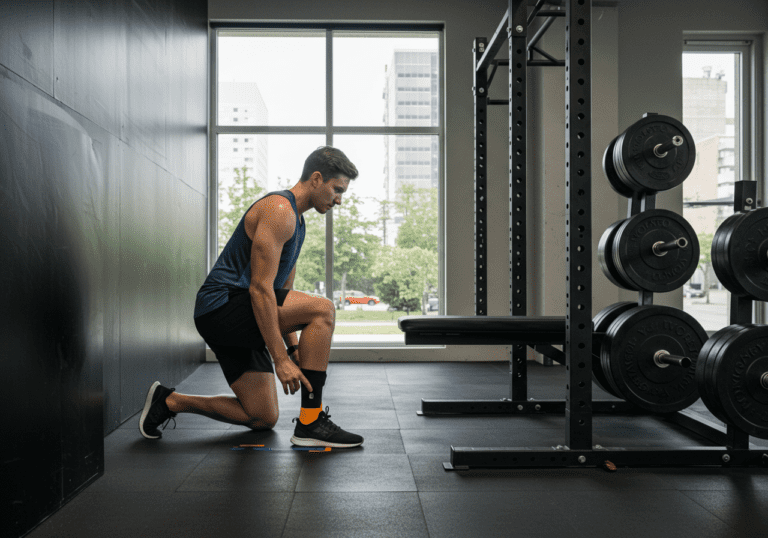
Ankle and foot, 1 min: slow calf raises 10–12 reps; short foot hold for 15 seconds.
Spine and hinge pattern, 1–2 min: dowel hip hinge 8 reps; or cat‑camel 5 gentle cycles if stiff.
Cues that work: light tension, slow exhales, tall posture, knees track over middle toes, feel big toe down, ribs stacked over pelvis, finish reps clean, not cooked.
Integrate with your main lifts: after the flow, do 1–2 ramp sets of the first exercise. Example: goblet squat 2 sets of 5 at an easy effort to groove depth and bracing.
Conditioning days: pair mobility snacks with Zone 2 cardio. Example: 20–30 minutes cycling in a conversational pace, then two mobility drills you skipped yesterday.
Track it: log drills, sets, and any pain notes. I tag warm-ups in Garmin and add sets in Strong or Apple Notes. For nutrition, I check daily protein in MyFitnessPal or Cronometer.
Example log excerpt (illustrative): Warm-up 10:00, HR avg near Zone 1–2; Bench 3×8 @ RPE 7 with paused first reps; Prehab shoulder set felt smooth, no pinch on lockout.
Scale Tension, Complexity, and Load Over Time
Advance time under tension first, then complexity, then load. Keep the prehab effort submaximal so your main lifts get the gas.
Beginner options: use wall or bench support for balance, light bands, slow tempos, partial ranges that are pain-free.
Advanced options: integrate tempo eccentrics, bottoms‑up kettlebell carries, and perturbations from a partner or cable.
Caption: 12-week outline for scaling prehab with your training
Weeks 1–2: 8–10 min flow; 2 sets per drill; RPE 4–5; Zone 2 cardio 1x20 min.

Weeks 3–4: 10–12 min; add holds 10–20 sec; small band upgrade; Zone 2 2x20–30 min.

Weeks 5–6: Keep time; progress range; isometrics 20–30 sec; begin offset carry 2x20–30 m.

Weeks 7–8: Slightly harder bands; unsupported hip airplanes; tempo lowers 3 sec; Zone 2 2–3x/week.

Week 9: Maintain time; bottoms‑up carry 2x15–25 m; add low box single‑leg RDL 2x6/side.

Week 10: Light perturbations on plank or squat hold; keep reps crisp; no pain during or after.

Week 11 (deload): Cut prehab volume ~30–50 percent; emphasize breathing and easy range work.

Week 12: Reassess key screens; confirm pain-free depth and control; maintain easiest versions that keep you consistent.
Swap list for common needs:
Shoulder: band external rotation to cable external rotation to bottoms‑up waiters carry.
Hip: supported hip airplane to toe‑touch progressions to free hip airplane.
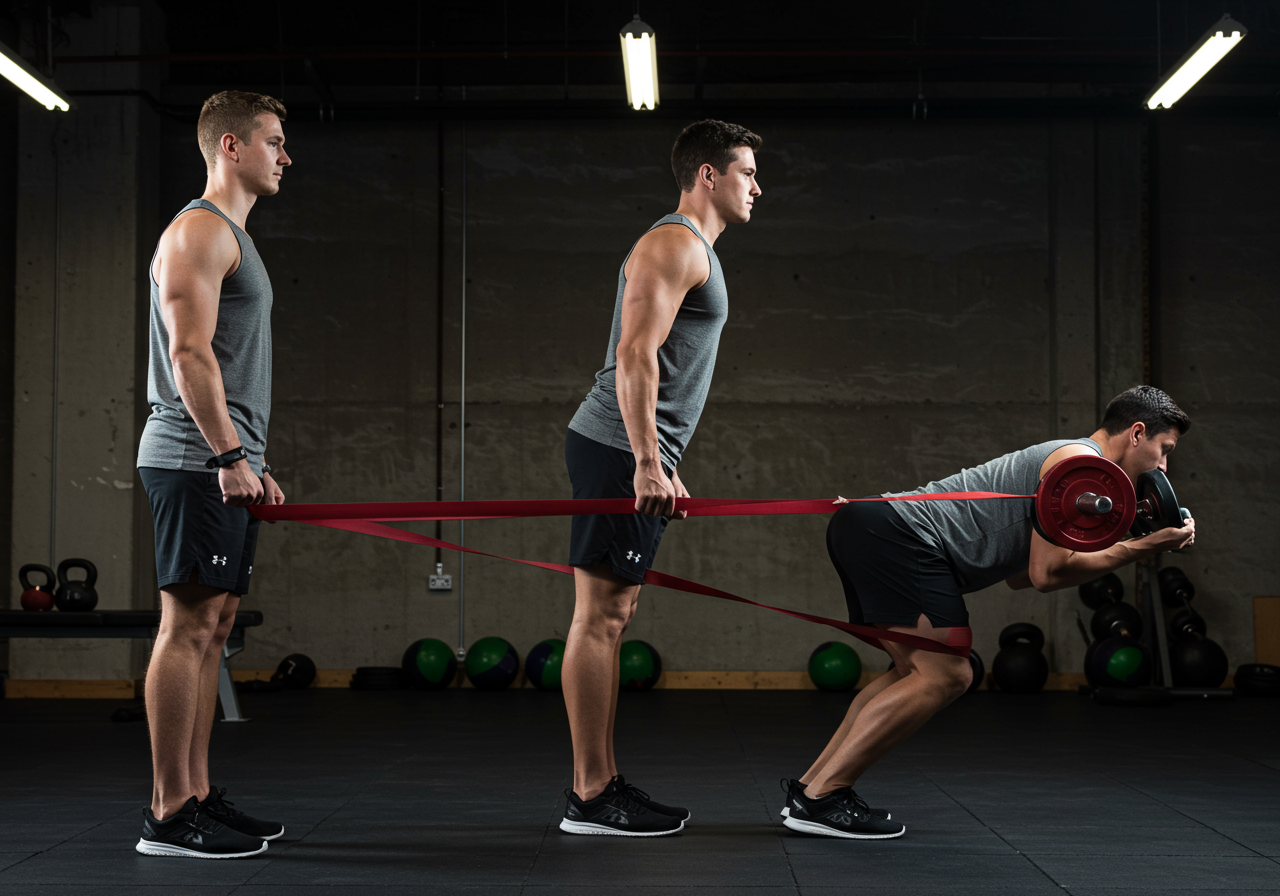
Knee: slow split squat to Spanish squat hold to cyclist squat with light plate.
Ankle: calf raise to tibialis raise to pogo hops if impact is tolerated.
Frequency, Intensity Rules, and Recovery Essentials
Weekly frequency: prehab 5–7 micro doses is fine because the work is easy. Before-lift dose 8–12 minutes. Strength 2–4 days per week. Conditioning 2–3 days at Zone 2.
Intensity and pain rules: keep most prehab at RPE 3–6. Mild effort, smooth breathing. If any sharp pain appears, shorten range, slow tempo, or choose a gentler drill.
Common mistakes: turning warm-ups into workouts, changing drills daily, skipping tracking, or chasing fatigue over quality. Keep a small, repeatable menu and note what helps.
Recovery basics: sleep 7.5–9 hours when possible. Protein around 1.6–2.2 g per kg body weight, plus carbs near training. Creatine monohydrate 3–5 g daily is broadly supportive. Consider omega‑3 if dietary intake is low. Hydrate with water and a pinch of electrolytes during long heat sessions.
Monitoring: rate morning stiffness 0–3 and session RIR or RPE. Watch step counts and heart rate trends in Fitbit, Garmin, or Apple Health. If fatigue climbs and performance dips for a week, trim volume and emphasize Zone 2 and easy range work.
Troubleshooting: stuck progress often means too much novelty. Keep the same drills for at least two weeks before changing. Motivation dips? Pair the flow with music or a timer and finish in under 12 minutes.
Results in the real world: newcomers who adopt this approach often report fewer cranky joints and steadier training blocks. In my logs, the lifters who keep the 10-minute flow most consistently tend to miss fewer sessions and move to heavier work with cleaner reps.
Next steps: save your 5–7 favorite drills, set a recurring reminder before each workout, and track notes for two weeks. If you want my printable prehab checklist and progression menu.
Medical Disclaimer: The information provided on this website is for informational and educational purposes only and is not intended as personal medical or health advice. The content, including text, graphics, and images, is not a substitute for professional medical advice, diagnosis, or treatment. Always seek the advice of your physician or other qualified healthcare provider…
Medical Disclaimer: The information provided on this website is for informational and educational purposes only and is not intended as personal medical or health advice. The content, including text, graphics, and images, is not a substitute for professional medical advice, diagnosis, or treatment. Always seek the advice of your physician or other qualified healthcare provider…
Medical Disclaimer: The information provided on this website is for informational and educational purposes only and is not intended as personal medical or health advice. The content, including text, graphics, and images, is not a substitute for professional medical advice, diagnosis, or treatment. Always seek the advice of your physician or other qualified healthcare provider…
Medical Disclaimer: The information provided on this website is for informational and educational purposes only and is not intended as personal medical or health advice. The content, including text, graphics, and images, is not a substitute for professional medical advice, diagnosis, or treatment. Always seek the advice of your physician or other qualified healthcare provider…
Medical Disclaimer: The information provided on this website is for informational and educational purposes only and is not intended as personal medical or health advice. The content, including text, graphics, and images, is not a substitute for professional medical advice, diagnosis, or treatment. Always seek the advice of your physician or other qualified healthcare provider…
Medical Disclaimer: The information provided on this website is for informational and educational purposes only and is not intended as personal medical or health advice. The content, including text, graphics, and images, is not a substitute for professional medical advice, diagnosis, or treatment. Always seek the advice of your physician or other qualified healthcare provider…