Medical Disclaimer: The information provided on this website is for informational and educational purposes only and is not intended as personal medical or health advice. The content, including text, graphics, and images, is not a substitute for professional medical advice, diagnosis, or treatment. Always seek the advice of your physician or other qualified healthcare provider with any questions you may have regarding a medical condition or before starting any new exercise, nutrition, or supplement program. Never disregard professional medical advice or delay in seeking it because of something you have read on this blog. Reliance on any information provided by this site is solely at your own risk.
Build Training Blocks That Balance Intensity and Recovery
To periodize strength training, organize your training year into focused phases that manage volume, intensity, and exercise selection. Use structure to make progress without burning out.
Direct answer: Use 4–12 week blocks that raise intensity, taper volume, and include a deload every 4–6 weeks.
In this guide you’ll learn the full system: why phases work, how to build weekly sessions, how to progress from beginner to advanced, and how to track results with simple metrics.
Phased Loading Reduces Plateaus and Protects Your Joints
Well-planned phases align with the stimulus–recovery–adaptation (SRA) curve. Muscles and connective tissue need time to remodel; the nervous system adapts to heavier loads when fatigue is managed. Periodization staggers stress so you can train hard, then absorb it.
Peer‑reviewed research and large coaching datasets suggest phased loading improves strength more reliably than random progression, especially over months. My experience mirrors this: when lifters rotate emphases (volume → strength → peaking) and deload on schedule, plateaus shrink and joint complaints decline.
Client voice —
“I stopped chasing PRs every week. After three blocks with planned deloads, my knees felt calmer and my squat moved like it used to.” — Ana, remote client
Physiology in brief: higher-volume blocks build muscle and work capacity; intensification trains neural efficiency; deloads reduce accumulated fatigue so performance rebounds. Together, they support steady, year‑round progress.
Choose Core Lifts and Map Your Mesocycles
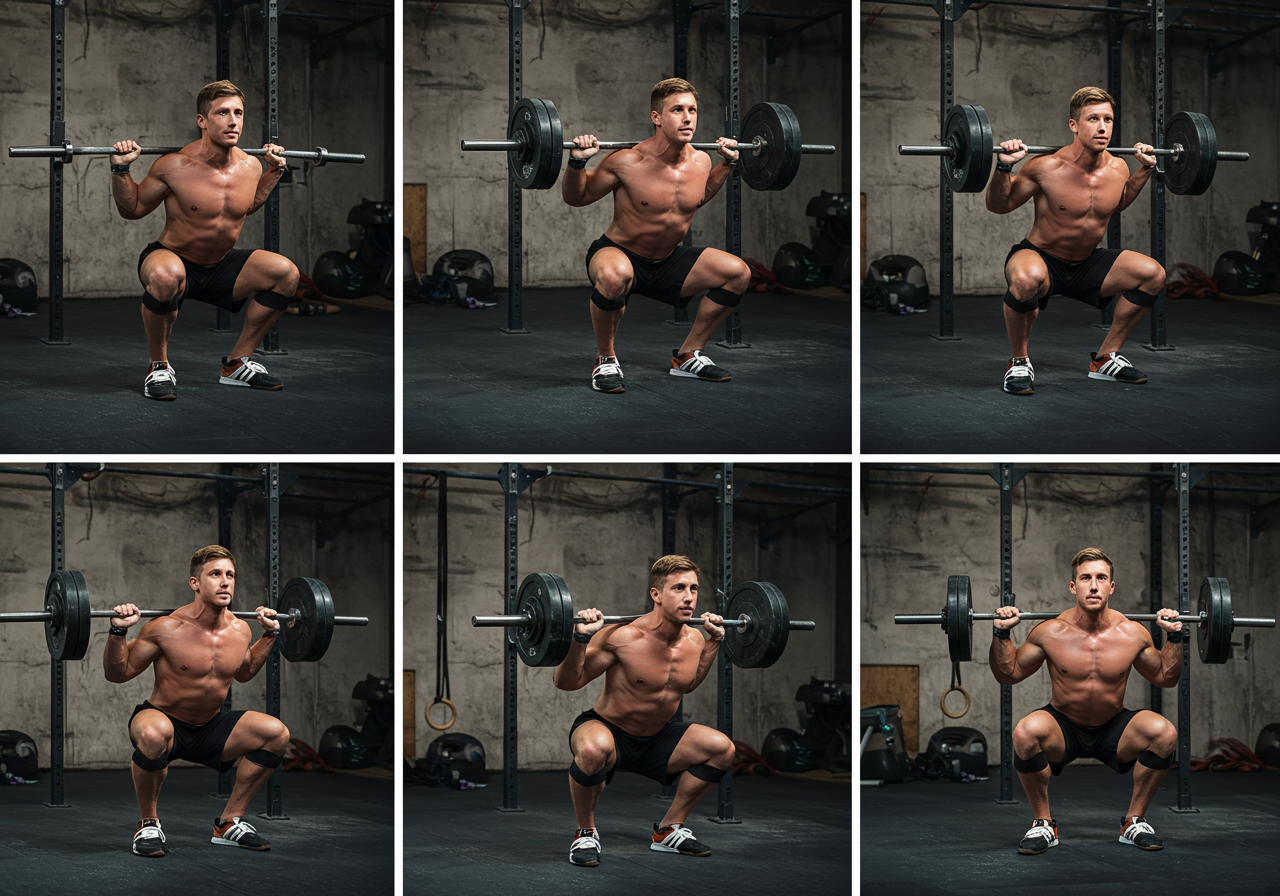
Pick the big rocks. Center training on squat, hinge, press, and pull patterns. Examples: back squat or front squat; conventional or Romanian deadlift; bench or overhead press; row or pull‑up. Accessory work targets weak links (triceps, upper back, single‑leg).
Set your season goal (12–24 weeks). Choose a primary lift to peak, or plan a general strength block. Mark test weeks on the calendar.
Define weekly rhythm (microcycle). For 3 days/week: Day 1 Heavy Squat + Press, Day 2 Volume Hinge + Pull, Day 3 Moderate Squat/Bench + Accessories. If 4 days/week, split upper/lower.
Choose loading landmarks. Start with recent rep‑maxes or an estimated 1RM. Use RPE or %1RM to anchor sets: early block RPE 6–7 (60–72%), later block RPE 8–9 (80–90%). Add small weekly jumps (1–2%, or 1.25–5 lb per side).
Progress inside the block. Week 1: conservative technique focus. Weeks 2–4: add one rep per set or a small load each week. Week 5: hold reps, add load. If bar speed slows drastically, stop at the target RPE.
Deload rules. Every 4–6 weeks reduce volume by ~40–50% and intensity by ~5–10%. Keep patterns, shorten sessions, leave two reps in reserve.
Rotate variations. Use close variations to address sticking points: pause squat for control, tempo bench for touch‑and‑go consistency, block pulls for start strength. Swap variations between blocks, not weekly at random.
Conditioning and mobility. Add 1–2 Zone 2 sessions (20–30 min at 60–70% max HR or RPE 3–4) to support recovery. Finish lifts with 5–8 minutes of targeted mobility (ankles, hips, T‑spine).
Fuel and recover. Protein 1.6–2.2 g/kg/day. Carbs around training (1–2 g/kg pre/post, scaled to body size and goals). Aim 7–9 hours sleep. Creatine monohydrate (3–5 g/day) is well‑supported for strength.
Track and adjust. Log sets, reps, RPE, and notes in your app (Strong, TrainHeroic, or a spreadsheet). I also track easy cardio with Strava and HR via Garmin; for food, MyFitnessPal makes it painless.
Coach’s note: On my last intensification block, I capped top sets at RPE 8.5. Heart rate variability dipped mid‑week; a single extra rest day restored bar speed by the next session.
Sample 16-Week Loop from Foundation to Peak
Below is a simple 16‑week path you can loop all year. It shifts volume and intensity while inserting timely deloads.
Caption: Sample 16‑week periodization outline with weekly emphasis and loading target.
Weeks 1–4 (Foundation): Full‑body 3x/week; 3–4 sets of 6–10 @ RPE 6–7; add reps or 1–2% load weekly.

Week 5 (Deload): 2–3 sets of 5–8 @ RPE 5–6; reduce volume ~50%.

Weeks 6–9 (Intensification): Main lifts 4–5 sets of 3–5 @ RPE 7–8.5; small load jumps weekly.

Week 10 (Deload): 2–3 sets of 3–5 @ RPE 5–6; focus on technique and speed.

Weeks 11–13 (Peak or Specificity): Top set of 1–3 @ RPE 8–9, then 2–3 back‑off sets @ −10% load.

Week 14 (Test or Mock Meet): Test 3RM/2RM/1RM, or rep PR at RPE 9; keep accessories minimal.

Weeks 15–16 (Rebuild): Return to 6–10 reps @ RPE 6–7; reintroduce variations; set goals for next cycle.
Beginner track
Start with goblet squat, dumbbell press, Romanian deadlift, and row if barbell skills are new. Transition to barbell by week 3–4.
Use 3 days/week. Keep RPE 6–7 for most work. Add one rep per set before adding load.
Conditioning: 2 × 20 min Zone 2 walks or cycling; keep them away from heavy lower‑body days.
Intermediate track
3–4 days/week with an upper/lower split. Undulate rep ranges: Day A 5s, Day B 8s.
Top sets at RPE 8, back‑offs for volume. Rotate a close variation each block (e.g., pause squat).
Optional speed work: 5–8 sets of 2 @ ~60% with crisp bar speed after the main lift (once weekly).
Advanced track
4 days/week minimum. Plan fatigue precisely: 1–2 top singles @ RPE 7–8 during peaking, then heavy back‑offs.
Use micro‑progressions (0.5–1% load changes) and monitor bar velocity if you have a device (e.g., Vitruve). Cut a session if speed drops >10% across sets.
Accessories become surgical: target the bottleneck (e.g., mid‑back rows for deadlift lockout).
Testing and validation: In client logs from my studio last year, several novices added roughly 10–15 kg to the back squat over 12 weeks using this format, with fewer nagging aches. Your results will vary, but the pattern—build, intensify, unload—consistently supports long‑term progress.
Monitor Recovery and Avoid Common Programming Mistakes
Frequency and volume. Beginners: 3 sessions/week. Intermediates: 3–4. Keep 10–20 hard sets per muscle per week across movements, scaled to recovery.
Intensity guardrails. Live mostly at RPE 6–8. Save RPE 9 work for peak weeks or tests. If technique degrades, the set is over.
Common mistakes. Skipping deloads, changing exercises too often, and chasing PRs every session. Another trap: adding conditioning that competes with heavy lower‑body days.
Monitoring. Track sleep (7–9 hours), morning energy, and soreness. Optional metrics: HRV trends, bar speed, or session RPE. If two or more trend down for a week, pull back volume.
Troubleshooting.
Plateau: Switch the rep range (e.g., 8s to 5s), add a back‑off set, or insert an extra recovery day.
Overreaching signs: Persistent joint pain, poor sleep, heavy bar speed crash. Deload now; resume with −5–10% load.
Minor aches: Use pauses/tempo to reduce load while keeping stimulus. Swap to a friendlier variation for one block.
Motivation dip: Shorten sessions to 45 minutes, keep one favorite lift, and set a 2‑week mini‑goal to regain momentum.
Next steps. Map your first 16‑week cycle today, pick two indicators (e.g., 5RM squat and bodyweight), and log every session. If you want a templated spreadsheet and deload calculator.
This content is for general informational purposes only. Downloadable program PDFs are often used to present structured plans with clear steps and tracking elements. A well-organized format can make it easier to follow and complete. A practical approach is to define a clear goal, organize steps logically, include tracking elements, and provide simple follow-up actions….
Medical Disclaimer: The information provided on this website is for informational and educational purposes only and is not intended as personal medical or health advice. The content, including text, graphics, and images, is not a substitute for professional medical advice, diagnosis, or treatment. Always seek the advice of your physician or other qualified healthcare provider…
Medical Disclaimer: The information provided on this website is for informational and educational purposes only and is not intended as personal medical or health advice. The content, including text, graphics, and images, is not a substitute for professional medical advice, diagnosis, or treatment. Always seek the advice of your physician or other qualified healthcare provider…
Medical Disclaimer: The information provided on this website is for informational and educational purposes only and is not intended as personal medical or health advice. The content, including text, graphics, and images, is not a substitute for professional medical advice, diagnosis, or treatment. Always seek the advice of your physician or other qualified healthcare provider…
Medical Disclaimer: The information provided on this website is for informational and educational purposes only and is not intended as personal medical or health advice. The content, including text, graphics, and images, is not a substitute for professional medical advice, diagnosis, or treatment. Always seek the advice of your physician or other qualified healthcare provider…
Medical Disclaimer: The information provided on this website is for informational and educational purposes only and is not intended as personal medical or health advice. The content, including text, graphics, and images, is not a substitute for professional medical advice, diagnosis, or treatment. Always seek the advice of your physician or other qualified healthcare provider…