Medical Disclaimer: The information provided on this website is for informational and educational purposes only and is not intended as personal medical or health advice. The content, including text, graphics, and images, is not a substitute for professional medical advice, diagnosis, or treatment. Always seek the advice of your physician or other qualified healthcare provider with any questions you may have regarding a medical condition or before starting any new exercise, nutrition, or supplement program. Never disregard professional medical advice or delay in seeking it because of something you have read on this blog. Reliance on any information provided by this site is solely at your own risk.
Peak Strength Phase is your eight-week roadmap to a bigger 1RM without burning out. You’ll learn how to ramp intensity, taper volume, test confidently, and recover well.
Direct answer: In eight weeks, you can safely raise your 1RM by peaking with planned intensification, micro-loads, and smart recovery.
You’ll get a complete weekly layout, beginner-to-advanced modifications, nutrition and sleep guidance, and simple tracking using Strong, Garmin/Strava, and MyFitnessPal. I’ll share what worked in client logs and what to avoid.
Why Tapering Volume Boosts Maximal Strength
Peaking aligns training with the specific skill of lifting a maximal single. As volume tapers and intensity climbs, fatigue drops while neural drive, bar path efficiency, and intermuscular coordination become the priority. In practice and peer-reviewed studies, taper + high-intensity blocks often produce stronger 1RM performances, though individual results vary.
From my coaching notes, lifters who kept top singles submaximal (RPE 8–9) and used back-off volume saw steadier progress than those who chased daily maxes. In client logs and my own cycles, 1RM improvements around 2–7% over eight weeks are common; your mileage may differ based on recovery, technique, and stress.
“I finally locked a 100 kg bench after months stuck at 97.5. The top singles built confidence, and the taper made testing day feel light.” — Marta, 39
Compared with high-volume hypertrophy blocks, a peak favors intensity, specificity, and strategic rest. The trade-off: less muscle-building volume temporarily, but a higher ceiling for expressing strength when it counts.
Weekly Training Structure and Session Flow
1) Establish a working max. Use your recent best triple or double at RPE 9 and convert with a simple formula (e.g., Epley) to estimate 1RM. If unsure, start conservatively.
2) Choose 2–3 main lifts. Prioritize squat, bench, and deadlift (or close variants). Keep accessories supportive, not exhausting.
3) Weekly layout (3–4 sessions):
Day 1: Squat focus + push accessories
Day 2: Bench focus + upper back
Day 3: Deadlift focus + hinge/core
Optional Day 4: Secondary bench or squat variations (lighter)
Accessories: 2–3 exercises, 2–4 sets of 6–12 (triceps, quads, lats, bracing). Stop 1–2 reps shy of failure.
5) Load & RPE rules: Keep top singles smooth (no grinders). If bar speed slows dramatically or technique slips, reduce 2.5–5 kg. Micro-load (0.5–1.25 kg) on bench if jumps feel large.
6) Conditioning that doesn’t steal strength: 1–2 x 20–25 minutes Zone 2 per week, conversational pace (~60–70% HRmax). Log with Garmin/Polar and post to Strava. Keep it easy; if legs feel heavy, shorten.
7) Nutrition & recovery:
Protein: ~1.6–2.2 g/kg/day. Use MyFitnessPal to confirm intake.
Carbs: emphasize pre/post-lift (1–2 g/kg across the training window). Hydrate: ~5–7 ml/kg pre-lift.
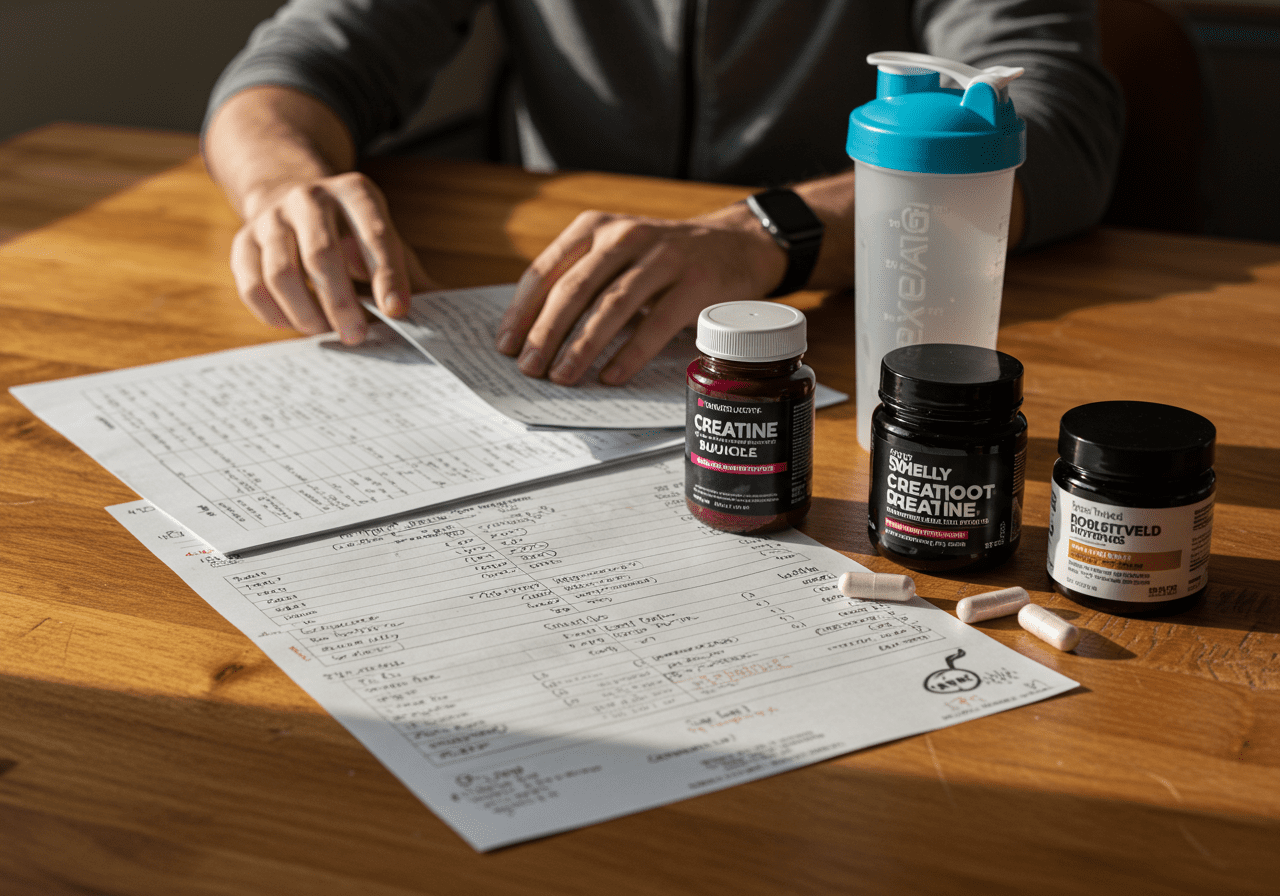
Supplements (optional): creatine monohydrate 3–5 g/day; caffeine 1.5–3 mg/kg on heavy days if tolerated.
Sleep: 7–9 hours. Protect the last two weeks with consistent bedtimes.
8) Tracking: Log sets, RPE, and notes in Strong or a simple Google Sheet. Mark any missed reps, joint pain, or life stress. Optional: HRV or readiness score; if it tanks, temper the top single.
Example (client log, Week 5 bench): Top single 90 kg @ RPE 8.5; back-off 3×3 @ 82.5 kg. Session: 55 minutes; average HR 95–110 bpm. Accessories: incline DB press 3×8, chest-supported row 3×10.
Progressive Intensity Scaling Across Experience Levels
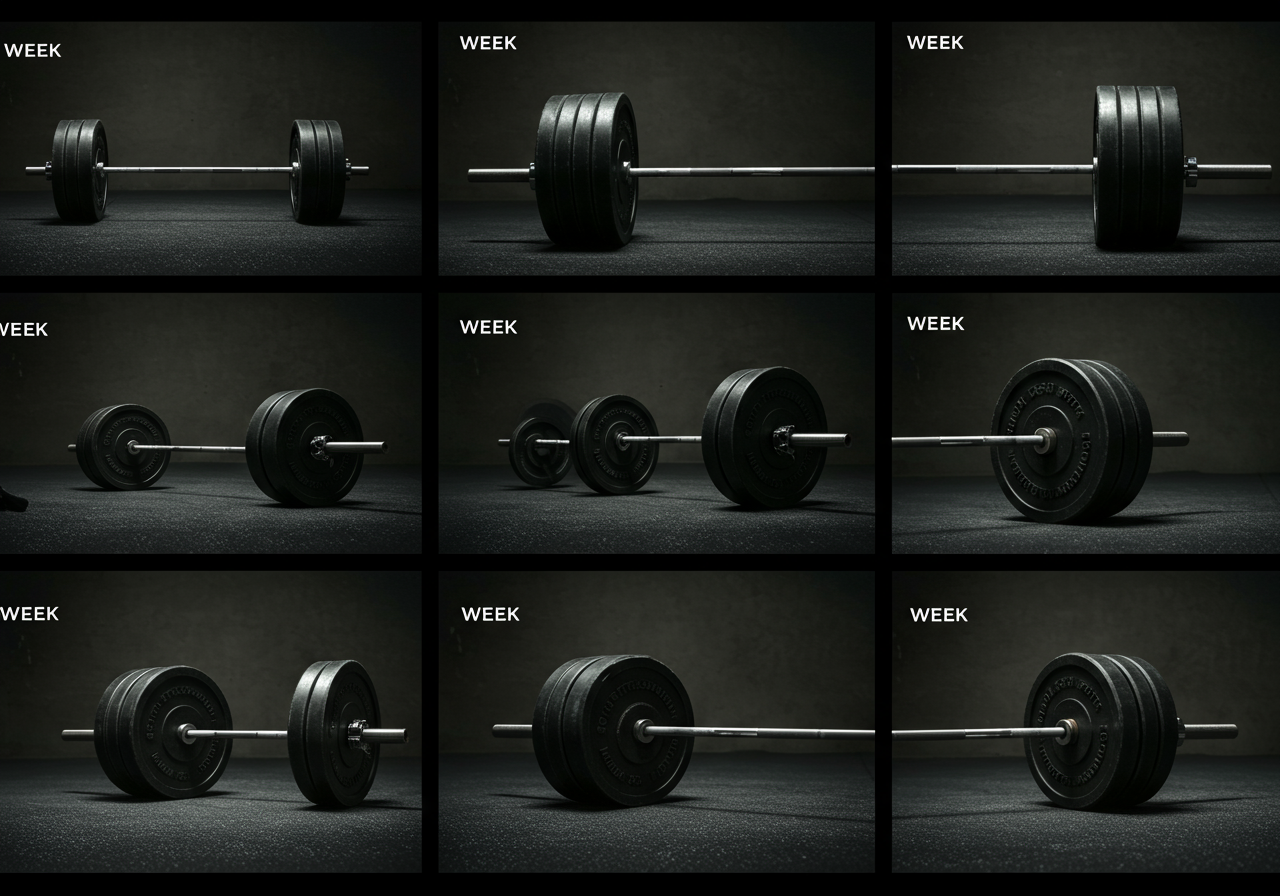
Use the outline below for squat, bench, and deadlift. Keep singles submaximal, build confidence, then taper to peak. Adjust the back-off volume by level.
Caption: 8-week peaking overview for main lifts.
Week 1: 4×5 @ ~70%; top single @ RPE 8 (smooth)

Week 2: 4×4 @ 72–75%; optional single @ RPE 8

Week 3: 5×3 @ 77–80%; single @ RPE 8–8.5

Week 4: 4×3 @ 80–82%; single @ RPE 8.5 (no grind)

Week 5: 3×2 @ 85–88%; single @ RPE 9 (confidence builder)

Week 6: 3×2 @ 87–90%; single @ RPE 9 (only if bar speed holds)

Week 7: 3–4 singles @ 90–93%; back-off 2×3 @ ~80%; taper most accessories

Week 8: Early week technique singles @ ~80%; 48–72 h later: Test day (3 attempts)
Beginner: Keep singles ≤ RPE 8.5. Use 2–3 back-off sets only. Train 3 days/week. Keep accessories simple (leg press, rows, planks). On test day, attempt plan: ~95% opener, small PR for second, optional third.
Intermediate: Maintain singles at RPE 8–9. Add pauses/tempo in Weeks 1–4 to sharpen technique, then drop them Weeks 5–8. 3–4 back-off sets early, 2 late. Consider a light Day 4 for bench.
Advanced: Monitor bar speed or video. If stable, include one overload single (wraps/slingshot/straps as appropriate) around Week 6 at ~100–105% sensation—never to failure. Reduce accessories sharply in Week 7. Extra rest days if joints ache.
Attempt selection (test day): Opener ≈ last solid triple × 0.92 (or 90–93% 1RM). Second: conservative PR (2–3%). Third: only if second moved clean, 1–3% jump.
Frequency Guidelines and Common Peaking Mistakes
Frequency & intensity: Most lifters thrive on 3–4 sessions/week. Rest 2–4 minutes for back-off sets; 4–6 minutes for heavy doubles/singles. Use RPE honesty—stop a set early if form slips.
Common mistakes: Overshooting singles, adding new exercises late in the peak, keeping accessories too heavy in Week 7, and cutting sleep during taper. I’ve made each mistake; the fix was simpler choices, earlier tapers, and stricter bedtimes.
Troubleshooting:
Plateau: cut back-off sets by one for a week, add 48 hours between heavy sessions, or switch a variation (e.g., paused deadlift) for 2 weeks.
Overuse pain: swap to SSB squat or close-grip bench; reduce ROM stress; add light tempo work; keep pain ≤2/10 during sets. If persistent, seek a clinician.
Low motivation: shorten sessions to top single + one back-off set; accessories optional. Momentum beats perfection.
Monitoring: Track top single RPE, back-off tonnage, and morning readiness (simple 1–5 scale). Optional HRV. If readiness tanks for 2–3 days, skip the single.
Recovery checklist: Protein daily, carbs around training, creatine consistently, hydration, and 7–9 hours sleep. In the final 72 hours, reduce fiber/fat pre-lift and prioritize easy-to-digest carbs.
Next steps: Save this plan, download the 8-week tracker (Google Sheet), and.
Medical Disclaimer: The information provided on this website is for informational and educational purposes only and is not intended as personal medical or health advice. The content, including text, graphics, and images, is not a substitute for professional medical advice, diagnosis, or treatment. Always seek the advice of your physician or other qualified healthcare provider…
Medical Disclaimer: The information provided on this website is for informational and educational purposes only and is not intended as personal medical or health advice. The content, including text, graphics, and images, is not a substitute for professional medical advice, diagnosis, or treatment. Always seek the advice of your physician or other qualified healthcare provider…
Medical Disclaimer: The information provided on this website is for informational and educational purposes only and is not intended as personal medical or health advice. The content, including text, graphics, and images, is not a substitute for professional medical advice, diagnosis, or treatment. Always seek the advice of your physician or other qualified healthcare provider…
Medical Disclaimer: The information provided on this website is for informational and educational purposes only and is not intended as personal medical or health advice. The content, including text, graphics, and images, is not a substitute for professional medical advice, diagnosis, or treatment. Always seek the advice of your physician or other qualified healthcare provider…
Medical Disclaimer: The information provided on this website is for informational and educational purposes only and is not intended as personal medical or health advice. The content, including text, graphics, and images, is not a substitute for professional medical advice, diagnosis, or treatment. Always seek the advice of your physician or other qualified healthcare provider…
Medical Disclaimer: The information provided on this website is for informational and educational purposes only and is not intended as personal medical or health advice. The content, including text, graphics, and images, is not a substitute for professional medical advice, diagnosis, or treatment. Always seek the advice of your physician or other qualified healthcare provider…