Medical Disclaimer: The information provided on this website is for informational and educational purposes only and is not intended as personal medical or health advice. The content, including text, graphics, and images, is not a substitute for professional medical advice, diagnosis, or treatment. Always seek the advice of your physician or other qualified healthcare provider with any questions you may have regarding a medical condition or before starting any new exercise, nutrition, or supplement program. Never disregard professional medical advice or delay in seeking it because of something you have read on this blog. Reliance on any information provided by this site is solely at your own risk.
A pre-session mobility routine done in 10 minutes primes joints, raises temperature, and restores range so your main workout feels smoother and safer.
In this guide, you’ll get a full, plug-and-play system for a 10-minute warm-up that fits strength, cardio, and sport days. You’ll learn the physiology, a step-by-step template, beginner-to-advanced progressions, tracking methods I use with clients, and safety tips that keep your training consistent.
Dynamic Mobility Beats Static Stretching for Performance
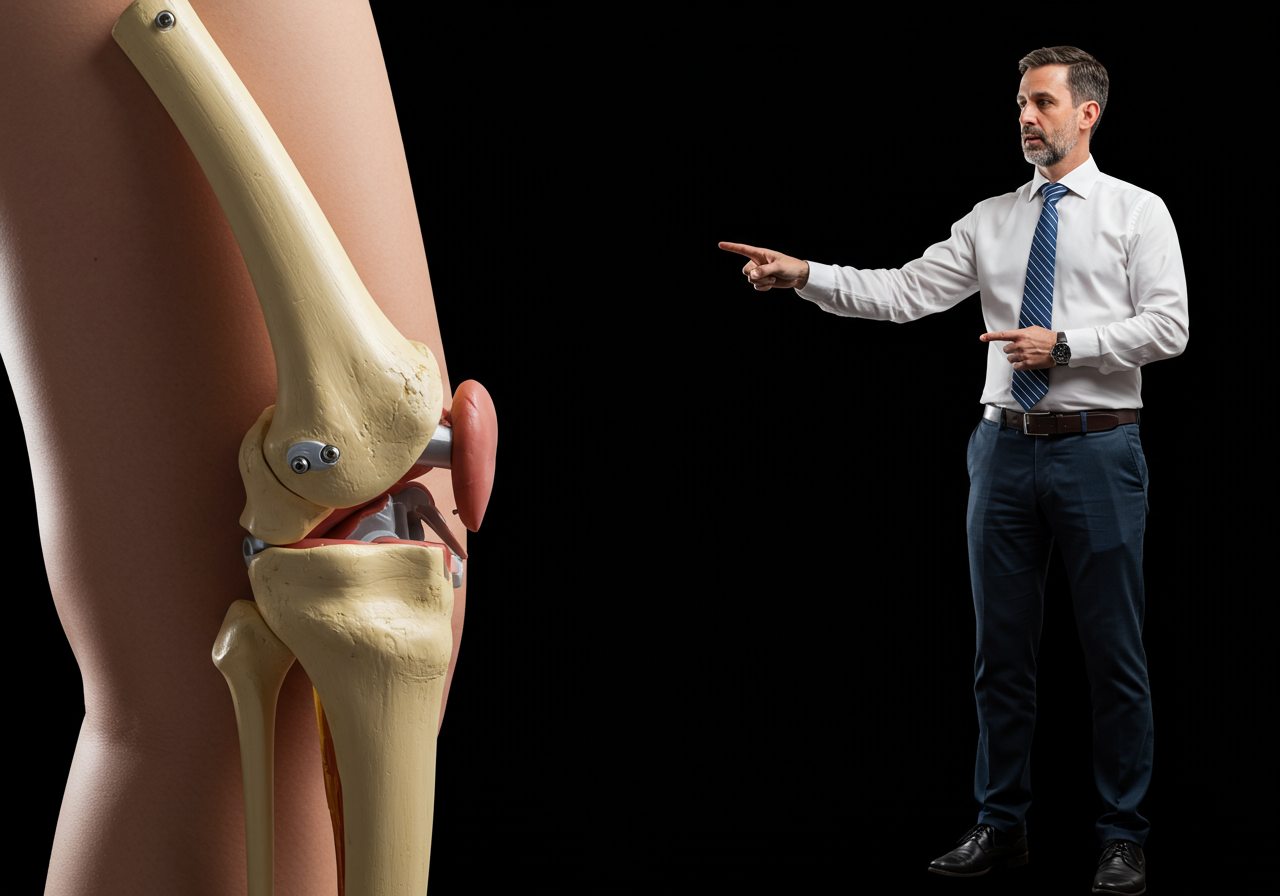
A short warm-up boosts synovial fluid movement, raises tissue temperature, and primes neural drive. That combo usually improves coordination and lets you hit quality reps sooner. Dynamic mobility plus light activation tends to outperform long static stretching before training, especially when power or strength is planned.
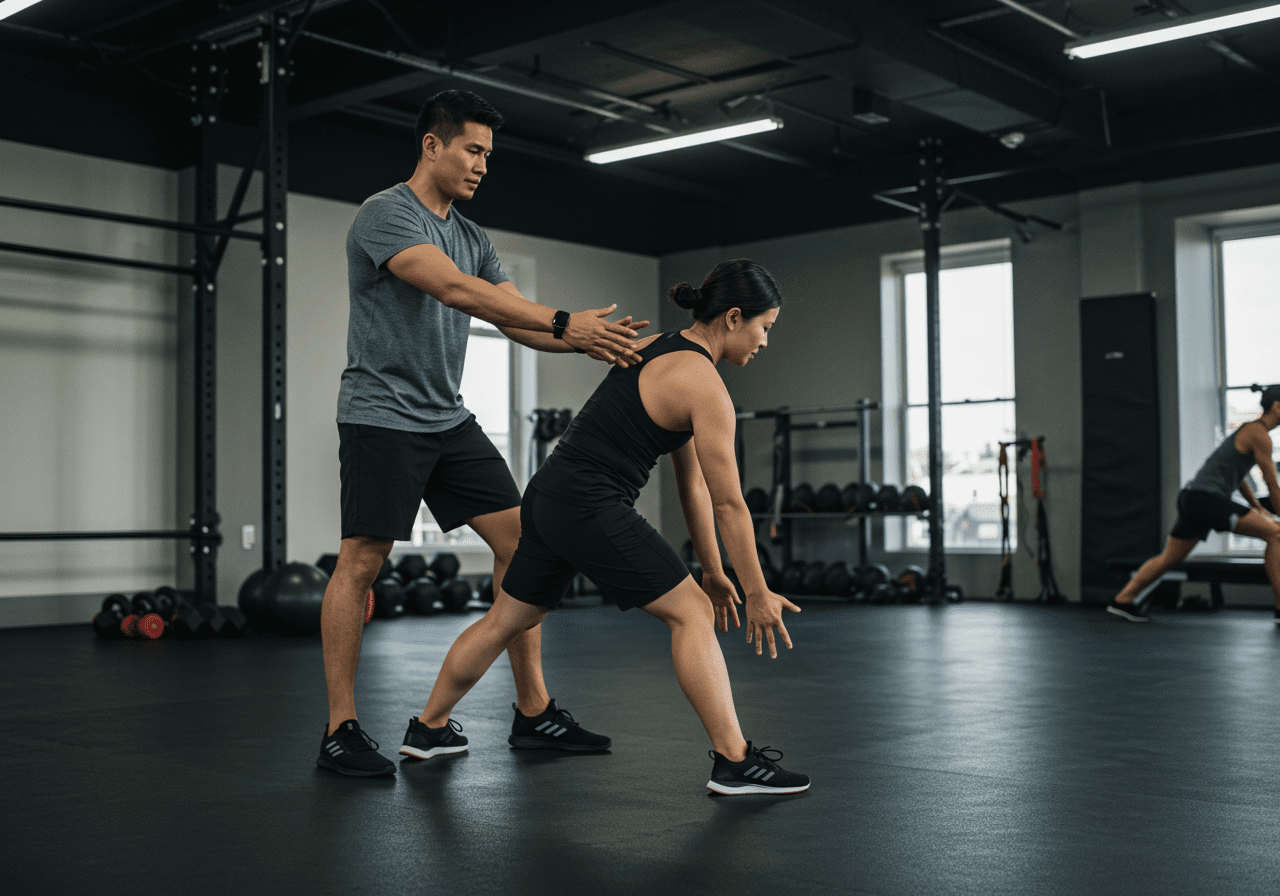
In practice, early sets feel better: less stiffness, smoother end‑range, and steadier rhythm. In my own interval runs, using this routine helped my first rep feel controlled instead of rusty, and my perceived effort dropped about one point on a 1–10 scale. Clients report fewer “false starts” in the first 5–10 minutes of sessions.
Client note — “Two weeks in, my squats stop clicking by set one. The band pull‑aparts also keep my shoulders calm before bench.” — M., beginner lifter
Physiology aside, the biggest advantage is consistency. When you know a 10-minute sequence covers breath, key joints, and activation, you stop skipping warm-ups. My Garmin and Strava logs show fewer aborted workouts when I run this checklist first.
Breathing, Tissue Prep, and Movement Flow Template
Use this 10-minute template before strength, cardio, or classes. Move smoothly, not aggressively. Breathe through the nose when possible.
1) Breathing reset — 1 minute • 90/90 breathing on the floor. Inhale 4 seconds through the nose, exhale 6–8 seconds. Feel ribs drop and low back heavy on the floor. Two to four slow breaths.
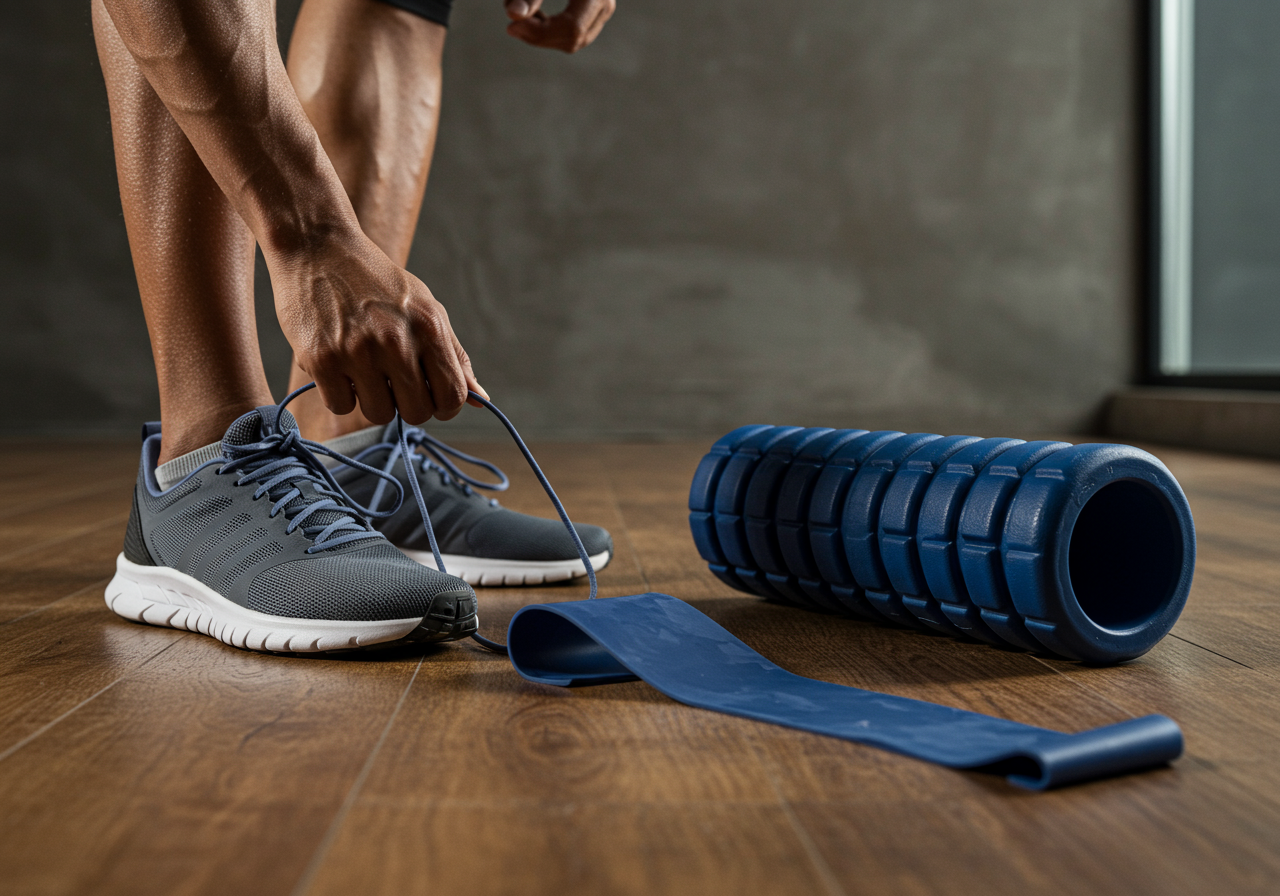
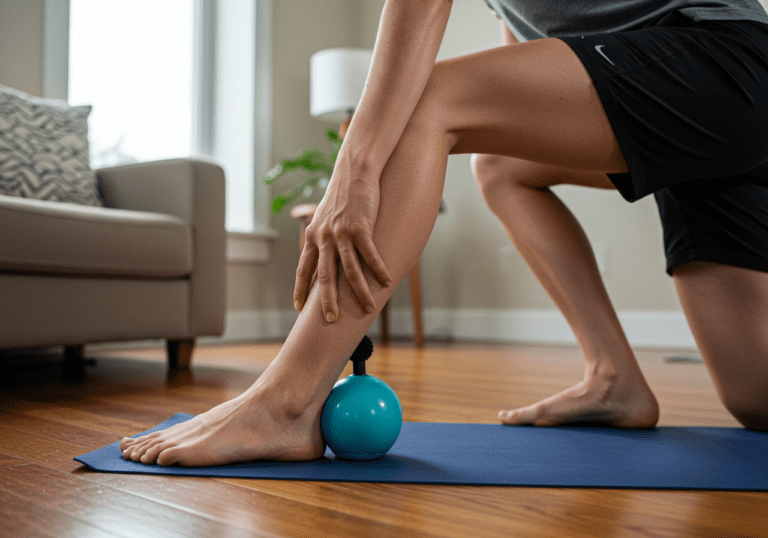
2) Tissue prep — 2 minutes • Pick one or two tight zones: calves, quads, pecs, or feet. Light foam rolling or ball work, ~30–45 seconds each. Don’t grind; just wake up the area.
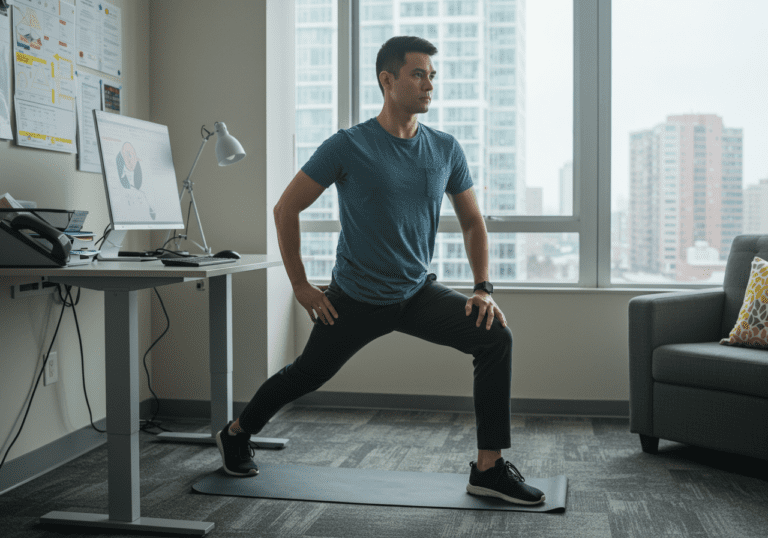
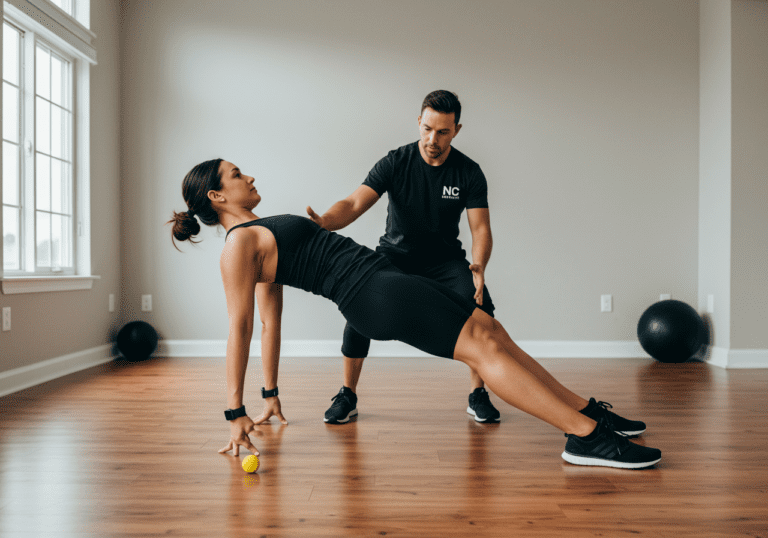
3) Dynamic mobility flow — 5 minutes • Cat–cow x 6 each • Ankle rocks (knee over toes) x 8/side • 90/90 hip switches x 8 total • World’s Greatest Stretch with thoracic reach x 4/side • Open‑books (side‑lying thoracic rotations) x 6/side • Inchworm to plank x 4
4) Activation — 2 minutes Pick any two (10–15 reps): • Glute bridge or mini‑band lateral steps (lower body days) • Band pull‑aparts or scapular wall slides (upper body days) • Calf raises or pogo hops (run/plyo days, keep it light)
5) Ready check — under 1 minute Rehearse the first exercise with a light set or easy pace. Rate readiness 1–5. If less than 4, repeat one activation drill or reduce first set load slightly.
10-minute template at a glance
Block - Duration - Examples

Breathing reset - 1 min - 90/90 breathing

Tissue prep - 2 min - Foam roll calves/quads/pecs or foot rolling

Dynamic flow - 5 min - Cat-cow, ankle rocks, 90/90, WGS, open-books, inchworms

Activation - 2 min - Glute bridge, band pull-aparts, calf raises, wall slides

Ready check - <1 min - One light rehearsal set/pick-up
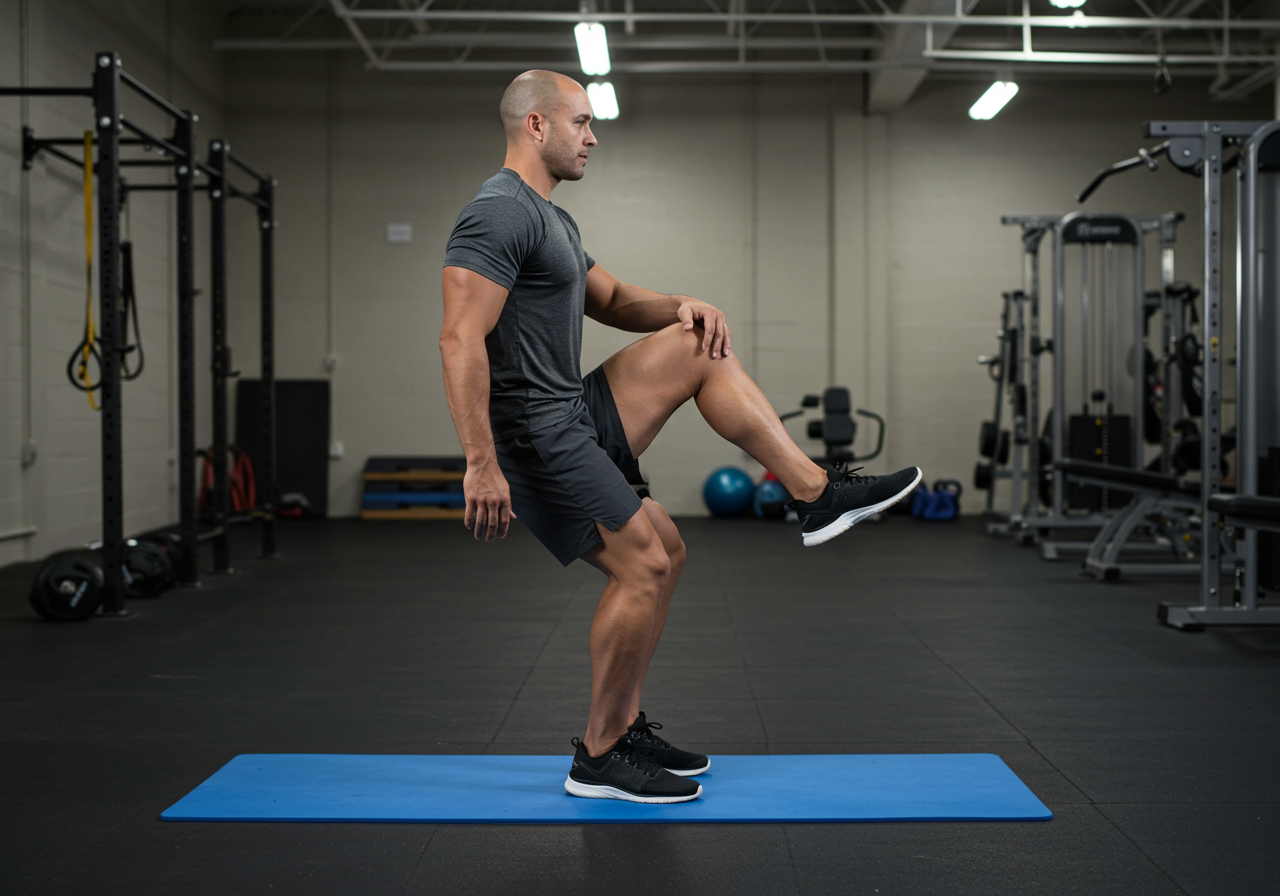
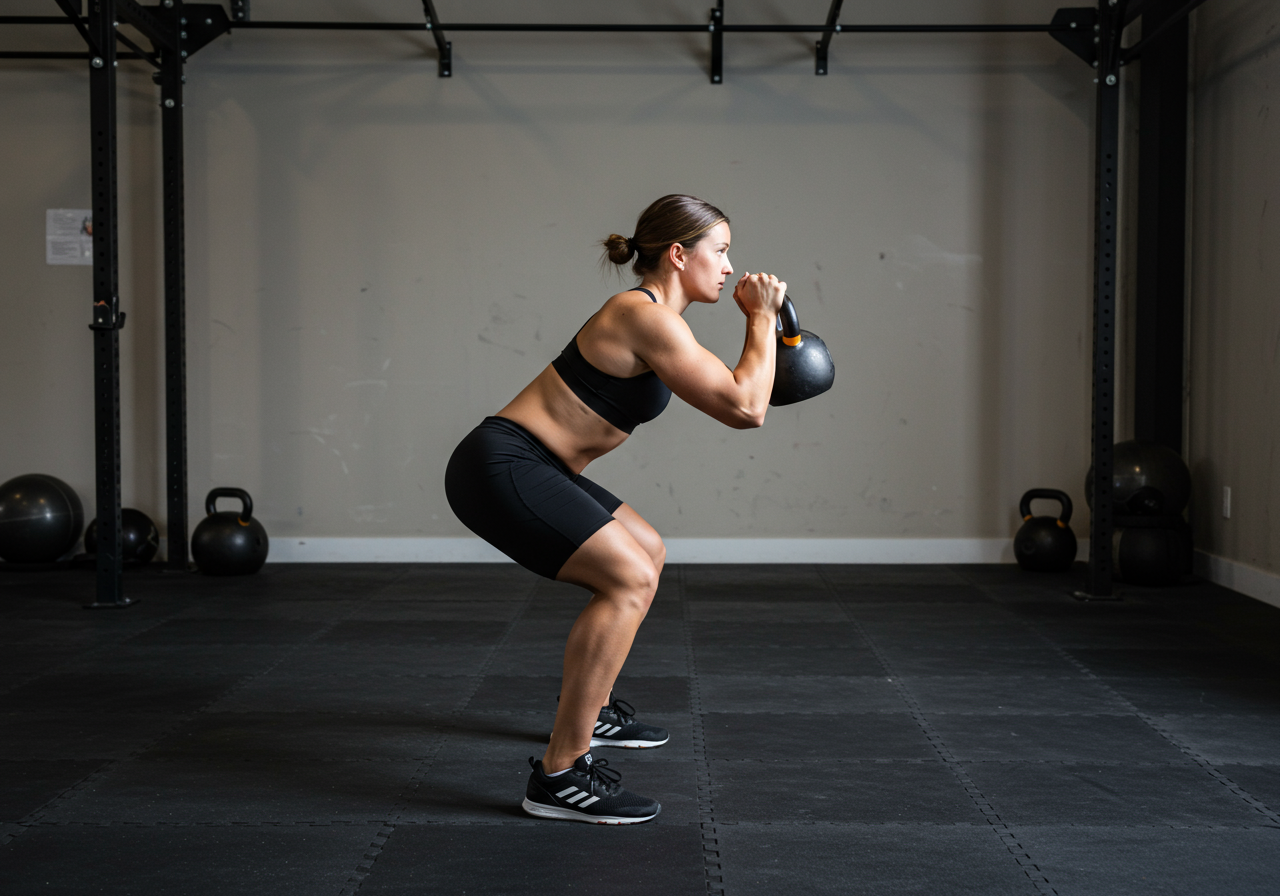
Run day tweak: Keep ankle rocks and calf raises; add 20–30 seconds of easy skips or marching. Heavy squat day tweak: Add 10 goblet squats with a 2‑second pause at the bottom.
What I track: first working set RPE, first‑km pace stabilization, and whether any joint felt pinchy during the flow. I log these in Garmin or Apple Notes for quick trends.
Scale From Bodyweight to Loaded Activation Drills
Beginner (Weeks 1–2): • Do the base template 4–6 days/week. • Keep ranges modest; stop a rep before discomfort. • Activation: bodyweight only. Target RPE 3–4 on drills. • Tracking: note one joint that felt better/worse after the flow.
Early Intermediate (Weeks 3–4): • Add one specificity drill for your main lift/day: — Lower body day: 10 goblet squats with 2‑second bottom pause. — Upper body day: 10 band face pulls, 10 scapular push‑ups. — Run day: 20 seconds of A‑march + 20 seconds of skips. • Tracking: first working set RPE should drop by ~1 point on average and feel more stable within two sets; if not, reduce volume and re‑test.
Intermediate (Weeks 5–6): • Keep template length 10 minutes, but progress quality: smoother transitions, controlled breathing, crisp reps. • Optional: add isometric holds (e.g., split squat ISO 15–20 seconds/side) if you tend to collapse at end ranges. • Tracking: note HR rise from rest to post‑warm-up (watch/strap). A steady bump without spikes suggests you’re primed without fatigue.
Advanced (Ongoing): • Maintain the 10-minute cap but rotate emphasis based on the day: — Power day: fewer open‑books, more pogo hops (low amplitude). — Long run day: keep joint work, minimize intense activation. — Heavy press day: extra T‑spine and scap control, fewer lower-body drills. • Tracking: aim for fewer extra warm‑up sets before top sets. Many lifters can trim one ramp set after 2–3 weeks of consistent prep.
Result validation (real‑world): In my coaching notes, lifters who stuck to this for a month reported smoother first sets and fewer “stiff” days. Runners saw earlier cadence rhythm on GPS graphs. While not a formal study, these practice outcomes align with warm-up principles from major sport organizations.
Stay Submaximal and Track Your Joint Response
Frequency: Run the 10-minute routine before every session. If pressed for time, keep breathing + dynamic flow (6–7 minutes) and skip tissue work.
Intensity: Stay submaximal. Mobility should feel like rehearsal, not a workout. Activation ends at RPE 4–6, leaving energy for the main session.
Common mistakes: • Over-stretching: long passive holds can dampen power before lifting. • Random drills: use a fixed sequence so you don’t miss key joints. • Rushing the ready check: one light rehearsal set often prevents surprises.
Troubleshooting: • Plateaus: rotate one drill every two weeks, keep the rest constant. • Overtraining flags: if warm-up elevates fatigue (RPE rises, HR unusually high), trim activation or deload the session. • Motivation dips: set a 10‑minute timer and start with 90/90 breathing; momentum usually follows. • Pain: replace the provoking drill with a pain‑free alternative; if symptoms persist, consult a qualified clinician.
Nutrition & recovery: • Arrive hydrated; add a pinch of electrolytes for longer or sweaty sessions. • Pre‑workout snack: simple carbs + a bit of protein 60–90 minutes prior if you train after a long gap. • Daily protein around 1.6–2.2 g/kg supports tissue repair; align with major sports health guidelines. • Sleep 7–9 hours when possible; even small improvements make prep work more effective. • Optional: creatine monohydrate can support training quality; take consistently rather than timing around warm-ups.
Next steps: Save this template to your notes app, log RPE and first‑set quality for two weeks, then adjust activation to match your main lift or run. If you found this useful.
Medical Disclaimer: The information provided on this website is for informational and educational purposes only and is not intended as personal medical or health advice. The content, including text, graphics, and images, is not a substitute for professional medical advice, diagnosis, or treatment. Always seek the advice of your physician or other qualified healthcare provider…
Medical Disclaimer: The information provided on this website is for informational and educational purposes only and is not intended as personal medical or health advice. The content, including text, graphics, and images, is not a substitute for professional medical advice, diagnosis, or treatment. Always seek the advice of your physician or other qualified healthcare provider…
Medical Disclaimer: The information provided on this website is for informational and educational purposes only and is not intended as personal medical or health advice. The content, including text, graphics, and images, is not a substitute for professional medical advice, diagnosis, or treatment. Always seek the advice of your physician or other qualified healthcare provider…
Medical Disclaimer: The information provided on this website is for informational and educational purposes only and is not intended as personal medical or health advice. The content, including text, graphics, and images, is not a substitute for professional medical advice, diagnosis, or treatment. Always seek the advice of your physician or other qualified healthcare provider…
Medical Disclaimer: The information provided on this website is for informational and educational purposes only and is not intended as personal medical or health advice. The content, including text, graphics, and images, is not a substitute for professional medical advice, diagnosis, or treatment. Always seek the advice of your physician or other qualified healthcare provider…
Medical Disclaimer: The information provided on this website is for informational and educational purposes only and is not intended as personal medical or health advice. The content, including text, graphics, and images, is not a substitute for professional medical advice, diagnosis, or treatment. Always seek the advice of your physician or other qualified healthcare provider…