Medical Disclaimer: The information provided on this website is for informational and educational purposes only and is not intended as personal medical or health advice. The content, including text, graphics, and images, is not a substitute for professional medical advice, diagnosis, or treatment. Always seek the advice of your physician or other qualified healthcare provider with any questions you may have regarding a medical condition or before starting any new exercise, nutrition, or supplement program. Never disregard professional medical advice or delay in seeking it because of something you have read on this blog. Reliance on any information provided by this site is solely at your own risk.
Intermediate strength programming starts when linear gains fade and your plan shifts to weekly undulation and planned deloads.
In this guide, you’ll learn a clear path to move beyond beginner training: how to set weekly volume, pick the right split, adjust intensity with RPE, add accessories that fix weak links, and validate your results without guesswork.
Why Volume, Intensity, and Recovery Drive Adaptation
Once novice gains slow, your body needs smarter stress to keep adapting. Progress becomes less about adding five pounds each session and more about balancing volume, intensity, and recovery across the week. This is where undulating rep ranges, targeted accessories, and scheduled deloads shine.
In practice and in peer‑reviewed research, strength improves reliably when weekly hard sets per muscle (roughly 8–16 for most) are paired with quality effort (RPE 7–9) and adequate sleep and protein. Tendons and connective tissue also appreciate gradual load changes, reducing overuse risk. I’ve watched many clients lift better the moment we stop chasing PRs every workout and start managing fatigue intentionally.
Client note: “Switching to RPE and weekly rep changes felt safer and oddly more productive. My lifts stopped stalling, and my shoulders finally calmed down.” — K., desk worker and new parent
Assess Readiness, Choose Split, Program Smart Volume
Follow this simple path to upgrade your training without getting lost in jargon.
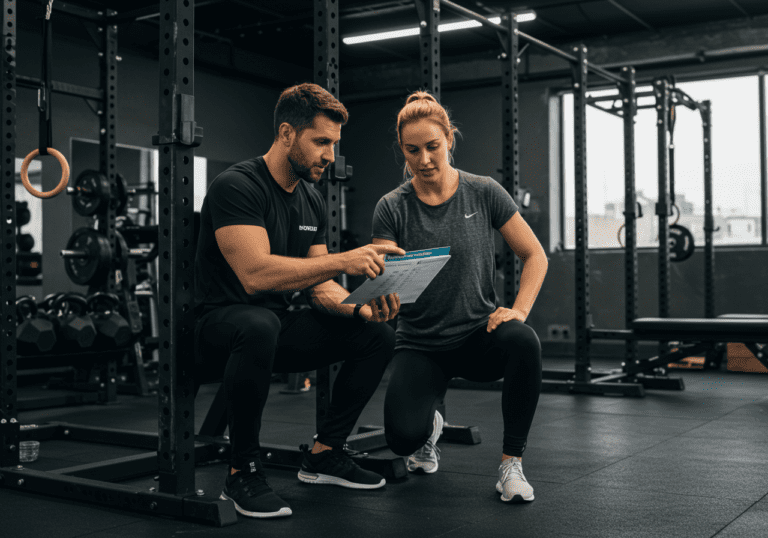
Assess readiness (10–15 minutes): Warm up, then perform one top set at RPE 8 for each main pattern—squat, hinge, horizontal press, vertical press, and a pull. Use a rep estimator (e.g., RIR-based) to back-calc working loads for the coming weeks.
Pick your weekly split: If you train 3 days, choose full-body (Mon/Wed/Fri). If you train 4 days, use Upper/Lower (Mon/Tue/Thu/Fri). Busy week? Two full-body sessions plus one optional short accessory day still works.
Set your volume targets: Start at 8–12 hard sets per muscle per week, distributed across 2–3 sessions. Keep 1–3 reps in reserve (RIR) on most sets. Push a top set to RPE 8 on big lifts once per week.
Use weekly undulation: Rotate rep ranges across sessions—e.g., Day 1 strength (3–5 reps), Day 2 hypertrophy (6–10 reps), Day 3 power/technique (2–4 reps with submaximal load and crisp speed).
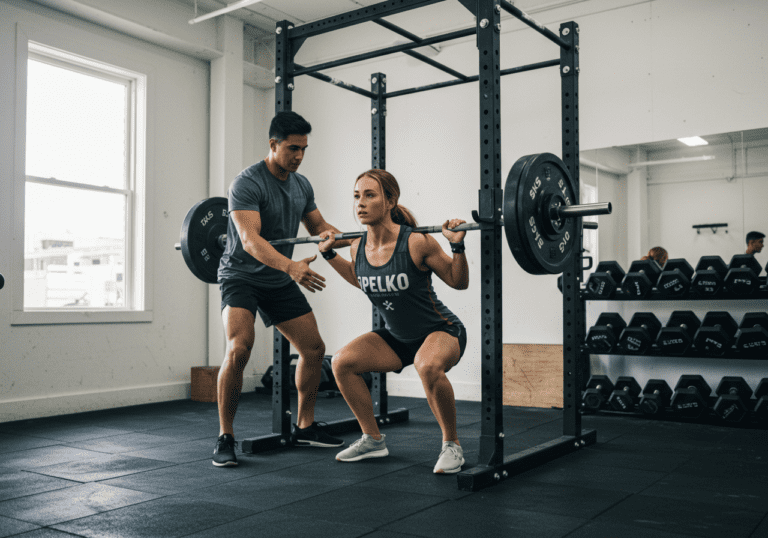
Choose cornerstone lifts: Squat (back or front), hinge (deadlift or RDL), horizontal press (bench or push‑up progressions), vertical press (overhead press), pull (row or pull‑up). Add accessories to shore up weak links: single‑leg work, rear‑delt/rotator cuff, hamstring curls, calf raises, anti‑rotation core, and loaded carries.
Session layout (45–70 minutes): Warm‑up — 5 min easy movement + 3 specific ramp sets. Main lift — 3–5 hard sets. Secondary lift — 3–4 sets. Accessories — 2–3 exercises, 2–3 sets each. Finish with 5 min mobility or breathing.
Intensity and rest: Main lifts at RPE 7–9; accessories at RPE 7–8. Rest 2–3 min on big lifts, 60–90 sec on accessories. Tempo: control the lowering; drive up with intent.
Conditioning to support recovery: 1–2 x 20–30 min Zone 2 (easy nasal-breath pace) on non-lifting days or after accessories. Keep legs light if deadlifting heavy the next day.
Track and adjust: Log sets, reps, RPE, and notes (apps like Strong, Hevy, or a spreadsheet). For conditioning and sleep, I use Garmin for HR and MyFitnessPal for nutrition. If two sessions in a row feel like RPE is higher at the same load, reduce next session’s volume by 20%.
Nutrition and recovery basics: Protein 1.6–2.2 g/kg/day, carbs around training, veggies and fruit daily, creatine monohydrate 3–5 g/day, caffeine timed pre‑workout if tolerated, 7–9 hours of sleep. Hydrate with a pinch of electrolytes on hot days.
Real-world snapshot: My last block used a 4‑day Upper/Lower split, 55–65 minutes per session. Top sets around RPE 8, back‑off sets 2×6–8 at RPE 7–8. I added a 25‑minute Zone 2 bike ride twice weekly (heart rate ~60–70% max), which helped me recover between heavy squat/deadlift days.
12-Week Bridge from Novice to Structured Cycling
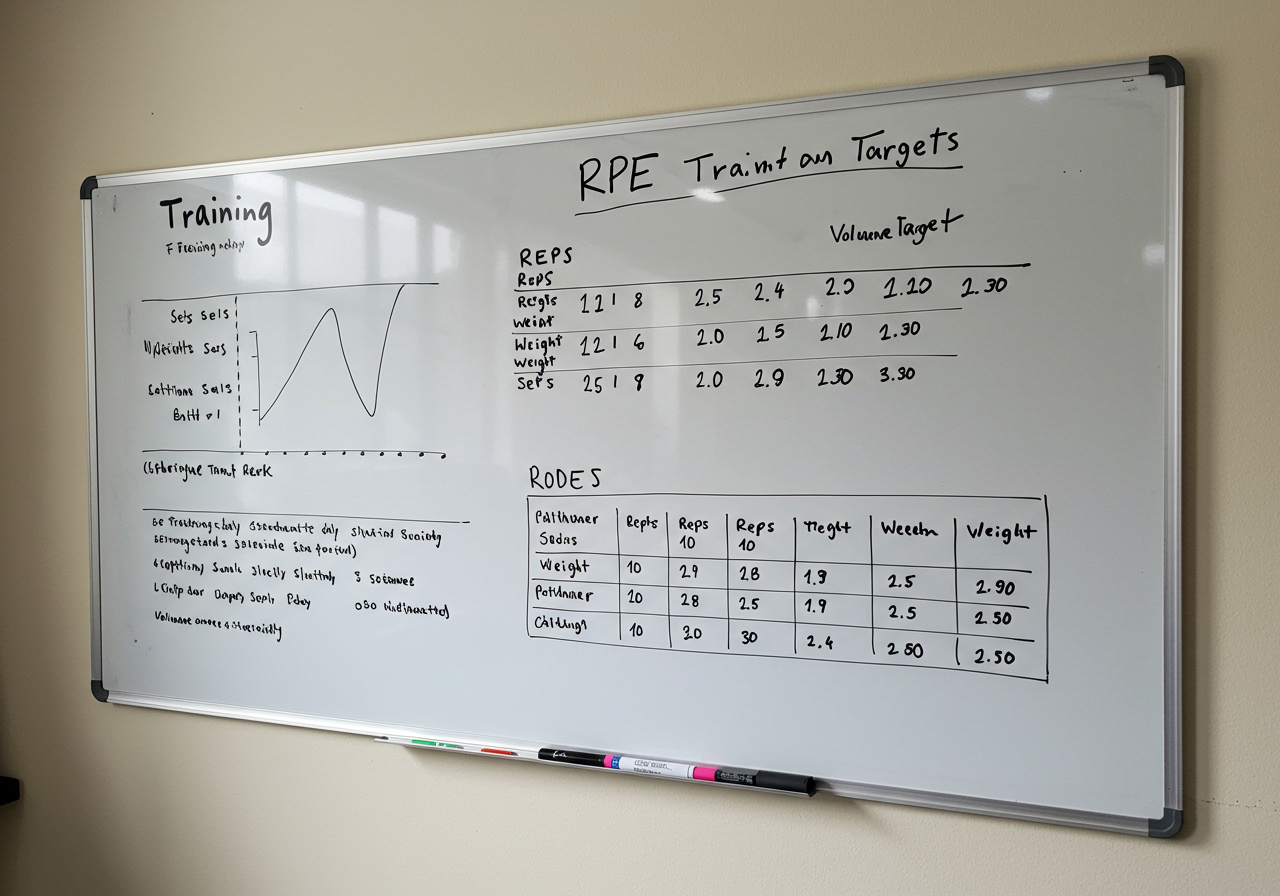
Use this 12‑week bridge to evolve from linear progress into structured weekly cycling. Retest and refine after each block.
Caption: 12‑week bridge from novice linear gains to structured intermediate training.
Weeks 1–2 (Foundation): Full‑body 3 days; main lifts 3×6–8 @ RPE 7; accessories 2×10–12; learn RIR; Zone 2 once/week.

Weeks 3–4 (Build): Undulate reps; Day 1 strength 4×5 @ RPE 8, Day 2 hypertrophy 3×8 @ RPE 7, Day 3 technique 5×3 speed @ RPE 6–7.

Week 5 (Overreach light): Add 1 set to main lifts; keep RPE caps; accessories steady; short tempo pauses on weak ranges.

Week 6 (Deload): Cut volume ~40–50%; keep movement quality; easy Zone 2 twice/week; extra sleep focus.

Weeks 7–8 (Intensify): Main lifts 5×3–4 @ RPE 8–9; accessories 3×8–12 @ RPE 7–8; pull‑ups/rows emphasized.

Weeks 9–10 (Hypertrophy bias): 3–4 sets of 6–10 @ RPE 7–8 across main/secondary lifts; single‑leg volume up; carries added.

Week 11 (Taper): Reduce sets on big lifts by ~30%; maintain speed and technique; brief priming singles @ RPE 6–7.

Week 12 (Re‑test): Top set @ RPE 9 or conservative 1–3RM estimation; compare to Week 1; log notes, adjust next block.
By level:
Beginner track: Favor full‑body 3 days; keep RIR 2–3; focus on consistent technique and bracing; minimal exercise variety.
Intermediate track: Upper/Lower 4 days or full‑body 3; rotate rep ranges weekly; add targeted accessories; maintain one easy conditioning session.
Advanced preview: Two heavy exposures per lift across the week (intensity and volume days), microcycle fatigue management, and strategic specialty bars/variations for plateau busting.
Progress checks: Track estimated 1RM from rep‑max formulas, bar speed if you have a velocity device, and a simple readiness score (sleep hours + stress notes). When in doubt, cap a set early and win the week.
Manage Frequency, Deload Smart, Troubleshoot Plateaus Fast
Frequency: Start with 3–4 lifting days. Intensity: Most work at RPE 7–8; save RPE 9 for a top set weekly. Deload every 4–8 weeks or sooner if life stress climbs.
Common mistakes: Chasing PRs every session, adding too many accessories, skipping warm‑ups, ignoring sleep and protein, and turning conditioning into extra leg day.
Troubleshooting quick hits:
Plateau: Hold load, add a set (or an extra back‑off) for 2 weeks, then push load again. If joints ache, reduce sets and emphasize technique speed.
Overreaching signs: Elevated morning HR, poor sleep, unusually high RPE. Solution: Cut volume 30–50% for 5–7 days; keep movement crisp.
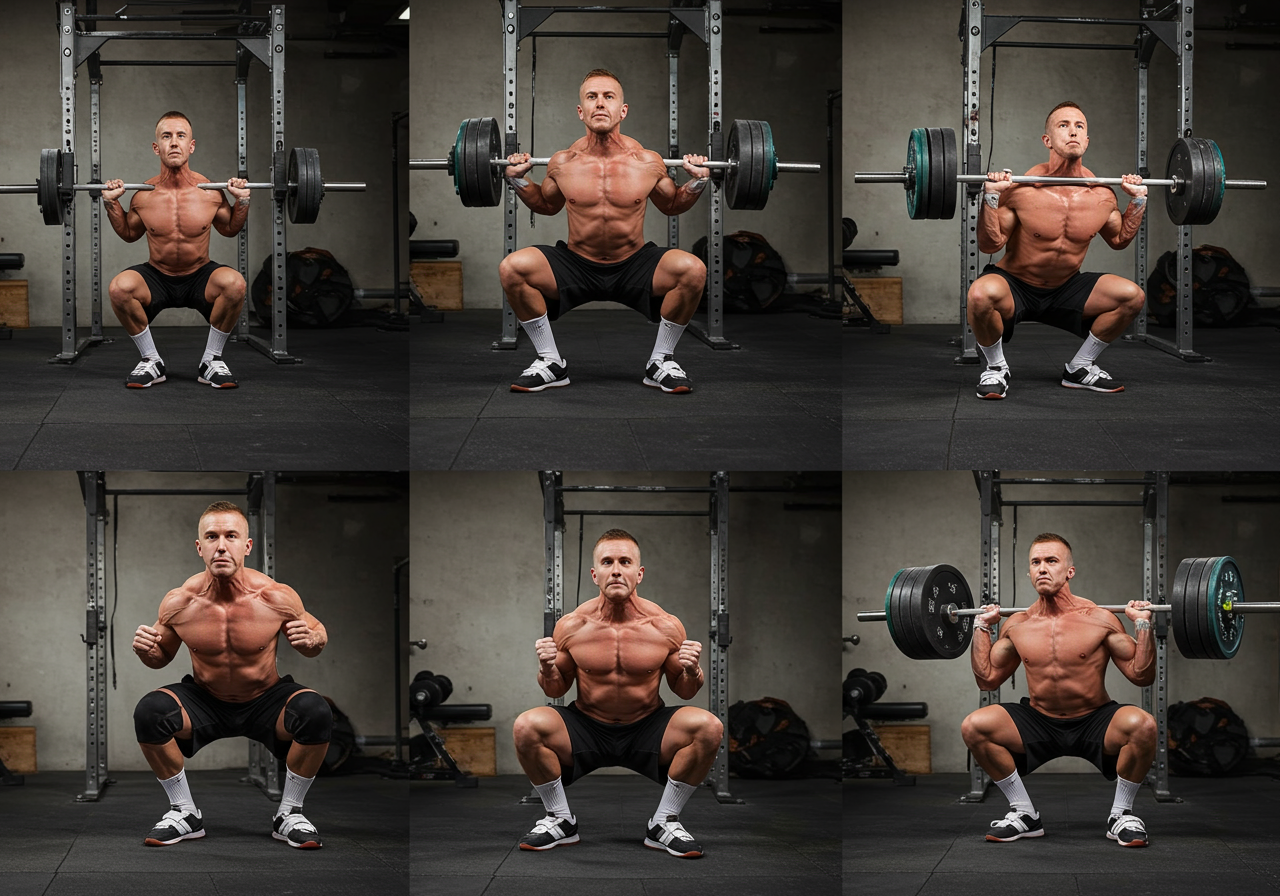
Motivation dip: Swap one variation you enjoy (e.g., front squat for back squat), train with a friend, or shorten sessions to 45 minutes and microdose accessories.
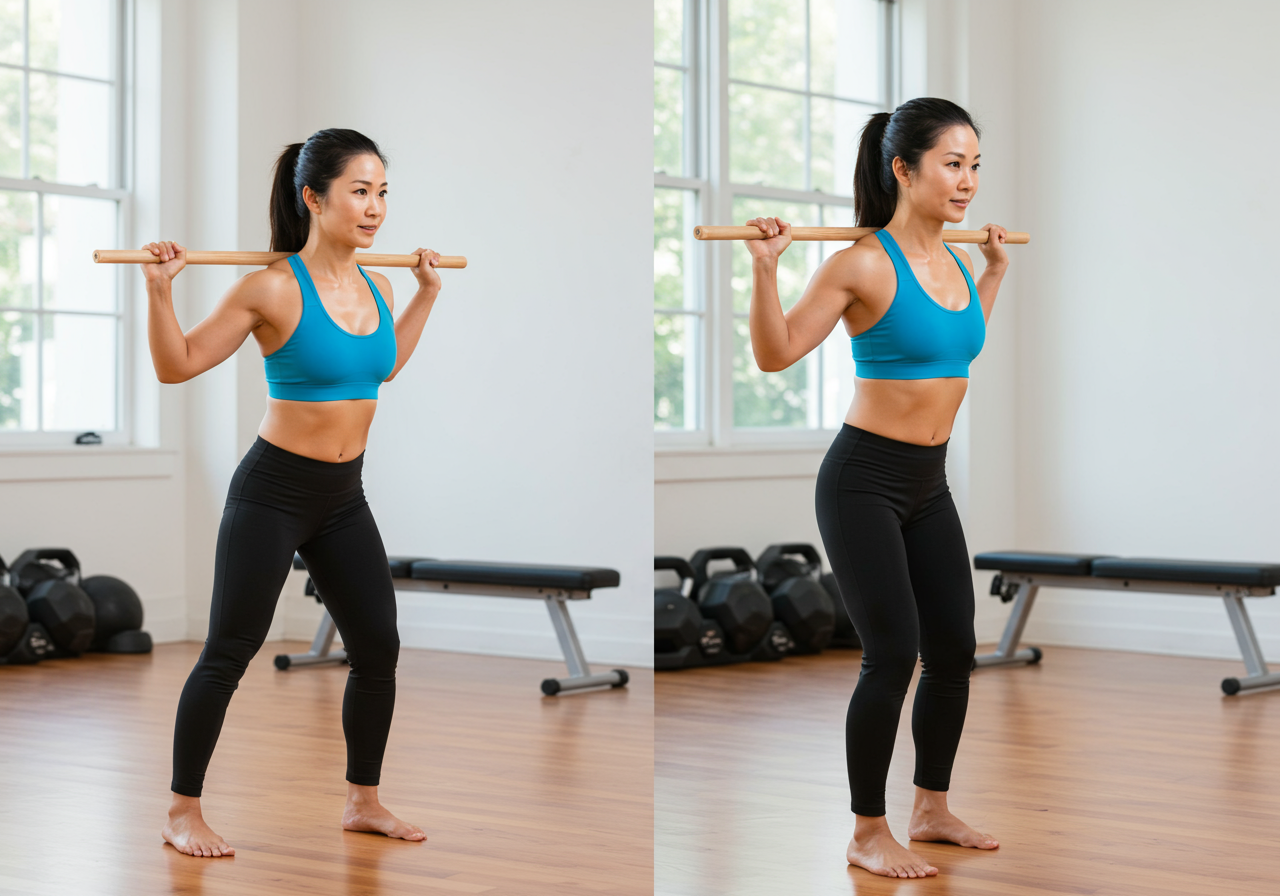
Minor aches: Use close-stance high‑bar squats, paused bench, or trap‑bar pulls temporarily; keep RIR 3–4 until symptoms calm. Seek professional care if pain persists.
Recovery and nutrition: Aim for protein at each meal, plan carbs around training, hydrate, and keep a consistent sleep schedule. Creatine is a simple, well‑supported add‑on. I log food in MyFitnessPal and skim weekly averages rather than obsessing daily.
Next steps: Save this framework, run the 12‑week bridge, and retest.
Medical Disclaimer: The information provided on this website is for informational and educational purposes only and is not intended as personal medical or health advice. The content, including text, graphics, and images, is not a substitute for professional medical advice, diagnosis, or treatment. Always seek the advice of your physician or other qualified healthcare provider…
Medical Disclaimer: The information provided on this website is for informational and educational purposes only and is not intended as personal medical or health advice. The content, including text, graphics, and images, is not a substitute for professional medical advice, diagnosis, or treatment. Always seek the advice of your physician or other qualified healthcare provider…
Medical Disclaimer: The information provided on this website is for informational and educational purposes only and is not intended as personal medical or health advice. The content, including text, graphics, and images, is not a substitute for professional medical advice, diagnosis, or treatment. Always seek the advice of your physician or other qualified healthcare provider…
Medical Disclaimer: The information provided on this website is for informational and educational purposes only and is not intended as personal medical or health advice. The content, including text, graphics, and images, is not a substitute for professional medical advice, diagnosis, or treatment. Always seek the advice of your physician or other qualified healthcare provider…
Medical Disclaimer: The information provided on this website is for informational and educational purposes only and is not intended as personal medical or health advice. The content, including text, graphics, and images, is not a substitute for professional medical advice, diagnosis, or treatment. Always seek the advice of your physician or other qualified healthcare provider…
Medical Disclaimer: The information provided on this website is for informational and educational purposes only and is not intended as personal medical or health advice. The content, including text, graphics, and images, is not a substitute for professional medical advice, diagnosis, or treatment. Always seek the advice of your physician or other qualified healthcare provider…