Medical Disclaimer: The information provided on this website is for informational and educational purposes only and is not intended as personal medical or health advice. The content, including text, graphics, and images, is not a substitute for professional medical advice, diagnosis, or treatment. Always seek the advice of your physician or other qualified healthcare provider with any questions you may have regarding a medical condition or before starting any new exercise, nutrition, or supplement program. Never disregard professional medical advice or delay in seeking it because of something you have read on this blog. Reliance on any information provided by this site is solely at your own risk.
A nutrition quick-start guide is the simplest way to fuel training and feel better within two weeks. Quick answer: set calories, hit protein, use the plate method, train four to five days, walk daily, sleep well, and track simply.
In this plan, you’ll build a beginner-friendly food guide and a complete training routine—cardio, strength, mobility, and daily movement. You’ll also get clear progressions and simple tracking so you can adjust with confidence.
Align Food with Workouts for Better Recovery
New exercisers often train hard but eat inconsistently. Aligning food with workouts supports energy, recovery, and steady habits. Protein helps muscle repair, carbs refill glycogen for cardio and lifting, and overall calories influence body composition. Sleep, hydration, and stress control amplify these effects.
In practice, beginners who pair simple meal structure with two to three strength days and easy cardio report better energy, fewer appetite swings, and more consistent sessions. Peer-reviewed guidance also favors progressive overload, adequate protein, and sufficient sleep for reliable early progress.
From my coaching notes: clients who adopted a plate method and logged protein most days found recovery improved and snacking dropped. One beginner told me, “I stopped guessing. Meals felt automatic, and my workouts finally clicked.”
Set Calories, Hit Protein, Build Simple Plates
Step 1 — Set a simple calorie target. Estimate maintenance with a quick rule, then adjust after two weeks: bodyweight (kg) × 22–28 ≈ maintenance kcal. For gentle fat loss, start around −300 kcal; for slow muscle gain, +150–250 kcal. Reassess using weekly averages.
Step 2 — Use easy macros. Protein: 1.6–2.2 g/kg/day. Carbs: 3–5 g/kg/day (higher on training days). Fats: fill the remainder, often 0.8–1.0 g/kg. These are common sport-nutrition ranges; adjust to appetite and performance.
Step 3 — Build plates, not stress. The plate method: half colorful produce; one-quarter lean protein; one-quarter quality carbs; add a thumb of healthy fats. Examples: salmon + quinoa + salad; chicken tacos + beans + slaw; tofu stir-fry + rice + veggies.
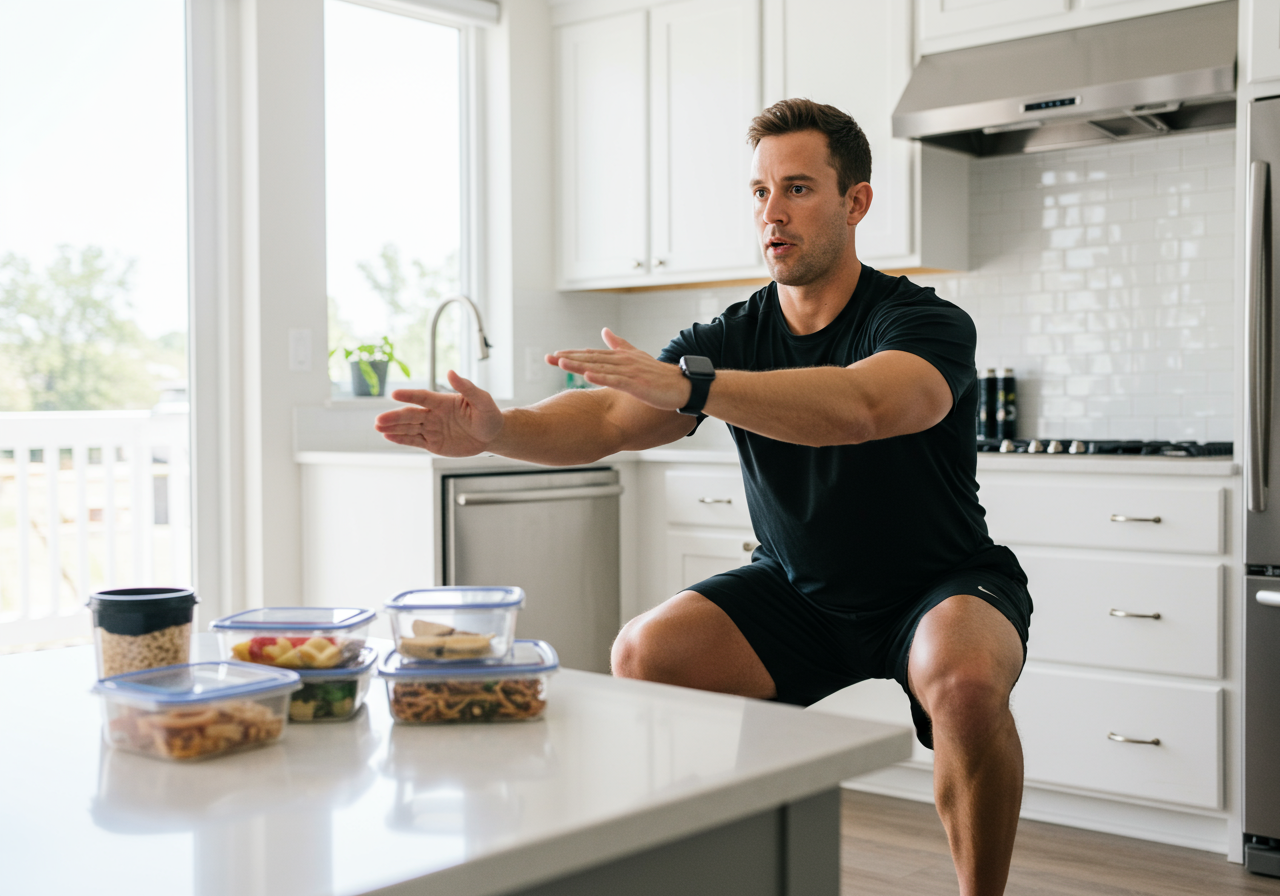
Step 5 — Meal prep in 60–90 minutes. Cook a sheet pan of protein, a pot of rice or potatoes, and wash/chop veggies. Portion two meals/day in containers; leave room for flexible dinners.
Step 6 — Plan your beginner training week. – Strength (2–3 days): full-body sessions. Do 3 sets of 8–12 reps at RPE 6–7 (2–4 reps in reserve). Movements: squat (goblet), hinge (hip hinge or Romanian deadlift), push (push-up or dumbbell press), pull (row), carry (farmer carry), core (dead bug or plank). – Cardio Zone 2 (2 days): 30–45 minutes at conversational pace. Use the talk test; heart rate feels easy to moderate. – Optional intervals (1 day): 6 × 1 minute hard (RPE 8) with 2 minutes easy between. Skip if recovering poorly. – Mobility (5–7 days): 10 minutes of hips, thoracic spine, and ankles. Add breathing drills post-workout. – Daily movement: 7–10k steps as a gentle target, adjusted to lifestyle.
Step 7 — Fuel around training. 1–2 hours pre-workout: a palm of protein and a cupped hand of carbs (e.g., yogurt + fruit, or turkey + rice). After training: protein plus carbs within a few hours. Hydration: sip water during the day; add a pinch of salt in hot climates or sweaty sessions.
Step 8 — Track lightly. Food: MyFitnessPal or Cronometer for two weeks to calibrate portions, then switch to plate visuals if preferred. Training: Strong app or a paper log for sets, reps, and RPE. Cardio: Strava, Garmin, or Fitbit for duration and heart rate. Body metrics: weigh 3×/week, track waist at the navel weekly, and take front/side photos every two weeks. Use averages, not single data points.
Step 9 — Keep supplements minimal. Optional basics: whey or plant protein; creatine monohydrate 3–5 g/day; vitamin D if deficient. Check with a healthcare professional before starting supplements.
Twelve-Week Pathway from Foundation to Performance
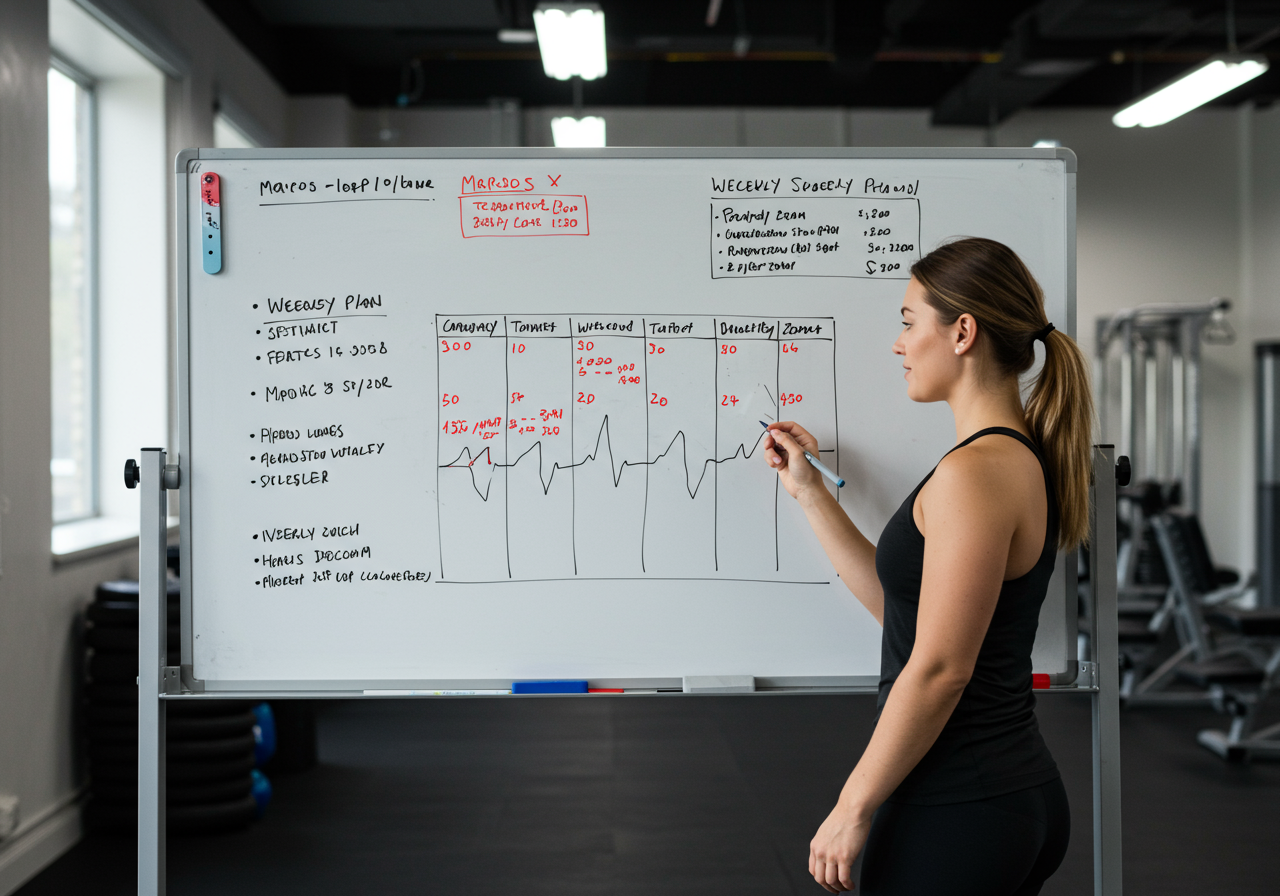
Caption: 12-week pathway overview — adjust based on recovery and schedule.
Week 1–4: Foundations — Strength 2–3 days @ RPE 6–7; Cardio Z2 2 days 30–40 min; Intervals optional; Mobility 10 min/day; Nutrition: protein baseline and plate method; Track steps and sleep. Week 5–8: Build — Strength 3 days, add load when all sets feel ≤ RPE 7 twice in a row; Cardio Z2 35–50 min; Intervals 1 day (progress to 8 × 1 min); Nutrition: adjust calories ±100–200 based on weekly averages; Carbs slightly higher on lift days. Week 9–12: Perform — Strength 3 days, one heavier day (RPE 7–8) with lower reps; Cardio Z2 40–60 min; Intervals 1 day (4 × 2–3 min); Nutrition: keep protein steady, refine pre/post-workout carbs; Consider a light deload if fatigue rises.
Loads and reps: When you complete all sets at the top of the rep range with RPE ≤7 for two sessions, add 2–5% load or one rep next time.
Cardio progression: First extend duration in Zone 2, then add a short interval session. A good sign of progress is the same pace at a lower heart rate.
Nutrition tweaks: If weight stalls for 2–3 weeks and fat loss is the goal, reduce ~100 kcal/day or add 10 minutes to two cardio sessions. For muscle gain, add a cupped-hand of carbs to two meals/day.
Troubleshooting: Plateau: check sleep, steps, and protein first. Overreaching signs: persistent soreness, elevated resting HR, irritability—insert an easy week. Motivation dips: schedule shorter sessions, use the 5‑minute rule, and train with a friend or group.
Train Smart, Recover Well, Monitor Your Progress
Frequency and intensity: Most beginners do well with 4–5 weekly sessions total. Keep most lifting at RPE 6–7 and most cardio in Zone 2. Push harder only when recovery, mood, and sleep are stable.
Recovery: Aim for 7–9 hours of sleep. Keep hydration steady and include produce at most meals. Schedule a lighter week every 4–8 weeks or after stressful life events.
Form and safety: Film a couple of sets to check technique or consult a coach. If pain persists beyond typical muscle soreness, scale range of motion or substitute a similar pattern (e.g., split squat for back squat) and seek professional guidance if needed.
Monitoring: Weekly review: look at average body weight, waist, step count, session RPEs, and mood. If two or more drift the wrong way, adjust food, sleep, or volume before chasing complexity.
Common mistakes: Overhauling everything at once; skipping protein at breakfast; turning every run into a race; adding too much load too soon; underestimating stress and sleep. Keep it boringly consistent.
Next steps: Keep the template for 12 weeks, then reassess goals. If you want more structure, download my printable checklist and two-week meal builder and import the plan into Strong and Strava. You’ll build momentum with less guesswork.
Client note: “The plate visuals removed calorie anxiety. I trained three days a week, walked most days, and felt in control instead of overwhelmed.”
Medical Disclaimer: The information provided on this website is for informational and educational purposes only and is not intended as personal medical or health advice. The content, including text, graphics, and images, is not a substitute for professional medical advice, diagnosis, or treatment. Always seek the advice of your physician or other qualified healthcare provider…
Medical Disclaimer: The information provided on this website is for informational and educational purposes only and is not intended as personal medical or health advice. The content, including text, graphics, and images, is not a substitute for professional medical advice, diagnosis, or treatment. Always seek the advice of your physician or other qualified healthcare provider…
Medical Disclaimer: The information provided on this website is for informational and educational purposes only and is not intended as personal medical or health advice. The content, including text, graphics, and images, is not a substitute for professional medical advice, diagnosis, or treatment. Always seek the advice of your physician or other qualified healthcare provider…
Medical Disclaimer: The information provided on this website is for informational and educational purposes only and is not intended as personal medical or health advice. The content, including text, graphics, and images, is not a substitute for professional medical advice, diagnosis, or treatment. Always seek the advice of your physician or other qualified healthcare provider…
Medical Disclaimer: The information provided on this website is for informational and educational purposes only and is not intended as personal medical or health advice. The content, including text, graphics, and images, is not a substitute for professional medical advice, diagnosis, or treatment. Always seek the advice of your physician or other qualified healthcare provider…
Medical Disclaimer: The information provided on this website is for informational and educational purposes only and is not intended as personal medical or health advice. The content, including text, graphics, and images, is not a substitute for professional medical advice, diagnosis, or treatment. Always seek the advice of your physician or other qualified healthcare provider…