Medical Disclaimer: The information provided on this website is for informational and educational purposes only and is not intended as personal medical or health advice. The content, including text, graphics, and images, is not a substitute for professional medical advice, diagnosis, or treatment. Always seek the advice of your physician or other qualified healthcare provider with any questions you may have regarding a medical condition or before starting any new exercise, nutrition, or supplement program. Never disregard professional medical advice or delay in seeking it because of something you have read on this blog. Reliance on any information provided by this site is solely at your own risk.
Scale Movement Safely Using One Variable at a Time
Regress and progress rehabilitation exercises without guesswork using this simple, safe system. You will learn how to scale movement, load, and weekly training so joints and tissues adapt without flaring symptoms.
Direct answer: Progress by changing one variable at a time—range, load, or speed—while pain stays ≤2/10, control remains crisp, and next-day stiffness resolves within 24 hours.
Gradual Stress Drives Tissue Adaptation and Recovery
Healing tissues respond to gradual stress. Muscles, tendons, and cartilage adapt when we nudge load just above current capacity and allow recovery. This is progressive overload applied to rehab.
Clinically, low-to-moderate pain that settles quickly is often acceptable, while spike-and-linger pain suggests overload. Cardio in easy zones improves circulation and recovery; strength at moderate effort restores capacity; mobility refines positions; and thoughtful activity reintroduces real-life demands. In practice and peer‑reviewed studies, these ingredients improve function when progressed patiently and monitored.
I use a simple traffic-light check: green (no pain or ≤2/10, normal next day), yellow (2–4/10, watch and hold), red (≥5/10 or next‑day flare, regress). This keeps advancement logical and safe.
Baseline check: pain (0–10), stiff areas, simple movement test (sit-to-stand, step-down, reach). Note anything that feels unstable.
Rule of one change: adjust only one variable at a time—Range of motion, Assistance, Pattern, Intensity, or Density (RAPID).
Session template (45–60 minutes)
Warm-up — 5–8 minutes: easy bike or walk + joint circles, then a rehearsal set at 50% ROM.
Capacity block (strength) — 20–25 minutes: 3 movement patterns relevant to your area, 2–3 sets each at RPE 6–7 (you could do 3–4 more reps).
Cardio base — 12–20 minutes: Zone 2 (easy talk pace). If walking, use brisk pace; if cycling, spin light resistance.
Mobility/control — 5–10 minutes: slow end-range holds, 3–5 breaths, and a positional core drill.
Cooldown — 3–5 minutes: gentle breathing, range you can own without pain.
Scaling examples
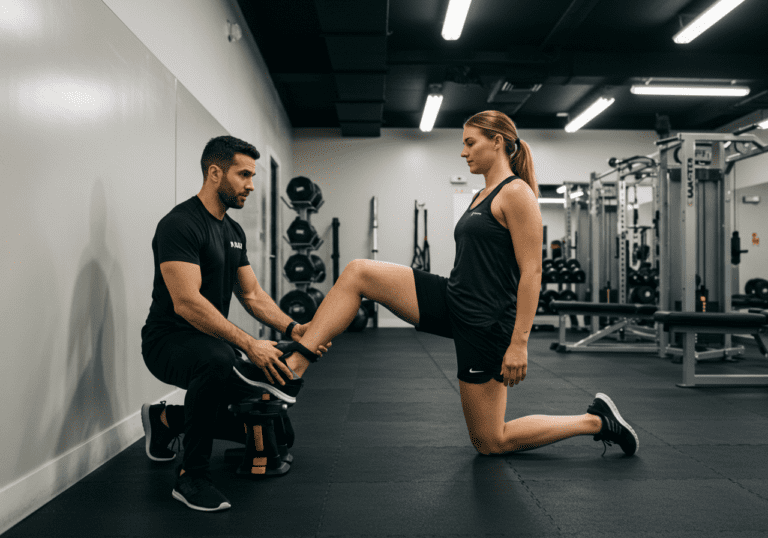
Knee focus: Sit-to-stand from high box → lower box → goblet squat → front squat. Progress depth first, then load. If pain spikes, raise the box or reduce depth.
Shoulder focus: Wall slides → incline dumbbell press → flat dumbbell press → single-arm overhead press. Control scapula rhythm and tempo (2–3 seconds down).
Low back/hinge: Hip hinge with dowel (three-point contact) → kettlebell deadlift from blocks → from floor → trap bar deadlift. Keep neutral spine and smooth breathing.
Cardio implementation
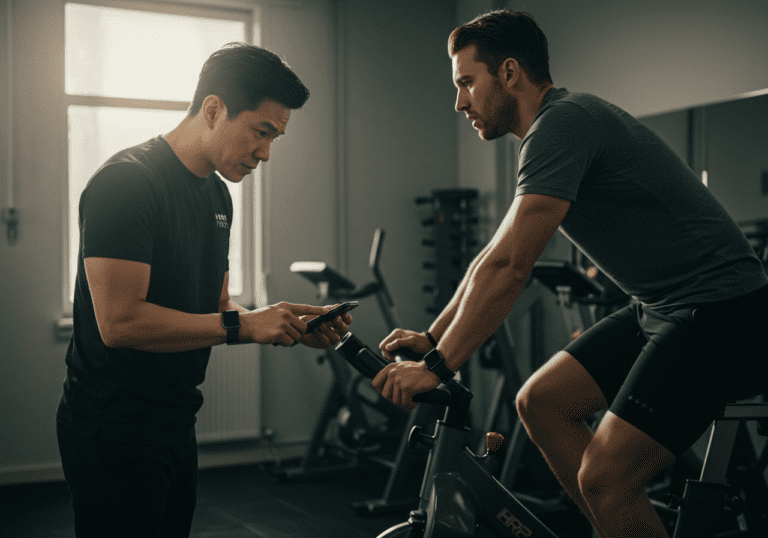
Base: 2–3 days/week Zone 2 for 20–40 minutes. I track with a Garmin; most clients hover at conversational pace.
Uplift: 1 optional day of short intervals (e.g., 6 × 60 seconds comfortably hard with full recovery). Skip intervals during a pain spike week.
Progress rules
Advance only if: pain ≤2/10 during, next-day normal, technique solid, and RPE ≤7.
Regress if: technique breaks, pain ≥5/10, or neighboring joints compensate. Usually reduce ROM or tempo first before removing load.
Tracking and tools
Log: sets/reps, RPE, pain during/after, morning readiness. I use a simple Google Sheet; some clients prefer Trainerize or paper.
Apps: Strava/Garmin for HR and distances; MyFitnessPal for protein; Fitbit or Oura for sleep and resting heart rate.
Nutrition and recovery
Protein: target 1.6–2.2 g/kg daily; spread across 3–4 feedings.
Calories: slight surplus for rebuilding, or maintenance if weight loss is a goal; prioritize whole foods.
Hydration: clear urine by midday; add electrolytes on longer sessions.
Supplements: creatine monohydrate 3–5 g/day can support strength; discuss with your clinician if you have medical conditions.
Sleep: 7–9 hours; lights dim 60 minutes before bed. My clients who protect sleep progress more steadily.
Real-world note
In my own return from a cranky knee, I started with high-box squats and Zone 2 cycling. Over three weeks I added depth before load. Average cycling HR was 126–132 bpm (Zone 2), and I kept strength at RPE 6–7. No setbacks, just gradual confidence.
Advance Load and ROM When Pain Stays Low
Follow these levels as your readiness improves. If any row feels too spicy, step back one line and hold for another week.
Caption: Weekly progression overview—advance one variable at a time when pain ≤2/10 and next-day feels normal. Level 1 (Weeks 1–2): Strength 2×10 @ RPE 5–6, partial ROM; Cardio 2×20 min Zone 2; Mobility holds 20–30s; Tempo slow (3–0–3). Level 2 (Weeks 3–4): Strength 3×8–10 @ RPE 6; deeper ROM; Cardio 3×20–30 min Zone 2; introduce 4×30s gentle strides or spin-ups. Level 3 (Weeks 5–6): Strength 3×8 @ RPE 6–7; add 2.5–5% load or reduce assistance; Cardio 1×30–40 min Zone 2 + 6×45–60s pickups; Mobility add end-range isometrics. Level 4 (Weeks 7–8): Strength 4×6–8 @ RPE 7; full ROM on primary lift; Cardio 1×40 min Zone 2 + 6×60s intervals (comfortable hard); Light change-of-direction if relevant. Level 5 (Weeks 9–10): Strength 4×5–6 @ RPE 7–8 on main pattern; secondary lifts stay RPE 6–7; Cardio 1×45 min Zone 2 + 8×60s intervals; Begin low-level plyos (e.g., 2×10 pogo hops). Level 6 (Weeks 11–12): Strength 3–4×3–5 @ RPE 7–8; keep accessories at RPE 6; Cardio endurance day 50–60 min Zone 2; Sport practice or brisk hike 60–90 min.
Examples of scaling decisions
Knee: Depth → load → unilateral work (split squat). If stairs hurt next morning, return to shallower squats and swap lunges for step-ups.
Shoulder: Incline press → flat press → overhead press. If reaching overhead aches, keep the incline and add bottom-range isometrics.
Low back: Hinge from blocks → floor → add tempo or pause. If back tightness lingers, keep block pulls and increase walking volume instead.
Client snapshots
“Maya” (desk worker) climbed pain-free stairs by week 5 after focusing on box squats and Zone 2 walks. “Luis” (rec soccer) returned to light dribbling by week 8 using incline pressing and careful sprint pickups. Individual timelines vary, but consistent logging helped both avoid flare-ups.
Structure Weekly Training with Deloads and Troubleshooting
Weekly structure
3–5 training days: 2–3 strength-focused, 2–3 cardio/mobility. Keep one full rest day.
Intensity: main lifts RPE 6–7 most weeks; only brief exposures to RPE 8 once tissues tolerate it.
Deload: every 4–6 weeks or after a stressful life period—halve volume, maintain light technique.
Troubleshooting
Plateau: change one variable—range, assistance, or density (more sets, shorter rests). Do not pile on everything at once.
Overdoing it: persistent soreness >48 hours, rising resting HR, poor sleep—pull back 20–30% for a week and add longer walks.
Motivation dips: shorten sessions to 25 minutes and keep the warm-up plus one key pattern and Zone 2—momentum matters.
Pain spikes: switch to isometrics or shallow ROM for 3–5 days, then re-test.
Safety and red flags
Stop and consult a clinician if you have night pain that wakes you, numbness/tingling that spreads, or sudden loss of strength.
After surgery or acute injury, follow your provider’s protocols first; treat this guide as general education.
Next steps
Download a simple log and color-code days (green/yellow/red). Compare weekly totals in Strava or Garmin to spot spikes.
Final note: steady beats intense. The athletes who win rehab train the boring basics, track the right data, and sleep like it’s part of the program—because it is.
Medical Disclaimer: The information provided on this website is for informational and educational purposes only and is not intended as personal medical or health advice. The content, including text, graphics, and images, is not a substitute for professional medical advice, diagnosis, or treatment. Always seek the advice of your physician or other qualified healthcare provider…
Medical Disclaimer: The information provided on this website is for informational and educational purposes only and is not intended as personal medical or health advice. The content, including text, graphics, and images, is not a substitute for professional medical advice, diagnosis, or treatment. Always seek the advice of your physician or other qualified healthcare provider…
Medical Disclaimer: The information provided on this website is for informational and educational purposes only and is not intended as personal medical or health advice. The content, including text, graphics, and images, is not a substitute for professional medical advice, diagnosis, or treatment. Always seek the advice of your physician or other qualified healthcare provider…
Medical Disclaimer: The information provided on this website is for informational and educational purposes only and is not intended as personal medical or health advice. The content, including text, graphics, and images, is not a substitute for professional medical advice, diagnosis, or treatment. Always seek the advice of your physician or other qualified healthcare provider…
Medical Disclaimer: The information provided on this website is for informational and educational purposes only and is not intended as personal medical or health advice. The content, including text, graphics, and images, is not a substitute for professional medical advice, diagnosis, or treatment. Always seek the advice of your physician or other qualified healthcare provider…
Medical Disclaimer: The information provided on this website is for informational and educational purposes only and is not intended as personal medical or health advice. The content, including text, graphics, and images, is not a substitute for professional medical advice, diagnosis, or treatment. Always seek the advice of your physician or other qualified healthcare provider…