Medical Disclaimer: The information provided on this website is for informational and educational purposes only and is not intended as personal medical or health advice. The content, including text, graphics, and images, is not a substitute for professional medical advice, diagnosis, or treatment. Always seek the advice of your physician or other qualified healthcare provider with any questions you may have regarding a medical condition or before starting any new exercise, nutrition, or supplement program. Never disregard professional medical advice or delay in seeking it because of something you have read on this blog. Reliance on any information provided by this site is solely at your own risk.
Start Slow with Heart-Rate Zones and Weekly Intervals
How to Build Cardiovascular Fitness After a Layoff starts with patience, structure, and numbers you can trust. You’ll learn a simple plan using heart-rate zones and realistic milestones.
Direct answer: Begin with low-intensity walks, add short intervals weekly, and track heart rate; progress only when recovery and breathing feel easy.
After time off, aerobic capacity declines: stroke volume and mitochondrial efficiency drop, and your perceived effort rises at the same pace. Soft tissues also detrain; tendons and bones rebuild slower than lungs, so intensity must climb gradually.
In coaching logs and peer-reviewed findings, most people regain a meaningful chunk of base fitness within weeks when they spend the majority of time in easy zones and sprinkle in controlled intervals. Rushing back to old paces often leads to shin tightness, plantar flare-ups, or motivation dips—I’ve made that mistake myself after racing seasons.
A client note I hear often: “I finally jogged 30 minutes without stopping.” That simple win usually arrives when easy days truly stay easy and sleep is consistent.
Test Baseline, Set Zones, Progress with Talk-Test Guidance
1) Readiness check (5 minutes): If you have symptoms, recent injury, or medical flags, consult a clinician. Otherwise, plan 3–5 weekly sessions you can stick with for a month.
2) Baseline test (low stress): Do a 20‑minute easy walk or jog. Keep nasal breathing or full-sentence talk. Record average heart rate, distance/pace, and RPE (0–10 scale). This is your yardstick, not a race.
3) Set effort zones:
No device: Easy = nose-breathing, full talk; Moderate = short phrases; Hard = single words.
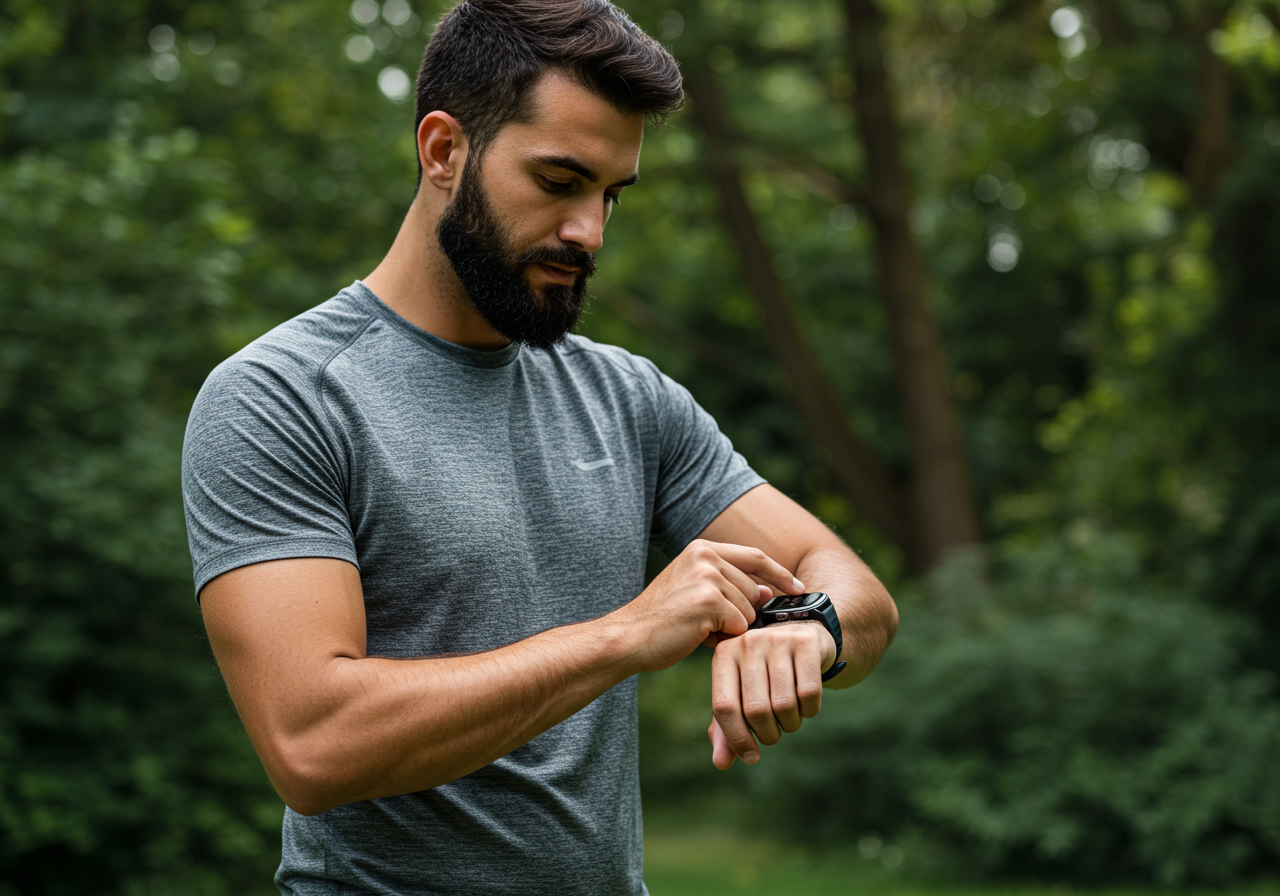
With HR monitor: Zone 2 cap ≈ comfortable breathing (often ~60–70% HRmax). Alternative: use a conversational pace or a conservative cap like 180−age as an upper limit if you lack lab data.
4) Build your session template (30–45 minutes):
Warm-up (5–8 min): Easy walk/jog or spin; add ankle rolls and hip circles.
Main set: Start with continuous Zone 1–2 work. After Week 2, insert brief pickups (30–60 seconds) at a brisk but controlled effort.
Cool-down (5 min): Easy movement; calf/hip mobility for 3–5 minutes.
5) Weekly structure (example):
3 aerobic days (walk/jog, bike, or row) in Zone 1–2.
1 short interval day after Week 2 (e.g., 6×45s brisk with full easy recoveries).
1 optional cross-training day (bike or swim) or mobility circuit.
6) Strength and mobility (twice weekly, 20–30 minutes): Bodyweight squats, split squats, dead bug, glute bridge, calf raises, mid-back rows. 2–3 sets of 8–12, slow and controlled.
7) Track and adjust: Log sessions in Strava, Garmin, Fitbit, or Apple Health. Note duration, average HR, time in zones, RPE, sleep quality, and how your breathing felt. Look for steady HR at faster paces over time.
8) Fuel and recover:
Daily protein around 1.6–2.0 g/kg supports tissue repair.
Carbs around workouts improve quality of intervals; a banana or small snack 30–60 minutes prior helps.
Hydration: sip water through the day; add electrolytes in heat or longer sessions.
Sleep: aim for a consistent schedule; short post‑workout walk can aid wind‑down.
9) Green lights to progress: Easy days feel conversational, soreness fades within 24–36 hours, and average HR for the same route trends down or pace trends up at the same HR.
Ten-Week Plan from Easy Walks to Moderate Tempo
Caption: Ten-week ramp emphasizing easy volume with controlled intervals.
Week 1: 3–4 x 20–30 min Zone 1–2; strides optional (4 x 15s). RPE 3–4.

Week 2: 4 x 25–35 min Zone 1–2; add 4–6 x 20–30s brisk, 90s easy. RPE 3–5.

Week 3: 4–5 sessions; 1 interval day 6 x 45s brisk, 2 min easy; 1 longer easy 35–45 min.

Week 4: Maintain volume; interval day 8 x 45s; longer day 40–50 min. Re-test 20-min easy baseline.

Week 5: 4–5 sessions; add tempo taste: 8–10 min steady (talk in short phrases), rest easy.

Week 6: Interval day 6 x 60s; longer day 45–60 min Zone 2; most other time Zone 1–2.

Week 7: Consolidate; optional second quality: 3 x 3 min moderate with 2–3 min easy.

Week 8: Slight deload (−15–20% volume) or re-test baseline; focus on relaxed technique.

Week 9: Build back; interval day 8 x 60s; longer day 55–70 min easy.

Week 10: Choose a low-key event/test: 30-min steady run or 5–10k bike; keep the day before easy.
Level adjustments:
Beginner: Start with 3 sessions/week; walk-jog method (1 min jog / 2–3 min walk) until breathing stays calm. Keep intervals as brisk walks or gentle jogs.
Intermediate: 4–5 sessions/week; keep 80–90% easy. One interval and one tempo-style session most weeks.
Advanced returner: 5–6 sessions/week; still 80%+ easy. Use two quality days (short intervals + longer steady). Insert a down week every 3–4 weeks.
Checkpoints: Repeat the 20‑minute easy test in Weeks 4 and 8. Look for similar average HR with a slightly faster pace or lower RPE. If fatigue lingers, hold the current week and trim intensity.
Keep 80% Easy, Monitor Recovery, Avoid Old Paces
Frequency & intensity: Most gains come from consistency. Keep roughly 80% of time in easy zones. Place harder work on days you can sleep well and eat normally.
Common mistakes: Jumping to old paces, stacking intervals back-to-back, ignoring calf/foot strength, and under-fueling on busy days. If shins or Achilles talk, switch to bike/row for a week while loading the calves with slow raises.
Monitoring: Use RPE, average HR on your standard loop, and morning readiness (resting HR, mood). If easy pace slows for several sessions and you feel irritable, cut volume 20% for 5–7 days.
Recovery staples: Protein at each meal, carbs around workouts, and a wind-down routine. Light mobility and a 5‑minute nasal-breathing walk post-session aid recovery.
Testimonial snapshot: “The talk test made everything click. After a few weeks of easy runs and tiny intervals, I could jog continuously again without my knees complaining.”
Next steps: Keep one re-test every 4–6 weeks. When you can complete your long easy session feeling fresh the next day, consider a simple goal event. Want a printable plan and zone calculator?.
Medical Disclaimer: The information provided on this website is for informational and educational purposes only and is not intended as personal medical or health advice. The content, including text, graphics, and images, is not a substitute for professional medical advice, diagnosis, or treatment. Always seek the advice of your physician or other qualified healthcare provider…
Medical Disclaimer: The information provided on this website is for informational and educational purposes only and is not intended as personal medical or health advice. The content, including text, graphics, and images, is not a substitute for professional medical advice, diagnosis, or treatment. Always seek the advice of your physician or other qualified healthcare provider…
Medical Disclaimer: The information provided on this website is for informational and educational purposes only and is not intended as personal medical or health advice. The content, including text, graphics, and images, is not a substitute for professional medical advice, diagnosis, or treatment. Always seek the advice of your physician or other qualified healthcare provider…
Medical Disclaimer: The information provided on this website is for informational and educational purposes only and is not intended as personal medical or health advice. The content, including text, graphics, and images, is not a substitute for professional medical advice, diagnosis, or treatment. Always seek the advice of your physician or other qualified healthcare provider…
Medical Disclaimer: The information provided on this website is for informational and educational purposes only and is not intended as personal medical or health advice. The content, including text, graphics, and images, is not a substitute for professional medical advice, diagnosis, or treatment. Always seek the advice of your physician or other qualified healthcare provider…
Medical Disclaimer: The information provided on this website is for informational and educational purposes only and is not intended as personal medical or health advice. The content, including text, graphics, and images, is not a substitute for professional medical advice, diagnosis, or treatment. Always seek the advice of your physician or other qualified healthcare provider…