Medical Disclaimer: The information provided on this website is for informational and educational purposes only and is not intended as personal medical or health advice. The content, including text, graphics, and images, is not a substitute for professional medical advice, diagnosis, or treatment. Always seek the advice of your physician or other qualified healthcare provider with any questions you may have regarding a medical condition or before starting any new exercise, nutrition, or supplement program. Never disregard professional medical advice or delay in seeking it because of something you have read on this blog. Reliance on any information provided by this site is solely at your own risk.
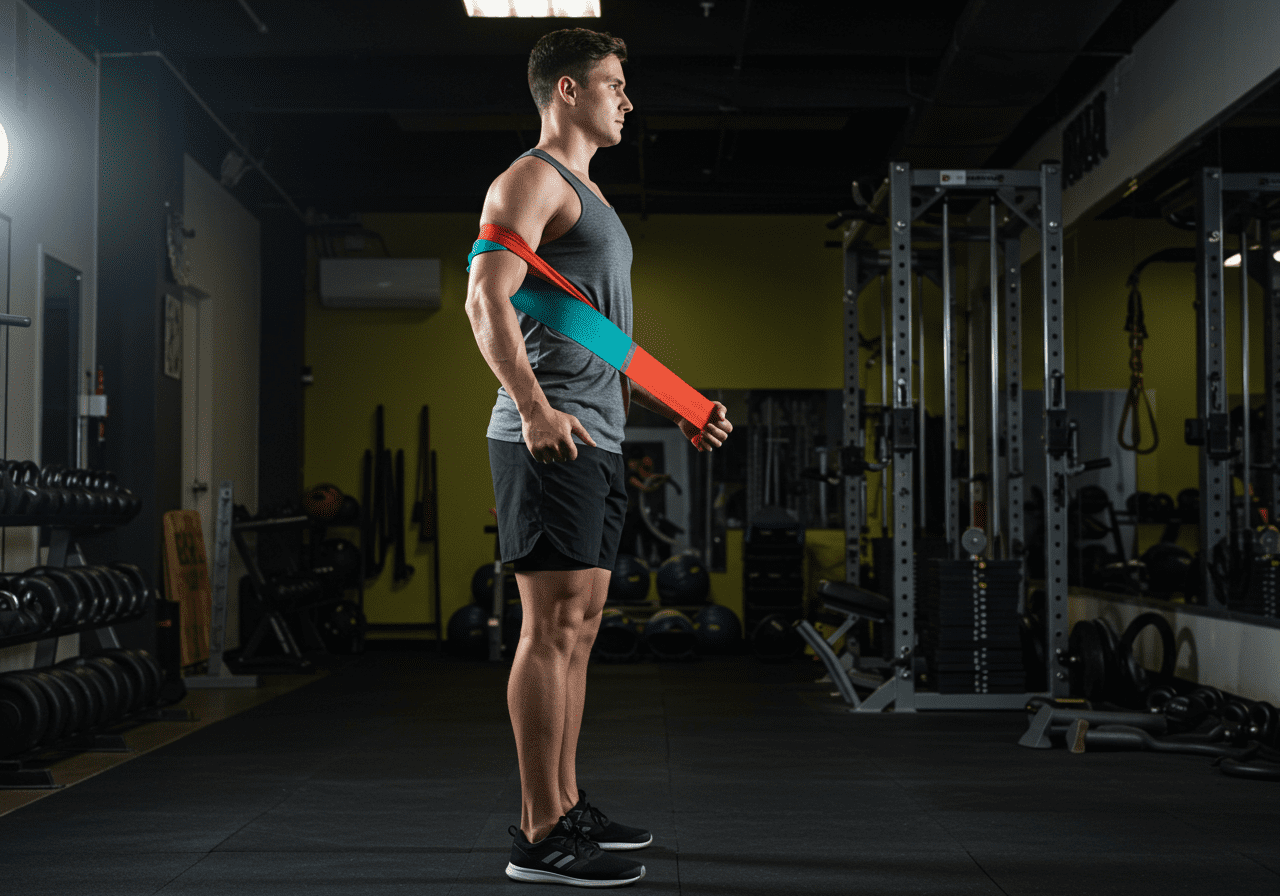
12-week strength program for beginners that builds muscle safely and steadily. You’ll get a simple three-day plan, weekly progress rules, and recovery habits.
Direct answer: Train three days weekly, add small weight increases when form is solid, and prioritize recovery to build muscle safely.
New lifters gain fastest when practice is frequent, loads progress gradually, and recovery is respected. Early improvements come from better motor control and joint stability as much as muscle growth. Your nervous system learns to recruit fibers efficiently, then muscle size follows with consistent training and protein.
In my beginner groups, it’s common to see steady strength increases over 12 weeks when training three days weekly with RPE-based progression. Individual outcomes vary, but technique-first work reduces aches and keeps momentum. This plan also balances pushing and pulling patterns to support posture and everyday strength.
Why full-body days? They repeat key skills (squat, hinge, press, pull) often enough to learn quickly without overwhelming your week. Compared with body-part splits, beginners typically recover better and progress faster on full-body schedules. Machines are great for learning control; free weights build balance and coordination. We’ll use both.
Row/Pull: pull elbows to ribs, squeeze shoulder blades together, control return
Optional finisher (5–8 minutes)
Bike or rower easy-to-moderate pace in Zone 2 (you can talk in short sentences)
Recovery checklist
Protein: roughly 1.6–2.2 g/kg body weight daily
Sleep: 7–9 hours; keep a consistent schedule
Hydration: clear urine most of the day; add electrolytes if training in heat
Supplements (optional): creatine monohydrate 3–5 g/day; vitamin D if deficient—consult a clinician
How I track with clients
Logbook or Strong/HeavySet app: weight, reps, RPE for each set
MyFitnessPal: protein and total calories
Garmin/Fitbit: sleep and resting heart rate; Strava for short cardio
Real session example (from my notebook)
Day A (Week 3): Goblet squat 3×8 @ 18 kg (RPE 7); DB bench 3×8 @ 14 kg; Cable row 3×10; Side plank 2×30 sec. HR peaked at 120 bpm.
Beginner to Advanced Progressions
Use this roadmap to guide 12 weeks. Add the smallest possible weight when you complete all target reps with good form at or below the target RPE.
12-week overview — progression from technique focus to moderate loads and confident execution.
Week 1: Learn movements; 3×8 @ RPE 6; stop 3–4 reps before failure.

Week 2: Repeat loads if technique wobbly; otherwise +1–2 kg (upper) / +2–5 kg (lower).

Week 3: 3×8–9 @ RPE 6–7; add a back-off set (−10% load) on main lifts.

Week 4: 3×9–10 @ RPE 7; if bar path is clean, progress next week.

Week 5: Move to 4×6–8 on main lifts @ RPE 7; accessories remain 2–3×10–15.

Week 6: Keep 4 sets; add load if last set RPE ≤7.5; keep 1–2 reps in reserve.

Week 7: Technique audit + small deload for any lift feeling beat-up (−10–15% load).

Week 8: Resume prior bests; aim to surpass by 1–2 kg upper / 2–5 kg lower.

Week 9: Introduce one harder top set @ RPE 8, then 2 back-off sets (−10%).

Week 10: Repeat structure; if a lift stalls two sessions, switch variation (e.g., tempo squat).

Week 11: Consolidate; no maxing. Keep RPE ≤8 and crisp form.

Week 12: Test week with caution—1 all-out AMRAP set at last week’s load (stop at RPE 9). Note estimated 1RM; then take two easier sessions.
Intermediate: front squat or leg press, trap-bar deadlift, barbell bench, chest-supported row, pulldown
Advanced-ready: back squat (if mobility allows), conventional deadlift, standing OHP, weighted pull-up; use top-set + back-off structure
Plateau fixes
Two sessions stuck at same load: reduce load 5–7%, add a set next session
Form breakdown: keep load, add tempo (3 sec down) for two weeks
Low motivation: swap one accessory for a favorite machine; keep momentum
Validation in practice
Client note: “At week 8 my knees stopped aching and my rows jumped. I’m lifting more without feeling wrecked.” — Ana, 42. In similar cohorts, consistent trainees often report better energy and visible muscle tone by week 6–8.
Programming Tips and Safety
Weekly frequency and volume
Three total-body sessions are enough to grow as a beginner
Aim for 8–12 hard sets per major pattern each week across exercises
Intensity guide
Most work at RPE 6–8; save RPE 9 for week 12 AMRAP sets only
If sleep is poor or life stress is high, keep a 2-rep buffer
Common mistakes
Jumping weight too fast: use the smallest plates; earn every increase
Skipping warm-ups: they groove technique and reduce joint irritation
Chasing soreness: progress comes from consistency, not crippling DOMS
Injury-aware training
Knees: prioritize goblet/front squats; keep knees tracking over toes
Lower back: hinge with neutral spine; choose trap-bar deadlift before straight bar
Shoulders: keep elbows 30–45° from torso on pressing; use neutral-grip DBs
Nutrition and recovery
Calories: slight surplus (≈200–300 kcal/day) if muscle gain is the goal
Protein: 1.6–2.2 g/kg body weight; distribute across 3–4 meals
Carbs around training help performance; include fruit, rice, oats, or potatoes
Progress tracking
Weekly: average body weight; tape chest/hips/thigh every 2–4 weeks
Performance: log loads, reps, and RPE; note bests per lift monthly
Recovery: watch resting HR and sleep duration; adjust load if both worsen
Next steps
After 12 weeks, keep the movement patterns, rotate variations, and cycle volume
Medical Disclaimer: The information provided on this website is for informational and educational purposes only and is not intended as personal medical or health advice. The content, including text, graphics, and images, is not a substitute for professional medical advice, diagnosis, or treatment. Always seek the advice of your physician or other qualified healthcare provider…
Medical Disclaimer: The information provided on this website is for informational and educational purposes only and is not intended as personal medical or health advice. The content, including text, graphics, and images, is not a substitute for professional medical advice, diagnosis, or treatment. Always seek the advice of your physician or other qualified healthcare provider…
Medical Disclaimer: The information provided on this website is for informational and educational purposes only and is not intended as personal medical or health advice. The content, including text, graphics, and images, is not a substitute for professional medical advice, diagnosis, or treatment. Always seek the advice of your physician or other qualified healthcare provider…
Medical Disclaimer: The information provided on this website is for informational and educational purposes only and is not intended as personal medical or health advice. The content, including text, graphics, and images, is not a substitute for professional medical advice, diagnosis, or treatment. Always seek the advice of your physician or other qualified healthcare provider…
Medical Disclaimer: The information provided on this website is for informational and educational purposes only and is not intended as personal medical or health advice. The content, including text, graphics, and images, is not a substitute for professional medical advice, diagnosis, or treatment. Always seek the advice of your physician or other qualified healthcare provider…
Medical Disclaimer: The information provided on this website is for informational and educational purposes only and is not intended as personal medical or health advice. The content, including text, graphics, and images, is not a substitute for professional medical advice, diagnosis, or treatment. Always seek the advice of your physician or other qualified healthcare provider…
 12-week strength program for beginners that builds muscle safely and steadily. You’ll get a simple three-day plan, weekly progress rules, and recovery habits.