Medical Disclaimer: The information provided on this website is for informational and educational purposes only and is not intended as personal medical or health advice. The content, including text, graphics, and images, is not a substitute for professional medical advice, diagnosis, or treatment. Always seek the advice of your physician or other qualified healthcare provider with any questions you may have regarding a medical condition or before starting any new exercise, nutrition, or supplement program. Never disregard professional medical advice or delay in seeking it because of something you have read on this blog. Reliance on any information provided by this site is solely at your own risk.
Choosing the right protein powder can supercharge recovery and make your first months of training feel manageable. Quick pick: whey isolate for speed, plant blends for tolerance, casein before bed; target 1.6–2.2 g/kg daily from food plus shakes.
In this guide you’ll get a simple, complete training plan (cardio, strength, mobility) and an easy decision path for whey, plant, or blended powders. I’ll share real session templates, how to log progress, and safe weekly progressions for steady results.
How Protein Supports Muscle Repair and Training
Protein supports muscle repair, helps retain lean mass in a calorie deficit, and improves training readiness. Whey generally has higher leucine and digests quickly, which can be helpful post‑workout. Plant powders (often pea + rice) can match the amino profile when blended well and are easier on digestion for some. Casein digests slower and may help overnight recovery. These patterns are consistent with peer‑reviewed findings, though individual responses vary.
Why it matters for your plan: faster repair lets you train more consistently, which compounds fitness. In my own log, dialing protein timing reduced next‑day soreness and improved quality on back‑to‑back sessions. One client, Maya (desk job, 34), switched from whey concentrate to a pea–rice blend due to lactose sensitivity; within two weeks she reported less bloating and fewer missed workouts because she felt better after lifting. Results are personal, but this pattern shows up often in practice.
Recovery nutrition works best when paired with smart training. We’ll organize your week to balance heart health (Zone 2 cardio), strength for metabolism and posture, and mobility for joint comfort—then match protein type and timing to each session.
Choosing Whey, Plant, or Casein Powders
Step 1 — Set your target: Aim for roughly 1.6–2.2 g protein per kg bodyweight daily. Split into 3–5 meals or shakes with consistent portions. Track in MyFitnessPal or Cronometer to check your average for a week.
Choose your powder:
Whey isolate: Fast digesting; lower lactose; great after training.
Whey concentrate: Budget‑friendly; may bother lactose‑sensitive users.
Plant blend (pea + rice ± pumpkin/hemp): Good amino coverage; gentler on digestion; look for ~20–30 g protein per scoop.
Casein: Slow release; useful before sleep or long gaps between meals.
Read labels like a coach:
Per scoop protein ≥ 20–25 g; short ingredient list.
Minimal added sugar; avoid proprietary blends that hide amounts.
Post‑strength session: 25–35 g whey isolate or plant blend within a couple of hours.
After long cardio (≥45 min): Add carbs (banana/oats) to the shake to replenish.
Evening recovery: 25–35 g casein or a thicker plant blend before sleep if dinner protein was light.
Build your weekly routine (simple template):
Strength (2–3 days): 45–60 min full‑body. Keep most sets at RPE 6–8 (two to four reps in reserve). Example session:
Goblet squat 3×8–10
Dumbbell bench press 3×8–10
Hip hinge (Romanian deadlift) 3×8
One‑arm row 3×10/side
Split squat 2×10/side
Plank 2×45–60s
Cardio (2–3 days): Mix Zone 2 and brief intervals.
Zone 2: 30–45 min at 60–70% HRmax (nasal‑breathing pace).
Intervals: 6×1 min at 85–90% HRmax, 2 min easy between.
Mobility (daily micro‑sessions): 5–10 min hips, T‑spine, ankles, shoulders. Add after training or during breaks.
Track and adjust:
Log workouts in Strava or Garmin Connect (heart rate, pace).
Record loads, sets, and RPE in a notes app or spreadsheet.
Note digestion: any bloating or cramps after certain powders? Switch type or split doses.
My experience: On weeks with two heavy lifts and one interval run, a post‑session whey isolate shake improved next‑day legs by midday. When coaching a vegan client, a pea–rice blend plus a higher‑protein dinner gave a similar day‑after feel. Your mileage may vary—listen to energy, soreness, and sleep.
Eight-Week Training and Supplementation Progression Plan
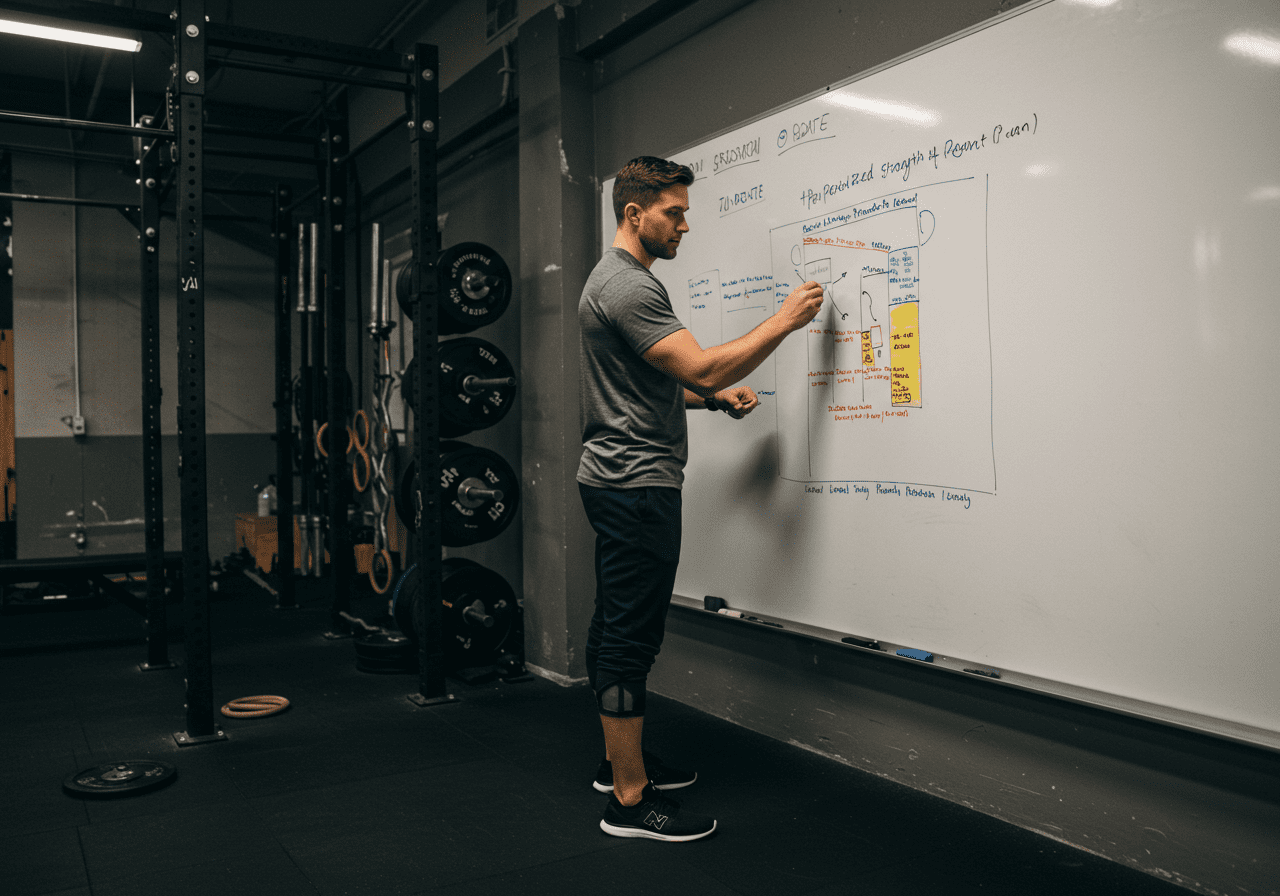
Caption: 8‑week ramp—training volume, cardio focus, and shake timing.
Week 1–2: Strength 2×/wk (3×8 @ RPE 6); Zone 2 cardio 2×20–30 min; Mobility 5–10 min daily; Shake 1× after strength or >40‑min cardio.

Week 3–4: Strength 3×/wk (3×8–10 @ RPE 6–7); Intervals 1× (6×1 min @ 85–90% HRmax); Zone 2 1–2×30–40 min; Add pre‑sleep casein/plant if dinner light.

Week 5–6: Strength 3–4×/wk (add 1 set to main lifts; alternate 8–10 and 5–6 reps); Intervals 1× (8×1 min); Zone 2 1×45–60 min; Shake 1–2× on heavy or long days.

Week 7 (Deload): Strength 2×/wk (‑30–40% volume, RPE 5–6); Zone 2 2×25–35 min; Keep daily protein steady; Use gentler powder if digestion feels off.

Week 8 (Re‑test): Test 8–10RM on a main lift or AMRAP set @ RPE 9; 5K time trial or bike FTP short test; Align shakes to test days and celebrate wins.
By level:
Beginner: Add weight only when last reps feel controlled (RPE ≤7). Keep intervals short and crisp. Use one shake most training days.
Intermediate: Introduce a fourth strength day or extra sets. Periodize reps (heavy 5s one day, 8–10s another). Consider two shakes on hardest days.
Advanced: Split sessions (AM cardio, PM lift) 1–2×/wk. Add tempo work and longer intervals (3–4 min). Use intra‑workout carbs for intense sessions; keep protein steady.
What success looks like: Steady load increases, fewer missed sessions, and stable mood/sleep. In practice, clients who hit protein targets most days progress more predictably, though individual rates vary.
References & Further Reading
The following peer-reviewed research and authoritative guidelines support the recommendations in this article:
Frequency & intensity: Start with 4–5 training days weekly: 2–3 strength, 2–3 cardio, short daily mobility. Hover around RPE 6–8 most sets; push harder only when recovery feels solid.
Common mistakes to avoid:
Undereating protein on rest days—keep it consistent to drive repair.
Buying powders with big scoops but little protein per serving—check the label.
Skipping Zone 2—your lifts feel better with an aerobic base.
Jumping weights too fast—leave 1–3 reps in reserve on most sets.
Digestive troubleshooting: If whey bothers you, try isolate or switch to a pea–rice blend. Reduce serving size and split doses. Choose unflavored or stevia‑sweetened options if artificial sweeteners trigger issues. Mix with water or lactose‑free milk and add a small carb source after long sessions.
Monitoring & recovery: Track morning resting HR and session RPE; note sleep hours and mood. Apps like Strava, Garmin, or Fitbit help spot fatigue trends. Aim for 7–9 hours sleep, a veggie or fruit at each meal, and 2–3 L water daily.
Quality & safety: Prefer third‑party tested products (NSF/Informed Choice). Rotate plant brands occasionally to limit repeated trace exposures. If you have allergies or medical conditions, check labels and consult a professional.
Next steps: Save this framework, set your protein target for the week, and schedule three sessions. If you want my tracker template and brand checklist.
Medical Disclaimer: The information provided on this website is for informational and educational purposes only and is not intended as personal medical or health advice. The content, including text, graphics, and images, is not a substitute for professional medical advice, diagnosis, or treatment. Always seek the advice of your physician or other qualified healthcare provider…
Medical Disclaimer: The information provided on this website is for informational and educational purposes only and is not intended as personal medical or health advice. The content, including text, graphics, and images, is not a substitute for professional medical advice, diagnosis, or treatment. Always seek the advice of your physician or other qualified healthcare provider…
Medical Disclaimer: The information provided on this website is for informational and educational purposes only and is not intended as personal medical or health advice. The content, including text, graphics, and images, is not a substitute for professional medical advice, diagnosis, or treatment. Always seek the advice of your physician or other qualified healthcare provider…
Medical Disclaimer: The information provided on this website is for informational and educational purposes only and is not intended as personal medical or health advice. The content, including text, graphics, and images, is not a substitute for professional medical advice, diagnosis, or treatment. Always seek the advice of your physician or other qualified healthcare provider…
Medical Disclaimer: The information provided on this website is for informational and educational purposes only and is not intended as personal medical or health advice. The content, including text, graphics, and images, is not a substitute for professional medical advice, diagnosis, or treatment. Always seek the advice of your physician or other qualified healthcare provider…
Medical Disclaimer: The information provided on this website is for informational and educational purposes only and is not intended as personal medical or health advice. The content, including text, graphics, and images, is not a substitute for professional medical advice, diagnosis, or treatment. Always seek the advice of your physician or other qualified healthcare provider…