Medical Disclaimer: The information provided on this website is for informational and educational purposes only and is not intended as personal medical or health advice. The content, including text, graphics, and images, is not a substitute for professional medical advice, diagnosis, or treatment. Always seek the advice of your physician or other qualified healthcare provider with any questions you may have regarding a medical condition or before starting any new exercise, nutrition, or supplement program. Never disregard professional medical advice or delay in seeking it because of something you have read on this blog. Reliance on any information provided by this site is solely at your own risk.
Home Strength Training Without a Barbell can still build real muscle and strength. This guide shows the exact movements, progressions, and tracking methods I use with beginners.
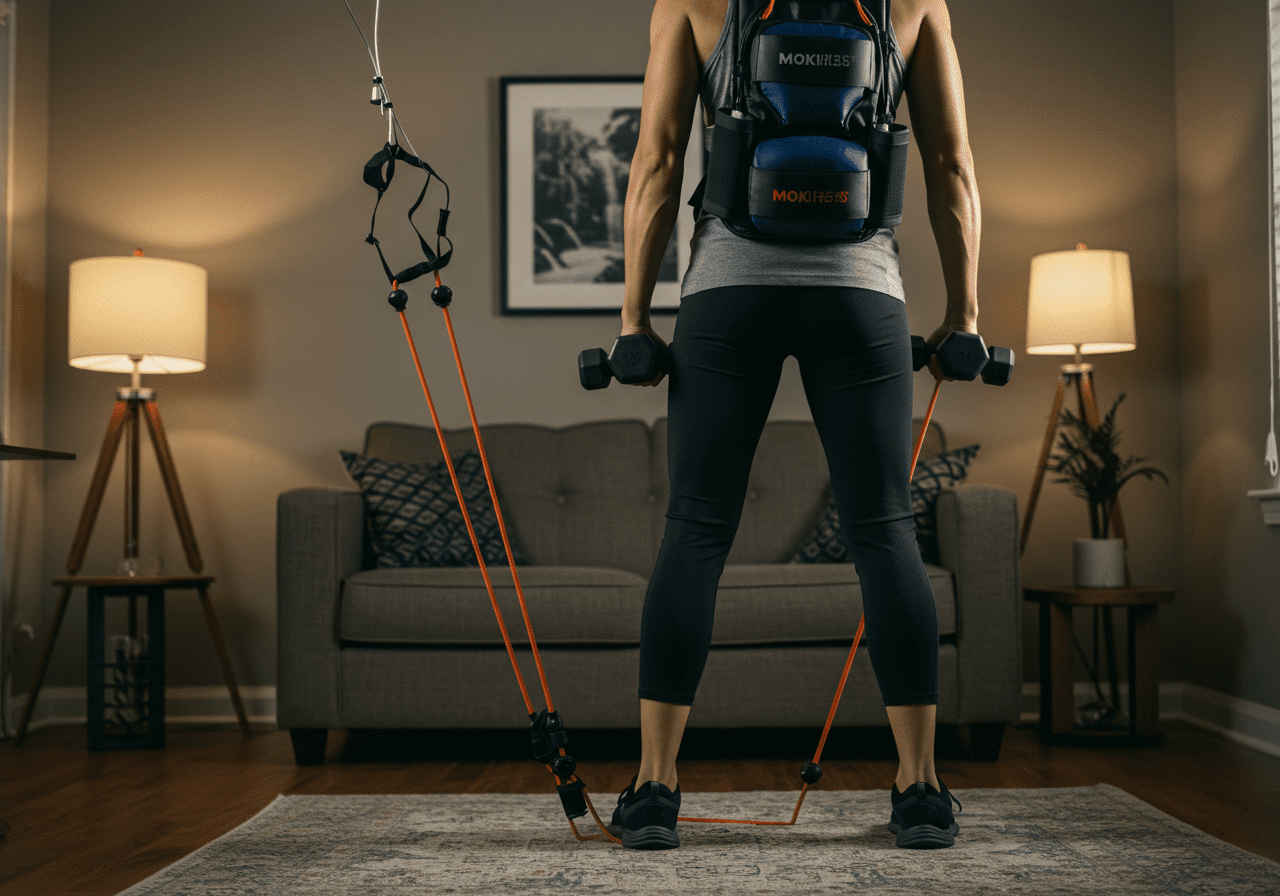
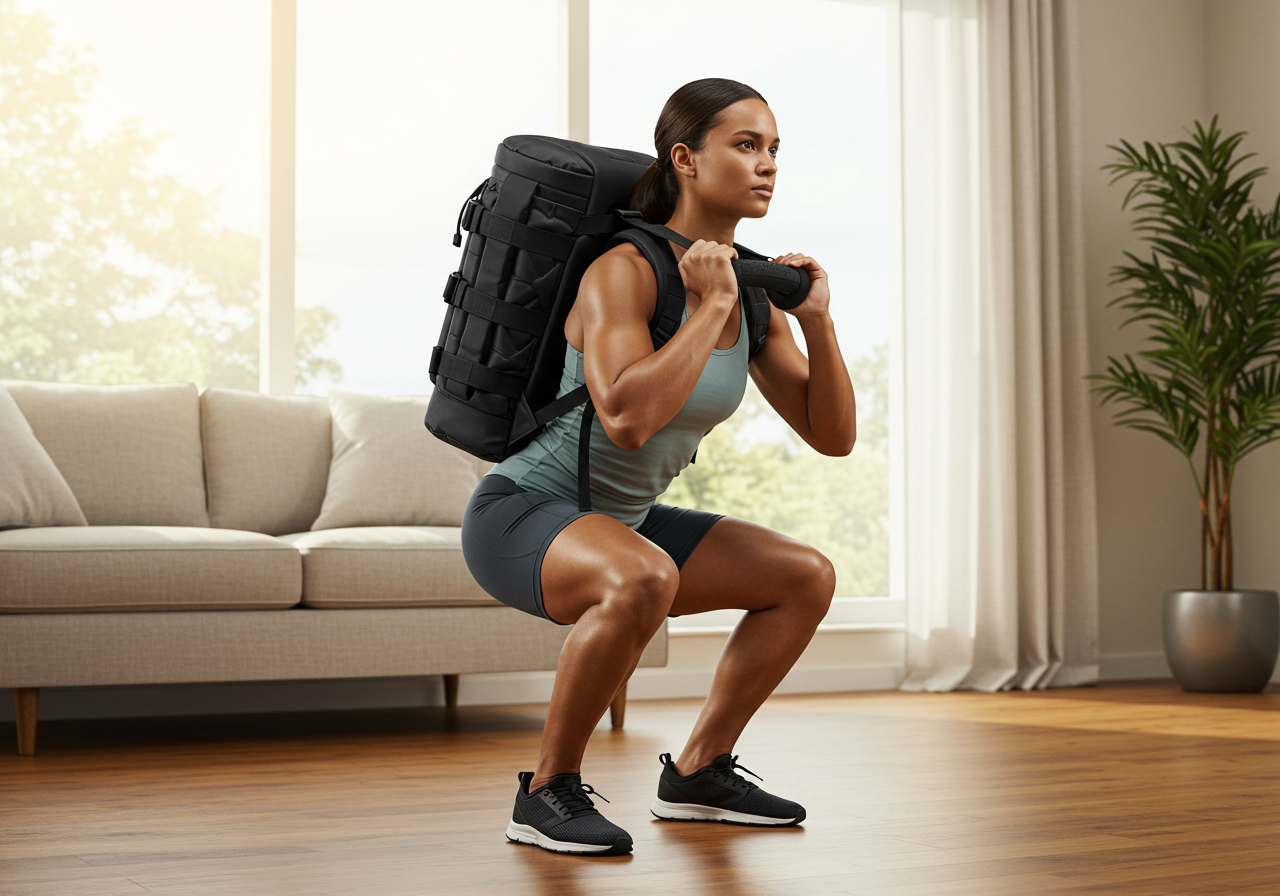
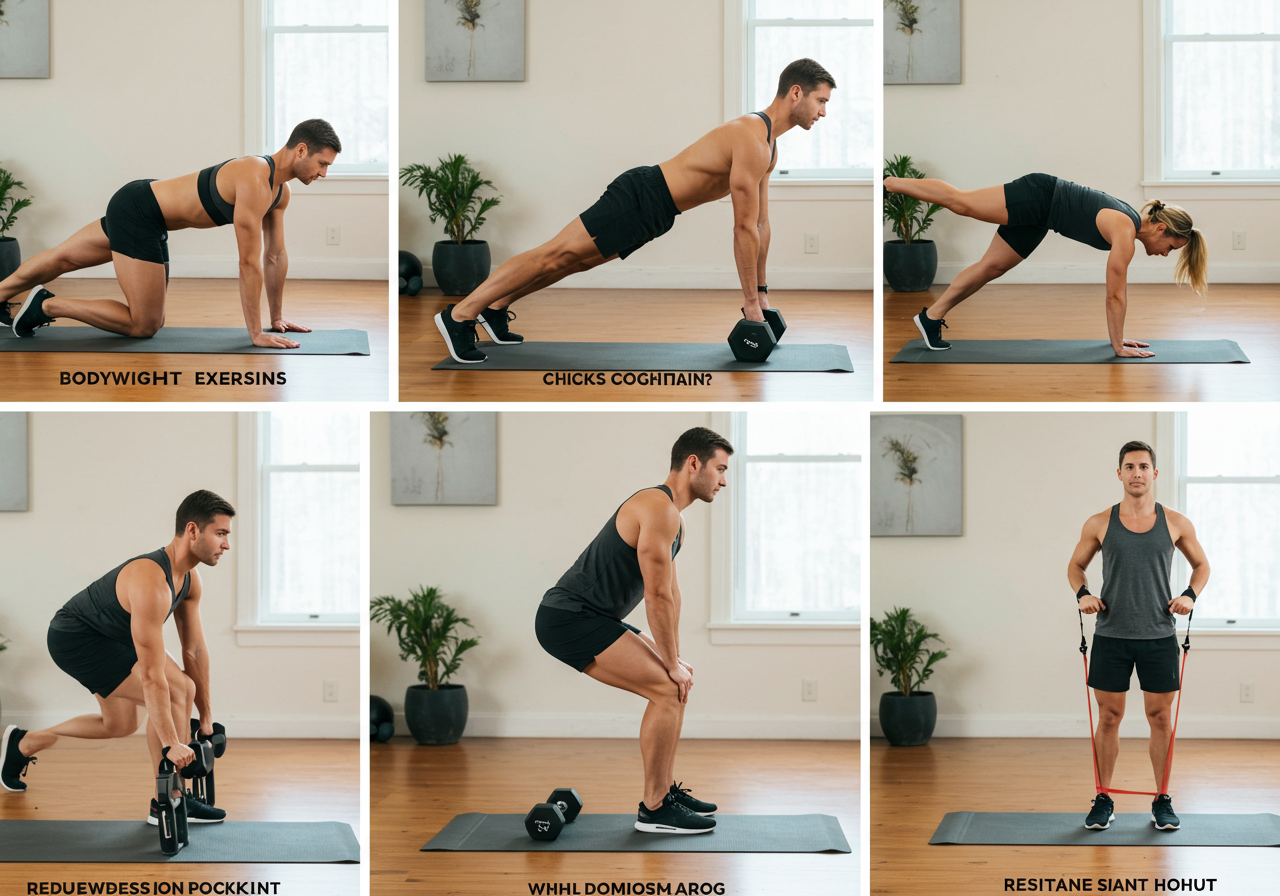
Direct answer: Yes—use dumbbells, bands, backpacks, and bodyweight progressions to train every major movement pattern safely and effectively.
You will learn a complete system that replaces barbell lifts with smart alternatives, a simple weekly progression, and clear tests to confirm you are getting stronger.
Science-Backed Evidence for Home Strength Training
Strength grows when muscles experience enough tension close to fatigue, not only when lifting barbells. Bands, dumbbells, and bodyweight can create that stimulus through full range of motion and controlled tempo.
Single-limb work (split squats, single-arm rows) loads each side more efficiently, which is perfect for small home setups. Variable resistance from bands helps lock out stronger positions while being joint-friendly.
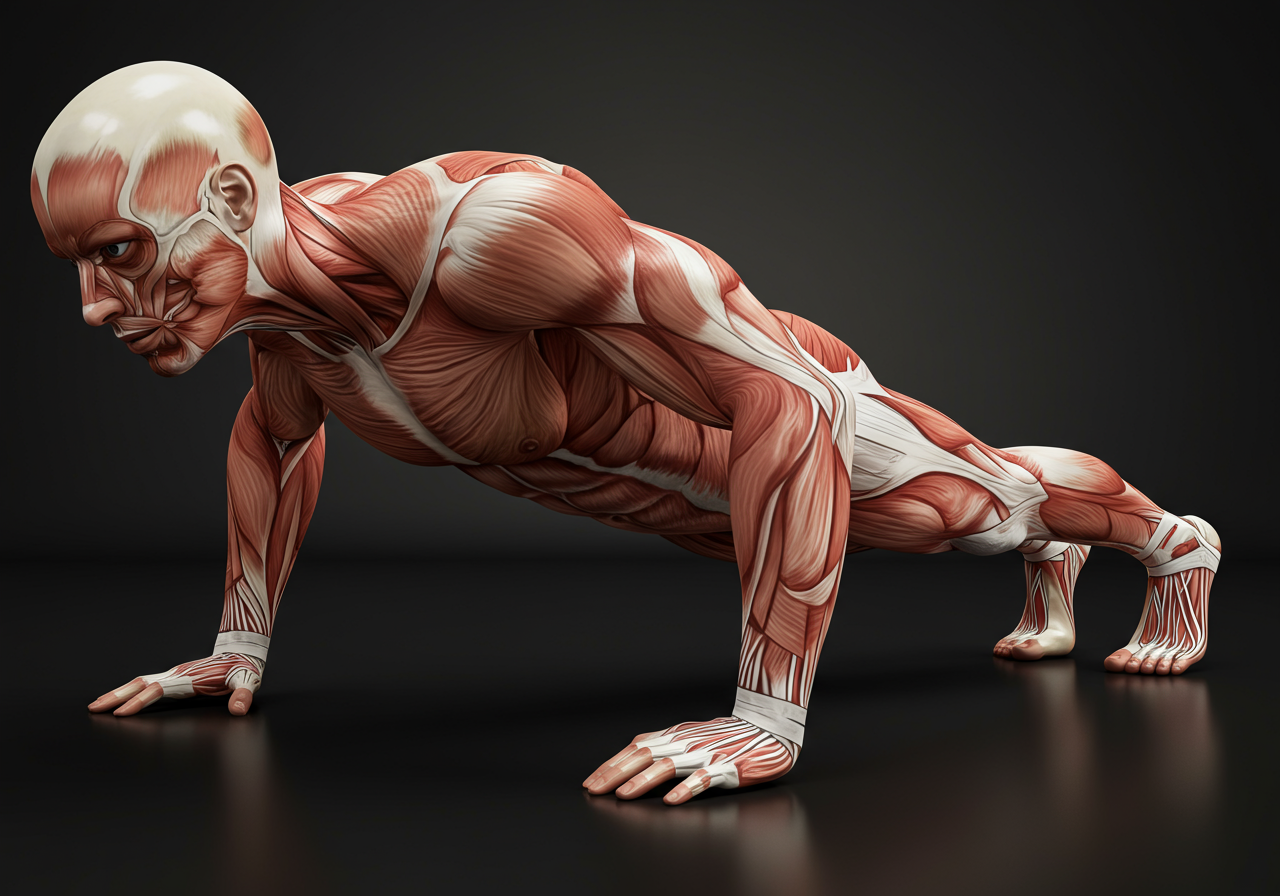
In peer-reviewed research and coaching practice, sets taken near technical failure (about 2–3 reps in reserve) drive hypertrophy reliably, even with moderate loads. I’ve seen beginners thrive at home by focusing on movement patterns—squat, hinge, push, pull, carry, and core—plus steady progression and good recovery habits.
Complete Exercise Alternatives and Warm-Up Protocol
Warm-up (5–8 minutes): easy marching or jump rope, then dynamic mobility—hip circles, arm swings, and 10 slow bodyweight squats. Aim for a light sweat (HR Zone 2).
Single-leg RDL (load or bodyweight) — 3 x 8–10/side
Suitcase carry — 3 x 20–40 meters/side
Core: side plank — 2–3 x 20–40 seconds/side
Session B (about 35–45 minutes)
Split squat — 3–4 x 8–12/side
Hip thrust or glute bridge — 3–4 x 10–15
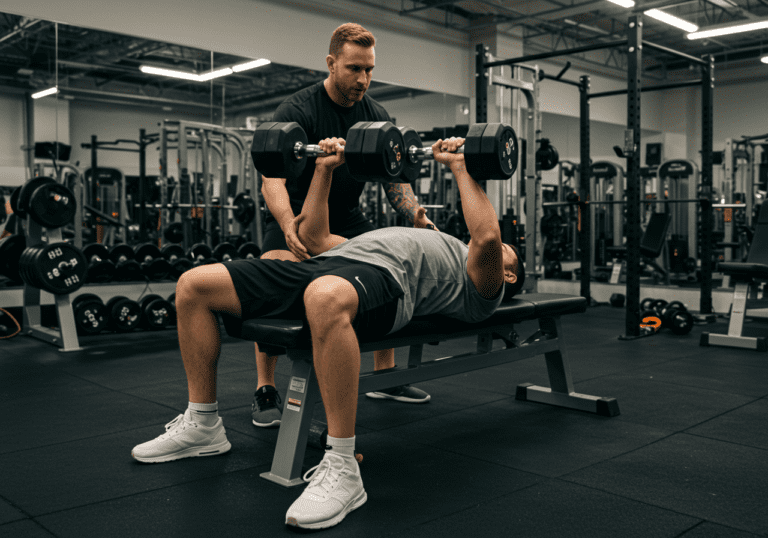
Floor press (dumbbells) or banded chest press — 3 x 8–12
Band pulldown or assisted pull-up — 3–4 x 6–10
Farmer carry — 3 x 20–40 meters
Core: dead bug — 2–3 x 6–8 slow reps/side
Cool-down (3–5 minutes): easy nasal breathing walk, then light stretches for hips, chest, and lats.
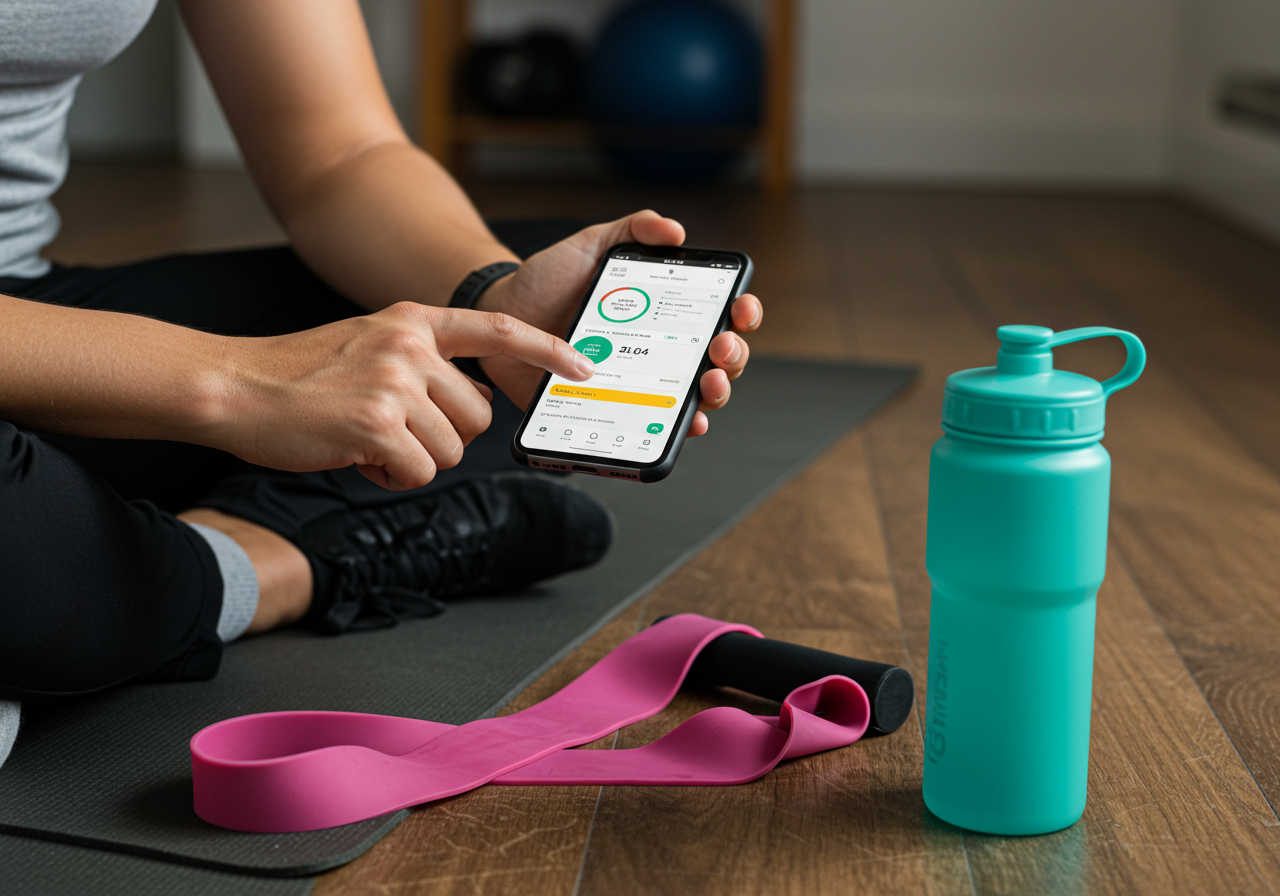
Tracking: Log sets, reps, and RPE in Strong, RepCount, or a simple spreadsheet. I also track HR via Garmin/Apple Watch; my typical home sessions average Zone 2–3.
Eight-Week Progression Plan with Testing Milestones
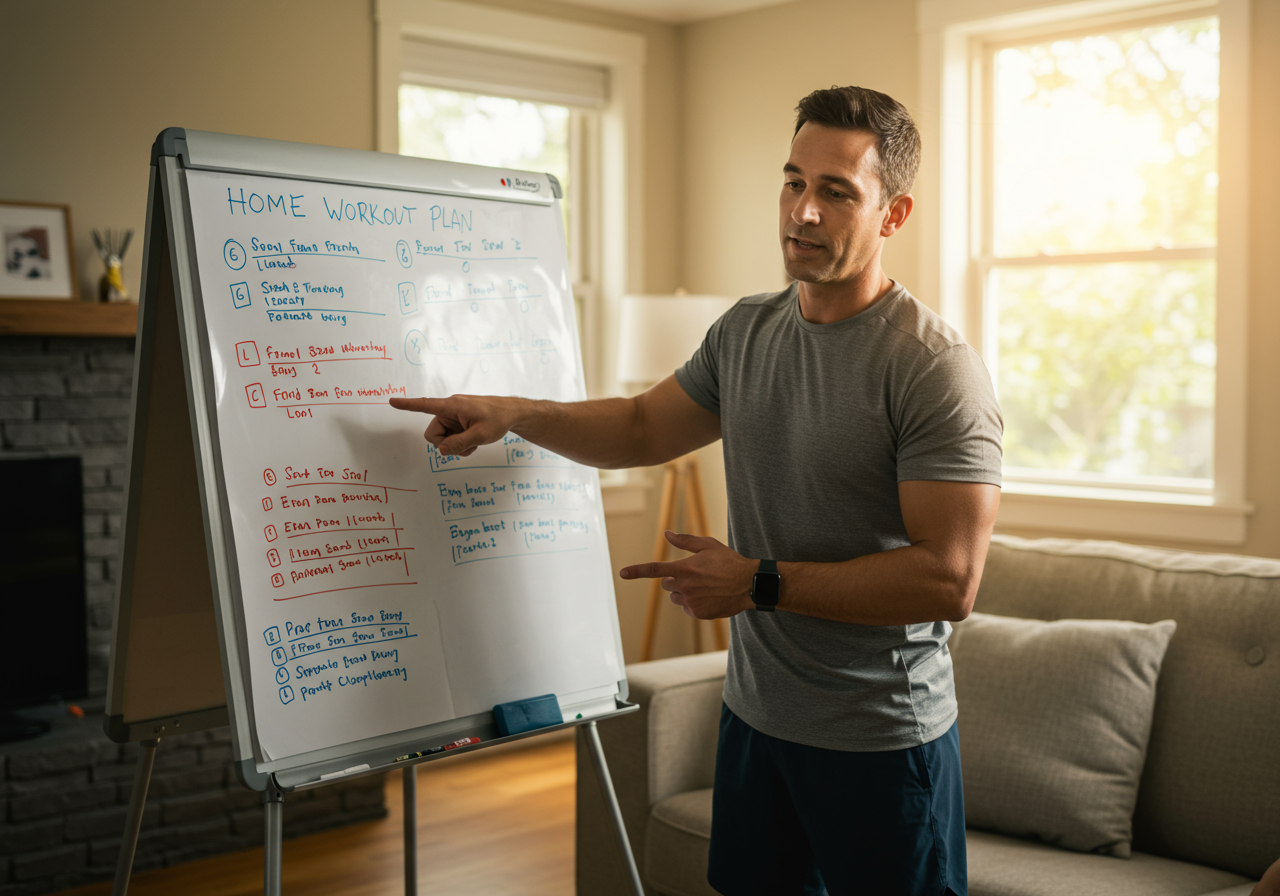
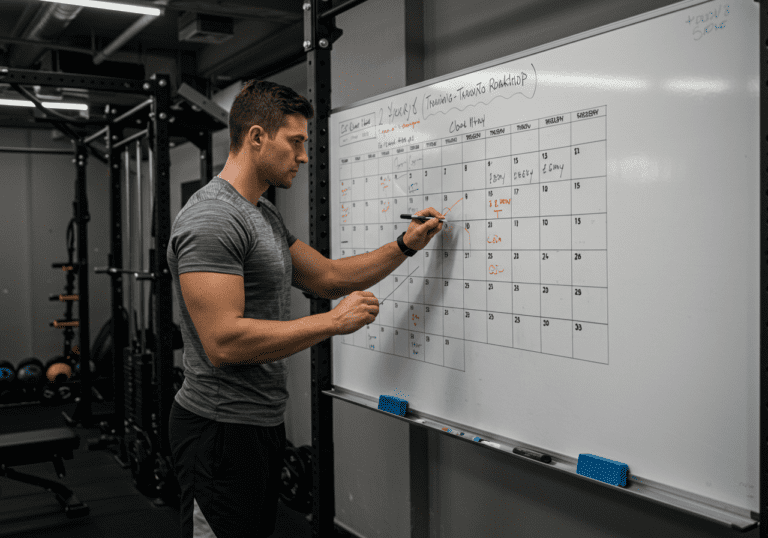
Use this roadmap to scale volume, intensity, and complexity. When you hit the top rep range with good form, increase load slightly or make the exercise harder.
Program roadmap — weeks, targets, and tests
Week 1–2: Foundation — Full-body 3x/week; main lifts 3×8 @ RPE 6–7; backpack 6–12 kg; rest 60–90s. Week 3–4: Volume push — 3×10–12 @ RPE 7; add band tension; rest 90s; holds: side plank 30–40s. Week 5–6: Strength focus — 4×6–8 @ RPE 7–8; more unilateral work; rest 90–120s; carries +10–20m per set. Week 7: Density week — keep load, reduce rest to 60s; use circuits A1–A3, B1–B3; stop sets 2 reps shy of failure. Week 8: Deload & check — 2 sessions only; 2×8 @ RPE 6; tests: max quality push-ups in 90s, 1-min wall sit, 30s dead hang or isometric row hold. Week 9–10 (Intermediate): Progression resumes — 4×8 @ RPE 7–8; add pause reps (1–2s bottom); try harder options (deficit push-ups, deeper split squats). Week 11–12 (Advanced options): Mechanical drop sets (e.g., feet-elevated push-ups → regular → incline) 2 rounds; band + dumbbell rows; single-leg RDL slower tempo (3–0–3).
Load progression ideas: add 1–2 kg to backpack/dumbbells, a thicker band, an extra set, or 1–2 reps per set. If joints feel stressed, progress tempo or range instead of load.
Example validation day (Week 8 or 12): record push-up reps, split-squat reps at fixed load, carry distance in 60 seconds, and side plank time. Improvement across at least two tests usually signals solid progress.
References & Further Reading
The following peer-reviewed research and authoritative guidelines support the recommendations in this article:
Training Frequency, Intensity Guidelines, and Common Fixes
Frequency: start with 3 strength days per week (A/B/A, then B/A/B). Optional: 1–2 short Zone 2 cardio sessions (20–30 minutes cycling or brisk walking) to support recovery and work capacity.
Intensity: most sets at RPE 7–8. Leave 1–3 reps in reserve on main lifts. Push to RPE 9 only on the final set of a movement once per week.
Common mistakes and fixes:
Plateaus: add a pause at the bottom, slow the lowering phase, or switch to unilateral variations; then return to regular tempo with a slightly heavier load.
Overuse aches: rotate grips/stances weekly; manage total sets (8–12 hard sets per muscle group per week fits most beginners).
Motivation dips: set a 20–30 minute cap; use habit trackers (Streaks, TickTick) and auto-log with Strong or RepCount.
Form drift: record one set per exercise weekly for a quick technique check.
Recovery and nutrition: aim for 1.6–2.2 g/kg protein, balanced carbs around training, and healthy fats. Creatine monohydrate (3–5 g/day) is optional but well-supported. Hydrate and sleep 7–9 hours. I track intake with MyFitnessPal when recomposition is the goal.
Real-world note: in practice, beginners often add a few reps per set over 4–6 weeks and report easier daily tasks (stairs, lifting groceries). One client message summed it up: “Backpack squats and band rows finally made home training click.”
Next steps: download a simple sheet, test baseline metrics this week, and start with Week 1–2.
Medical Disclaimer: The information provided on this website is for informational and educational purposes only and is not intended as personal medical or health advice. The content, including text, graphics, and images, is not a substitute for professional medical advice, diagnosis, or treatment. Always seek the advice of your physician or other qualified healthcare provider…
Medical Disclaimer: The information provided on this website is for informational and educational purposes only and is not intended as personal medical or health advice. The content, including text, graphics, and images, is not a substitute for professional medical advice, diagnosis, or treatment. Always seek the advice of your physician or other qualified healthcare provider…
Medical Disclaimer: The information provided on this website is for informational and educational purposes only and is not intended as personal medical or health advice. The content, including text, graphics, and images, is not a substitute for professional medical advice, diagnosis, or treatment. Always seek the advice of your physician or other qualified healthcare provider…
Medical Disclaimer: The information provided on this website is for informational and educational purposes only and is not intended as personal medical or health advice. The content, including text, graphics, and images, is not a substitute for professional medical advice, diagnosis, or treatment. Always seek the advice of your physician or other qualified healthcare provider…
Medical Disclaimer: The information provided on this website is for informational and educational purposes only and is not intended as personal medical or health advice. The content, including text, graphics, and images, is not a substitute for professional medical advice, diagnosis, or treatment. Always seek the advice of your physician or other qualified healthcare provider…
Medical Disclaimer: The information provided on this website is for informational and educational purposes only and is not intended as personal medical or health advice. The content, including text, graphics, and images, is not a substitute for professional medical advice, diagnosis, or treatment. Always seek the advice of your physician or other qualified healthcare provider…