Medical Disclaimer: The information provided on this website is for informational and educational purposes only and is not intended as personal medical or health advice. The content, including text, graphics, and images, is not a substitute for professional medical advice, diagnosis, or treatment. Always seek the advice of your physician or other qualified healthcare provider with any questions you may have regarding a medical condition or before starting any new exercise, nutrition, or supplement program. Never disregard professional medical advice or delay in seeking it because of something you have read on this blog. Reliance on any information provided by this site is solely at your own risk.
Bench press essentials are the fast track to safer, stronger pressing. In this guide, you’ll learn how grip width, bench angle, and structured progressions work together.
Direct answer: Keep forearms vertical with a stacked wrist, set shoulder blades down and back, use a smooth bar path, and increase load gradually each week.
Vertical Forearms and Scapular Retraction Reduce Injury Risk
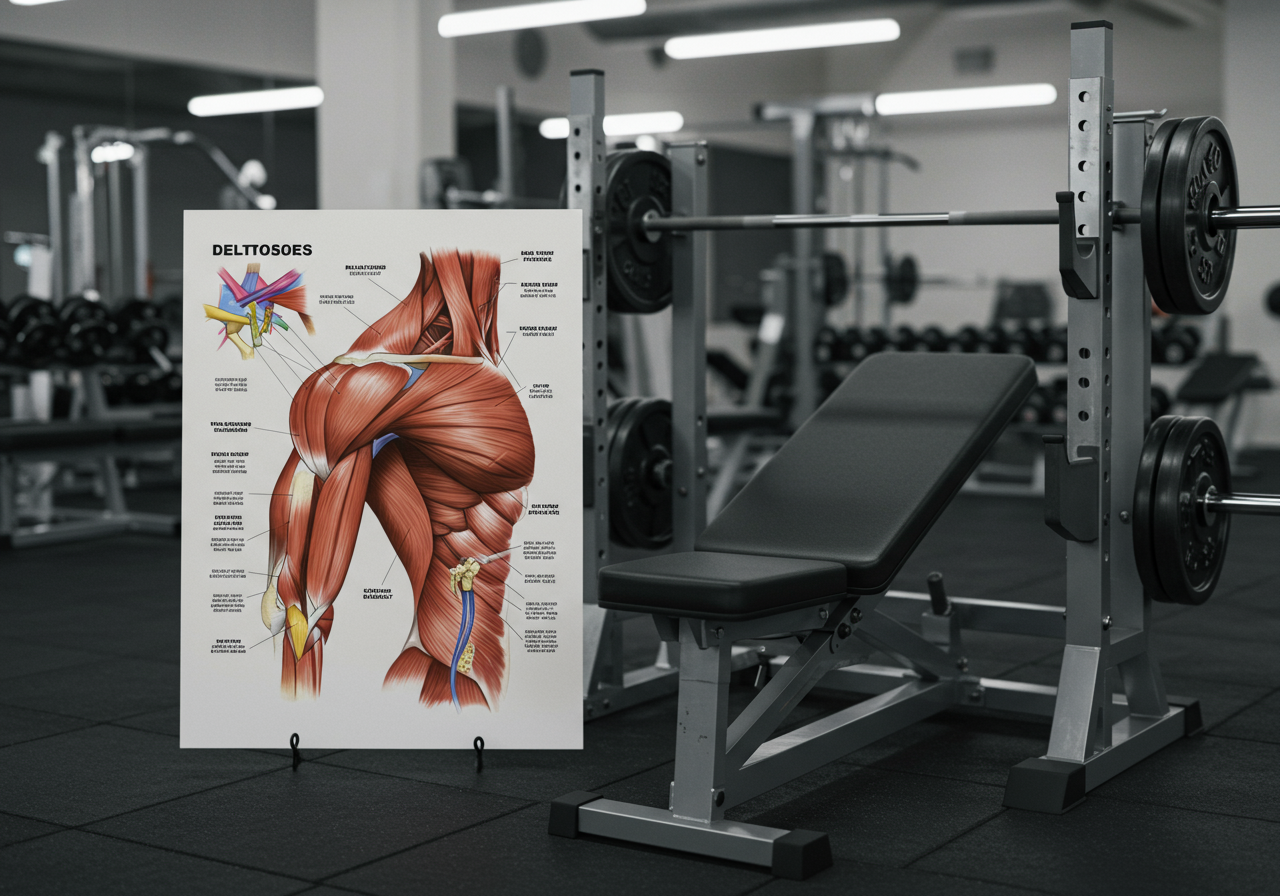
Grip and angle change how much work your pecs, triceps, and front delts perform. A vertical forearm at the chest reduces unnecessary elbow torque. Scapular retraction and depression stabilize the shoulder, lowering irritation risk while transferring more force to the bar.
Flat bench builds general pressing strength; a 15–30° incline shifts emphasis toward upper chest and may feel friendlier on cranky shoulders. Decline reduces shoulder demand but offers less carryover for many lifters; it’s optional.
In practice with novices, consistent technique plus progressive overload often leads to steady strength increases over the first 4–8 weeks, provided recovery and nutrition are on point. My client logs (tracked in the Strong app) show the biggest early wins come from better setup and bar control more than from adding fancy variations.
I monitor recovery with a simple checklist (sleep hours, perceived soreness, appetite) and, when available, wearable data from Garmin or Fitbit. When these trend well, session RPE falls at the same load, a useful sign that the plan is working.
Five Contact Points, Stacked Wrists, Full Thumb Grip
Warm-up — 5–8 minutes: Easy cardio, then 1–2 rounds of band pull-aparts, scap wall slides, and push-up plus. Finish with 2–3 light ramp-up sets on the bench.
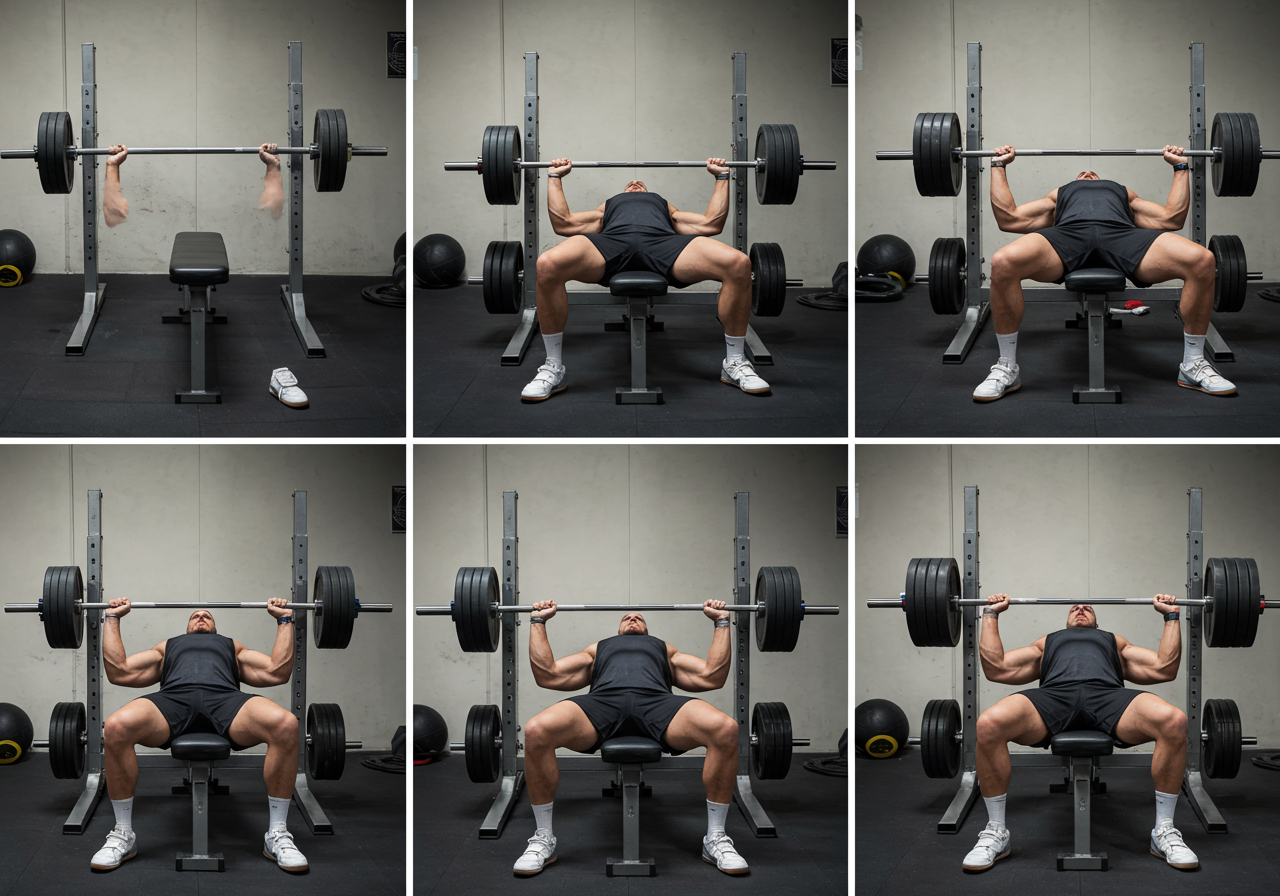
Bench setup: Eyes under the bar, feet planted, five points of contact (head, shoulders, glutes, left/right foot). Pull shoulder blades down and back into the pad. Slight arch is fine; pain is not.
Find your grip: Start a hair wider than shoulder width. At the bottom, forearms should be vertical from elbow to wrist. Stack wrists over the bar; avoid bending them back. Use a full grip with thumbs wrapped for safety.
Pick the angle: Flat for most strength work. If shoulders complain, try a low incline (15–30°) or a slightly narrower grip. Save decline for specialty blocks.
Bar path and touch point: Lower in 2–3 seconds to touch around mid-to-lower sternum, keeping elbows about 45–60° from your torso. Press back and up toward the rack in a gentle J-curve while maintaining leg drive.
Rep quality: Smooth descent, a light touch (no bouncing), then drive hard. Think: squeeze the bar, keep the upper back tight, push the floor away with your feet.
First session layout (example): – Bench Press: 3 sets of 8 reps at RPE 6–7, 2–3 minutes rest. – One push accessory: Dumbbell incline press 3×10–12 at RPE 7. – One pull accessory: Chest-supported row 3×10–12 at RPE 7. – Shoulder saver: Face pull or band external rotation 2–3×15 easy.
Logging: Record sets, reps, load, RPE, and any pain notes. Film one working set to check bar path and elbow angle. Apps like Strong or Hevy make it simple; I add quick cues (e.g., “elbows 55°,” “touch lower”).
Post-session: Walk 3–5 minutes, then gentle pec/lat mobility. Eat a protein-rich meal within a few hours and hydrate.
Small Weekly Loads, Multiple Angles, Quality Over Max
Use small, steady steps. Favor rep quality over chasing maximal weight. Most lifters do best with 2–3 bench exposures per week.
Caption: Weekly progression overview (intensity uses RPE; variations rotate to build skill and reduce plateaus).
Beginner Weeks 1–4: Flat bench 3x8 @ RPE 6–7; add 1–2.5% weekly if all sets ≤7 RPE; close-grip 2x10; row 3x10.

Beginner Weeks 5–8: Flat bench 4x6 @ RPE 7–8; pause bench (1s) 3x5 @ RPE 6–7; incline DB press 3x10; row 3x8 heavier.


Intermediate Weeks 1–4: Day A flat 5x5 @ RPE 7; Day B incline 4x6 @ RPE 7; plus triceps/upper-back 6–8 total sets/session.

Intermediate Weeks 5–8: Day A flat 4x4 @ RPE 8; Day B pause bench 5x3 @ RPE 7–8; introduce Spoto or pin press 3x3 light.


Advanced Weeks 1–4: Undulate—Heavy (4x3 @ RPE 8), Volume (5x6 @ RPE 7), Skill (pause 6x2 @ RPE 6–7).

Advanced Weeks 5–8: Intensify—Top single @ RPE 8 then 4x3 @ RPE 8; Volume day 5x5 @ RPE 7; Accessory emphasis on triceps/back.
Load rules: Add 0.5–2.5 kg per week when the final set is ≤8 RPE with crisp form. If any two sets exceed RPE 9 or technique slips, hold or reduce load 2–5% and repeat.
Deloads: Every 4–8 weeks, cut volume by ~40–50% for one week while keeping light technique work. Resume with the prior successful week.
Variation rotation: Close-grip for triceps, pause bench for stability, incline for upper chest, Spoto/pin press for mid-range control. Cycle one focus variation for 3–4 weeks.
Use Spotters, Microload Plateaus, Adjust Grip When Needed
Weekly structure: 8–16 hard pressing sets across 2–3 days for most trainees. Keep main bench work around RPE 6–9, finishing most sets with 1–3 reps in reserve.
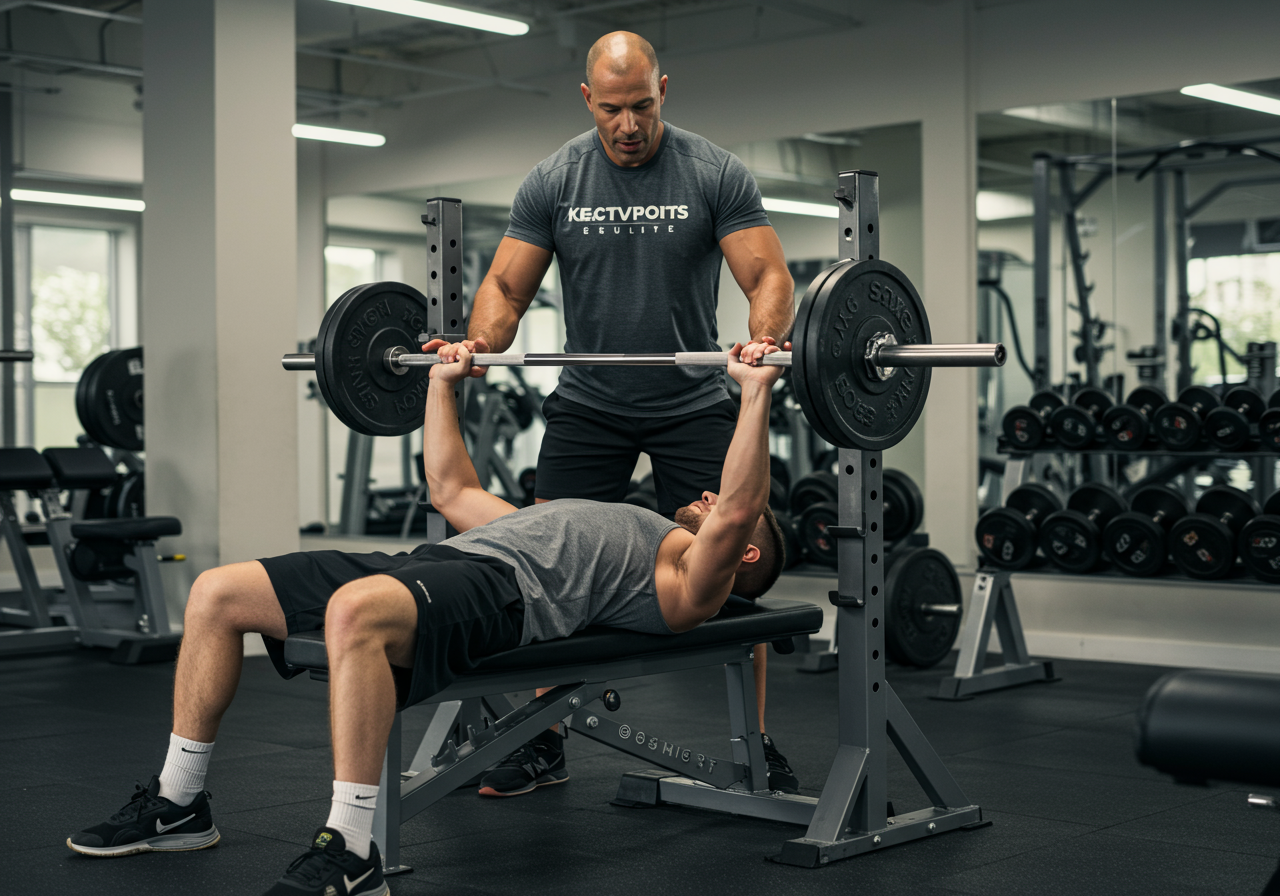
Safety musts: Use a spotter or safety arms. Wrap thumbs around the bar. Keep shoulders tight on the pad; avoid excessive elbow flare. When in doubt, lower the load and clean up technique.
Troubleshooting: – Plateaus: Microload with 0.5–1.25 kg plates, add a pause or tempo block, and increase upper-back volume. – Shoulder grumpiness: Try a slightly narrower grip, low incline, more rowing/face pulls, and reduce weekly pressing sets for 1–2 weeks. – Motivation dips: Use the 5‑minute rule—start the warm-up; momentum often follows. Shorten sessions instead of skipping.
Recovery & nutrition: Aim for 1.6–2.2 g/kg protein, carbs around training, and 3–5 g creatine monohydrate if desired. Caffeine can help performance; avoid late if it hurts sleep. Target 7–9 hours of sleep and keep a consistent schedule. Light cardio on rest days aids recovery.
Track results: Use the Strong or Hevy app to log load, reps, and RPE. Re‑test a comfortable 3–5RM or e1RM every 6–8 weeks. Look for smoother bar paths on video and stable RPE at higher loads as proof of progress.
Next steps: Download the accompanying template. Your press will thank you.
Medical Disclaimer: The information provided on this website is for informational and educational purposes only and is not intended as personal medical or health advice. The content, including text, graphics, and images, is not a substitute for professional medical advice, diagnosis, or treatment. Always seek the advice of your physician or other qualified healthcare provider…
Medical Disclaimer: The information provided on this website is for informational and educational purposes only and is not intended as personal medical or health advice. The content, including text, graphics, and images, is not a substitute for professional medical advice, diagnosis, or treatment. Always seek the advice of your physician or other qualified healthcare provider…
Medical Disclaimer: The information provided on this website is for informational and educational purposes only and is not intended as personal medical or health advice. The content, including text, graphics, and images, is not a substitute for professional medical advice, diagnosis, or treatment. Always seek the advice of your physician or other qualified healthcare provider…
Medical Disclaimer: The information provided on this website is for informational and educational purposes only and is not intended as personal medical or health advice. The content, including text, graphics, and images, is not a substitute for professional medical advice, diagnosis, or treatment. Always seek the advice of your physician or other qualified healthcare provider…
Medical Disclaimer: The information provided on this website is for informational and educational purposes only and is not intended as personal medical or health advice. The content, including text, graphics, and images, is not a substitute for professional medical advice, diagnosis, or treatment. Always seek the advice of your physician or other qualified healthcare provider…
Medical Disclaimer: The information provided on this website is for informational and educational purposes only and is not intended as personal medical or health advice. The content, including text, graphics, and images, is not a substitute for professional medical advice, diagnosis, or treatment. Always seek the advice of your physician or other qualified healthcare provider…