Medical Disclaimer: The information provided on this website is for informational and educational purposes only and is not intended as personal medical or health advice. The content, including text, graphics, and images, is not a substitute for professional medical advice, diagnosis, or treatment. Always seek the advice of your physician or other qualified healthcare provider with any questions you may have regarding a medical condition or before starting any new exercise, nutrition, or supplement program. Never disregard professional medical advice or delay in seeking it because of something you have read on this blog. Reliance on any information provided by this site is solely at your own risk.
Hypertrophy vs Strength Training is the decision most beginners face, and choosing well shapes your results, schedule, and motivation.
Choose hypertrophy for size and shape; choose strength to lift heavier and build high neural efficiency.
In this guide, you’ll get simple criteria to pick your track, session templates that actually work, a 12‑week progression, and testing methods to confirm you’re improving.
Evidence-Based Training Stress and Neural Adaptations
Muscle size and maximal force respond to overlapping but distinct stress. Hypertrophy favors moderate loads, higher volume, and proximity to failure that drives mechanical tension and metabolite build‑up. Strength prioritizes heavier percentages, longer rest, and specific practice of lifts to refine neural drive and technique.
Across peer‑reviewed studies and coaching practice, both approaches can grow muscle and make you stronger, especially early on. When volume is equal, hypertrophy protocols often grow size slightly faster, while heavy, specific lifting improves one‑rep strength more efficiently. Expect large individual variation.
From my client logs and workshops, novices do best with clear focus blocks: 6–8 weeks leaning hypertrophy (8–12 reps) or strength (2–5 reps), then retest. This reduces program hopping and helps recovery.
Baseline Testing and Session Templates Explained
Step 1 — Pick your primary goal for 8 weeks. If you want visible size, pick hypertrophy. If you want to raise your 1RM or feel stronger for sport, pick strength. You can cycle later.
Step 2 — Establish a baseline. Use a submax test: after warm‑up, perform one top set leaving 2 reps in reserve (RIR 2). Estimate 1RM with a rep calculator (e.g., Epley). Record in Strong or Hevy app.
Step 3 — Use the matching session template.
Hypertrophy Day (60–70 min) Warm‑up — 5–8 min easy cardio + dynamic hips/shoulders. Main lift (e.g., back squat): 3–4 sets × 6–10 reps @ RPE 7–9, 2–3 min rest. Secondary (e.g., RDL): 3–4 × 8–12 @ RPE 7–8. Upper pull (e.g., row): 3–4 × 8–12. Isolation/pump: 2–3 × 12–15 (curls, laterals, leg extensions). Core: 2–3 sets. Cool‑down: easy walk + light stretches.
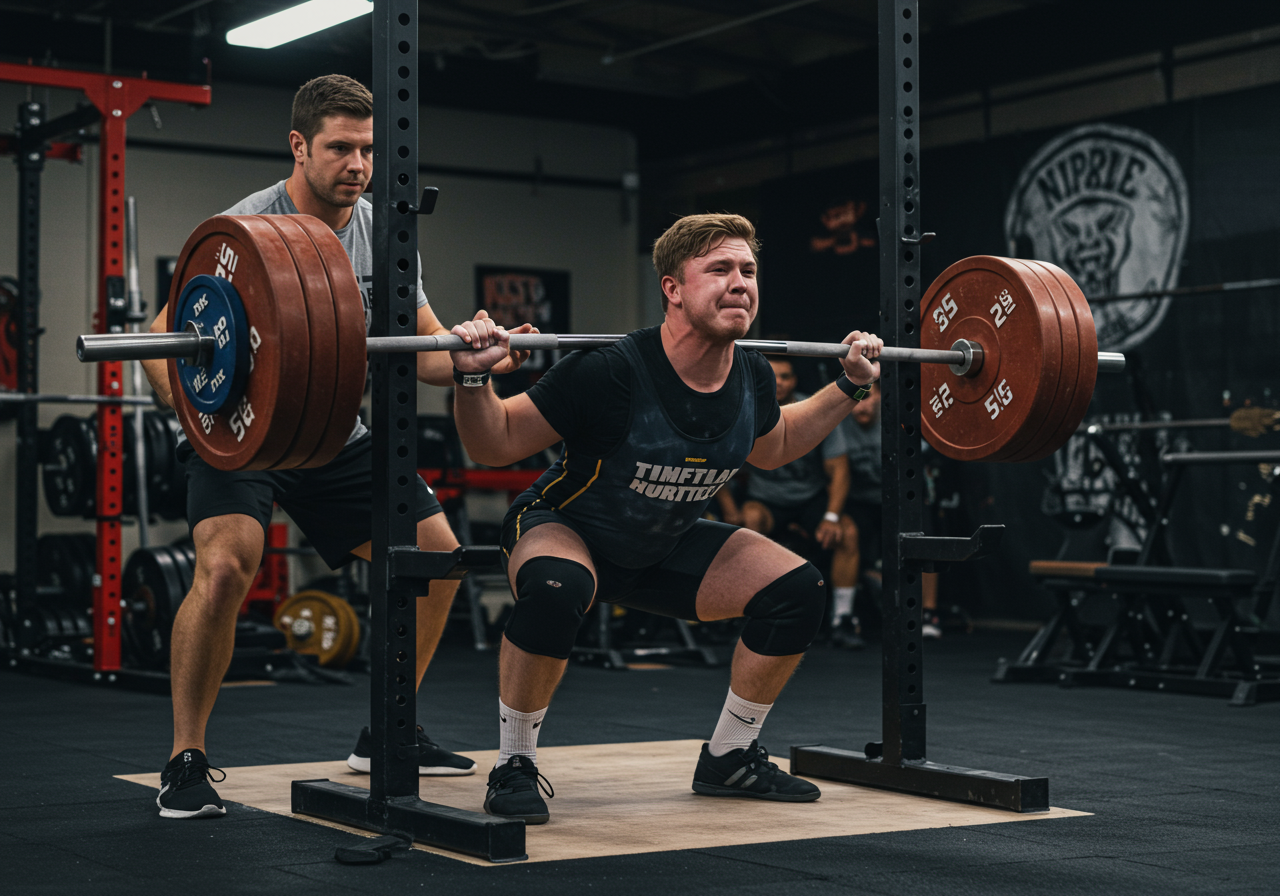
Strength Day (55–65 min) Warm‑up — barbell ramping sets to working weight. Primary lift (e.g., back squat): 4–6 sets × 2–5 reps @ 80–90% 1RM, RPE 7–8.5, 3–5 min rest. Technique lift (e.g., paused squat): 3 × 2–3 @ ~75–85%. Assistance (e.g., hamstring/upper back): 2–3 × 6–10 @ RPE 7. Optional finisher: 5–8 min zone 2 cardio or carries.
Step 4 — Progression rules. Hypertrophy: add 1–2 reps each set until the top of the range, then increase load 2–5% and reset to the bottom of the range. Keep 0–2 RIR. Strength: hold rep targets; increase load 2.5–5% when all sets are ≤RPE 8. Insert a lighter week every 4th week.
Step 5 — Recovery & nutrition. Aim for 1.6–2.2 g/kg/day protein, 25–35 kcal/kg/day if trying to grow, and 7–9 hours sleep. Creatine monohydrate 3–5 g/day is widely supported. Track meals in MyFitnessPal weekly, not obsessively.
Step 6 — Cardio to support lifting. Add 2× zone 2 sessions (20–30 min, conversational pace). I keep these on non‑leg days or after upper‑body to protect squat/deadlift performance.
Example from my own test block: 3 days/week lifting (upper/lower/upper‑lower blend), 2 zone‑2 rides (~30 min each, HR 65–75% max) logged on Garmin. Sessions averaged 55–70 min. RPE stayed mostly 7–8, with one hard top set per lift.
12-Week Hypertrophy and Strength Progression Plan
Pick one track for the next 12 weeks. The lines below show how to scale sets, reps, and intensity while protecting recovery.
Caption: 12‑week progression comparing hypertrophy and strength tracks. Weeks 1–2: Hypertrophy — 3×8–10 @ RPE 7–8; Strength — 4×3–5 @ ~80% 1RM, RPE ≤8. Weeks 3–4: Hypertrophy — 4×8–12, add 2–5% load when hitting 12; Strength — 5×3–4 @ 82–85%, long rests. Week 5: Hypertrophy — keep volume, one set to RPE 9; Strength — 4×2–3 @ 85–88%, plus 2×5 @ 70% speed work. Week 6 (Deload): Hypertrophy — cut sets by 40–50%, keep technique crisp; Strength — 3×2 @ 75%, easy. Weeks 7–8: Hypertrophy — 4–5×6–10 with a new accessory; Strength — 5–6×2–4 @ 85–90%, pause variation 3×2 @ 80%. Weeks 9–10: Hypertrophy — 3–4×10–12 + 1 metabolite set (e.g., 15–20 reps) per lift; Strength — 6×2 @ 87–90%, back‑off 2×5 @ 72–75%. Week 11: Hypertrophy — aim for small PRs (1–2 reps or 2–5% load); Strength — 3×1–2 @ 90–92% if bar speed is good. Week 12 (Test/Measure): Hypertrophy — estimate new 10RM/8RM, take photos and girths; Strength — test a conservative single @ ≤9 RPE or calculate via heavy triple.
Beginner: Train full‑body 3×/week, 2 main lifts per day, 8–12 hard sets per muscle per week. Keep 1–2 RIR. Focus on form and consistent sleep.
Intermediate: Upper/Lower split 4×/week. Undulate reps across days (e.g., heavy 5s, moderate 8s). Insert a deload every 4–6 weeks.
Advanced: Rotate variations (paused, tempo, close‑grip), manage fatigue with bar speed or RPE caps, and plan 6–8 week blocks with a clear testing week.
Frequency, RPE, Monitoring, and Common Mistakes
Frequency: Start with 3 days/week. Move to 4 when recovery is reliable. Keep at least one full rest day.
Intensity & cues: Use RPE 7–8 most sessions. Save RPE 9 for a final set on key lifts, not every week. Film your top set to check depth, bar path, and bracing.
Common mistakes to avoid: Changing exercises weekly, skipping warm‑ups, adding extra failure sets, and neglecting sleep. If elbows or knees grumble, switch to a friendlier variation (e.g., safety bar squat, neutral‑grip press) and reduce weekly jumps.
Monitoring: Track sets, reps, RPE, and morning energy. Optional: HRV or resting HR with Fitbit or Oura as a recovery nudge. If performance drops 2–3 sessions in a row, deload early.
Plateaus: For hypertrophy stalls, add a set for lagging muscles or push closer to failure for one week. For strength stalls, add a pause or tempo to address sticking points, and reduce accessory fatigue.
Injuries: Pain that sharpens with each set is a stop sign. Sub in single‑leg or machine work and see a qualified clinician if it persists.
Testimonial: “At 46, I ran the strength track for 10 weeks. My joints felt better with longer rests, and my deadlift moved cleaner than ever.” — L., remote client
Next steps: Pick your track, download a logging app, and start Week 1 today. I’ll send a printable checklist and video cues—.
Medical Disclaimer: The information provided on this website is for informational and educational purposes only and is not intended as personal medical or health advice. The content, including text, graphics, and images, is not a substitute for professional medical advice, diagnosis, or treatment. Always seek the advice of your physician or other qualified healthcare provider…
Medical Disclaimer: The information provided on this website is for informational and educational purposes only and is not intended as personal medical or health advice. The content, including text, graphics, and images, is not a substitute for professional medical advice, diagnosis, or treatment. Always seek the advice of your physician or other qualified healthcare provider…
Medical Disclaimer: The information provided on this website is for informational and educational purposes only and is not intended as personal medical or health advice. The content, including text, graphics, and images, is not a substitute for professional medical advice, diagnosis, or treatment. Always seek the advice of your physician or other qualified healthcare provider…
Medical Disclaimer: The information provided on this website is for informational and educational purposes only and is not intended as personal medical or health advice. The content, including text, graphics, and images, is not a substitute for professional medical advice, diagnosis, or treatment. Always seek the advice of your physician or other qualified healthcare provider…
Medical Disclaimer: The information provided on this website is for informational and educational purposes only and is not intended as personal medical or health advice. The content, including text, graphics, and images, is not a substitute for professional medical advice, diagnosis, or treatment. Always seek the advice of your physician or other qualified healthcare provider…
Medical Disclaimer: The information provided on this website is for informational and educational purposes only and is not intended as personal medical or health advice. The content, including text, graphics, and images, is not a substitute for professional medical advice, diagnosis, or treatment. Always seek the advice of your physician or other qualified healthcare provider…