Medical Disclaimer: The information provided on this website is for informational and educational purposes only and is not intended as personal medical or health advice. The content, including text, graphics, and images, is not a substitute for professional medical advice, diagnosis, or treatment. Always seek the advice of your physician or other qualified healthcare provider with any questions you may have regarding a medical condition or before starting any new exercise, nutrition, or supplement program. Never disregard professional medical advice or delay in seeking it because of something you have read on this blog. Reliance on any information provided by this site is solely at your own risk.
Quick test, daily drills, and strength progressions inside
Ankle mobility is the linchpin for smoother running strides and cleaner lifting mechanics. When the ankle moves well, your knees track better and your hips stop compensating.
The fastest fix: mobilize, strengthen, then load the ankle five days weekly for 10–15 minutes.
In this guide you’ll get a simple test, daily drills, strength progressions, and ways to integrate mobility into runs and squats. I’ll also show how to track results, avoid setbacks, and fuel recovery.
How limited dorsiflexion disrupts squat depth and running mechanics
Limited dorsiflexion shifts load up the chain. In squats, heels lift early, knees cave, and the torso folds. In running, your foot strikes stiffer, increasing braking and calf strain. More motion at the talocrural joint lets the knee travel forward so the foot can stay planted and the hips track cleanly.
Peer‑reviewed studies have linked reduced dorsiflexion with altered squat mechanics and higher soft‑tissue stress in runners. Gains often come from a combination of joint mobilization plus strength of the calves and tibialis muscles; flexibility alone rarely sticks without loading.
From my training logs last winter, improving ankle control helped my front squat depth stabilize without a heel wedge, and my easy runs felt springier at the same heart rate. Mobility wasn’t the only variable, but movement quality clearly improved.
Client note (Marisol, beginner lifter/runner): “After three weeks, my knees stopped caving in goblet squats and my shins felt less tight on runs. The knee‑to‑wall test moved forward about a couple centimeters.”
Bottom line: When ankle motion and strength improve, technique gets easier. That can reduce discomfort and open room for safe progress.
Banded glides, calf stretches, and tibialis raises explained
Warm‑up — 3–5 minutes of easy movement: brisk walk, bike, or jump rope in Zone 1–2 (you can talk in full sentences). Then follow the flow below.
1) Assess (2 minutes)
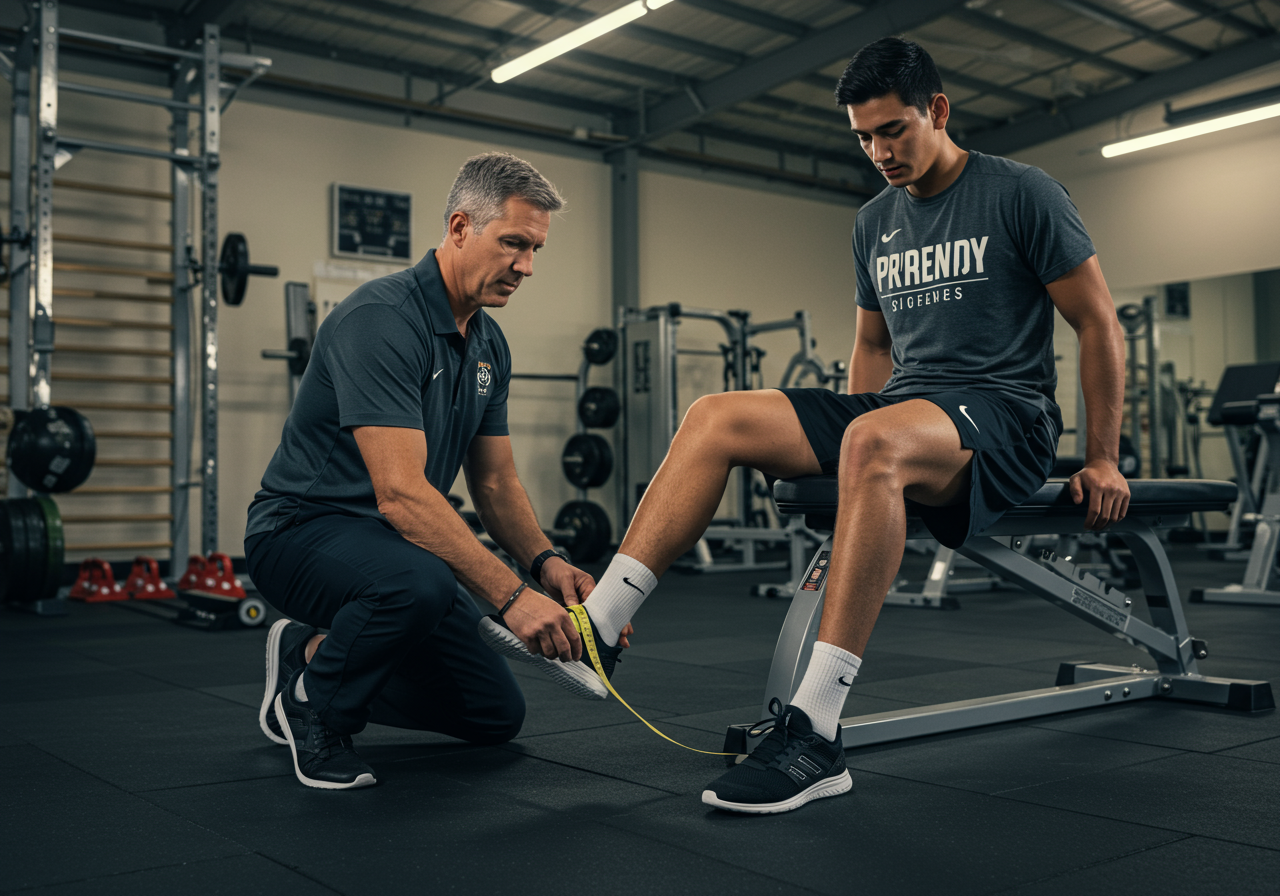
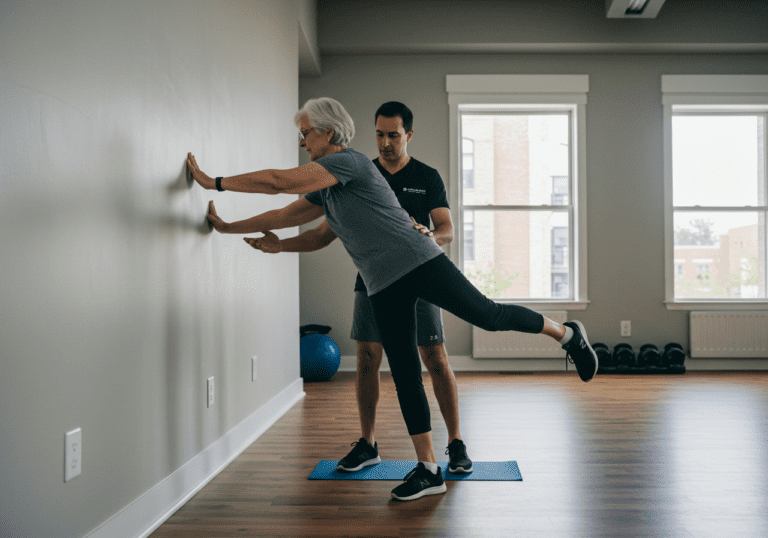
Knee‑to‑wall test: Stand facing a wall, big toe ~5–10 cm away. Drive your knee toward the wall without the heel lifting. If the knee touches, slide the foot back 1 cm and retest. Record the last distance your knee can still touch on each side (cm). Note any front‑of‑ankle pinch.
2) Mobilize the joint (3–5 minutes)
Banded talus glide: Loop a light band around the ankle crease pulling backward as you lunge the knee over toes. 2 sets of 10 slow rocks each side.
Bent‑knee calf stretch (contract‑relax): 20 seconds stretch, then 5 seconds gentle calf press into the floor, relax deeper. 2 rounds per side.
Soft‑tissue sweep: Light foam roll or lacrosse ball on calves and sides of shin for 60–90 seconds total per leg.
3) Strengthen the movers (6–10 minutes)
Tibialis raises (heels on floor, back against wall, lift toes): 2–4 sets of 10–15 reps at RPE 6–7, slow lower.
Optional low‑amplitude pogo hops: 2–3 sets of 15–30 contacts, land softly, build stiffness gradually.
Daily 15‑Minute Micro‑Session (template)
2 min assess + soft‑tissue
5 min banded glides + contract‑relax
6 min tibialis and calf raises
2 min goblet squat patterning or step‑downs
Real session example (from my log)
15 min after an easy run (Garmin HR avg Zone 2): tibialis raises 3×15; bent‑knee calf raises 3×12 with 10‑kg dumbbell; banded glides 2×10; goblet squat 3×8 with a 2‑cm wedge, RPE 6–7. I record knee‑to‑wall cm in Apple Notes and upload runs to Strava. Nutrition: ~30 g whey and a piece of fruit post‑session.
Cues
Tripod foot: big toe, little toe, heel pressed; avoid collapsing arch.
Knee tracks over 2nd–3rd toe, not inside.
Move slow, especially the lowering phase. Quality beats quantity.
Eight-week ramp from beginner mobility to loaded plyometrics
Use this simple ramp. Adjust volume if soreness lingers beyond 48 hours. Keep most sets at RPE 6–7; one hard set (RPE 8) per area is enough.
Caption: 8‑week ankle mobility progression for runners and lifters.
Weeks 1–2 (Beginner): Daily 10–12 min mobility; Strength 2x/week — Tib raises 3x12–15; Bent‑knee calf 3x12; Goblet squat with 1–2 cm heel wedge 3x8; Running — add 4x20s strides (full recovery). Goal: knee‑to‑wall +1–2 cm.

Weeks 3–4 (Novice+): Daily 12–15 min; Strength 3x/week — Tib raises 4x12; Straight + bent‑knee calf 3x12 each; Split squat 3x10; Goblet squat wedge 1 cm; Running — hill strides 6–8s x4–6. Goal: smoother squat to parallel.

Weeks 5–6 (Intermediate): Daily 12–15 min; Add eccentric heel drops 3x8; Tib raises add load (plate or DB) 3x10–12; Backward sled 4x20 m; Goblet squat flat or micro‑wedge; Running — 6–8x30s fast with good form in Z5 recoveries. Goal: knee‑to‑wall another +1 cm.

Weeks 7–8 (Advanced base): Daily 10–12 min; Single‑leg calf 3x8–10; Pogo hops 3x20; Front squat or safety‑bar squat with 2‑sec pause; Running — short downhill cadence drills 4x15s; Optional tempo run Z3. Goal: flat‑foot deep squat tolerance.
Deload option: Cut sets by ~40% for 5–7 days if calves or Achilles stay sore, then resume. Lifters can cycle wedges: start higher on heavy days, lower on light technique days.
Markers of progress
Knee‑to‑wall distance: aim for steady increases without heel lift.
Squat video: compare shin angle and heel contact week to week.
Running metrics: cadence and ground contact time from Garmin/Coros trending stable as paces improve.
Micro-sessions five days weekly plus recovery and nutrition tips
Frequency: Micro‑sessions 5–6 days/week work well; one slightly longer strength‑focused session (20–25 minutes) 1–2 times/week cements gains.
Safety: A front‑of‑ankle pinch suggests joint glide first (banded mobilizations) before deeper stretches. Sharp Achilles pain? Stop plyos, reduce volume, and consult a qualified clinician if symptoms persist.
Common mistakes
Only stretching. Without tibialis and calf strength, gains fade.
Rushing plyometrics. Build isometric and eccentric strength first.
Collapsing arches. Maintain a tripod foot to aim motion where it belongs.
Recovery & nutrition
Protein: 1.6–2.2 g/kg/day; distribute across meals. I track intake in MyFitnessPal when dialing in recovery.
Hydration and electrolytes support calf function on hot runs.
Some athletes use 10–15 g collagen or gelatin with vitamin C 30–60 minutes before calf work; evidence is mixed, but it may help connective tissue — consider trialing.
Sleep: 7–9 hours. Calves rebound poorly on short sleep.
Motivation & tracking
Habit stack: do tibialis raises during coffee brew or pre‑run. Log knee‑to‑wall cm weekly.
Use Strava or Garmin to tag sessions “ankle work” so improvements line up with training blocks.
Troubleshooting
Plateau: add tempo (3–4 sec lowers) or load to tib raises/calf work before adding more volume.
Overtraining signs: lingering calf tightness, drop in jump feel, irritability. Take a 3–5 day reset.
Asymmetry: start with the tighter side for an extra set.
What results to expect: In practice, consistent athletes often add 2–4 cm on the knee‑to‑wall test over 6–8 weeks and report easier squat depth and smoother stride. Individual results vary with training age and adherence.
Next steps: Keep one or two ankle drills in warm‑ups year‑round, retest monthly, and cycle wedge height down as you get stronger. If this helped.
Medical Disclaimer: The information provided on this website is for informational and educational purposes only and is not intended as personal medical or health advice. The content, including text, graphics, and images, is not a substitute for professional medical advice, diagnosis, or treatment. Always seek the advice of your physician or other qualified healthcare provider…
Medical Disclaimer: The information provided on this website is for informational and educational purposes only and is not intended as personal medical or health advice. The content, including text, graphics, and images, is not a substitute for professional medical advice, diagnosis, or treatment. Always seek the advice of your physician or other qualified healthcare provider…
Medical Disclaimer: The information provided on this website is for informational and educational purposes only and is not intended as personal medical or health advice. The content, including text, graphics, and images, is not a substitute for professional medical advice, diagnosis, or treatment. Always seek the advice of your physician or other qualified healthcare provider…
Medical Disclaimer: The information provided on this website is for informational and educational purposes only and is not intended as personal medical or health advice. The content, including text, graphics, and images, is not a substitute for professional medical advice, diagnosis, or treatment. Always seek the advice of your physician or other qualified healthcare provider…
Medical Disclaimer: The information provided on this website is for informational and educational purposes only and is not intended as personal medical or health advice. The content, including text, graphics, and images, is not a substitute for professional medical advice, diagnosis, or treatment. Always seek the advice of your physician or other qualified healthcare provider…
Medical Disclaimer: The information provided on this website is for informational and educational purposes only and is not intended as personal medical or health advice. The content, including text, graphics, and images, is not a substitute for professional medical advice, diagnosis, or treatment. Always seek the advice of your physician or other qualified healthcare provider…