Medical Disclaimer: The information provided on this website is for informational and educational purposes only and is not intended as personal medical or health advice. The content, including text, graphics, and images, is not a substitute for professional medical advice, diagnosis, or treatment. Always seek the advice of your physician or other qualified healthcare provider with any questions you may have regarding a medical condition or before starting any new exercise, nutrition, or supplement program. Never disregard professional medical advice or delay in seeking it because of something you have read on this blog. Reliance on any information provided by this site is solely at your own risk.
Transform Energy With Strategic Three-Minute Work Breaks
How to Implement Mini-Recovery Breaks During the Workday can transform your energy, posture, and productivity in a few weeks.
Do this: take 3–5-minute breaks every 30–60 minutes to stand, breathe six slow breaths, and move joints.
In this guide you will learn a simple break framework, step-by-step routines, a levelled progression, and clear ways to track results with minimal disruption to work.
Research Shows Microbreaks Reduce Pain and Boost Performance
Short, regular interruptions to sitting unload tissues, restore blood flow, and move synovial fluid through joints. A longer exhale downshifts the nervous system, while eye breaks reduce strain from screens. Brief walking or mobility snacks subtly raise daily activity, supporting glucose control and overall stamina.
Peer-reviewed studies on microbreaks suggest 30 seconds to 5 minutes can reduce discomfort and maintain or even improve task performance. In practice with my remote clients, adding 6–8 microbreaks often correlates with fewer afternoon aches and steadier focus ratings, though results vary.
Client note: ‘By week three, my neck pressure faded from a constant throb to an occasional whisper, and I stopped reaching for ibuprofen.’ — Maya, product designer.
From my own logs, using a 3–5-minute break every 50 minutes led to steadier midday energy on Garmin Body Battery and fewer end-of-day tightness notes. These are observational, not lab-grade, but consistent across several months.
Four-Step System From Scheduling Alerts to Movement Menus
1) Map your day (5 minutes). On a sticky note or app, mark common dip times, long meetings, and tasks that trigger slouching. Rate current discomfort and focus (0–10). This becomes your baseline.
2) Set prompts. Use one: Pomofocus or Focus To-Do (30–60 minute cycles), Stretchly/Time Out (screen dim reminders), Apple Watch Stand, Garmin Move Alert, or a simple phone alarm. Keep alerts gentle to avoid stress spikes.
3) Build your break menu. Rotate options to keep it fresh and to address the whole body.
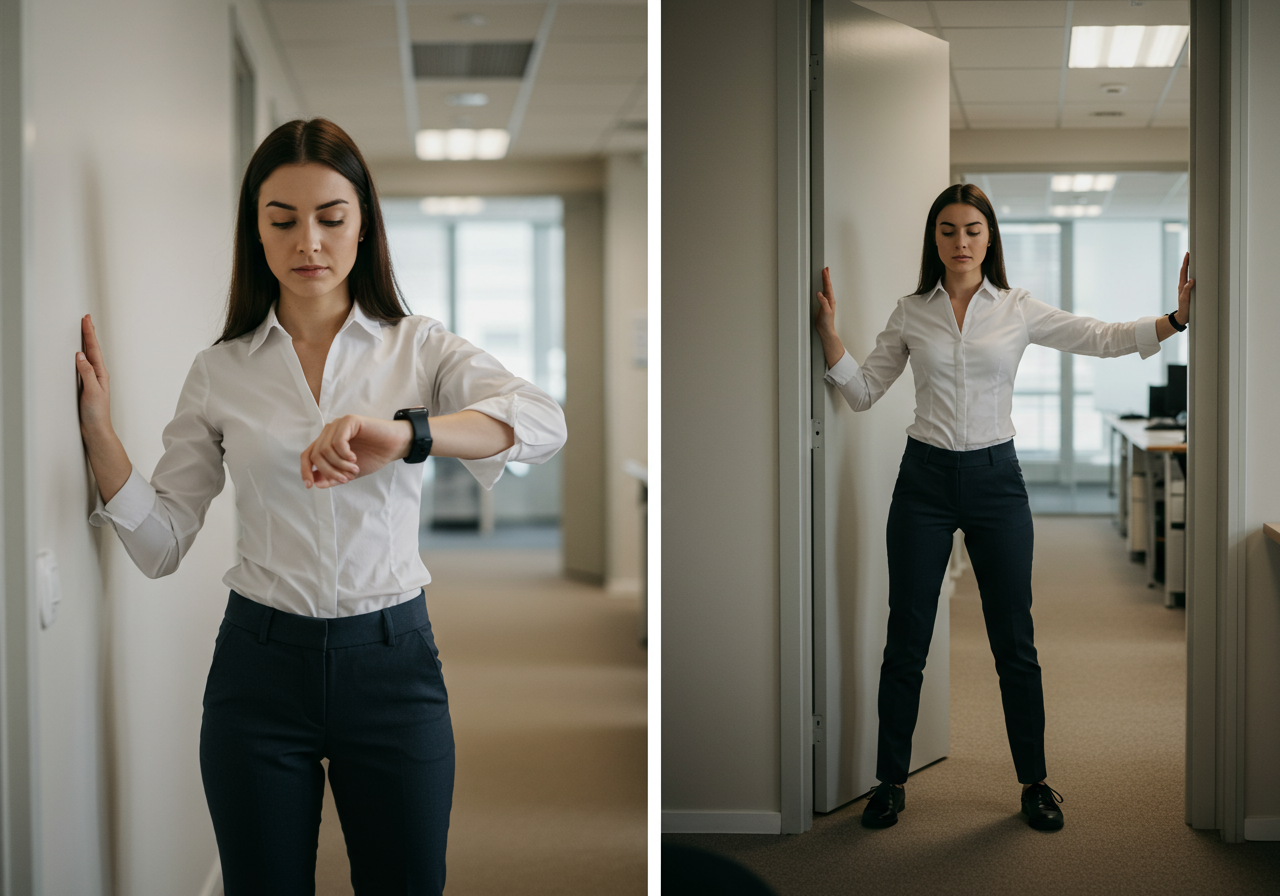
60–90-second Reset: stand tall, inhale 4s, exhale 6s x 6 breaths; chin nods x 6; shoulder rolls x 8; 20-20-20 eyes (look 20 feet away for 20 seconds).
3-minute Mobility Snack: hip circles x 8 each, calf raises x 15, thoracic openers (hands behind head, extend/rotate) x 6 each, wrist flexor/extensor floss x 6 each.
5-minute Walk & Breathe: brisk hallway or outside walk in Zone 1–2 (talking easy), nasal breathing if comfortable.
Desk Posture Reset (30–60 seconds): sit bones anchored, ribs stacked over pelvis, feet flat, screen at eye level; relax traps, lengthen back of the neck.
4) Slot breaks by task type. After 50 minutes of deep work: 3-minute Mobility Snack. Between meetings: 60–90-second Reset. Post-lunch: 5-minute Walk & Breathe to counter slump.
5) Track effortlessly. In Notes, Notion, or a paper tally, mark a check each time you complete a break. Optional: record discomfort (0–10) and focus (0–10) at lunch and end of day. Wearables: steps, stand hours, and heart rate during walks should stay in easy Zone 1–2.
6) Fuel and hydration support. Keep a water bottle visible. Moderate caffeine early; avoid late spikes. Aim for a protein-forward lunch with some fiber and color (e.g., chicken, quinoa, vegetables, olive oil). If afternoons crash, try a lighter lunch portion and a small protein-rich snack later.
7) Link to your training. These breaks preserve tissue quality, so evening workouts feel smoother—less warm-up needed, better positions in squats, hinges, or push-ups.
Eight-Week Protocol Progressing From Six to Ten Breaks
Start where you can be consistent. Gate progress by comfort, not willpower. If pain or dizziness appears, reduce intensity and consult a professional.
Progression overview — increase frequency or duration slowly while keeping breaks low intensity.
Level 1 (Weeks 1–2): Break every 60 min; 60–90-second Reset or 3-minute Mobility Snack; target 6 breaks/day. Level 2 (Weeks 3–4): Break every 50–55 min; 3-minute Mobility Snack plus one 5-minute Walk & Breathe after lunch; 7–8 breaks/day. Level 3 (Weeks 5–6): Break every 45–50 min; alternate 3-minute Mobility and 5-minute Walks; add mini-band pull-aparts x 15 during two breaks; 8–9 breaks/day. Level 4 (Weeks 7–8): Break every 40–45 min; include two 8–10-minute walks (mid-morning and mid-afternoon) if schedule allows; keep all movement in Zone 1–2.
Suggested checks to advance: end-of-day discomfort averages ≤3/10 for a week, focus stable or improved, and no unusual fatigue. Using Strava or Garmin, you may see modest step increases; prioritize consistency over big numbers.
References & Further Reading
The following peer-reviewed research and authoritative guidelines support the recommendations in this article:
Troubleshoot Dizziness, Scheduling Conflicts, and Motivation Dips
Frequency and intensity: aim for 6–10 breaks in an 8–9 hour day. Keep mobility and walking at an easy effort (RPE 2–3/10). If you feel lightheaded after breathing drills, shorten exhales and sit.
Common mistakes: stacking breaks back-to-back to ‘make up’ missed ones (less effective), turning breaks into workouts (fatiguing), or ignoring eyes and wrists (discomfort returns). If knee or foot pain appears with walking, switch to seated mobility/upper-body drills and consult a clinician if symptoms persist.
Troubleshooting plateaus: rotate new drills weekly, change walking routes, or pair breaks with a micro-habit (fill water, stand-up call). If motivation dips, use tiny goals: one 60-second Reset per hour. If meetings crush your schedule, use stealth breaks: shoulder rolls and 20-20-20 while on mute, followed by a 3-minute stand-and-breathe between calls.
Recovery and nutrition: sleep 7–9 hours. Hydrate throughout the day; add electrolytes if you sweat during outdoor walks. A balanced lunch with 25–40 g of protein (adjust to appetite and goals) steadies energy. Some clients find 3–5 g daily creatine supports training; not essential for breaks, but helpful for overall performance if appropriate for you.
Validation: clients commonly report fewer afternoon aches within 2–3 weeks and steadier focus during deep work blocks. In my logs, evening lifting sessions felt smoother with less warm-up time on days with 7+ microbreaks.
Next steps: batch a 2-week experiment, record simple metrics (break count, discomfort, focus), and review. If this helped.
Medical Disclaimer: The information provided on this website is for informational and educational purposes only and is not intended as personal medical or health advice. The content, including text, graphics, and images, is not a substitute for professional medical advice, diagnosis, or treatment. Always seek the advice of your physician or other qualified healthcare provider…
Medical Disclaimer: The information provided on this website is for informational and educational purposes only and is not intended as personal medical or health advice. The content, including text, graphics, and images, is not a substitute for professional medical advice, diagnosis, or treatment. Always seek the advice of your physician or other qualified healthcare provider…
Medical Disclaimer: The information provided on this website is for informational and educational purposes only and is not intended as personal medical or health advice. The content, including text, graphics, and images, is not a substitute for professional medical advice, diagnosis, or treatment. Always seek the advice of your physician or other qualified healthcare provider…
Medical Disclaimer: The information provided on this website is for informational and educational purposes only and is not intended as personal medical or health advice. The content, including text, graphics, and images, is not a substitute for professional medical advice, diagnosis, or treatment. Always seek the advice of your physician or other qualified healthcare provider…
Medical Disclaimer: The information provided on this website is for informational and educational purposes only and is not intended as personal medical or health advice. The content, including text, graphics, and images, is not a substitute for professional medical advice, diagnosis, or treatment. Always seek the advice of your physician or other qualified healthcare provider…
Medical Disclaimer: The information provided on this website is for informational and educational purposes only and is not intended as personal medical or health advice. The content, including text, graphics, and images, is not a substitute for professional medical advice, diagnosis, or treatment. Always seek the advice of your physician or other qualified healthcare provider…