Incremental loading in rehab gives you a clear path to restore capacity without re-injury. Increase load 2–10% when pain stays ≤3/10 during activity and the next day.
In the next few minutes, you’ll learn the exact steps I use with clients and in my own training: pain rules, weekly progressions, session templates, tracking, and recovery essentials that connect strength, cardio, and mobility.
Tissues adapt to the stress you place on them. Load stimulates mechanotransduction—the signal that tells collagen, muscle, and bone to remodel. Too little load stalls healing; too much load flares symptoms. Finding the middle lane is the art of incremental progress.
For tendons and post-sprain soft tissues, slow and progressive tension helps align fibers and improve stiffness. Similar principles support bone (Wolff’s law) and muscle (progressive overload). In practice and in peer-reviewed clinical guidance, pain-guided progressions with small, frequent increments reduce setbacks and improve function.
The nervous system also adapts. Graded exposure rebuilds confidence and motor patterns while keeping the autonomic load manageable. Tracking acute-to-chronic workload ratio and session RPE helps avoid sudden spikes—common culprits in re-injury.
Before you start — Get clearance for red flags (locking, night pain, swelling that won’t settle, or suspected fracture). When in doubt, see a clinician.
Set your baseline. Choose a test that reflects your injury: pain-free range of motion, single-leg heel raises, 30-second sit-to-stand, walk pace for 10 minutes, or a controlled squat depth. Record pain during (0–10) and 24 hours after.
Define your safe zone. Use the pain traffic light: Green ≤2/10, Yellow 3–4/10 with no worse next day, Red ≥5/10 or next-day spike—adjust down.
Pick starter loads. Begin below symptom threshold: e.g., isometric holds 3×30–45s at mid-range; or 2–3 sets of 8–12 reps at RPE 5–6; or walk-jog with 30–60s jog bouts. Keep cardio mostly Zone 2 (easy talk pace).
Warm-up sequence (6–10 min). Easy cyclical movement, local mobility (1–2 drills), and 1–2 ramp-up sets at lighter loads.
Increment rules. Increase only one variable per session by ~2–10%: load, reps, time under tension, or weekly volume. Example: add 1–2 kg to goblet squat or 1–2 reps per set, or +2–5 minutes total walking.
Pain and next-day check. Stay ≤3/10 during. If next day is the same or better, keep progressing. If pain jumps 2+ points or swelling increases, drop the next session’s stress 10–30%.
Monitor training load. Use session RPE × minutes for cardio; total hard-set count × average RPE for strength. Aim ACWR ~0.8–1.2 to avoid spikes.
Tools that help. Strava or Garmin for duration/HR; Apple Health or Fitbit for steps and HR; a notes app or Trainerize for sets/reps; MyFitnessPal for protein and calories.
Recovery foundations. Sleep 7–9 hours, brief calf/hip mobility after sessions, and easy Zone 2 on off days. Protein 1.6–2.2 g/kg/day; include carbs around rehab work. Some clinicians suggest collagen + vitamin C 30–60 minutes before tendon loading; evidence is mixed, so consider it optional.
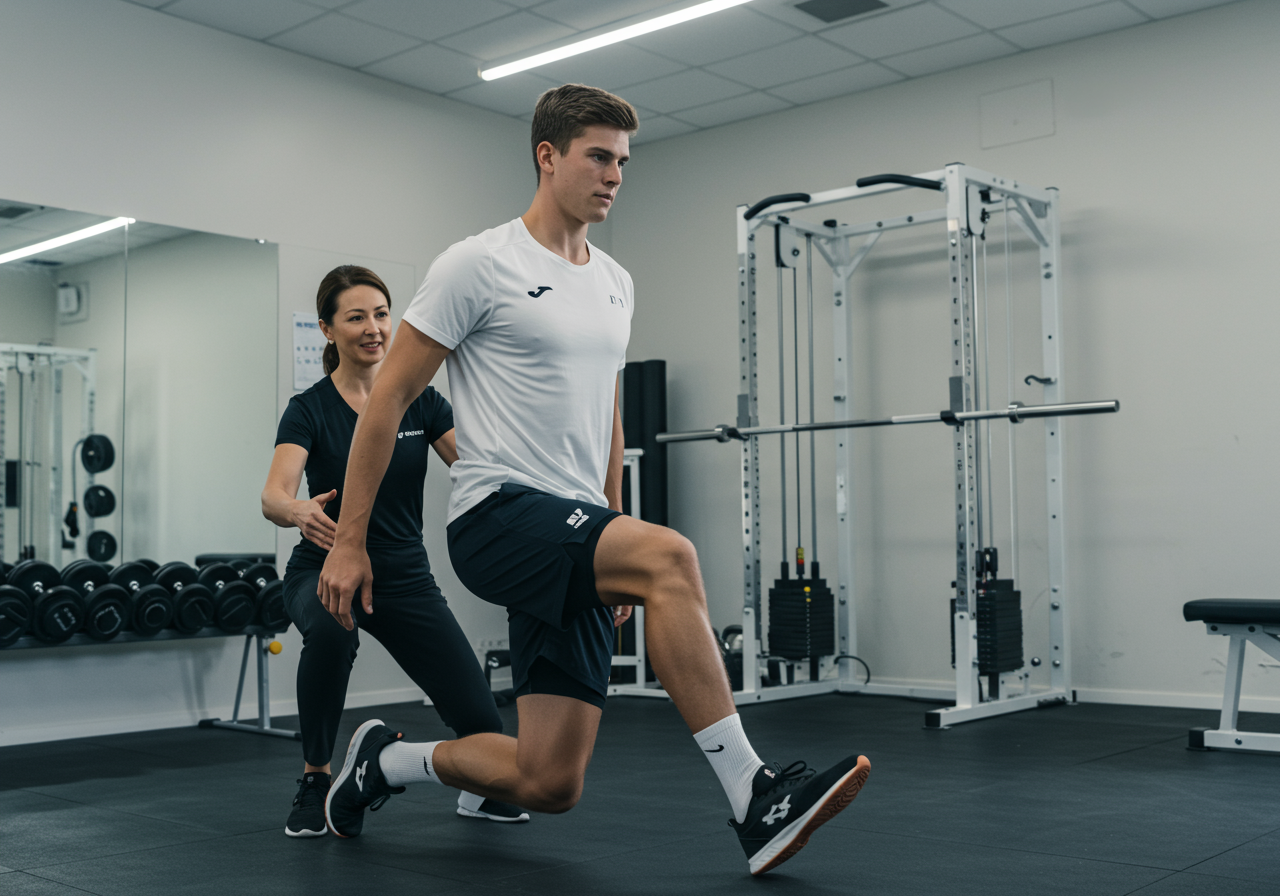
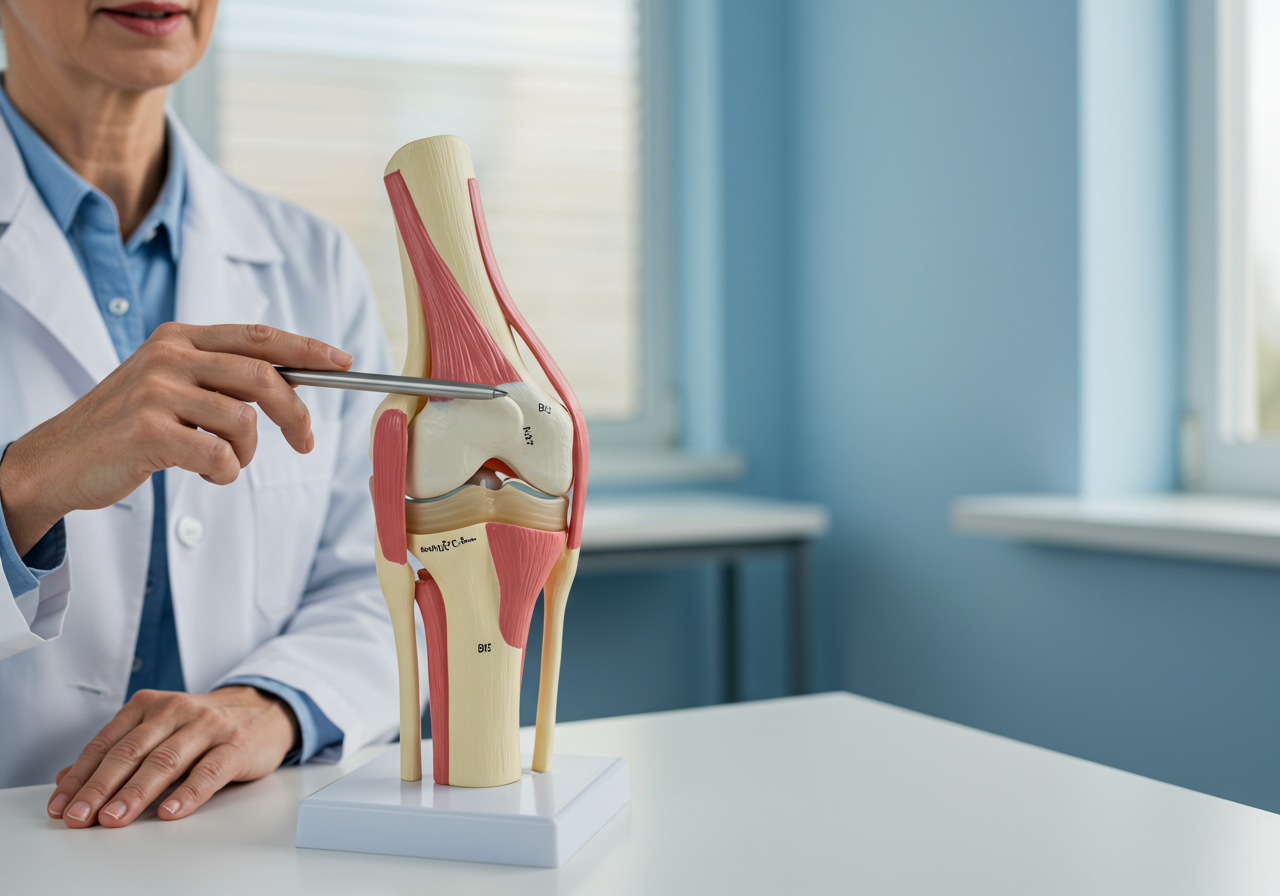
Example session (knee-focused). Warm-up → Wall squat isometrics 3×45s (RPE 6) → Step-down 3×8 (slow 3–1–3 tempo) → Hip hinge (RDL) 3×8 @ RPE 6 → 10–20 min Zone 2 bike → 5 minutes mobility. Progress one element next time.
My practice note: After a mild ankle sprain, I started with 3×45s calf isometrics and 15-minute Zone 2 cycling. I increased holds and volume every 2–3 days. Within four weeks, single-leg calf raises improved from 8 to 20 reps without morning stiffness.
Levels — Beginner controls pain and swelling; Intermediate builds capacity; Advanced reintroduces impact and sport-specific work. Move forward when pain rules are met and next-day status is stable for 7–10 days.
Strength track — Use isometrics → slow tempo → normal tempo → power. Cardio track — Use walk → walk-jog → continuous easy jog → controlled intervals.
Client story: Mara (39, half-marathoner) stalled every time she jumped miles by 20%. We shifted to 5–10% weekly volume bumps and added split squats with slow tempo. In six weeks she returned to 30 km/week without next-day stiffness.
Caption: Sample 6-week progression for knee rehab (squat + walk-jog). Increase only one stressor at a time.
Week 1–2: Isometrics 3×30–45s; Box squat 3×8 @ RPE 5; Walk 20–30 min Z2 (every other day)

Week 3: Goblet squat 3×8 @ RPE 6; Step-down 3×8 slow; Walk 30–35 min Z2; Optional 3×10 calf raises

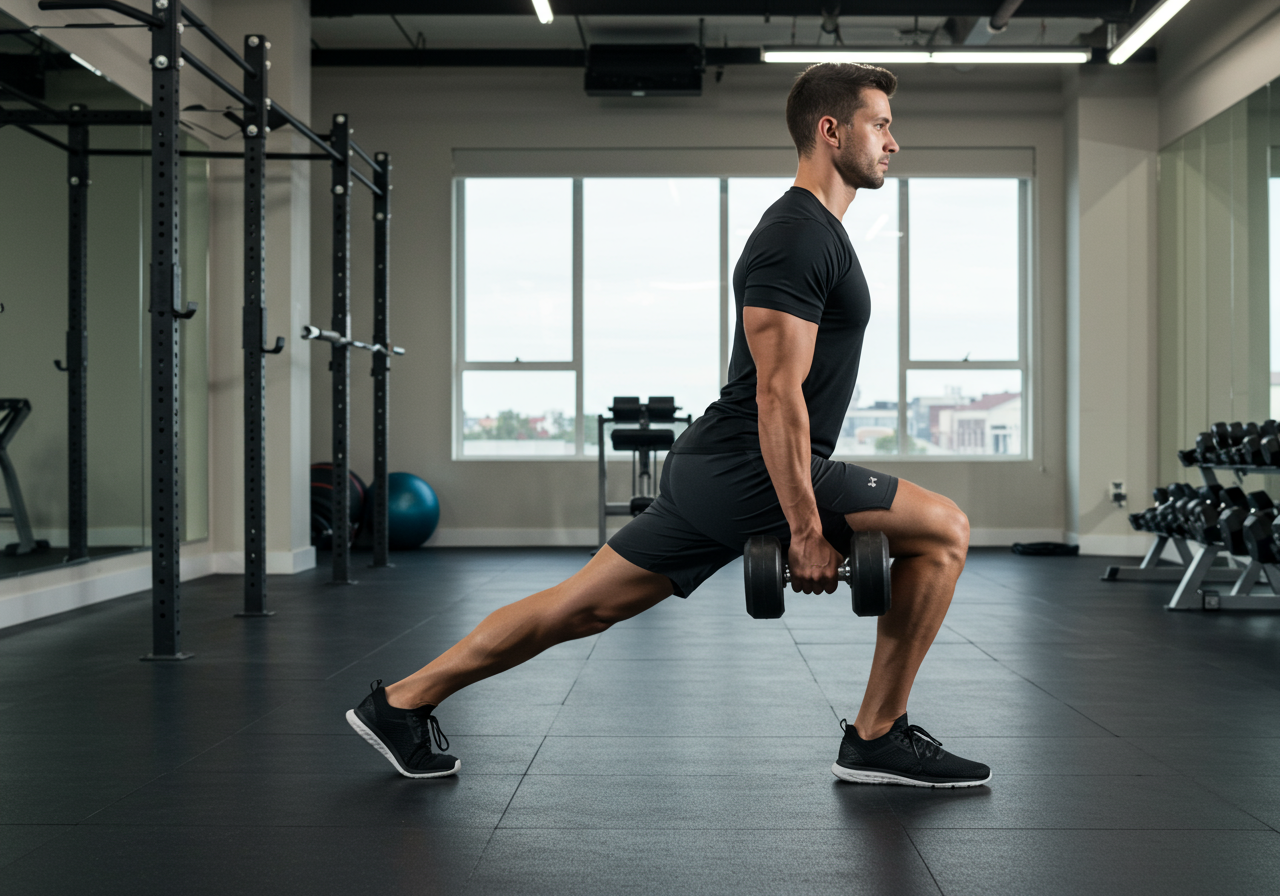
Week 4: Goblet squat 4×8 @ RPE 6–7; Split squat 3×8; Walk-jog 1:1 × 10–15 min Z2; Bike 15 min Z2

Week 5: Front-foot elevated split squat 4×8; RDL 3×8; Walk-jog 2:1 × 15–20 min Z2; Add light skips 3×20 m (if pain ≤3/10)

Week 6: Back squat or leg press 4×6 @ RPE 7; Lateral step-down 3×10; Continuous jog 15–20 min Z2; Strides 4×15–20 s easy-fast
Advanced return-to-play (2–4 weeks beyond). Introduce low-amplitude plyometrics 2×/week (e.g., pogos 3×20–30), progress to submaximal change of direction, then sport drills at 70–85% effort. Keep ACWR ~1.0 and deload 20–30% every 4th week.
“I used the 2–10% rule and the next-day check. It felt slow for two weeks, then suddenly I could train consistently again.” — J., desk worker rehabbing shoulder
Frequency. Strength rehab 3–4 days/week (alternating patterns); easy cardio 3–5 days/week in Zone 2. Keep one full rest day.
Intensity. Start most work at RPE 5–6. Use slow tempos (3–1–3) to increase time under tension without heavy loads. Introduce faster reps or impact only when pain is calm for 7–10 days.
Common mistakes. Adding load and volume and speed at once; ignoring next-day reactions; skipping isometrics; no deloads; changing shoes/surfaces and programming at the same time.
Troubleshooting. Plateau: switch the variable you progress (reps → load or tempo). Flare-up: reduce next session 20–30%, add isometrics and Zone 2 only for 3–5 days. Motivation dips: pre-schedule 25-minute sessions and check off one metric (e.g., total sets) to keep momentum.
Nutrition and recovery. Protein 1.6–2.2 g/kg/day; carbs around sessions; hydrate; 7–9 hours sleep. Light mobility and a 10-minute walk the day after harder sessions speed recovery. If you track HRV, resume progressions when values return to your usual range.
Next steps. Keep a simple log (sets, RPE, pain during/next day) and review weekly. If you want templates and progress checklists, subscribe for my rehab progression planner.
Catch Overtraining Early With Simple Weekly Symptom Scans Overtraining syndrome can sneak up on beginners; here’s how to identify it fast and recover properly. Core signs: lasting fatigue, performance decline, mood shifts, poor sleep; recover by cutting training volume, sleeping 7–9 hours, and fueling adequately. In this guide, I’ll show you my field-tested system to…
Build Endurance With 2-4 Weekly Pool Sessions Swimming workouts for total-body endurance conditioning deliver cardio, core stability, and shoulder/hip strength with minimal joint stress. This guide shows you the exact session structure, weekly progressions, and recovery strategies I use with new swimmers. Direct answer: Train 2–4 times weekly, progress total meters by 10–15% max, and…
Quick Overview: Zone Targets and Weekly Structure Heart Rate Zone Training helps beginners build endurance smarter with clear intensity targets. You’ll learn how to set your zones, plan workouts, and track progress without guesswork. Direct answer: Spend most sessions in Zone 2, add short Zone 4–5 intervals weekly, and take at least one full rest…
Strategic Cold Plunge Timing for Recovery and Performance Cold water immersion can be a powerful recovery tool when you integrate it into a structured week of cardio, strength, and mobility. Use cold water immersion after cardio or on rest days, 2–10 minutes at 10–15°C, and avoid right after heavy lifting. In this guide you’ll learn…