Medical Disclaimer: The information provided on this website is for informational and educational purposes only and is not intended as personal medical or health advice. The content, including text, graphics, and images, is not a substitute for professional medical advice, diagnosis, or treatment. Always seek the advice of your physician or other qualified healthcare provider with any questions you may have regarding a medical condition or before starting any new exercise, nutrition, or supplement program. Never disregard professional medical advice or delay in seeking it because of something you have read on this blog. Reliance on any information provided by this site is solely at your own risk.
Clear Boundaries Protect Clients and Boost Results
A clear nutrition policy protects clients and accelerates progress while keeping coaching ethical and focused. You’ll learn how to write one and weave it into a full training plan.
Quick answer: define scope, safety rules, consent, fueling guidelines, communication boundaries, and a review schedule.
I’ll show the exact outlines I use with new clients, how it connects to strength, cardio, mobility, and activity work, plus how we track outcomes with apps and simple metrics.
Evidence-Based Guidelines Improve Adherence and Safety
Policies prevent mixed messages and reduce risk. They clarify what a coach can advise, when to refer out, and how to fuel training safely. Research and major sports-health guidelines generally support protein targets around 1.6–2.2 g/kg, carbohydrate intake that matches training load, and adequate hydration and sleep for performance and recovery.
In practice, standardized guidance improves adherence. When I added a consent section, a red‑flag list (e.g., disordered eating, unexplained weight change), and a referral workflow, clients started asking better questions and our check-ins became faster and more productive.
Client note from Maya (shared with permission): “I finally knew what to log, when to ask for help, and what my plate should look like on hard days. I felt safe and coached.” While individual results vary, this structure consistently reduces confusion and supports steady gains.
Build Your Policy: Scope, Red Flags, Consent
Use these steps to build a practical, ethical policy that plugs directly into training.
Define scope of practice: State what you do (general nutrition education, menu patterns, fueling timing) and what you don’t (diagnosing conditions, prescribing therapeutic diets). Sample clause: “I provide general nutrition education; medical nutrition therapy is referred to a licensed clinician.”
Safety and red flags: List situations requiring pause and referral (e.g., dizziness, rapid weight loss, eating disorder history, pregnancy without physician clearance). Include emergency contacts and a simple decision path.
Consent and privacy: Explain data you collect (intake form, weigh‑ins, photos), how it’s stored, and the opt‑out process. Keep records secure and time‑bound.
Fueling guidelines by training day: Offer simple, adjustable targets:
Protein: roughly 1.6–2.2 g/kg daily, spread over 3–5 meals.
Carbohydrate: lighter days lower; hard days higher. Example: easy day—focus on vegetables, fruit, whole grains; hard day—add starches around sessions.
Fats: include quality sources daily (olive oil, nuts, eggs, fatty fish) to round out calories.
Hydration: start sessions well hydrated; sip during long or hot workouts; include electrolytes on heavy sweat days.
Supplement policy: Food first. Only third‑party‑tested products if used (e.g., creatine monohydrate, caffeine in modest amounts). No proprietary blends. Clients disclose all supplements and medications.
Cultural and preference fit: Ask about food culture, budget, kitchen access, allergies/intolerances. Provide flexible plate builds rather than rigid meal plans.
Communication boundaries: Response times, check‑in days, and what merits urgent messages. This keeps expectations clear and prevents burnout on both sides.
Review cadence: Schedule policy reviews every 4–8 weeks, or after any training phase change or medical update.
Now connect policy to training sessions:
Weekly structure (starter template): 3 strength sessions (full‑body), 2 cardio days (one Zone 2, one intervals), daily micro‑mobility (5–10 minutes), and active steps (6–10k most days).
Session layout (example, 55–65 minutes): Warm‑up 8 min → Main lifts 25–30 min → Accessory 10–15 min → Conditioning finisher 5–10 min → Breath/extend 3–5 min.
Fuel timing examples: For strength days, include protein with each meal; add a carb‑rich meal 2–4 hours pre‑lift. For interval days, add extra carbs pre and post. Easy Zone 2 usually needs normal meals plus fluids, unless extra long or in the heat.
Tracking tools: Training load on Garmin/Strava; nutrition consistency via MyFitnessPal or Cronometer; daily notes with RPE and energy; optional morning resting heart rate or HRV from a wearable.
My real world note: In my own spring block, I ran 35–45 minutes in Zone 2 (conversational pace) twice weekly and progressed a goblet squat from 3×8 @ RPE 6 to 3×8 @ RPE 8 in four weeks. I matched harder days with more carbs and saw steadier energy.
Scale Training and Nutrition Over Eight Weeks
The plan scales with experience and life demands. Use RPE and heart‑rate zones to keep intensity appropriate. The policy evolves alongside training.
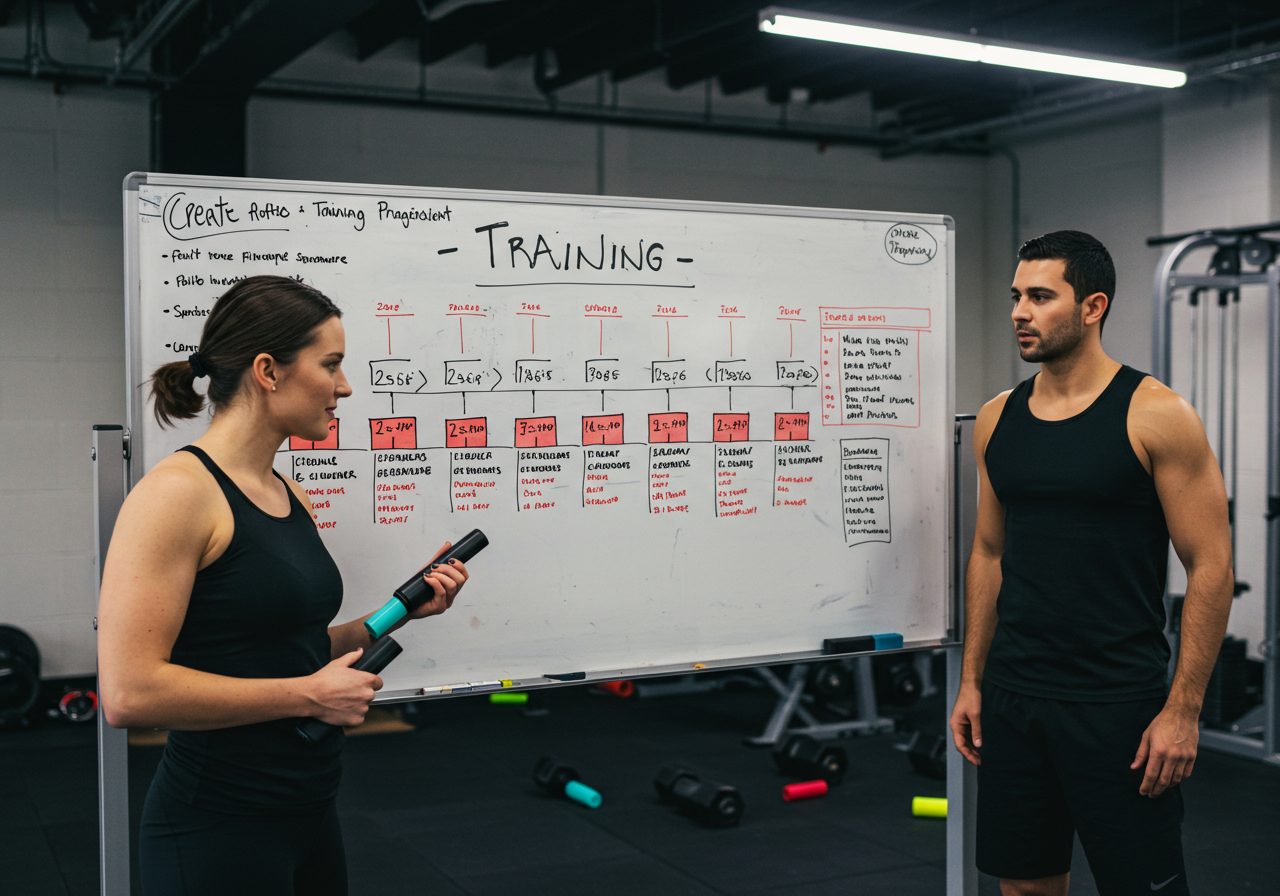
Progression map — training focus and policy milestones:
Weeks 1–2: Strength 2–3x full-body @ RPE 6; Cardio 2x (1× Zone 2, 1× brisk walk/short intervals); Mobility daily 5–8 min. Policy: consent, scope, fueling basics.

Weeks 3–4: Strength 3x full-body @ RPE 6–7; Cardio 2x (Zone 2 + intro intervals 6×30s); Mobility 8–10 min. Policy: hydration/electrolytes, supplement rules.

Weeks 5–6: Strength 3x (add a set to main lifts); Cardio 2–3x (one longer Zone 2); Mobility 10 min. Policy: cultural preferences, red‑flag checklist review.

Weeks 7–8: Strength 3–4x (upper/lower split possible); Cardio 3x (progress intervals 6–8×1 min); Mobility 10–12 min. Policy: refine carb periodization; set review cadence.
Beginner cues: keep most strength work at RPE 6–7; finish sessions feeling you could do 2–3 more clean reps. Zone 2 should feel conversational. Add small weekly increases.
Intermediate tweaks: rotate rep ranges (e.g., 5–8 for compounds, 10–15 for accessories); one interval workout creeps toward RPE 8. On heavy days, increase starches and fluids; lighter days, emphasize fibrous carbs and lean proteins.
Advanced options: undulate volume across the week, add tempo work or heavier singles @ RPE 8, and periodize carbs around key sessions. Insert a deload every 4–8 weeks. For long endurance days, plan electrolytes and simple carbs per hour as tolerated.
Frequency, Intensity, and Plateau Management Essentials
Frequency: Most beginners thrive on 5 training touchpoints per week (3 strength, 2 cardio) plus short daily mobility. Adjust to recovery and schedule.
Intensity guardrails: 70–80% of work easy/moderate (RPE ≤7; Zone 2). Keep high‑intensity efforts selective. Progress load or volume by small, steady steps.
Plateau playbook: First, check sleep, protein, and total calories. Then adjust one variable: add a set, tighten rest, increase steps, or improve carb timing before key sessions.
Overtraining/injury: Watch for mood changes, stubborn soreness, falling performance, or rising resting heart rate. Pull back volume 20–40% for a week and prioritize easy aerobic work and mobility. Seek medical care for sharp pain or swelling.
Motivation: Use simple wins—habit streaks, step goals, or a weekly PR in something (reps, pace, form). I like a Friday “confidence set” at RPE 6–7 that always feels good.
Apps and tools: MyFitnessPal or Cronometer for food logs; Garmin/Strava for runs and rides; a notes app for daily RPE and energy; a spreadsheet to track lifts and body measurements.
Pros/cons of common approaches: RPE is flexible and teaches autoregulation; percentage‑based plans give structure but need accurate maxes. Food logging drives awareness but can feel tedious—use photo logs on busy weeks.
Recovery: Aim for consistent protein across the day, fruits/vegetables daily, and regular sleep/wake times. Consider creatine monohydrate if appropriate; avoid unverified supplements.
Next steps: Draft your one‑page policy today, attach it to your intake form, and schedule the first review at week four.
Medical Disclaimer: The information provided on this website is for informational and educational purposes only and is not intended as personal medical or health advice. The content, including text, graphics, and images, is not a substitute for professional medical advice, diagnosis, or treatment. Always seek the advice of your physician or other qualified healthcare provider…
Medical Disclaimer: The information provided on this website is for informational and educational purposes only and is not intended as personal medical or health advice. The content, including text, graphics, and images, is not a substitute for professional medical advice, diagnosis, or treatment. Always seek the advice of your physician or other qualified healthcare provider…
Medical Disclaimer: The information provided on this website is for informational and educational purposes only and is not intended as personal medical or health advice. The content, including text, graphics, and images, is not a substitute for professional medical advice, diagnosis, or treatment. Always seek the advice of your physician or other qualified healthcare provider…
Medical Disclaimer: The information provided on this website is for informational and educational purposes only and is not intended as personal medical or health advice. The content, including text, graphics, and images, is not a substitute for professional medical advice, diagnosis, or treatment. Always seek the advice of your physician or other qualified healthcare provider…
Medical Disclaimer: The information provided on this website is for informational and educational purposes only and is not intended as personal medical or health advice. The content, including text, graphics, and images, is not a substitute for professional medical advice, diagnosis, or treatment. Always seek the advice of your physician or other qualified healthcare provider…
Medical Disclaimer: The information provided on this website is for informational and educational purposes only and is not intended as personal medical or health advice. The content, including text, graphics, and images, is not a substitute for professional medical advice, diagnosis, or treatment. Always seek the advice of your physician or other qualified healthcare provider…