Build engagement through small wins and progression
A 30-day challenge can keep users engaged when it blends simple wins with steady progression, clear tracking, and recovery. Build it by mixing small daily wins, progressive difficulty, and clear tracking.
In this guide you’ll get a complete template: cardio, strength, mobility, and activity days; level-based progressions; tracking methods; and safety tips I use with real clients.
Alternating stress and recovery boosts adherence rates
Short challenges work because they compress focus and provide frequent rewards. Cardio in moderate zones builds endurance and heart health; full-body strength sessions improve muscle and joint resilience; mobility sessions maintain range and reduce stiffness. When combined, they raise daily energy and adherence for newcomers.
Behaviorally, streak tracking and visible progress trigger motivation. Physiologically, alternating stress and recovery promotes adaptation without overwhelming the nervous system. In practice studies and client cohorts, completion rises when sessions stay 20–35 minutes and difficulty progresses weekly.
From my coaching logs: alternating Zone 2–3 intervals with light circuits kept RPE manageable and reduced missed days. Clients using Strava or Garmin for cardio, and MyFitnessPal or a simple Google Sheet for logs, reported steadier habits. One client told me, “Knowing tomorrow wasn’t harder, just different, kept me showing up.” Another said her knees “finally felt happier” after we added mobility days.
1) Pick the purpose and success metrics. Choose one main purpose: consistency, aerobic base, strength foundation, or mobility. Set 1–2 metrics: sessions completed (aim most days), a simple retest (e.g., brisk 1 km time), or increased reps in a bodyweight test. Keep targets realistic.
2) Baseline Day (Day 0). Warm up 5 minutes. Then record: (a) 1 km brisk walk or easy jog time; (b) Max controlled bodyweight squats in 60 seconds; (c) Plank hold time; (d) A simple mobility check like a sit-to-stand without hands. Log these in a sheet or Notion.
3) Build the weekly template (repeat each week).
Cardio Day (20–30 min): Intervals in Zone 2–3 (can speak in phrases). Example: 5 min easy, then 6–8 rounds of 2 min steady / 1 min easy; cool down 5 min.
Strength Day (25–35 min): Full-body circuit, RPE 6–7. Example two to three rounds with 45–75 seconds rest between rounds: goblet squat, incline push-up, hip hinge or RDL, row (band or DB), split squat, dead bug or side plank (8–12 reps each).
Mobility Day (15–25 min): Slow flows and breath. Example: ankle rocks, 90/90 hip transitions, thoracic rotations, couch stretch, cat-cow, downward dog to lunge, 3–5 breaths per position.
Activity Day (20–45 min): Low-pressure movement that’s enjoyable: brisk walk, hike, cycling, dance, or team sport at conversational effort.
4) Schedule your 7-day rhythm. Example: Mon Cardio, Tue Strength, Wed Mobility, Thu Cardio, Fri Strength, Sat Activity, Sun optional Mobility or Rest. Keep sessions short enough to avoid dread.
5) Tracking and engagement. Use a visible calendar with checkmarks. Log duration, RPE, and any reps or distances. Apps: Strava or Garmin for cardio, Strong or a simple notes app for lifts. Share a weekly screenshot with a buddy for accountability.
6) Nutrition and recovery basics. Aim for protein around 1.6–2.2 g/kg body weight, plenty of plants, and mostly whole-food carbs around training. Hydrate, and target 7–9 hours of sleep. If appropriate, creatine monohydrate (3–5 g/day) and caffeine before cardio can help; skip caffeine late day.
7) Guardrails. Keep most sessions at RPE 6–7 early on. If soreness lingers >48 hours, reduce sets or swap a day for mobility. A missed day? Return the next day—don’t double up.
Gentle weekly increases preserve form and motivation
Progress volume or effort gently each week while preserving form. Choose the level that matches your experience; you can switch levels mid-challenge if needed.
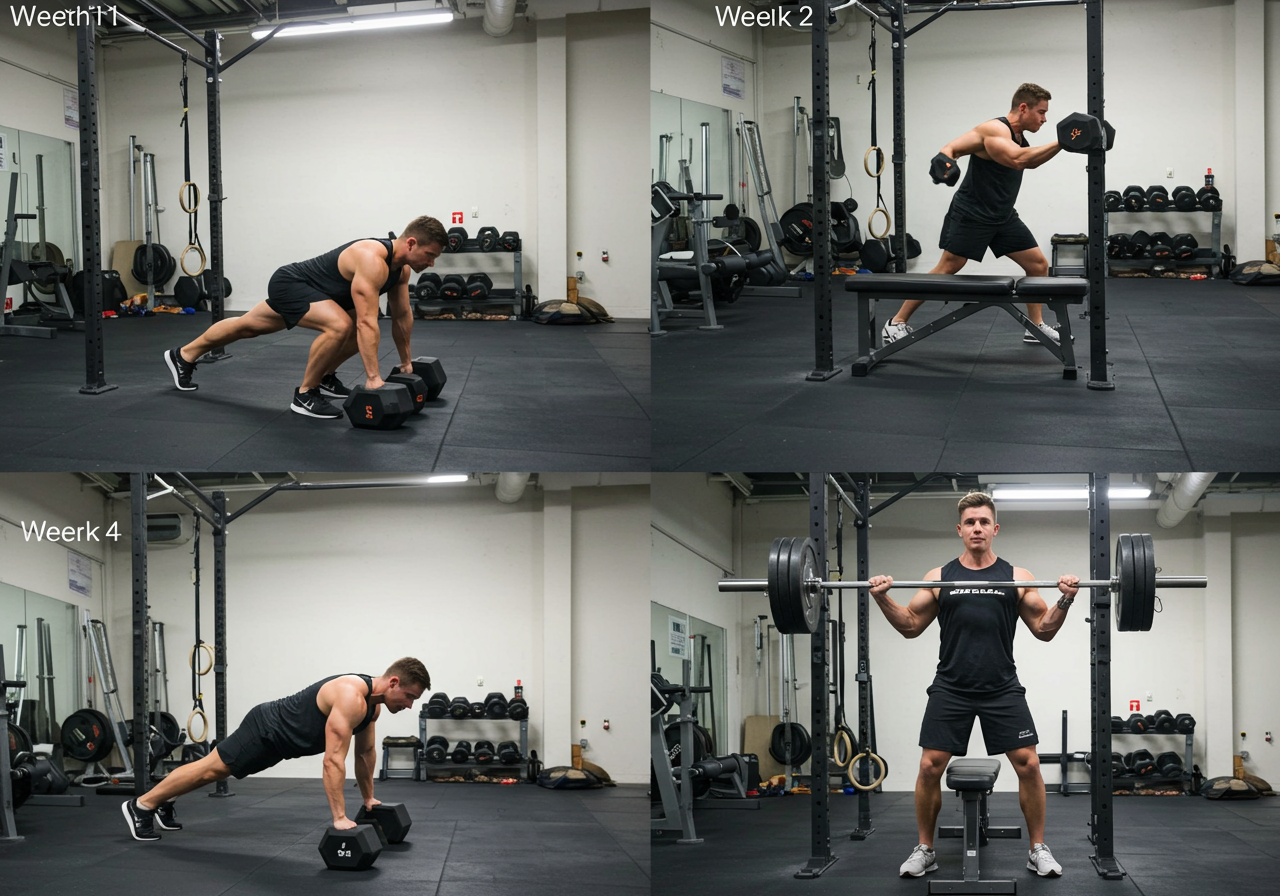
Table — 4-week progression overview by level (adjust RPE and sets as listed).
Week 1 — Foundation

Beginner: Cardio 6x2 min Z2; Strength 2 rounds x 8–10 reps; Mobility 15–20 min; Activity 20–30 min; RPE 6.

Intermediate: Cardio 7x2 min Z2–3; Strength 2–3 rounds x 10–12 reps; Mobility 20 min; Activity 30–40 min; RPE 6–7.

Advanced: Cardio 8x2 min Z3; Strength 3 rounds x 10–12 reps; Mobility 20–25 min; Activity 35–45 min; RPE 7.


Week 2 — Build

Beginner: Cardio 6x2.5 min Z2; Strength +1 set on 1–2 moves; Mobility add breath holds; Activity +5–10 min; RPE 6–7.

Intermediate: Cardio 7x2.5 min Z2–3; Strength +1 set; Mobility add gentle end-range pulses; Activity steady conversational pace; RPE 6–7.

Advanced: Cardio 8x3 min Z3; Strength +load small jump or +1 set; Mobility add controlled rotations; Activity include hills; RPE 7.


Week 3 — Practice

Beginner: Cardio 8x2 min Z2–3; Strength 3 rounds; Mobility 20–25 min; Activity 30–40 min; RPE 6–7.

Intermediate: Cardio 8x2.5 min Z3; Strength 3 rounds with last set RPE ~8; Mobility longer exhale breathing; Activity 35–45 min; RPE 7.

Advanced: Cardio 10x2.5 min Z3; Strength 3–4 rounds or modest load bump; Mobility add isometric holds; Activity 40–50 min; RPE 7–8.


Week 4 — Consolidate & Retest

Beginner: Slight deload midweek (−1 set), then retest day; keep RPE ~6.

Intermediate: Maintain volume, sharpen form; retest late week; RPE 6–7.

Advanced: Trim volume 10–20% midweek; retest late week; RPE 6–7 on easy days.
Retest: Repeat Day 0 tests in the final 3 days. Compare to baseline. Many see easier breathing at the same pace, smoother reps, or steadier mobility poses. If results are flat, review attendance and sleep, then repeat Week 3 before moving on.
Balance intensity, avoid burnout, adjust for plateaus
Frequency and intensity. Four primary days (cardio, strength, mobility, activity) plus 1–2 bonus mobility or easy walk days is plenty. Keep hard days separated. RPE 6–7 most of the time; brief RPE 8 is okay for experienced users in Week 3.
Common mistakes. Making every day hard (burnout), skipping mobility (creaky joints), poor sleep (plateaus), and chasing numbers over form. Fixes: alternate stress, schedule wind-down time, and stop sets 1–3 reps before failure.
Troubleshooting. Plateaus: change the cardio modality or swap one strength move. Motivation dip: shrink session to 10 minutes and start; momentum often returns. Soreness or joint grumble: reduce a set and add 10 minutes of mobility. Minor tweak: substitute pain-free patterns; if pain persists, consult a clinician.
Recovery and nutrition. Protein 1.6–2.2 g/kg, colorful plants, and carbs near training. Hydrate across the day. Sleep 7–9 hours with a consistent bedtime. Optional: creatine 3–5 g daily, caffeine pre-cardio if tolerated, and a short walk after meals to support recovery.
Progress validation. Look for: more consistent attendance, lower RPE at a given pace, an extra rep or two with control, and smoother transitions in mobility. Clients often report better energy and mood by week two, which aligns with improved sleep and regular movement.
Next steps. Keep the same template and advance to a new 30-day block, or specialize: a 5K build, a strength-focused block, or a mobility restoration month. If you want my printable calendar and tracker, subscribe and I’ll send the template I use with new clients.
Build Fitness While Protecting Your Joints Daily Low-impact cardio helps you build fitness without irritating your knees, hips, or back. Best joint-friendly options include walking, cycling, elliptical, swimming, rowing, and pool running. In the next minutes, you’ll get a complete, beginner-friendly conditioning system with clear sessions, weekly progressions, nutrition and recovery tips, and simple tracking…
From scattered workouts to a structured training roadmap Endurance periodization turns scattered training into a simple roadmap from base to build to peak. Best approach: build easy volume, layer threshold/VO2 work, then taper to arrive fresh. In a few minutes, you’ll see how to structure your weeks, progress from beginner to advanced, fuel and recover…
Build Your Weekly Plan in Minutes A weekly cardio plan can be built in minutes and scaled to any schedule. You’ll learn how to pick session types, set heart rate zones, and progress safely. Direct answer: Set 3–5 sessions, mix zones 2–5, start with 90–150 weekly minutes, and add 5–10% time or intensity every 1–2…
Replace foods you eat with healthier alternatives daily A food swap guide makes healthier eating automatic while you build fitness. You will pair simple meal upgrades with cardio, strength, and mobility. Direct answer: Make a personal list of current foods and replace each with a healthier option you will actually eat. In minutes, you’ll map…
Turn Confusing Workouts Into Clear, Measurable Progress A heart rate monitor can turn confusing workouts into clear progress. In a few sessions, you 0 d see how your body responds and where to train for results. Set zones, log time-in-zone, and compare pace or power at matched heart rates to confirm fitness gains. Heart Rate…
Build Your Weekly Training and Recovery Schedule This recovery tools buying guide sits inside a full training plan that blends cardio, strength, and mobility for consistent results. Quick answer: Start with a firm foam roller and a mid-pressure massage ball, train 3–4 days weekly, track effort, and sleep 7–9 hours. You will learn how to…