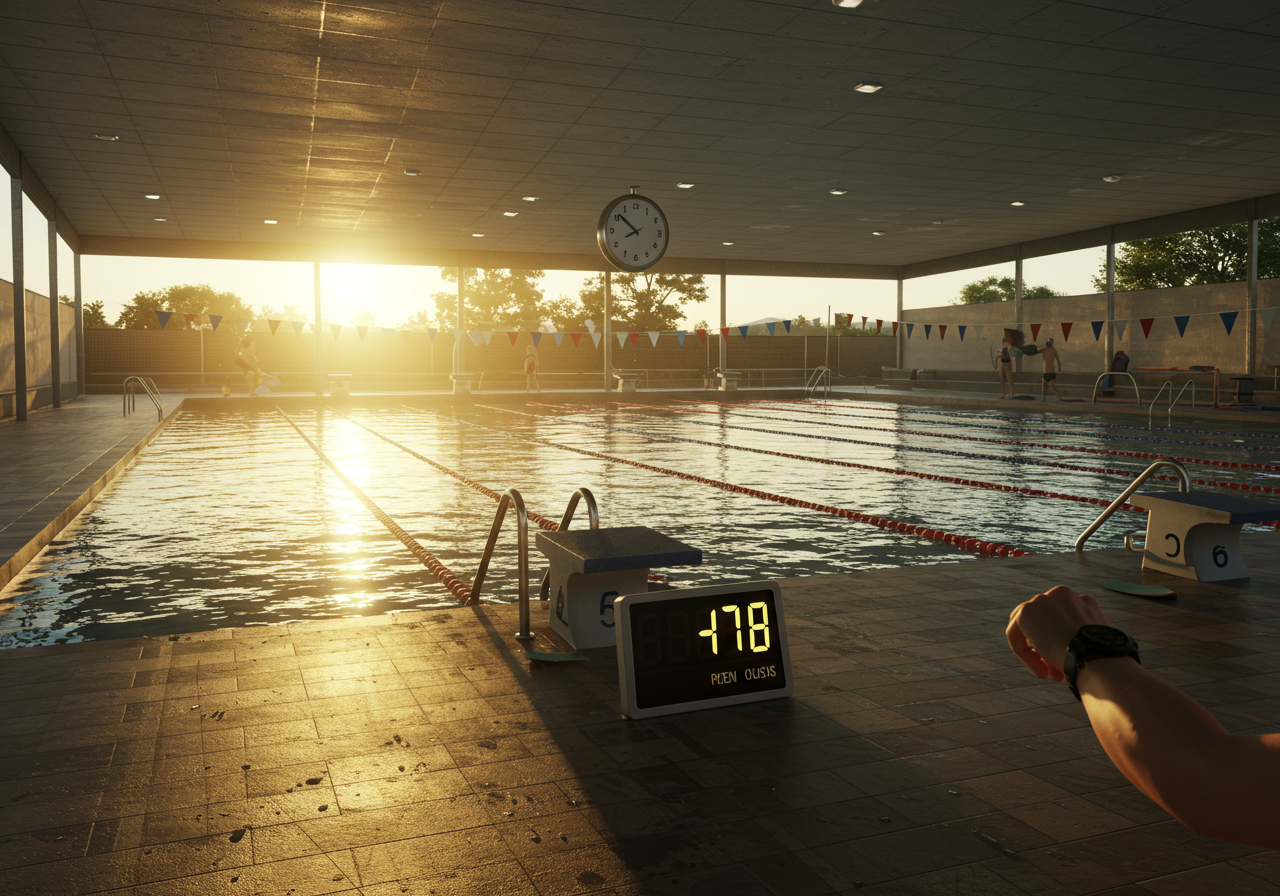
Swimming workouts for total-body endurance conditioning deliver cardio, core stability, and shoulder/hip strength with minimal joint stress. This guide shows you the exact session structure, weekly progressions, and recovery strategies I use with new swimmers.
Direct answer: Train 2–4 times weekly, progress total meters by 10–15% max, and keep most sets easy aerobic while practicing efficient technique.
Low-Impact Resistance Training Improves Cardio and Core
Water is ~800 times denser than air, so every stroke is resistance plus cardio. That combination builds heart-lung capacity while training the lats, shoulders, hips, and deep core. Because you’re horizontal and buoyant, impact is low—great if running bothers your knees or back.
What we typically see in practice: consistent easy-to-moderate sessions improve pacing economy, reduce stroke count per length, and extend aerobic time-to-fatigue. Breathing rhythm (bilateral or 2:1) enhances CO2 tolerance and relaxation, which helps you hold form when effort rises. A peer-reviewed body of work also links regular swimming with improved cardiorespiratory fitness and blood pressure, though results vary by baseline fitness and adherence.
Compared with land cardio: swimming taxes upper body and trunk far more and teaches posture control. The trade-off is technique complexity—so we’ll keep drills simple and measurable.
40-60 Minute Sessions: Warm-Up Through Cool-Down
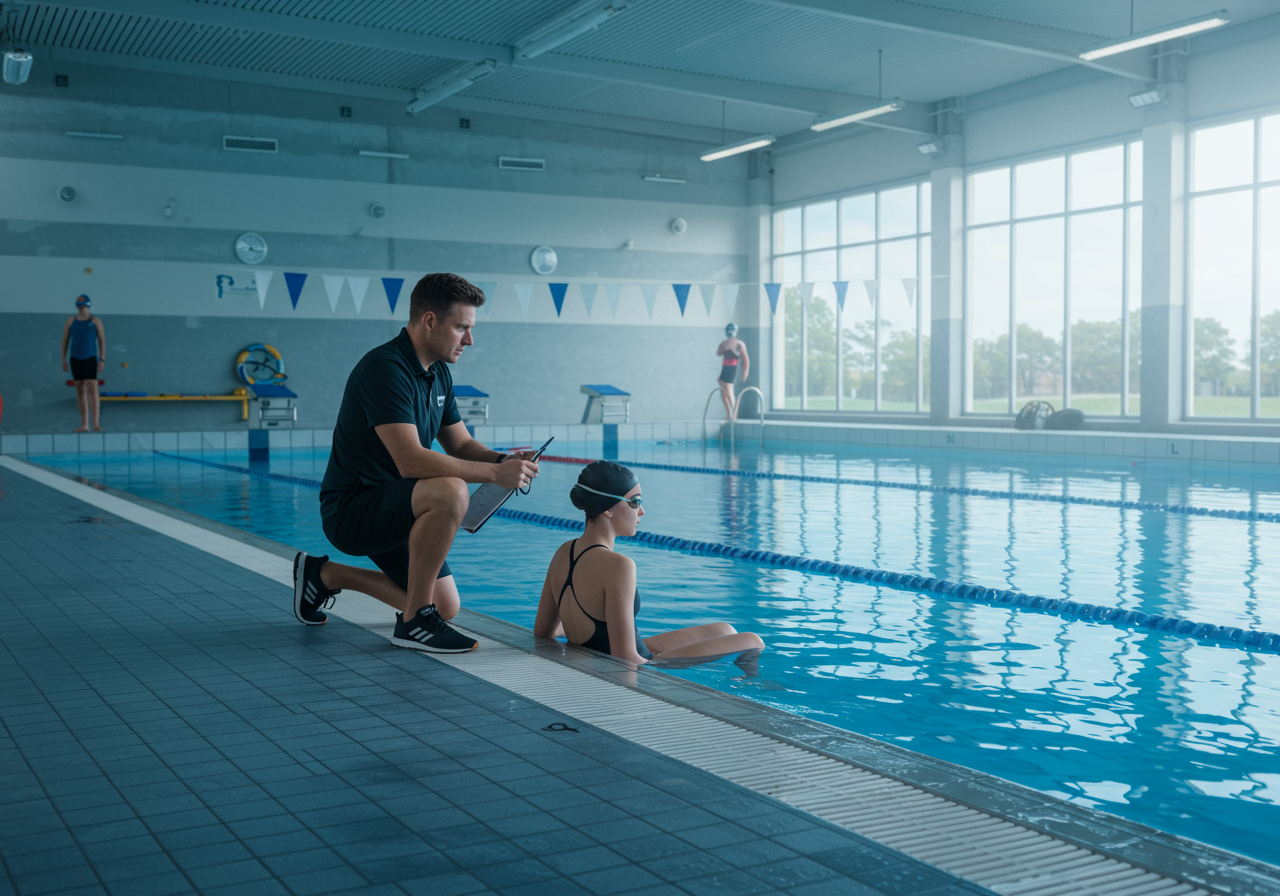
Session blueprint (40–60 minutes):
Warm-up — 5–8 minutes easy freestyle as relaxed as possible; focus on long body line and gentle exhale underwater.
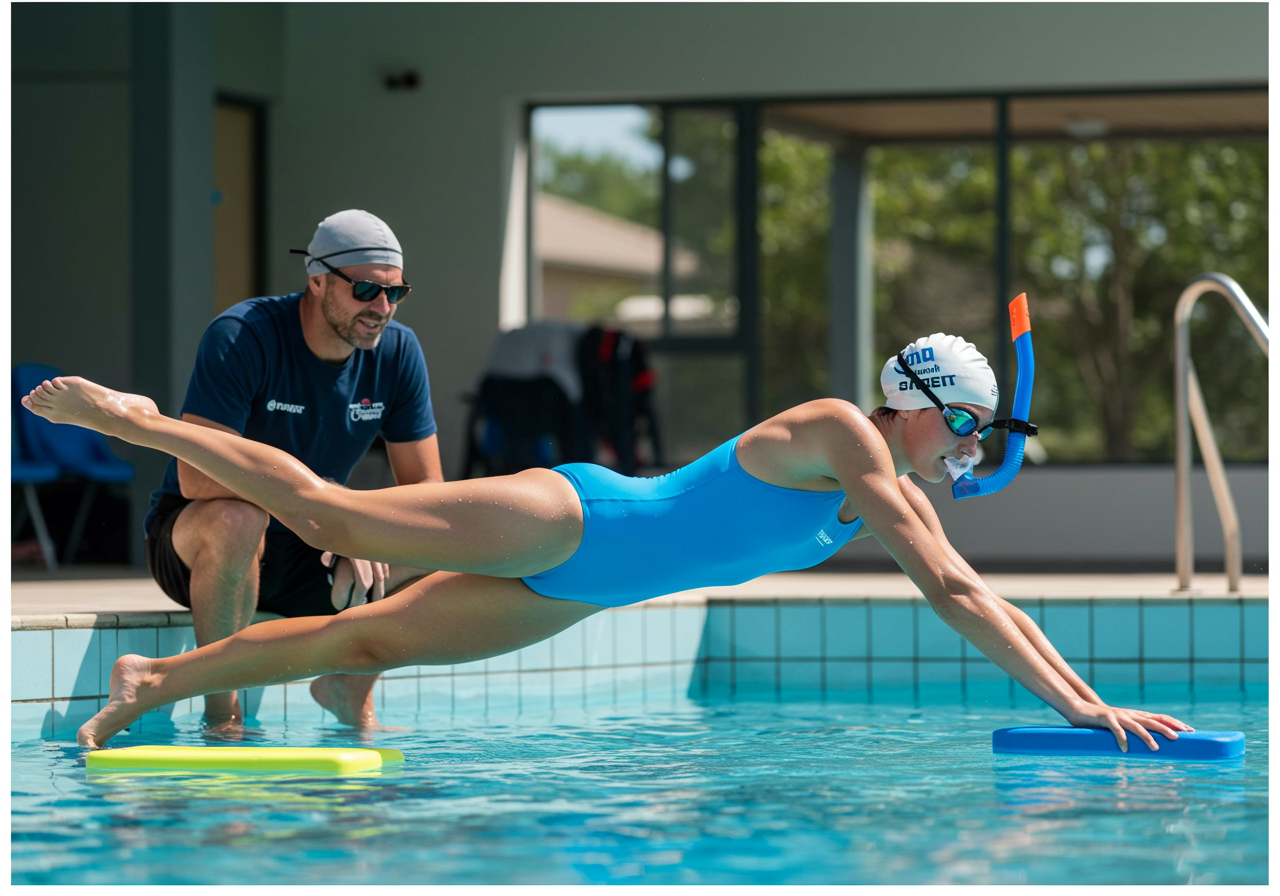
Drills — 8–12 minutes. My go-tos: side-kick (align head-spine, point the lead hand forward), catch-up (enter, extend, then pull), scull (feel pressure on forearm).
Main set — Intervals that match your level. Use RPE or pace per 100 m; rest is short enough to keep heart rate elevated but technique clean.
Accessory — 6–10 minutes pull buoy or paddles (small) for feel; short kick sets for hip-driven rhythm.
Cool-down — 4–8 minutes easy swim, integrate a few backstroke lengths to open shoulders.
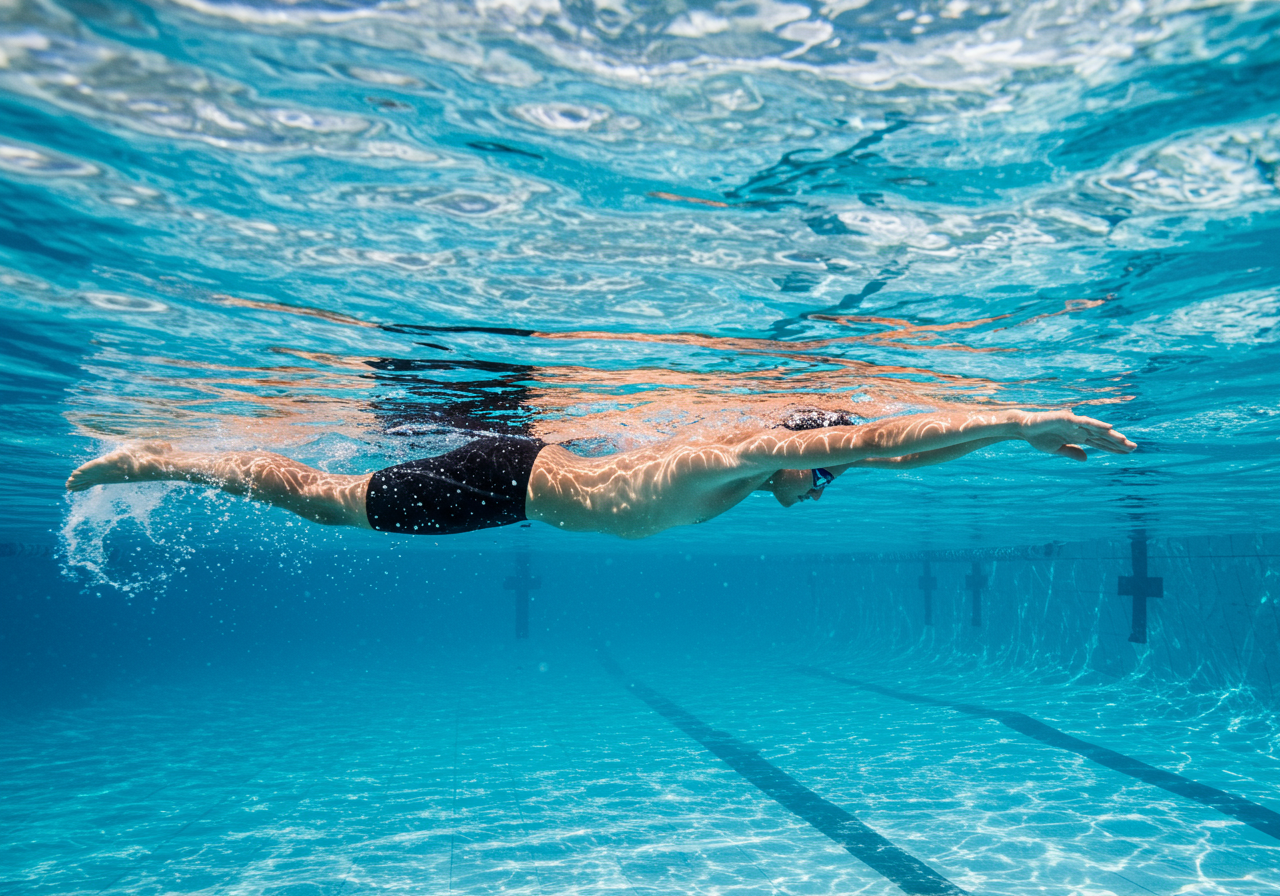
Technique cues: Think “head still, ribs down,” reach forward with fingertips slightly down, high-elbow catch, press water back past hip. Kick from the hips (quiet knees). Breathe by rolling with the body, one goggle in the water.
Intensity guide: Use RPE. Easy aerobic = 3–4/10, steady aerobic = 5–6/10, threshold = 7–8/10, sprints = 9/10 for short bursts. If you use a Garmin/FORM, track pace/100 and stroke count (SPL) each main set.
Example main sets:
Beginner: 8×50 m @ RPE 4–5, 20–30s rest. Focus: smooth breathing and even pacing.
Intermediate: 10×100 m @ RPE 6–7, 15–20s rest. Aim for consistent pace across all reps, negative split the last two.
Advanced: 3×(4×100 m) where 1–3 @ RPE 6, #4 @ RPE 8, 10–15s rest between 100s, 60s between sets.
Real session from my log: 45 minutes, 25 m pool, ~1,800 m total. Warm-up 400 easy + drills 300. Main: 8×100 @ 2:05/100 aiming steady, RPE 6, 15s rest. Pull 4×50 easy. Cool-down 200. Notes: negative split last two, stroke count dropped from 21 to 19 SPL as I relaxed the kick.
Client win (beginner, Maya): “I started with 25 m repeats, out of breath. By week 6 I swam 400 m without panic and my shoulders stopped aching.”
Fuel & recovery: For sessions >45 minutes, sip 200–400 ml water with electrolytes poolside. Pre-swim snack 30–60 min prior: fruit + yogurt or toast + honey. After: ~0.3 g/kg protein and carbs to match effort. Sleep 7–9 hours; light band work for rotator cuff on dryland days.
Tracking: Log pace/100 m, SPL, total meters, and RPE in Garmin Connect, Strava, or MySwimPro. A slow drop in SPL at the same pace is a great sign your technique is improving.
8-Week Plan: 800m to 2000m Progression
How to scale: Build frequency first (2 → 3 sessions/week), then add meters slowly (50–200 m per session). Keep most work aerobic; sprinkle short threshold pieces.
8‑week progression overview (distances assume 25 m pool; adjust for yards). Plain-text summary table below. Week 1–2: 2 sessions; 800–1,200 m each; focus: relaxed breathing, 25–50 m repeats, long rests. Week 3: 2–3 sessions; 1,000–1,400 m; add 1 drill; main set 6–8×50 steady, 20–30s rest. Week 4 (lighter): 2 sessions; reduce volume by ~20%; technique emphasis; optional easy pull. Week 5: 3 sessions; 1,200–1,600 m; introduce 6–10×100 @ RPE 6–7, 15–20s rest. Week 6: 3 sessions; 1,400–1,800 m; add short threshold: 2×(4×100) where #4 harder, easy 50 between sets. Week 7: 3 sessions; 1,500–2,000 m; sprinkle 8–12×25 fast with long rest, keep form. Week 8 (test): 2–3 sessions; maintain volume; one day swim a comfortable continuous 400–800 m to gauge progress.
Level targets:
Beginner goal: comfortable 400–800 m continuous at conversational pace.
Intermediate goal: hold even pace for 10×100 with ≤10% slowest-fastest spread.
Advanced goal: include 1 threshold-focused day weekly without stroke count drifting up.
Open-water bridge (optional weeks 6–8): 10–20 min easy lake or ocean swim with a buddy or kayak support. Use sighting every 6–8 strokes; stay parallel to shore.
Balance Volume, Fix Form, Prevent Shoulder Strain
Frequency & mix: Most beginners thrive on 2–3 swims/week. Keep roughly 70–80% easy aerobic, 15–25% steady/threshold, and 5–10% short sprints.
Troubleshooting:
Plateaus: Hold volume steady for a week, swap in more drills, and measure SPL. If SPL rises as you fatigue, shorten reps to protect form.
Overtraining signs: Heavy arms day after day, disrupted sleep, irritability. Cut the next session to easy technique only, and increase calories slightly.
Shoulder niggles: Check hand entry (avoid crossing midline), finish the pull by the hip, and add 2×/week band external rotations and wall slides.
Breathlessness: Exhale steadily underwater; try 3:3 or 2:1 patterns. If panic hits, switch to backstroke for 25 m and reset.
Validation & testing: In my last beginner group, three swimmers completed their first relaxed 800 m by week eight using this structure. For a simple benchmark, time a 200 + 400 easy-hard combo and track average pace/100 m monthly; expect smoother breathing and steadier pacing before major speed changes.
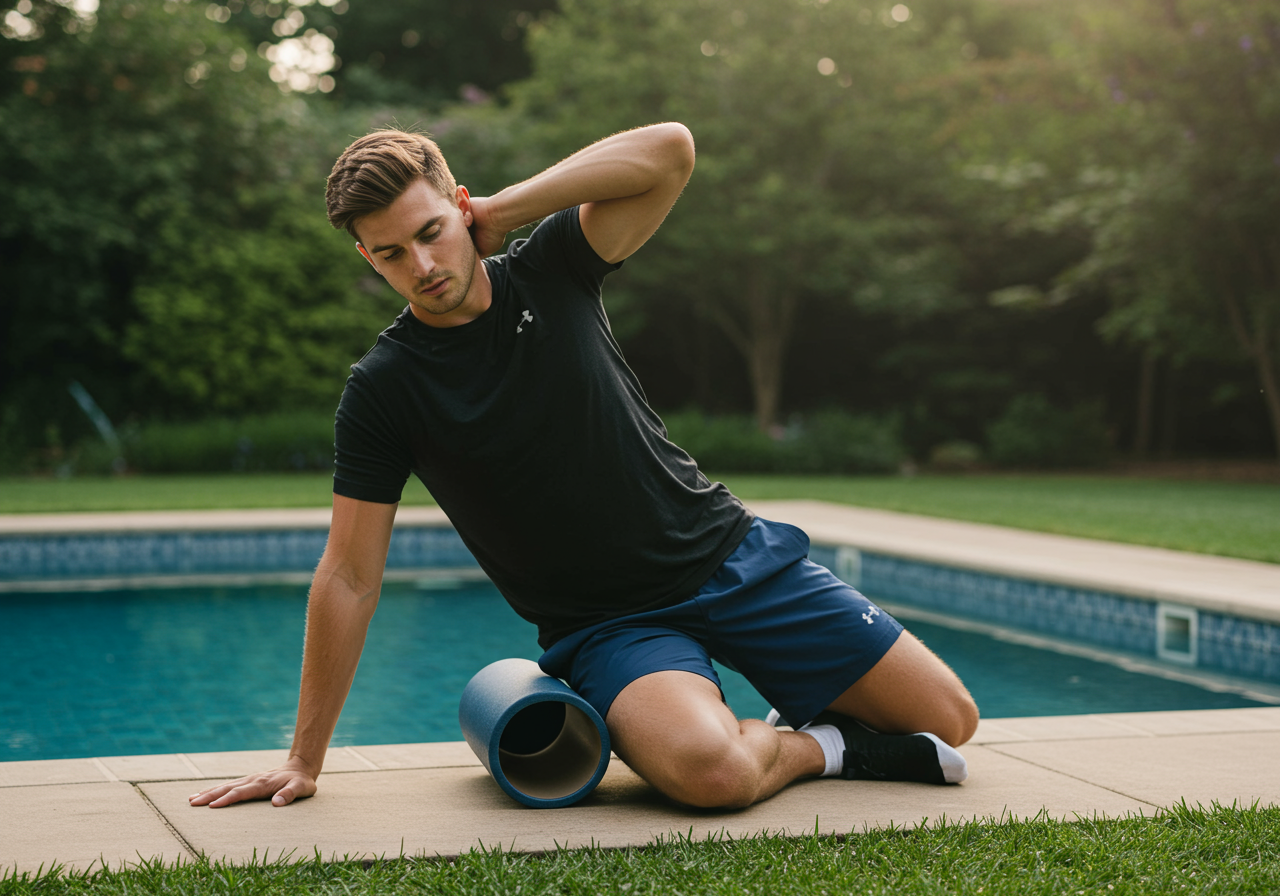
Nutrition & recovery: Aim for balanced meals with protein at 1.4–1.8 g/kg/day during training blocks. Hydrate proactively; add electrolytes if you cramp. Sleep is your speed coach—7–9 hours. Light mobility for T‑spine and lats after swims helps shoulders stay happy.
Safety: Never swim alone in open water. Bright cap, buoy, and a buddy. In pools, respect lane etiquette, circle swim, and pass at the wall.
Next steps: Log today’s baseline (pace/100, SPL, RPE) in Garmin or Strava. Follow the 8‑week outline above, then repeat the test week. If you want my printable session cards, subscribe and I’ll send the full template set.
Catch Overtraining Early With Simple Weekly Symptom Scans Overtraining syndrome can sneak up on beginners; here’s how to identify it fast and recover properly. Core signs: lasting fatigue, performance decline, mood shifts, poor sleep; recover by cutting training volume, sleeping 7–9 hours, and fueling adequately. In this guide, I’ll show you my field-tested system to…
Incremental loading in rehab gives you a clear path to restore capacity without re-injury. Increase load 2–10% when pain stays ≤3/10 during activity and the next day. In the next few minutes, you’ll learn the exact steps I use with clients and in my own training: pain rules, weekly progressions, session templates, tracking, and recovery…
Strategic Cold Plunge Timing for Recovery and Performance Cold water immersion can be a powerful recovery tool when you integrate it into a structured week of cardio, strength, and mobility. Use cold water immersion after cardio or on rest days, 2–10 minutes at 10–15°C, and avoid right after heavy lifting. In this guide you’ll learn…
Quick Overview: Zone Targets and Weekly Structure Heart Rate Zone Training helps beginners build endurance smarter with clear intensity targets. You’ll learn how to set your zones, plan workouts, and track progress without guesswork. Direct answer: Spend most sessions in Zone 2, add short Zone 4–5 intervals weekly, and take at least one full rest…