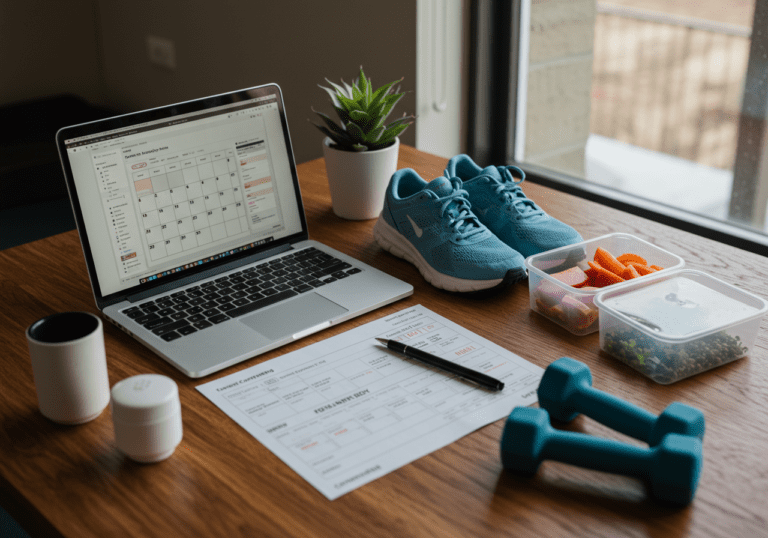
This recovery tools buying guide sits inside a full training plan that blends cardio, strength, and mobility for consistent results.
Quick answer: Start with a firm foam roller and a mid-pressure massage ball, train 3–4 days weekly, track effort, and sleep 7–9 hours.
You will learn how to set a balanced weekly schedule, select effective recovery tools (rollers, guns, and more), use them safely, and progress from beginner to advanced without burnout.
Why Aerobic Capacity, Strength, and Mobility Matter
Foundational fitness improves when three pillars work together: aerobic capacity (heart, lungs, mitochondria), strength (muscle, tendon, bone), and mobility (joint range and control). Recovery practices reduce perceived soreness and help you train consistently.
Foam rolling and massage guns can acutely increase range of motion and decrease muscle tenderness, likely via neural and fluid shifts rather than structural changes. In peer‑reviewed studies, these effects are short‑term, so tools work best as supplements to sleep, nutrition, and smart load management.
What this means in practice: use tools to feel better and move better today, while training creates the lasting adaptation. Overreliance on gadgets cannot fix poor programming or chronic sleep debt.
“Two weeks in, I wasn’t limping after desk days anymore. Ten minutes with the roller plus the hip routine made my runs feel smoother.” — Maya, new runner
Complete Session Structure: Cardio, Strength, and Mobility
1) Set your weekly structure (45–60 minutes per session)
Three or four training days: two cardio-focused, one or two strength-focused.
Daily 10–15 minute mobility reset (morning or evening).
One low-effort recovery day with gentle walking or cycling.
Main — 20–40 minutes at conversational pace (Zone 2; RPE 4–6). Keep breathing through the nose when possible.
Optional finishers — 4–6 short strides or 20–30 second pickups with full recovery.
3) Strength day (full-body)
Warm-up — 5 minutes: glute bridge x10, dead bug x8/side, band pull-apart x15.
Main lifts — 3–4 moves, 2–4 sets each, RPE 6–8: goblet squat, hip hinge (Romanian deadlift or kettlebell deadlift), push (push-up or DB press), pull (row), carry (farmer’s carry).
Core finisher — side plank 2×20–40s/side, bird-dog x8/side.
4) Mobility reset (daily)
Hip 90/90 or figure‑four stretch — 1–2 minutes/side.
Pre‑workout primer (2–3 minutes) — quick foam roll on quads/calves/upper back; light pressure only. Goal: reduce stiffness, not deep massage.
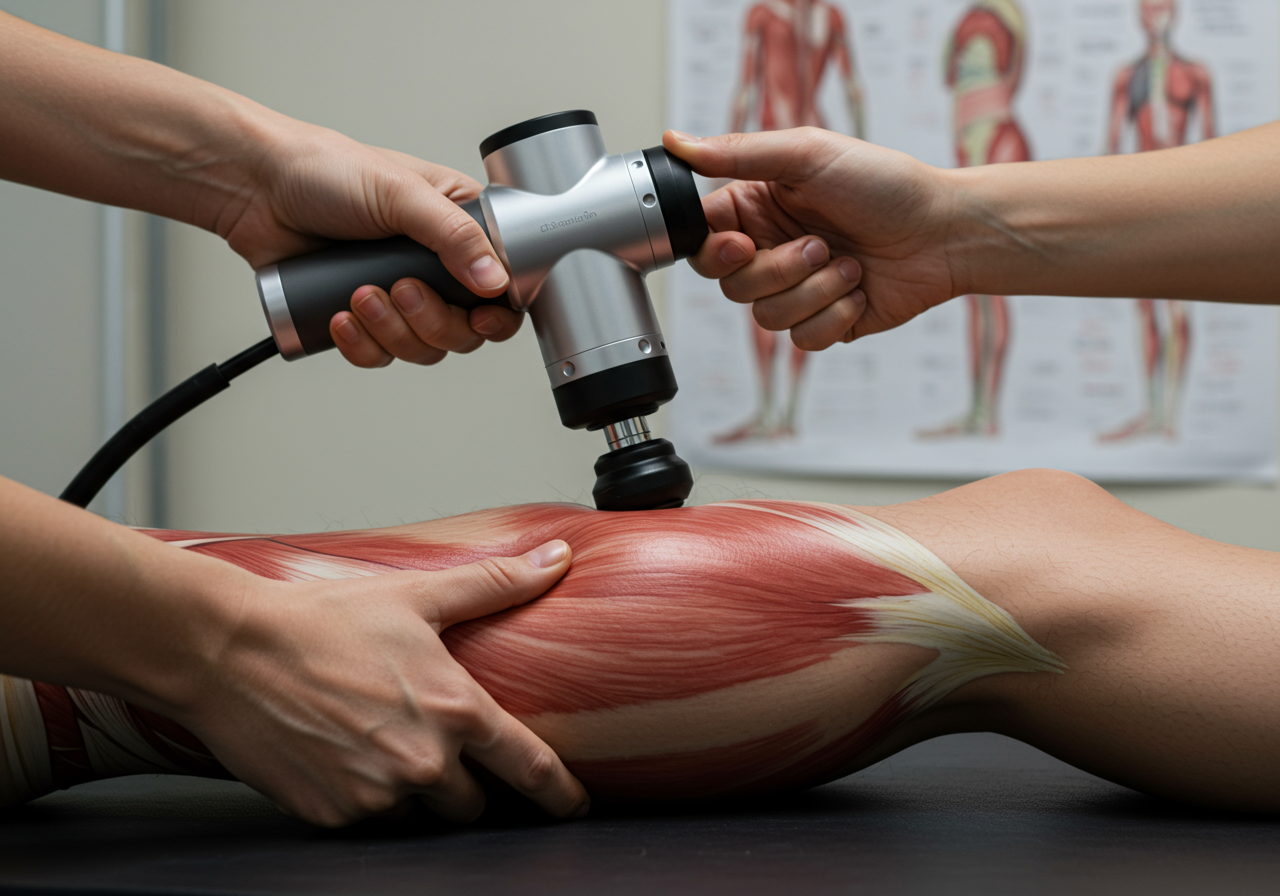
Post‑workout (5–10 minutes) — slow passes on tight areas; 30–60 seconds per spot. Massage gun on large muscles only, low to medium setting. Avoid bones and acute injuries.
Off‑day check‑in (5 minutes) — target common hotspots (glutes, calves, lats) with a massage ball against a wall for accuracy.
6) Buying guide — what to look for
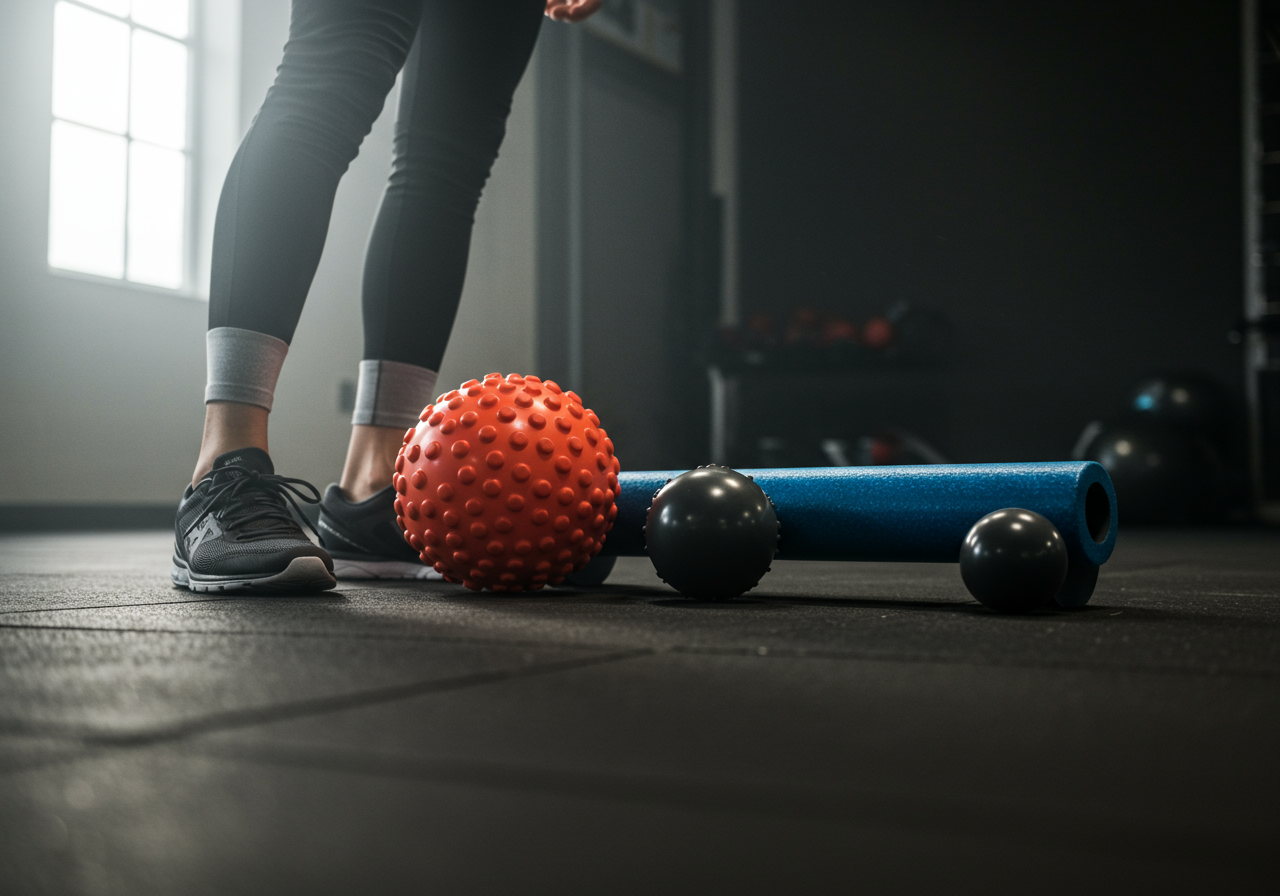
Foam rollers — Density: medium-to-firm for versatility. Texture: smooth or light ridges; avoid aggressive spikes for beginners. Size: 12–18″ for portability.
Massage balls — Diameter 2.5–3″; rubber or cork for grip; choose medium firmness to start.
Massage guns — Check stall force (adequate for legs without painful jamming), amplitude (10–14 mm is sufficient), multiple head attachments, quiet motor, and 2–3 hour battery life. A reliable midrange model beats a cheap rattler.
Compression/sleeves — Graduated compression (15–25 mmHg) for travel or long sitting; ensure proper sizing.
Heat/cold — Reusable gel packs. Use heat for stiffness before sessions; cold for calming after hard days if it helps you personally.
7) Tracking
Cardio — Use Strava or Garmin to log duration, pace, HR zones.
Strength — Log sets/reps/RPE in Strong or a simple spreadsheet.
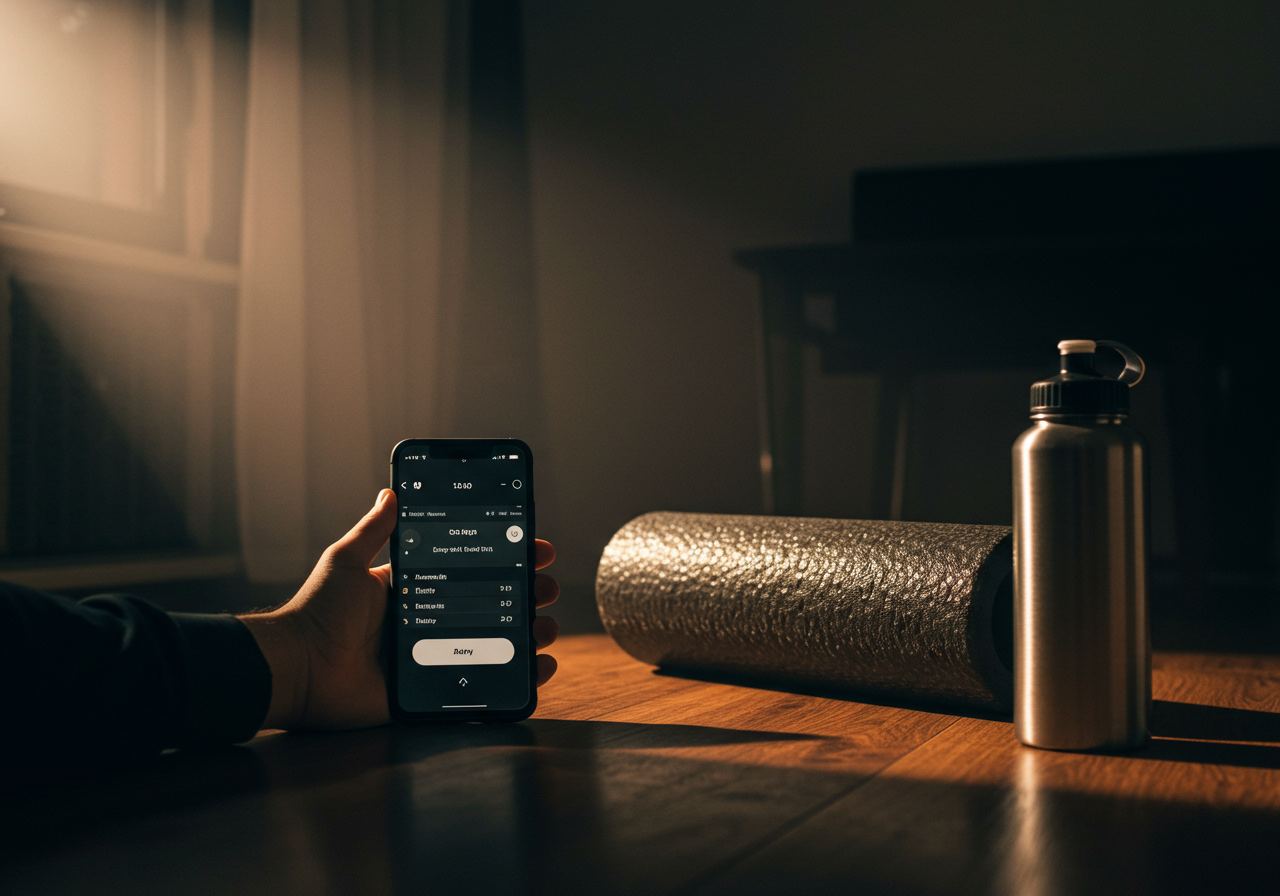
Recovery — Note wake-up soreness (0–10), sleep hours, and tool minutes. Adjust training if soreness stays ≥5 for two days.
From the coaching log: a simple week might include a 35-minute Zone 2 run, one full-body session at RPE 7, and a bike ride on the weekend, with 10 minutes of rolling after each workout and a 5-minute ball session on the off-day.
Eight-Week Progression from Beginner to Advanced Training
8‑week roadmap (caption: volume rises gradually; Week 4 is a refresh.)
Week 1: 2x Cardio Z2 20–30 min; 1x Strength 2–3x10 @ RPE 6; Mobility 10 min daily; Tools 5 min post.

Week 2: 2x Cardio Z2 25–35 min; 1–2x Strength 3x8–10 @ RPE 6–7; Add carry; Tools 6–8 min post.

Week 3: 2x Cardio Z2 30–40 min; 2x Strength 3x8 @ RPE 7; Optional 4 pickups x 20s; Tools 8–10 min post.

Week 4 (refresh): 2x Cardio Z2 20–30 min; 1x Strength 2x8 @ RPE 6; Extra sleep; Tools light only.

Week 5: 1x Z2 35–45 min + 1x intervals (6x1 min Z3, full rest); Strength 3–4x6–8 @ RPE 7–8; Tools 8–10 min.

Week 6: 1x Z2 40–50 min + 1x tempo (10–15 min Z3 steady); Strength add hinge focus; Tools targeted ball work.

Week 7: 1x Z2 45–55 min + 1x intervals (8x1 min Z3); Strength 4x6 @ RPE 8; Optional accessory supersets; Tools as needed.

Week 8 (consolidate): Test easy pace HR; Strength maintain 3x6–8 @ RPE 7; Mobility 15 min/day; Tools light flush.

Beginner to Intermediate: Progress by adding 5–10 minutes to cardio and 1 set to major lifts every 1–2 weeks.

Intermediate to Advanced: Add a third quality session (shorter tempo), push RPE 8 selectively, and introduce unilateral lifts and loaded carries.
Validation checkpoints
Cardio: Can you hold the same conversational pace with a slightly lower heart rate by Week 8? If yes, aerobic base is improving.
Strength: Are main lifts up by 2.5–10% or 1–2 reps at the same RPE? That’s progress.
Mobility: Can you achieve a deeper squat without heel lift and less hip pinch? Note before/after photos monthly.
Frequency Guidelines, Common Mistakes, and Troubleshooting Tips
Frequency & intensity — Most beginners thrive on 3 training days plus daily 10-minute mobility. Keep most cardio easy (Z2). Lift with 1–2 reps in reserve. Add intensity only when you recover well.
Common mistakes — Going too hard, too often; chasing pain with tools; skipping protein and sleep. Tools should feel relieving, not bruising.
Troubleshooting
Plateau: Deload for 4–7 days, then resume with a small bump in volume or a new accessory lift.
Overtraining signs: Resting HR up 5–10 bpm for several mornings, irritability, stubborn soreness. Cut volume in half for a week.
Injury niggles: Reduce range and load; use tools gently around, not on, pain. If pain persists >7–10 days, consult a clinician.
Motivation dips: Book short, easy wins—20-minute Z2 or two supersets. Consistency > intensity.
Nutrition & recovery — Aim for 1.6–2.2 g/kg protein daily, carbs around training (e.g., fruit or oats pre; rice or potatoes post), and 7–9 hours of sleep. Hydrate to pale-yellow urine; add electrolytes in heat. Creatine monohydrate (3–5 g/day) is well-supported for strength; skip if medically contraindicated.
Tool hygiene & safety — Clean attachments weekly, avoid open wounds, numb areas, or recent thrombosis. Keep percussion gun moving; 15–60 seconds per spot is enough.
Progress tracking — Log RPE, sets/reps, weekly minutes, and tool time. Consider HRV or readiness from Garmin, Fitbit, or WHOOP only as context, not commands. Reassess goals every 4 weeks.
Client snapshot — A desk‑bound beginner added two 30‑minute Z2 rides and one full‑body lift weekly. After eight weeks, they reported less calf tightness and easier breathing on hills, with better sleep scores. Individual results vary, but consistent habits compound.
Next steps — Save this plan, pick one roller and one ball today, and start logging. Subscribe for printable templates and a 10‑minute mobility video.
Accessory work for big lifts is the smartest lever to grow your squat, bench, deadlift, and press without burning out. Choose 1–3 targeted accessories per lift, train 6–15 reps, progress weekly, and deload every 4–8 weeks. In this guide, you’ll learn how to pick the right accessories for your weak links, structure sessions around big…
Compound Lifts Build Strength, Isolations Refine Details Compound vs Isolation Movements decide how fast you gain strength, muscle, and resilience. I’ll show you when each shines and how to blend them. Quick answer: Base training on compound lifts, then plug isolation where you need joint-friendly volume, symmetry, or rehab-friendly workload. You’ll leave with a full…
Replace foods you eat with healthier alternatives daily A food swap guide makes healthier eating automatic while you build fitness. You will pair simple meal upgrades with cardio, strength, and mobility. Direct answer: Make a personal list of current foods and replace each with a healthier option you will actually eat. In minutes, you’ll map…
Build engagement through small wins and progression A 30-day challenge can keep users engaged when it blends simple wins with steady progression, clear tracking, and recovery. Build it by mixing small daily wins, progressive difficulty, and clear tracking. In this guide you’ll get a complete template: cardio, strength, mobility, and activity days; level-based progressions; tracking…
Build Fitness While Protecting Your Joints Daily Low-impact cardio helps you build fitness without irritating your knees, hips, or back. Best joint-friendly options include walking, cycling, elliptical, swimming, rowing, and pool running. In the next minutes, you’ll get a complete, beginner-friendly conditioning system with clear sessions, weekly progressions, nutrition and recovery tips, and simple tracking…
Dynamic Warm-Ups and Strategic Cool-Downs for HIIT Warm-up and cool-down decide whether high-intensity cardio feels sharp or sloppy. Today you’ll get a complete system that scales from beginner to advanced. The best approach is 10–12 minutes of dynamic ramp-up and 8–10 minutes of easy aerobic plus breathing and light mobility afterward. You’ll learn why these…