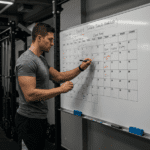
To track client progress, you need a simple, repeatable framework that ties training to clear numbers and real-life wins. This guide shows you exactly how I build that system across cardio, strength, mobility, and daily activity.
Direct answer: Use a small set of consistent metrics each week to guide training decisions.
Why Consistent Measurement Beats Guesswork Every Time
Training works when stress meets recovery at the right dose. Simple, repeatable metrics turn guesswork into feedback. Heart rate zones reflect cardiovascular strain, rep targets align with progressive overload, and mobility scores highlight usable range of motion. When these numbers move in the right direction, performance and wellbeing usually follow.
In practice studies and in my coaching, beginners who track just a few measures stick to training more consistently and make steadier adjustments. One client, Maya (busy desk job), reported fewer knee aches and smoother stair climbing after eight weeks of gentle progressions and short mobility checks. Her adherence improved once we stopped chasing dozens of markers and focused on four.
Lessons learned: too many metrics lead to overwhelm; inconsistent test conditions muddy results; skipping recovery data hides fatigue. Tools help, but simplicity wins. Apps like Garmin or Fitbit capture heart rate and steps reliably; Strava organizes cardio sessions; MyFitnessPal supports nutrition logs; a shared Google Sheet keeps everything in one place.
Approach comparison, quick takeaways: – RPE vs. Percentages: RPE adapts to daily readiness; percentages are tidy but rigid. Beginners usually do better with RPE plus wide rep ranges. – Pace vs. Heart Rate: pace is intuitive outdoors; heart rate travels well across terrain and weather. I suggest HR zones for easy days and pace/RPE for intervals.
Build Your Lean Dashboard in Five Steps
Set up a lean dashboard that captures the training effect without clutter. Use these four pillars plus a recovery check.
Cardio metric: easy-day heart rate at a steady pace (Zone 2) or average pace on a short repeatable route.
Strength metric: a key lift performed for reps at 1–3 RIR (reps in reserve) or RPE 7–8; track best set reps and load.
Mobility metric: one position that matters to you (e.g., knee-to-wall dorsiflexion distance, deep squat hold time, or shoulder flexion reach).
Activity metric: 7‑day step average or daily active minutes.
Recovery markers: sleep hours, morning feel (1–5), and session RPE.
Pick your tests (Day 0). Choose one metric per pillar. Keep them short and repeatable. Example tests: 20–30 minutes Zone 2 walk/jog; Goblet squat top set of 6–10 at RPE ~8; knee‑to‑wall distance both sides; 7‑day steps from your wearable.
Establish a baseline (Week 1). Perform light versions of your tests to learn the setup. Log conditions (sleep, time of day, shoes, surface). Consistency beats intensity.
Build a simple week. Aim for 4–5 training days: – 2 full‑body strength sessions (30–45 min). – 2 cardio sessions (one Zone 2, one gentle interval). – 2 short mobility blocks (8–12 min), stack onto warm‑ups or evenings. – Daily steps: set an achievable floor.
Log immediately. After each session, record: duration, main metric (HR, load, reps), RPE, and any notes. Use Fitbit/Garmin for HR/steps, Strava for routes, and a shared sheet for the rest.
Adjust weekly. If you hit the top of your rep range at RPE ≤8, add a small load next time. If Zone 2 feels easier at the same pace, extend duration by 5–10 minutes or nudge pace. For mobility, when positions feel smoother, add a slightly harder variation.
Validate monthly. Re‑test the same short assessments under similar conditions. Compare like for like. If results are flat, tweak one variable at a time (volume, intensity, or recovery).
Example session flow (beginner‑friendly): Warm‑up — 5 minutes easy movement and breath. Strength A — Goblet squat 3×8 @ RPE 7; Incline push‑ups 3×6–10; Hip hinge (DB RDL) 3×8; Row 3×10; Carry 2×30–40 m; Core 2 sets. Cardio (separate day) — 25–35 min Zone 2 (conversational, nasal breathing), RPE 4–5. Mobility — 10 minutes: ankle rocks, deep squat breathing, thoracic rotations.
Scale From Beginner Baseline to Advanced Loading
Start light, show up often, and let the numbers nudge you forward. Keep the same tests so changes are believable.
Progression roadmap—use these targets to scale volume and intensity.
Weeks 1–2: Learn movement; Strength 3×8 @ RPE 6–7; Cardio Z2 20–30 min; Mobility 10 min/day; Steps 6–8k; Set baseline at end of week 2.

Weeks 3–4: Add 1 set to main lifts; Z2 30–40 min; Intro intervals 6×30s easy-hard; Mobility add 1 drill; Steps +1k; Brief re-check.

Weeks 5–6: When reps hit cap at RPE ≤8, add small load (plates or heavier DBs); Intervals 6–8×1 min easy-hard; Keep one Z2 session longer; Mobility progress depth/time.

Week 7 (Deload): Halve accessory volume; Keep technique work; Easy Z2 20–30 min; Maintain mobility; Prioritize sleep.

Weeks 8–10: One heavier strength day (5–6 reps), one moderate day (8–10); Intervals 4–6×2 min comfortably hard; Z2 steady; Steps 8–10k.

Weeks 11–12: Consolidate; Reduce junk volume; Re-test all four metrics in similar conditions; Note changes and plan the next block.
Level cues: Beginner — keep RPE mostly 6–7; focus on form and regularity. Intermediate — alternate heavier and moderate strength days; add structured intervals; track sleep more closely. Advanced — split strength into upper/lower if time allows; add tempo or hill work; use micro‑progressions (e.g., 2.5% load bumps, 2–3 min added to Z2).
What improvement looks like: easier breathing at the same easy pace, more reps or slightly more load at a similar effort, smoother depth in key positions, and steadier daily activity. If a metric stalls across two re‑tests, adjust one variable, not five.
Balance Frequency, Recovery, and Nutrition for Results
Frequency and intensity: aim for 4–5 training days weekly. Keep most cardio easy (Zone 2) and a small slice as intervals. Strength sets should finish with 1–3 reps in reserve. Mobility is short and frequent rather than heroic.
Recovery and nutrition: target protein around 1.6–2.2 g/kg body weight, eat mostly whole foods, and adjust calories based on goals (a modest deficit for fat loss or small surplus for muscle). Hydrate, and sleep 7–9 hours. Creatine monohydrate is a simple add‑on many tolerate well; check with a professional if unsure.
Troubleshooting: – Plateau: if lifts stall, reduce accessories and add rest days; if cardio stalls, extend Z2 time before adding more intervals. – Overreaching signs: rising resting HR, poor sleep, irritability—pull back volume for a week. – Motivation dips: shrink the goal; do 20‑minute “minimum effective” sessions; keep streaks alive. – Injury niggles: swap painful moves for pain‑free patterns (e.g., goblet squat instead of back squat), lower range, and keep tissues moving.
Result checks: every four weeks repeat your short tests in similar conditions. If two cycles show no change, change one knob—volume, intensity, or recovery—and re‑check. Small, steady wins compound faster than hot streaks followed by layoffs.
Next steps: copy this template into a Google Sheet, sync your wearable, and start the baseline week.
Build Your Weekly Plan in Minutes A weekly cardio plan can be built in minutes and scaled to any schedule. You’ll learn how to pick session types, set heart rate zones, and progress safely. Direct answer: Set 3–5 sessions, mix zones 2–5, start with 90–150 weekly minutes, and add 5–10% time or intensity every 1–2…
Dynamic Warm-Ups and Strategic Cool-Downs for HIIT Warm-up and cool-down decide whether high-intensity cardio feels sharp or sloppy. Today you’ll get a complete system that scales from beginner to advanced. The best approach is 10–12 minutes of dynamic ramp-up and 8–10 minutes of easy aerobic plus breathing and light mobility afterward. You’ll learn why these…
Build engagement through small wins and progression A 30-day challenge can keep users engaged when it blends simple wins with steady progression, clear tracking, and recovery. Build it by mixing small daily wins, progressive difficulty, and clear tracking. In this guide you’ll get a complete template: cardio, strength, mobility, and activity days; level-based progressions; tracking…
Three full-body sessions weekly for consistent muscle gain A 12-week hypertrophy block for beginners can turn scattered workouts into consistent muscle gain, confidence, and better daily energy. Do three full-body sessions weekly, 6–12 reps, stop 1–3 reps before failure, and add small weight or reps each week. Across the next pages, you’ll get the exact…
Watch HRV, Heart Rate, Sleep, and Load How to Track Recovery with Wearables is simpler than it looks: focus on a few reliable numbers and act on them. Direct answer: Watch HRV trend, resting heart rate, sleep efficiency, and training load to gauge recovery. In this guide, I’ll show you how I coach beginners to…
Stay Consistent Without Burnout Using Smart Structure A weekly training schedule lets busy professionals stay consistent without burnout. In the next five minutes, you’ll learn how to build one that works. Direct answer: Use four 30–45 minute sessions—two strength, one cardio, one mobility—plus 5-minute daily movement snacks. I coach executives, teachers, and new parents. The…