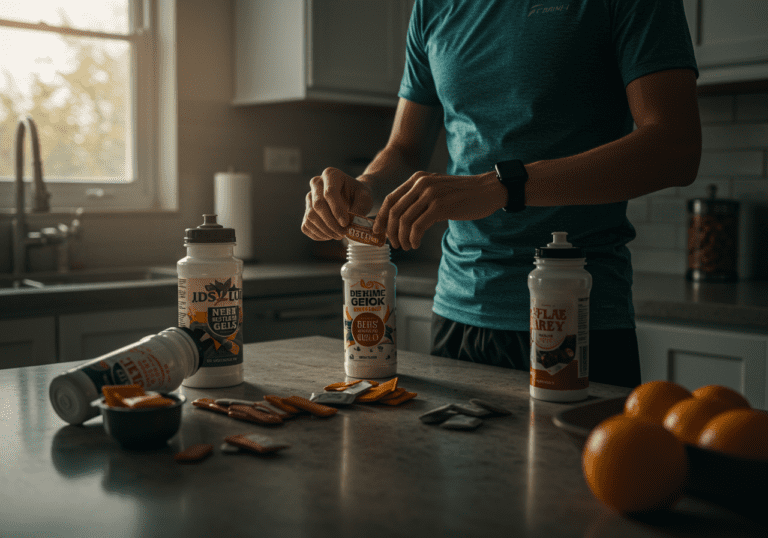
Recovery runs turn tired legs into training momentum. They are easy, conversational-effort jogs placed after hard days to speed repair without adding stress.
Do them 24–48 hours after hard workouts at conversational pace to improve blood flow and preserve training quality.
In this guide you’ll learn when to choose an easy run versus non‑impact active recovery, how to set intensity, and how to progress from beginner to advanced without burning out.
Low‑intensity aerobic movement increases muscle blood flow and lymphatic return, which can help clear metabolic byproducts and reduce soreness. It also maintains aerobic enzyme activity and capillary function between intense days with minimal mechanical damage.
In practice and in peer‑reviewed work, very easy efforts between hard sessions often maintain training quality and perceived readiness better than full inactivity. The caveat: go too hard, and it becomes another workout, not recovery.
My coaching notes: after threshold intervals, I’ll run 30–35 minutes in Zone 2 (Garmin estimate ~120–138 bpm for me). I finish looser, and the next day’s quality session usually holds pace at a lower RPE. One of my clients, Maya, used the same approach during a half‑marathon cycle; she reported less quad stiffness and hit her Wednesday workouts with steadier splits.
Recovery run vs active recovery: running keeps movement specific and maintains running economy. Non‑impact options (bike, brisk walk, easy swim) reduce joint load and are great when legs feel beat up or shoes blisters flare. Both can work; choose based on tissue tolerance and overall fatigue.
1) Schedule — Place recovery work 24–48 hours after hard intervals, long runs, or heavy lifts. During peak weeks, include 1–2 of these sessions.
2) Intensity targets — Use the talk test: you can speak in full sentences. Aim for HR Zone 1–2 (roughly 60–75% of threshold HR) or RPE 2–3 out of 10. If HR drifts upward despite slowing pace, cut it short.
3) Warm‑up (5 minutes) — Easy walk/jog, then 3 short mobility moves: ankle rocks, leg swings, and 10 bodyweight good‑mornings.
4) Main easy aerobic (20–40 minutes) — Keep steps light and cadence relaxed. If joints are cranky, swap to 30–45 minutes of very easy cycling, brisk walking, or a short pool session.
5) Mobility finisher (6–10 minutes) — Couch stretch, hip 90/90 transitions, thoracic rotations. Move slow and breathe through your nose.
6) Strength & mobility integration — On recovery days, favor simple tissue care: a single set of band pull‑aparts, dead bugs, and side planks (1 set each) to keep posture and core engaged without fatigue.
7) Fuel & hydrate — Within 60 minutes, aim for a snack with 20–30 g protein and carbs based on body size and training load. Keep salt/electrolytes handy if you sweat heavily.
8) Track & adapt — Log RPE, average HR, and how your next quality session feels. Tools I use: Strava or Garmin for HR/pace, MyFitnessPal for fueling patterns, and simple HRV apps to check readiness. If recovery runs feel harder each week, reduce time or switch to non‑impact.
My recent session log: 32 minutes easy (average HR 128 bpm, RPE 3), nose breathing throughout, finished with 8 minutes mobility. Next day tempo felt smooth with no calf tightness.
Start where you can breathe easily and finish fresher than you began. Build volume slowly, and insert regular deloads. Use this as a template and adjust to your recovery and schedule.
Caption: 4‑week level‑specific plan to integrate recovery runs and active recovery
Level  Week  Key Session                    Duration   Intensity (HR/RPE)       Notes

Begin  1     Easy run + mobility            20–25 min  Zone 1–low 2 / RPE 2     Talk test; add 5‑min mobility

Begin  2     Easy run + strides (4x15s)     25–30 min  Zone 2 / RPE 2–3         Strides ~90% effort, full walk‑back

Begin  3     Two easy sessions              2 x 25 min Zone 2 / RPE 3           Second day can be brisk walk or bike

Begin  4     Deload week                    20–25 min  Zone 1–2 / RPE 2         Extra sleep; no strides

Inter  1     Easy run after intervals       30–35 min  Zone 2 / RPE 3           Add 6–8 min mobility flow

Inter  2     Two easy runs in heavy week    2 x 30 min Zone 2 / RPE 3           Optional 4x20s strides day 2

Inter  3     Add hills alternative          30–40 min  Zone 2 / RPE 3–4         If sore, swap to 45‑min easy spin

Inter  4     Deload week                    25–30 min  Zone 1–2 / RPE 2–3       Reduce total volume ~25%

Adv    1     Post‑tempo recovery            35–45 min  Low Zone 2 / RPE 3       Nose‑breathing; cap HR drift <5 bpm

Adv    2     Doubles: AM spin / PM jog      20 + 30    Zone 1–2 / RPE 2–3       Keep total under 60 min

Adv    3     Strides + drills               35–45 min  Zone 2 / RPE 3–4         6–8 strides, light drills; avoid lactate

Adv    4     Deload week                    30–35 min  Zone 1–2 / RPE 2–3       Book massage or longer mobility
Progress checks:
You can breathe through your nose for most of the session.
Average HR stays in Zone 1–2 and pace feels relaxed.
Next quality workout begins with springy steps and lower RPE than last week.
When to regress: If easy days feel like work, your HR climbs >10 bpm at the same pace, or soreness lingers past 48 hours, shorten the session or switch to non‑impact.
Frequency — Most runners do 1–2 recovery sessions weekly, placed after intensity or long days. Strength athletes can use active recovery on off‑days to reduce stiffness.
Pairing with strength — Keep lifting light on recovery days: technique sets only (e.g., goblet squats 2x8, band rows 2x12). Save heavy work for separate days.
Common mistakes — Running too fast, skipping fuel, turning strides into sprints, or stacking too many days without a deload. Remember: the goal is to finish feeling better.
Injury filters — If you feel joint pain (not just muscle fatigue), pick cycling, walking, or pool work. If pain changes your gait, rest and consult a professional.
Recovery basics — Prioritize 7–9 hours sleep, protein around 1.6–2.2 g/kg/day, and carbs matched to training volume. Gentle breathwork or a 10‑minute walk after dinner can nudge recovery along.
Next steps — Download a simple tracker or use your notes app to log date, duration, HR, RPE, and next‑day feel. If you want my templates and weekly tips, subscribe to the newsletter so we can build durable fitness together.
Turn Random Rest Into a Repeatable Recovery System A recovery toolbox turns random rest into a repeatable system for better training results. It uses simple tools, short timers, and checklists to reduce fatigue, protect joints, and keep progress steady. In a few minutes, you will learn how to combine practical tools, reliable timers, and a…
Hook & Quick Overview Shoulder Mobility Drills to Prevent Impingement and Pain matter because tight tissues and weak stabilizers make overhead movement cranky fast. This guide gives you a proven, beginner-friendly system. Direct answer: Practice 8–12 minutes of targeted mobility daily and 2 strength sessions weekly to reduce shoulder impingement risk and pain. You will…
Fast Start Deload weeks convert hard training into reliable progress by lowering fatigue while keeping your movement sharp. In this guide, you’ll learn when to schedule them, how much to cut, and simple templates that protect strength and joints. Plan deload weeks by reducing volume 30–50%, keeping technique sharp, and maintaining intensity around RPE 6–7…
Quick Start A 4-day split, set up correctly, accelerates muscle growth without burning you out. You’ll learn an efficient layout, weekly progressions, and recovery strategies. The most effective 4-day split alternates upper and lower sessions, prioritizes compounds, and progresses load weekly with a deload every 4–6 weeks. Why This Split Works Training each muscle group…
Quick bodyweight intervals burn fat at home Home Cardio Workouts Without Equipment can reduce body fat, improve conditioning, and fit into busy schedules. In this guide, you’ll learn practical routines, progressions, and how to track results. Direct answer: Do 20–30 minutes of mixed bodyweight intervals three to five days weekly at moderate to vigorous effort….
Balance Strength and Cardio with Smart Weekly Structure To combine strength lifts with endurance, start with a simple 3+2 weekly template that balances intensity and recovery. Do two strength days, two endurance days, and one mixed day while keeping easy volume high and hard efforts brief. In minutes, you will learn a clear weekly layout,…