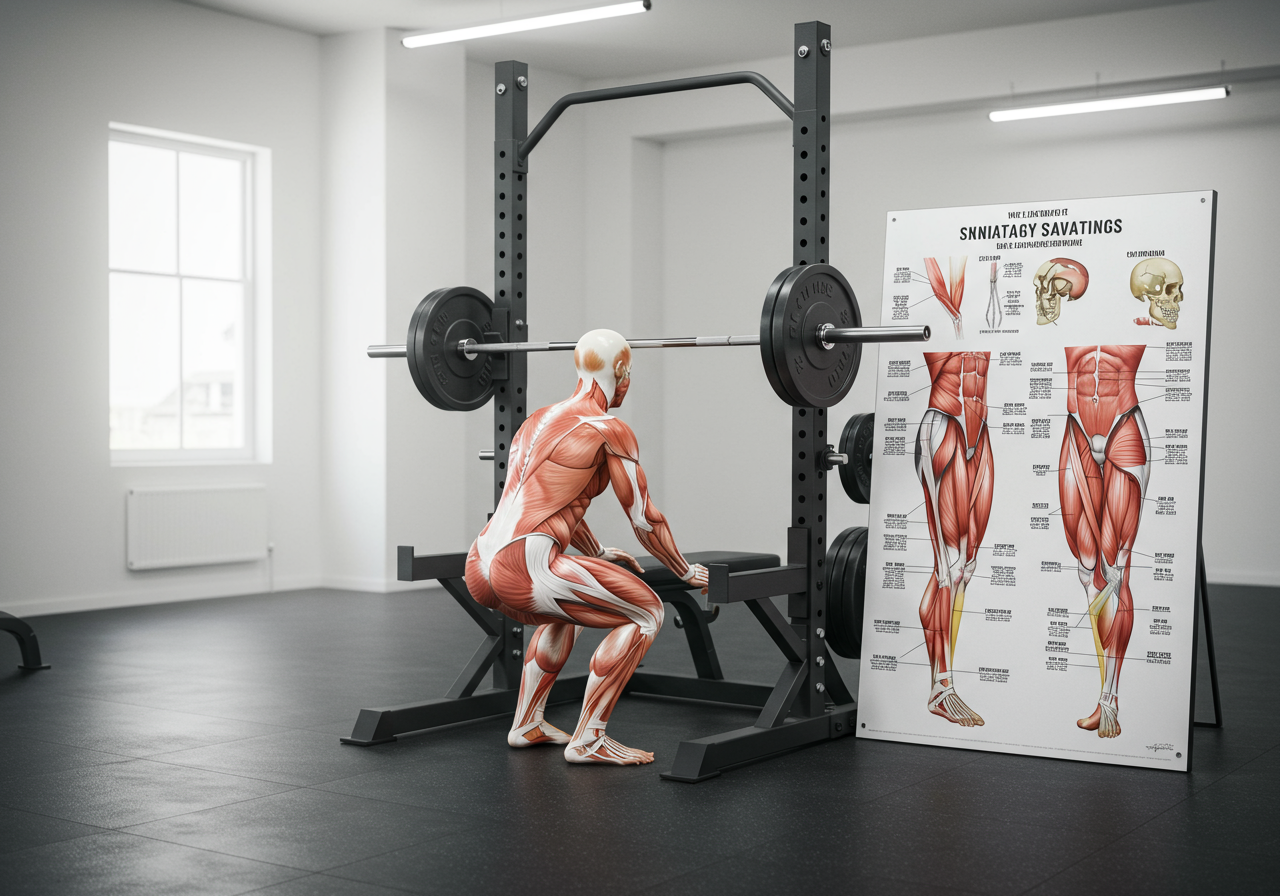
A 4-day split, set up correctly, accelerates muscle growth without burning you out. You’ll learn an efficient layout, weekly progressions, and recovery strategies.
The most effective 4-day split alternates upper and lower sessions, prioritizes compounds, and progresses load weekly with a deload every 4–6 weeks.
Why This Split Works
Training each muscle group twice weekly hits a sweet spot for growth. Protein synthesis peaks for 24–72 hours post-session; a four-day upper/lower cadence refreshes that signal without overwhelming recovery. In peer-reviewed research and practice, 10–20 weekly sets per muscle with progressive overload tends to produce reliable hypertrophy.
By dividing work across four sessions, you can place key lifts when you’re fresh. Compounds like squats, presses, and pulls drive most adaptation. Accessories then fill weak links with higher reps and joint-friendly angles.
In my coaching logs, lifters using this split maintained better performance quality per set versus “marathon” full-body days. My own cycle (Garmin HR, Strong app logs) averaged 65–80 minutes per session, with stable motivation and steady load increases across 8–10 weeks before a deload.
Recovery slots are intentional. Low-intensity cardio on rest days (Zone 2—easy nose-breath pace) improves work capacity, aiding between-set recovery without stealing resources from lifting.
Build Your Four Days
Schedule: Upper A (Day 1), Lower A (Day 2), Rest/Zone 2 (Day 3), Upper B (Day 4), Lower B (Day 5), Rest or Mobility (Days 6–7). Keep sessions 60–80 minutes.
Warm-up — 5–10 min brisk walk or bike + dynamic mobility (hips/shoulders) + 2–4 ramp-up sets for the first lift.
Lower B – Deadlift (conventional or trap bar) — 3–4×3–5 @ RPE 7–8, longer rest – Front Squat or Leg Press — 3×6–10 @ RPE 8 – Hip Thrust — 3×8–12 @ RPE 8 – Seated Leg Curl — 2–3×10–15 @ RPE 8–9 – Seated Calf Raise — 3×12–15 @ RPE 8–9 – Anti-Rotation Press — 2–3×10–12/side
Rest Day Cardio — 20–30 min Zone 2 (talkable pace). My Garmin shows ~120–135 bpm here; yours may vary. Keep it easy.
Progression Rule — If you hit all prescribed reps with RPE ≤8, add 1–2.5% next week (microplates help). If you miss reps or RPE >9, repeat the load or reduce 2–5% and finish strong.
Session Example (real log) — Bench Press: 85 kg × 6, 6, 5 @ RPE ~8; next week added 1 kg and achieved 6, 6, 6. Recorded in Strong; accessory volume unchanged.
Cool-down — 3–5 min easy cycling + light stretches for hips, chest, and lats.
Nutrition Snapshot — For muscle gain, I aim for maintenance +200–300 kcal, protein 1.6–2.2 g/kg, carbs centered around sessions, creatine monohydrate 3–5 g/day, and 7–9 hours of sleep tracked via smartwatch. Clients who hit these basics usually progress more smoothly.
From First Week to Strong Weeks
Caption: 8-week overview to guide load, sets, and deload timing. Week 1–2: Learn technique, 2–3 sets/main lift, 8–12 reps @ RPE 6–7; accessories 2–3×10–15 @ RPE 7. Week 3–4: 3–4 sets/main lift, 5–8 reps @ RPE 7–8; add 1–2.5% if reps met; accessories steady. Week 5–6: Keep sets, shift one main lift to lower reps (3–5) @ RPE 8; add a back-off set @ -10% if energy is high. Week 7: Push performance — aim to match or beat Week 5 loads with cleaner reps; accessories 1 extra set for lagging muscles. Week 8: Deload — reduce loads ~10–20% and cut sets in half; focus on perfect form and quicker sessions.
Beginner Path — Favor machines for stability as needed, stop sets at RPE 7, and add weight only when all reps feel crisp. Expect more technique PRs than load PRs early on.
Intermediate Path — Alternate heavy (3–6 reps) and moderate (6–10) exposures across A/B days. Small weekly increases add up; track e1RM trends in a sheet or the Strong app.
Advanced Path — Use microloading (0.5–1 kg), rotate variations (e.g., pause squats in Week 3–4), and periodize accessories to protect joints. Consider 5–1 wave loading in the final heavy week before deload.
Plateau Fixes — Change one variable at a time: rep range swap (6–8 → 8–10), add a back-off set, or insert a slight variation (incline press instead of flat). If two weeks stall, deload and return.
Results in Practice — In client files using this split, typical outcomes included steadier weekly PRs and fewer missed reps compared with higher-frequency plans. Example: “I finally added 10 kg to my trap-bar deadlift in eight weeks without my back flaring up,” reported Dan (tracked in Trainerize and MyFitnessPal). Individual results vary, but the pattern holds frequently when recovery is on point.
Stay Healthy and Keep Climbing
Frequency — Four lifts weekly, 1–2 easy cardio slots. Keep total weekly sets per muscle around 10–20; start low and build.
Intensity & RPE — Spend most main-lift work at RPE 7–8. Save true grinders (RPE 9) for the final set on strong days only.
Common Mistakes — Skipping warm-ups, chasing failure on every accessory, and adding volume too quickly. If morning heart rate jumps or sleep dips, hold loads steady for a week.
Injury Management — Swap movements, not training intent. Example: if pressing irritates shoulders, use neutral-grip DB presses and keep rows to balance volume. Shorten range with pads or pins temporarily.
Recovery — Protein 1.6–2.2 g/kg, carbs near training, creatine 3–5 g/day, fish oil if diet lacks fatty fish, and consistent sleep. I monitor readiness with HRV and a quick 1–10 energy score before warm-up.
Motivation & Tracking — Log sessions (Strong, Trainerize, or Google Sheets). Tag wins: rep PRs, smoother technique, or faster rest times at same load. Small streaks keep momentum.
Next Steps — Run the plan 8 weeks, deload, then repeat with a new accessory emphasis. If you want my templates and video cues, subscribe and I’ll send the planner.
Fast Start Deload weeks convert hard training into reliable progress by lowering fatigue while keeping your movement sharp. In this guide, you’ll learn when to schedule them, how much to cut, and simple templates that protect strength and joints. Plan deload weeks by reducing volume 30–50%, keeping technique sharp, and maintaining intensity around RPE 6–7…
Turn Random Rest Into a Repeatable Recovery System A recovery toolbox turns random rest into a repeatable system for better training results. It uses simple tools, short timers, and checklists to reduce fatigue, protect joints, and keep progress steady. In a few minutes, you will learn how to combine practical tools, reliable timers, and a…
Hook & Quick Overview Shoulder Mobility Drills to Prevent Impingement and Pain matter because tight tissues and weak stabilizers make overhead movement cranky fast. This guide gives you a proven, beginner-friendly system. Direct answer: Practice 8–12 minutes of targeted mobility daily and 2 strength sessions weekly to reduce shoulder impingement risk and pain. You will…
Build Balanced Legs with Single-Leg Training Progressions Single-leg strength exercises fix wobbly knees, even out leg size, and translate to real-world power. This guide shows you the exact routines, weekly progressions, and recovery rules I use with new lifters and busy clients. Train them 2–3 days weekly, progress load and range, and expect steadier knees…
Build Athletic Range With Yoga-Based Mobility Training Yoga-based mobility improves athletic performance by building usable range, end-range control, and calm breathing under pressure. Today you’ll learn how to plug it into strength, cardio, and sport practice without losing time or power. Direct answer: Do 10–20 minutes of targeted flows before or after training, three to…
Anti-inflammatory foods can meaningfully reduce soreness and speed up recovery when paired with smart training, adequate protein, and sleep. In this guide, I merge a simple training week (strength, cardio, and mobility) with recovery nutrition that lowers unnecessary inflammation. You’ll get meal templates, grocery picks, supplement considerations, and a step-by-step plan to progress from beginner…