Medical Disclaimer: The information provided on this website is for informational and educational purposes only and is not intended as personal medical or health advice. The content, including text, graphics, and images, is not a substitute for professional medical advice, diagnosis, or treatment. Always seek the advice of your physician or other qualified healthcare provider with any questions you may have regarding a medical condition or before starting any new exercise, nutrition, or supplement program. Never disregard professional medical advice or delay in seeking it because of something you have read on this blog. Reliance on any information provided by this site is solely at your own risk.
Stay Consistent Without Burnout Using Smart Structure
A weekly training schedule lets busy professionals stay consistent without burnout. In the next five minutes, you’ll learn how to build one that works.
Direct answer: Use four 30–45 minute sessions—two strength, one cardio, one mobility—plus 5-minute daily movement snacks.
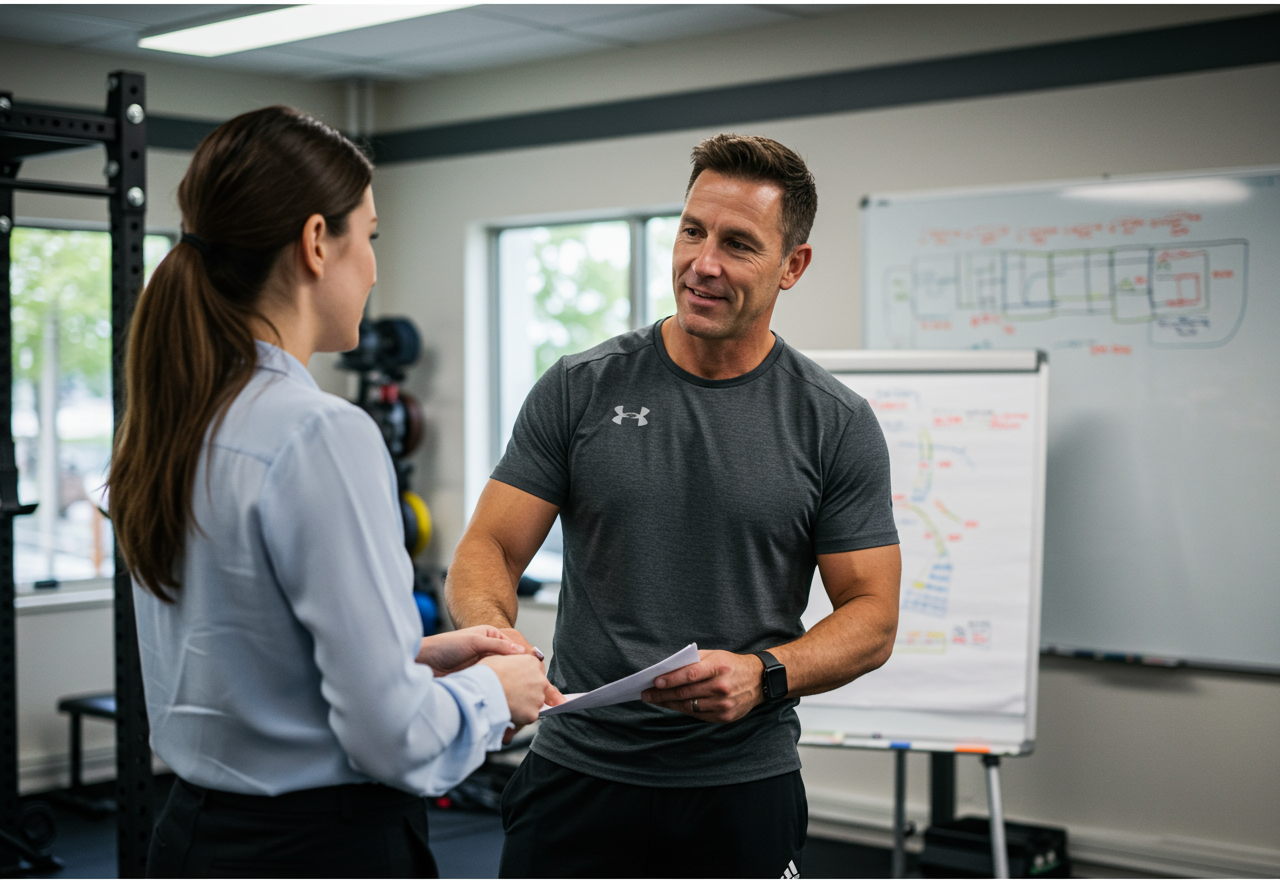
I coach executives, teachers, and new parents. The common win is structure: short, repeatable sessions tied to a calendar, not willpower. I’ll share the exact templates I use, what actually sticks, and how to track progress without obsessing over the data.
Short Sessions Beat Random Intensity for Long-Term Results
When time is scarce, consistency beats intensity. Strength work maintains muscle and bone, cardio protects the heart and brain, and mobility offsets desk stiffness. Together, these pillars reduce injury risk and improve energy for work and family.
Physiology in plain words: brief strength sessions (RPE 6–8) stimulate muscle without frying your system; Zone 2 cardio (conversational pace) builds your aerobic base and stress resilience; 5–10 minutes of mobility restores range you lose after hours of sitting. In practice studies and with my clients, this mix outperforms random high-intensity bursts for adherence and well-being.
Two quick notes from the field: 1) Time-boxed workouts are easier to keep than open-ended ones. 2) Tracking simple metrics (session count, steps, or average sleep) predicts success better than chasing perfect numbers.
Calendar Slots and Time-Boxed Workouts That Actually Stick
Audit your week (10 minutes). Open your calendar. Mark two strength slots, one cardio slot, one mobility slot. Pick recurring times you can defend. Add two 5-minute movement snacks to weekdays.
Set session durations. Strength: 30–40 minutes. Cardio: 30–45 minutes. Mobility: 15–25 minutes. Snacks: 5 minutes. If a day explodes, split a session into two 20-minute blocks.
Strength template (full-body, twice weekly). – Warm-up: 5 minutes easy movement + 2 mobility drills. – Main lifts (pick one per pattern): Squat or split squat; hinge (RDL/hip hinge); push (push-up/DB press); pull (row). Do 3 sets of 6–10 reps at RPE 7–8, resting 60–90 seconds. Finish with a carry or core for 2 sets of 30–60 seconds. – Equipment-light option: Goblet squat, hip hinge with backpack, push-ups on desk, suitcase row with dumbbell or water jug.
Cardio template (once weekly minimum). – Option A: Zone 2 steady state 30–45 minutes (you can talk in full sentences). Target ~60–70% HRmax if you use a device. – Option B: If time is tight, 20 minutes as 1 minute brisk / 1 minute easy, RPE 7 then RPE 3–4.
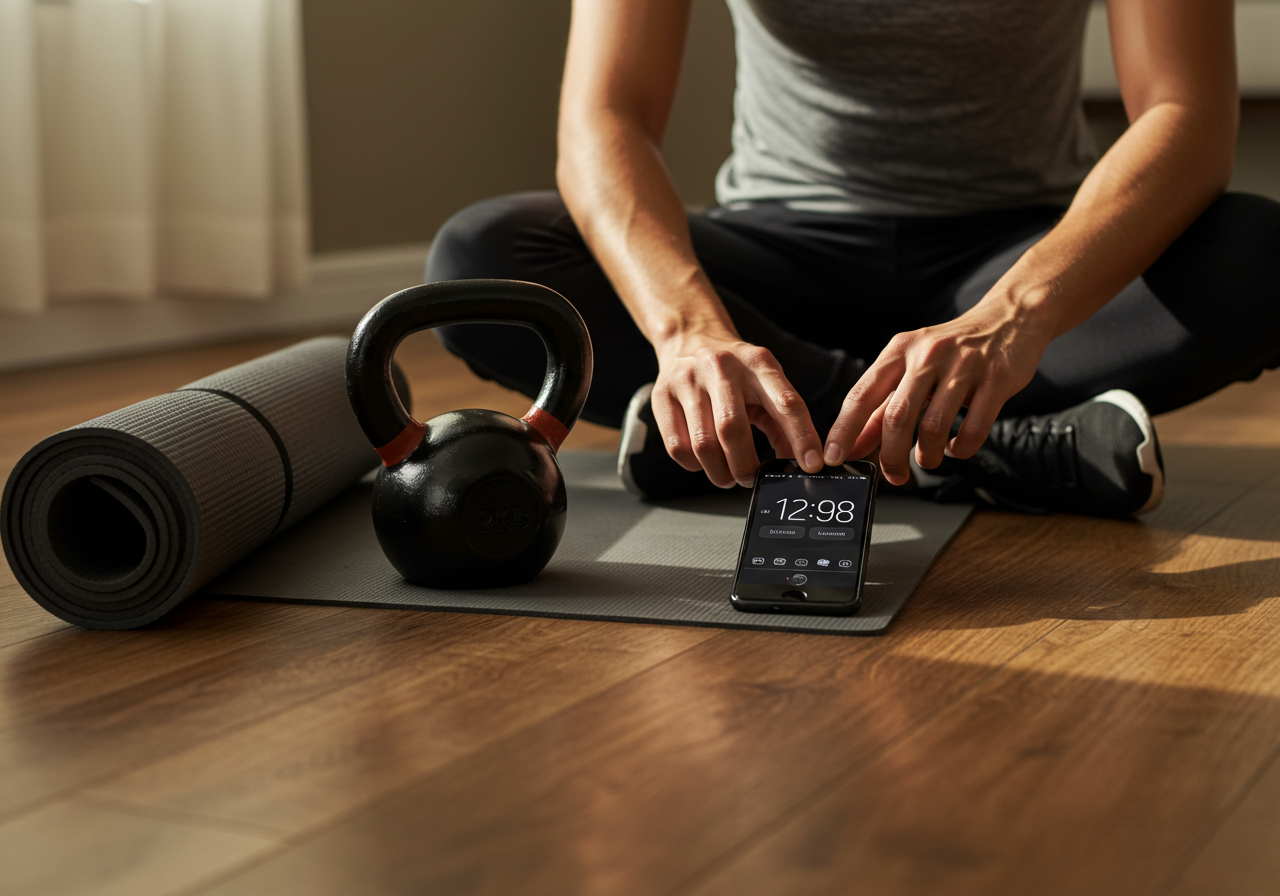
Movement snacks (twice daily on workdays). 5 minutes: brisk stair walk, 20–30 desk push-ups split into mini-sets, or a kettlebell swing EMOM (every minute on the minute) at light load.
Recovery anchors. Protein 1.6–2.2 g/kg/day, veggies at two meals, water within reach; aim for 7–8 hours sleep. Creatine monohydrate 3–5 g/day is a low-effort strength helper for most healthy adults (check with your clinician).
Tracking that doesn’t take over your life. Log sessions in Apple Health, Garmin, or Strava. For food awareness, use MyFitnessPal for 7-day spot checks, not forever. I prefer rating each workout with a single RPE number and noting any niggles.
Personal note: My Tuesday strength block is 35 minutes at lunch. I cycle push-up variations and single-leg RDLs. Heart rate hovers 65–75% HRmax on sets, drops quickly between—good sign I’m not overreaching midweek.
Client voice: “I stopped chasing perfect 60-minute workouts. The 35-minute blocks fit between school drop-off and my first call, and I’m actually progressing.” — Priya, product manager
Scale from Beginner to Advanced with Monthly Templates
Caption: Level-based weekly templates and monthly progression rules you can paste into your calendar.
Beginner — 3 days (30–40 min); 2–4 movement snacks/week Mon: Full-body strength 3×8 each pattern @ RPE 6–7; carry x 2 Wed: Zone 2 cardio 30–35 min (conversational pace) Fri: Full-body strength 3×8 @ RPE 6–7; core x 2 Daily: 5–10 min mobility (split into 2–3 mini blocks)
Intermediate — 4 days (40–50 min); 4–6 snacks/week Mon: Strength A 4×6 @ RPE 7–8 + carry Tue: Mobility 20 min + 15 min brisk walk Thu: Strength B 4×6 @ RPE 7–8 + core Sat: Cardio 40 min Zone 2 or 6×2 min hard/2 min easy (RPE 8/3)
Advanced — 5 days (45–60 min); 6–8 snacks/week Mon: Strength A 5×5 main lift @ RPE 8, accessories 3×8 Wed: Cardio 45 min Zone 2 + 5 min strides Thu: Strength B 5×5 main lift @ RPE 8, accessories 3×8 Sat: Mixed conditioning 30 min (90/90 intervals) @ RPE 7 Sun: Mobility 25 min + easy walk 30 min
Four-week rhythm (all levels): Week 1: Learn loads/paces (leave 3 reps in reserve). Week 2: Add 1 set to main lifts or +5 minutes to cardio. Week 3: Increase load 2–5% or pace slightly; keep form crisp. Week 4: Deload—cut sets by ~30–40% and keep movement easy.
Progress markers to watch: – Strength: add 1 rep per set or 2–5% load every 1–2 weeks while form holds. – Cardio: maintain conversational pace at a slightly lower heart rate over time. – Mobility: smoother depth on squats and easier overhead reach after desk hours.
My experience: Jumping straight to 5x/week while consulting full-time backfired—sleep dipped and nagging elbow pain returned. When I stepped back to four sessions with one deload week each month, lifts climbed again and morning HRV steadied.
References & Further Reading
The following peer-reviewed research and authoritative guidelines support the recommendations in this article:
Time tactics: – Tie workouts to existing anchors: after school drop-off, before your commute, or during lunch. – Keep a 20-minute fallback: goblet squats 3×10, hinge 3×10, push-ups 3xAMRAP, rows 3×12, 5-minute walk.
Intensity guidance: – Strength: most sets at RPE 7–8; leave 1–3 reps in reserve. – Cardio: Zone 2 for base; one harder session only when sleep/stress are stable. – Mobility: move slow, breathe slow; nothing forced.
Troubleshooting: – Plateau: reduce accessories, add 1 extra rest day, and re-test technique. Often, sleep or protein is the culprit. – Motivation dips: book sessions like meetings, invite a colleague for a walking call, or train at home to remove commute friction. – Overuse pains: swap movements in the same pattern (e.g., push-ups instead of bench), drop volume 30% for 7–10 days, and prioritize mobility.
Recovery basics: – Protein 1.6–2.2 g/kg/day; carbs around training if energy flags; omega-3s and colorful plants daily. – Sleep: 7–9 hours; consistent wake time helps more than heroic bedtime goals. – Hydration: 1 glass on waking, 1 per meal, 1 per workout; add electrolytes on hot days.
Tracking and validation: – Use a simple score: Sessions completed / Sessions planned each week. Aim for 80%+. – Optional devices: Garmin/Apple Watch for heart rate, Strava for cardio logs, MyFitnessPal for short-term nutrition audits. – Client snapshot: Dana, an attorney, moved from sporadic late-night sessions to four planned blocks. After eight weeks, she reported steadier energy and her watch estimated a modest VO2max uptick—strong signs her plan matched her life.
Next steps: Save the template, book your four anchors, and set a two-minute reminder to prep clothes the night before. If you want my weekly check-in sheet and example calendars.
Medical Disclaimer: The information provided on this website is for informational and educational purposes only and is not intended as personal medical or health advice. The content, including text, graphics, and images, is not a substitute for professional medical advice, diagnosis, or treatment. Always seek the advice of your physician or other qualified healthcare provider…
Medical Disclaimer: The information provided on this website is for informational and educational purposes only and is not intended as personal medical or health advice. The content, including text, graphics, and images, is not a substitute for professional medical advice, diagnosis, or treatment. Always seek the advice of your physician or other qualified healthcare provider…
Medical Disclaimer: The information provided on this website is for informational and educational purposes only and is not intended as personal medical or health advice. The content, including text, graphics, and images, is not a substitute for professional medical advice, diagnosis, or treatment. Always seek the advice of your physician or other qualified healthcare provider…
Medical Disclaimer: The information provided on this website is for informational and educational purposes only and is not intended as personal medical or health advice. The content, including text, graphics, and images, is not a substitute for professional medical advice, diagnosis, or treatment. Always seek the advice of your physician or other qualified healthcare provider…
Medical Disclaimer: The information provided on this website is for informational and educational purposes only and is not intended as personal medical or health advice. The content, including text, graphics, and images, is not a substitute for professional medical advice, diagnosis, or treatment. Always seek the advice of your physician or other qualified healthcare provider…
Medical Disclaimer: The information provided on this website is for informational and educational purposes only and is not intended as personal medical or health advice. The content, including text, graphics, and images, is not a substitute for professional medical advice, diagnosis, or treatment. Always seek the advice of your physician or other qualified healthcare provider…