Medical Disclaimer: The information provided on this website is for informational and educational purposes only and is not intended as personal medical or health advice. The content, including text, graphics, and images, is not a substitute for professional medical advice, diagnosis, or treatment. Always seek the advice of your physician or other qualified healthcare provider with any questions you may have regarding a medical condition or before starting any new exercise, nutrition, or supplement program. Never disregard professional medical advice or delay in seeking it because of something you have read on this blog. Reliance on any information provided by this site is solely at your own risk.
Top 10 Home Gym Mistakes derail results; this system prevents them while building strength, cardio, and mobility at home.
Direct answer: To avoid home gym mistakes, plan sessions, track loads and heart rate, master technique, recover well, and progress gradually.
You’ll get a simple at‑home framework: strength circuits, smart cardio, mobility, and recovery—plus how to fix common errors before they cost you time or cause aches.
Progressive Overload and Tracking Drive Measurable Gains
Most plateaus come from three issues: poor setup, inconsistent progression, and under‑recovery. When you plan sessions and control volume and intensity, you build capacity without unnecessary strain.
Progressive overload—adding small, repeatable stressors—drives strength and aerobic gains. In practice and in peer‑reviewed research, steady load progress and low‑to‑moderate cardio (Zone 2) improve work capacity while keeping fatigue manageable. Technique and bracing reduce joint stress so you can train more often.
Clients who adopted basic tracking (sets, RPE, and heart rate) reported clearer progress: more reps at the same weight and lower heart rate at a given pace. Your numbers may vary, but consistent measurement usually predicts consistent results.
Clear Your Space and Master Movement Patterns
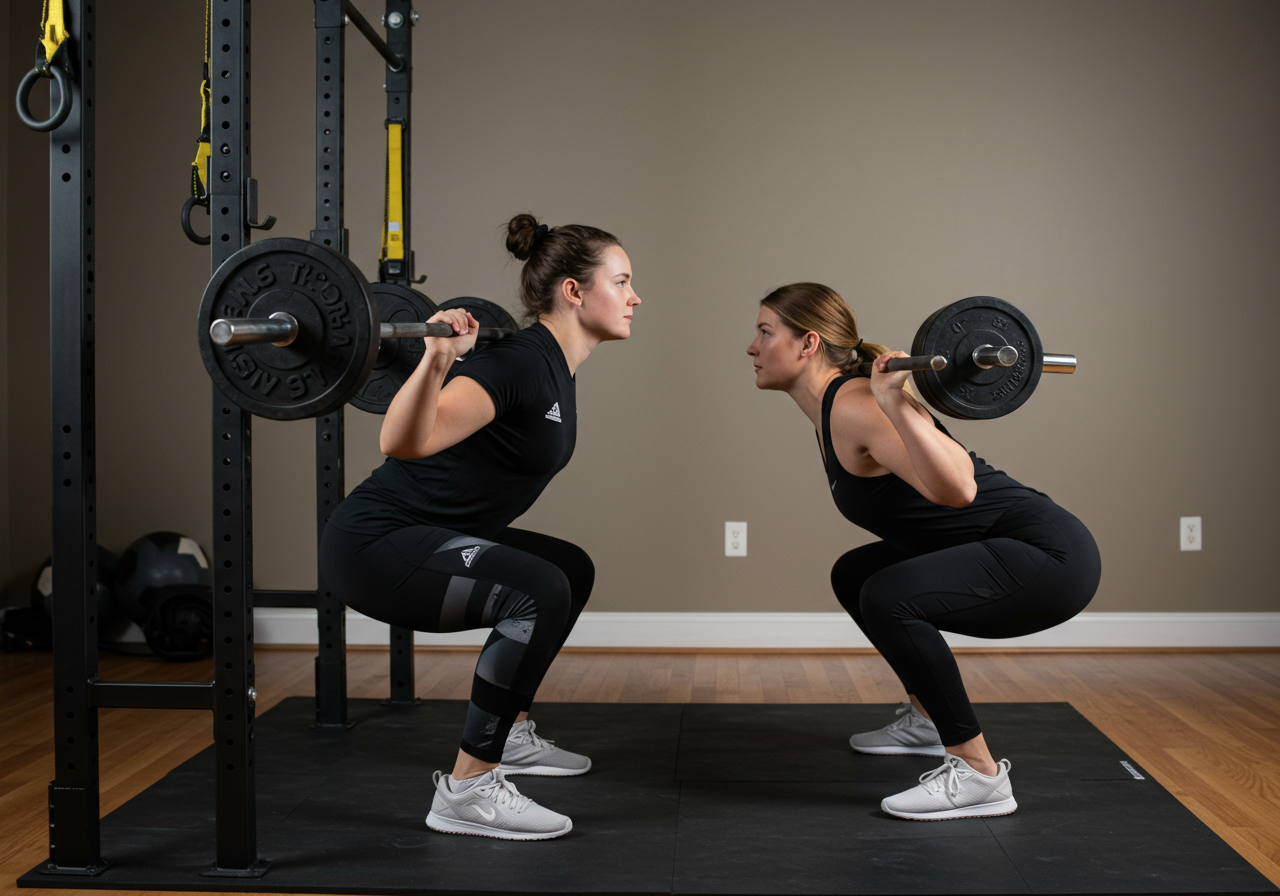
1) Setup check (2 minutes) Clear 2–3 meters of floor. Verify stable surfaces, good lighting, and ventilation. If using a rack, set safety pins just below bottom squat depth. Use collars on any loaded bar or dumbbell handle. Anchor bands securely at or below chest height.
2) Warm‑up (5–8 minutes) Easy cardio (2 minutes), then dynamic mobility: ankle rocks, hip airplanes, band pull‑aparts, and thoracic rotations. Finish with 3 diaphragmatic breaths and one light practice set for each main lift.
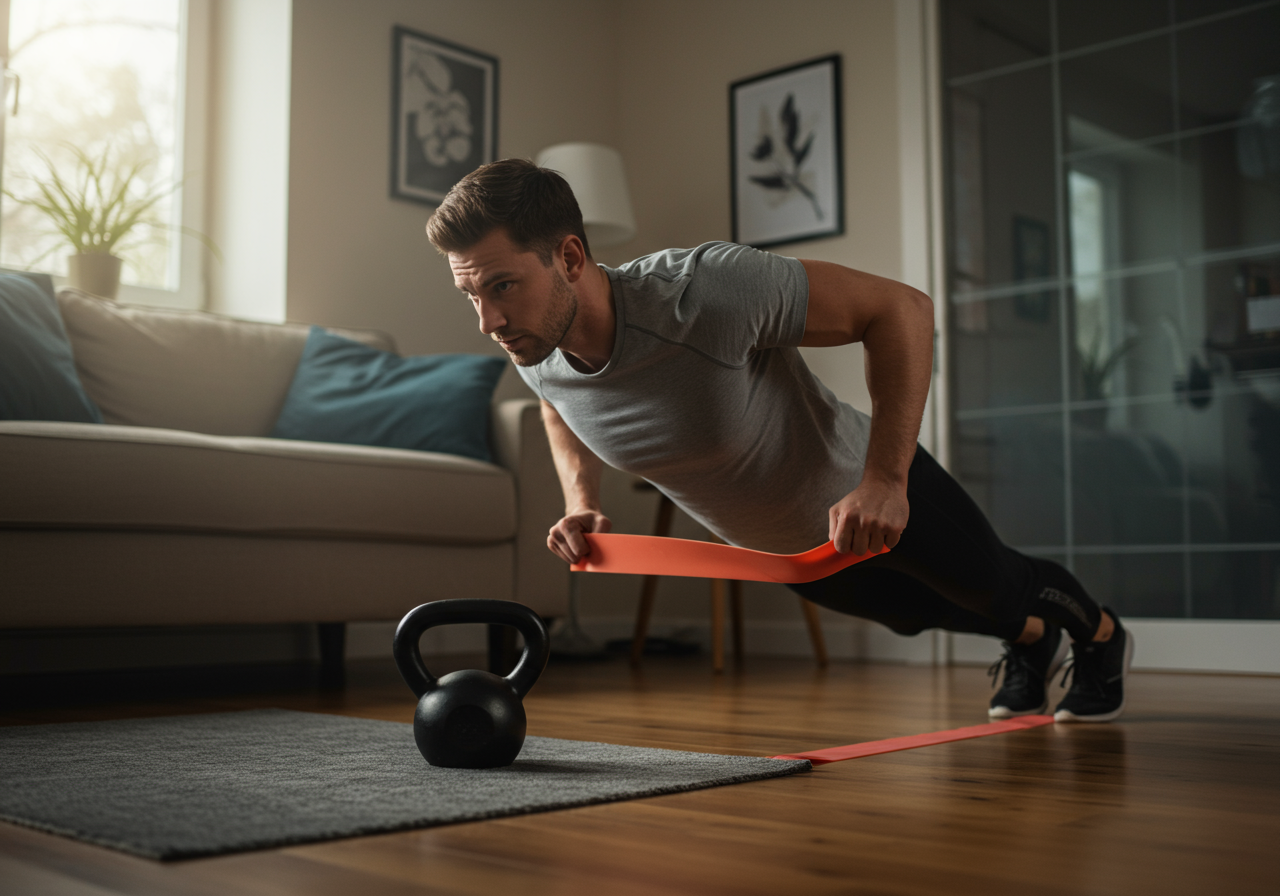
3) Strength circuit (20–25 minutes) Rotate these patterns: squat, hinge, push, pull, carry. Start with two circuits, then build to three. – Goblet squat or split squat: 8–12 reps @ RPE 6–7 – Dumbbell RDL or hip hinge: 8–12 reps @ RPE 6–7 – Push‑up or incline push‑up: 6–10 reps, leave 2 reps in reserve – One‑arm row: 8–12 reps each side – Suitcase carry or front rack carry: 20–40 meters Rest 60–90 seconds between moves. Breathe in on the way down, brace, then exhale through the effort.
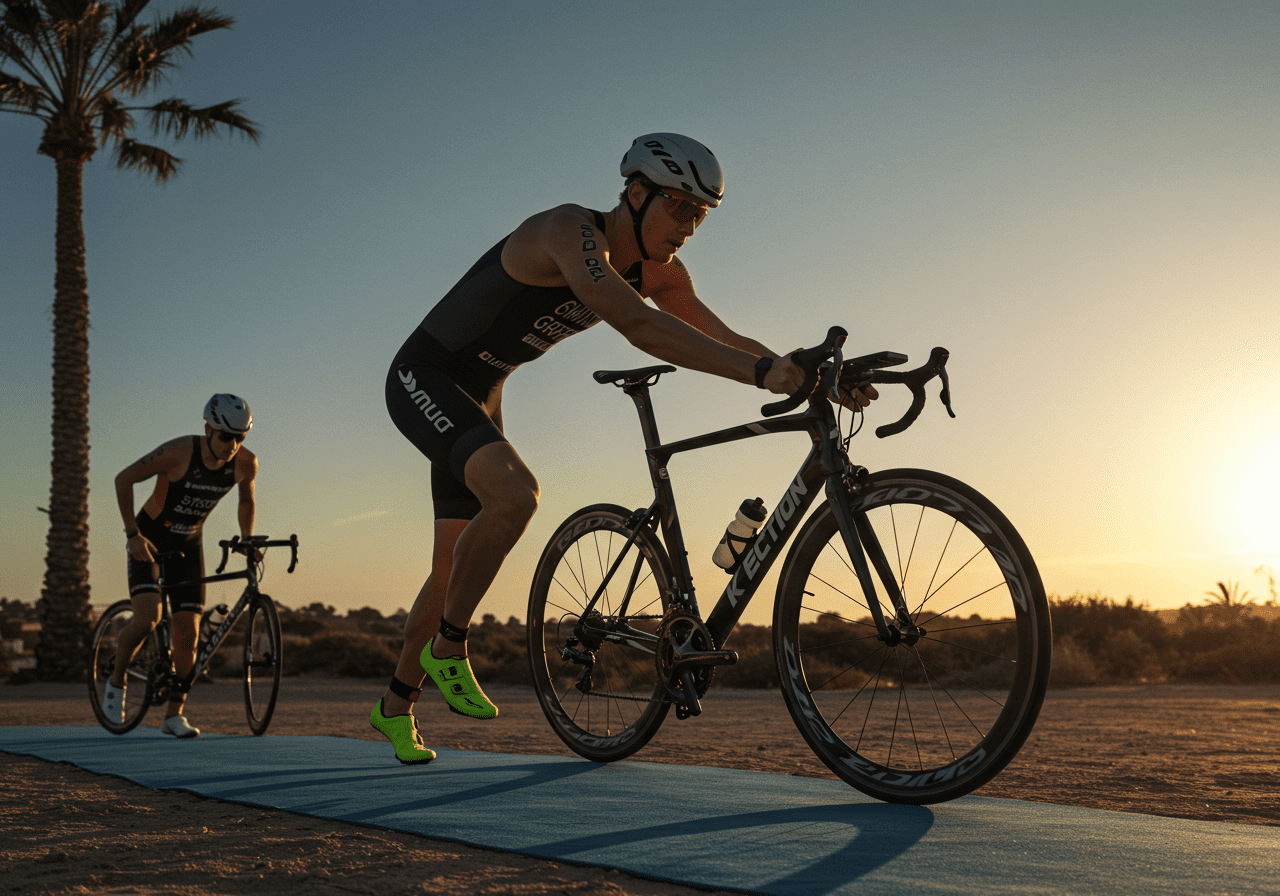
4) Cardio block (10–20 minutes) Pick one option: – Zone 2 steady: 12–20 minutes at conversational pace (roughly 60–70% max heart rate). – Intervals: 6 x 45 seconds brisk / 75 seconds easy; aim for HR rising into upper Zone 3 on work bouts. – Minimal‑equipment: jump rope or shadow boxing, same time structure.
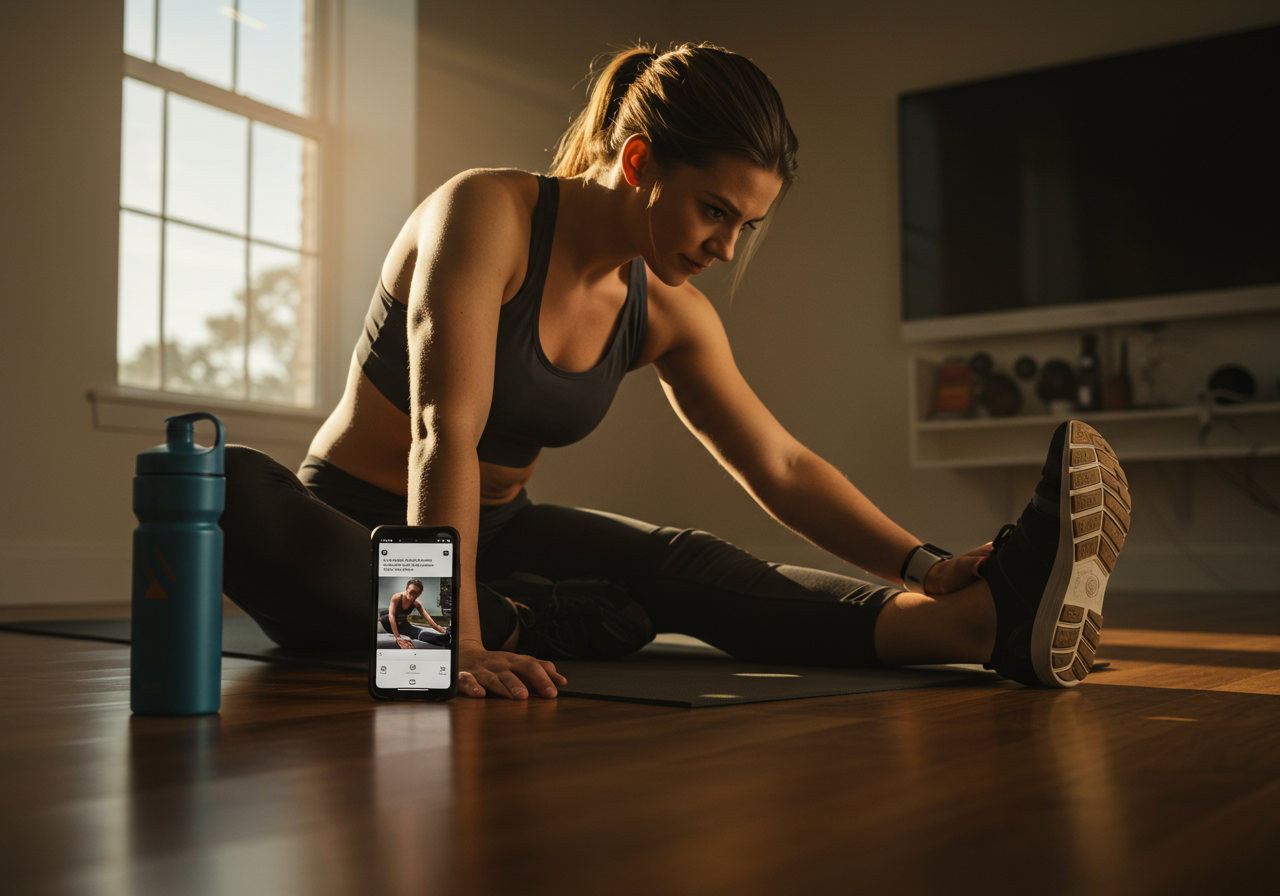
5) Mobility and core (5–10 minutes) 90/90 hip switches, couch stretch, and dead bug or side plank. Two sets each, controlled breathing.
6) Log and review (2 minutes) Record sets/reps/weight and RPE in Strong or a spreadsheet. Log cardio time and average HR in Garmin/Strava/Fitbit. In MyFitnessPal, note protein intake and hydration.
Top 10 home gym mistakes and fast fixes
Random sessions: Use a repeatable template (squat, hinge, push, pull, carry).
No warm‑up: Add 5 minutes of easy cardio and joint prep.
Chasing failure every set: Leave 1–3 reps in reserve to recover better.
Ignoring technique: Brace, control tempo, and film a set weekly to self‑check.
Skipping legs/back: Prioritize squats/hinges/rows before arms.
No progression plan: Add 1–2 reps or 1–2 kg weekly if form holds.
Unsafe setup: Use collars, set safety pins, and confirm band anchors.
Cardio omission: Keep 2–3 short Zone 2 sessions for heart health.
Under‑recovery: Sleep 7–9 hours; protein most meals; deload every 4–8 weeks.
Not tracking: Log weights, RPE, and heart rate to guide increases.
Example from my log: 42‑minute session—average HR 132 (mostly Zone 2), goblet squat 3 x 10 x 16 kg, push‑ups 3 x 8, one‑arm row 3 x 12 x 20 kg, suitcase carries 3 x 30 m. Felt like RPE 7, solid technique.
Eight-Week Ramp from Beginner to Advanced Lifter
Use this to scale from new to confident. Keep two easy days for every hard day early on. If form slips or sleep is poor, hold the load or deload.
Progression overview — 8‑week ramp from beginner to stronger. Week 1–2: Strength 2x/week (2 circuits); Zone 2 cardio 2×20 min; RPE 6; technique first. Week 3–4: Strength 3x/week (build to 3 circuits); Intervals 1x/week (6 x 45s fast/75s easy); Zone 2 1×25 min. Week 5–6: Strength 3x/week (add a set to priority lift); Intervals 1–2x/week (6–8 reps); Zone 2 1×30–35 min; RPE 7–8. Week 7 (deload): Cut volume ~30–40%, keep movement quality; Zone 2 only 2×20–25 min. Week 8: Resume prior volume with small load bump (1–2 kg or +1 rep per set); optional advanced variations.
Beginner: Incline push‑ups, goblet squats, band rows, short carries. Keep RPE around 6–7 and perfect the positions.
Intermediate: Standard push‑ups, split squats, dumbbell RDLs, heavier rows, longer carries. Nudge volume up after the deload.
Advanced: Feet‑elevated push‑ups, front‑foot elevated split squats, single‑leg RDLs, pull‑ups or heavy one‑arm rows, interval progressions like 8 x 1 minute hard / 1–2 minutes easy.
Client note (anonymized): After eight weeks of consistent logging and Zone 2 work, one client reported more push‑up reps and lower heart rate at the same cycling pace. Results vary, but steady progression plus tracking commonly improves both strength endurance and aerobic efficiency.
Manage Frequency, Intensity, and Recognize Overtraining Signs
Frequency: Start with 3–4 sessions per week. Two full‑body strength days and 1–2 short cardio sessions work well.
Intensity: Most sets at RPE 6–8. Save grinders for the last set of a main lift if technique looks solid.
Troubleshooting plateaus: Hold load and add a rep; or keep reps and add 1–2 kg; or change tempo (3‑second lowers). If fatigue lingers, deload a week and return fresh.
Overtraining vs. under‑recovery: Persistent soreness, poor sleep, and declining motivation mean it’s time to reduce volume, walk more, and prioritize sleep and protein.
Injury guardrails: Pain above mild discomfort that worsens with each set—stop and regress. Use rack safeties, collars, and stable anchors. Keep walkways clear.
Nutrition & recovery: Protein 1.6–2.2 g/kg/day, carbs around training, creatine monohydrate 3–5 g/day if appropriate, hydrate with a pinch of salt in long hot sessions, and aim for 7–9 hours of sleep.
Motivation: Pair training with a trigger (morning coffee, favorite playlist). Use a visible checklist and streak counter. Celebrate small PRs—one more rep counts.
Next steps: Download a simple tracker, set three cues for warm‑up, and commit to eight weeks.
Medical Disclaimer: The information provided on this website is for informational and educational purposes only and is not intended as personal medical or health advice. The content, including text, graphics, and images, is not a substitute for professional medical advice, diagnosis, or treatment. Always seek the advice of your physician or other qualified healthcare provider…
Medical Disclaimer: The information provided on this website is for informational and educational purposes only and is not intended as personal medical or health advice. The content, including text, graphics, and images, is not a substitute for professional medical advice, diagnosis, or treatment. Always seek the advice of your physician or other qualified healthcare provider…
Medical Disclaimer: The information provided on this website is for informational and educational purposes only and is not intended as personal medical or health advice. The content, including text, graphics, and images, is not a substitute for professional medical advice, diagnosis, or treatment. Always seek the advice of your physician or other qualified healthcare provider…
Medical Disclaimer: The information provided on this website is for informational and educational purposes only and is not intended as personal medical or health advice. The content, including text, graphics, and images, is not a substitute for professional medical advice, diagnosis, or treatment. Always seek the advice of your physician or other qualified healthcare provider…
Medical Disclaimer: The information provided on this website is for informational and educational purposes only and is not intended as personal medical or health advice. The content, including text, graphics, and images, is not a substitute for professional medical advice, diagnosis, or treatment. Always seek the advice of your physician or other qualified healthcare provider…
Medical Disclaimer: The information provided on this website is for informational and educational purposes only and is not intended as personal medical or health advice. The content, including text, graphics, and images, is not a substitute for professional medical advice, diagnosis, or treatment. Always seek the advice of your physician or other qualified healthcare provider…