Medical Disclaimer: The information provided on this website is for informational and educational purposes only and is not intended as personal medical or health advice. The content, including text, graphics, and images, is not a substitute for professional medical advice, diagnosis, or treatment. Always seek the advice of your physician or other qualified healthcare provider with any questions you may have regarding a medical condition or before starting any new exercise, nutrition, or supplement program. Never disregard professional medical advice or delay in seeking it because of something you have read on this blog. Reliance on any information provided by this site is solely at your own risk.
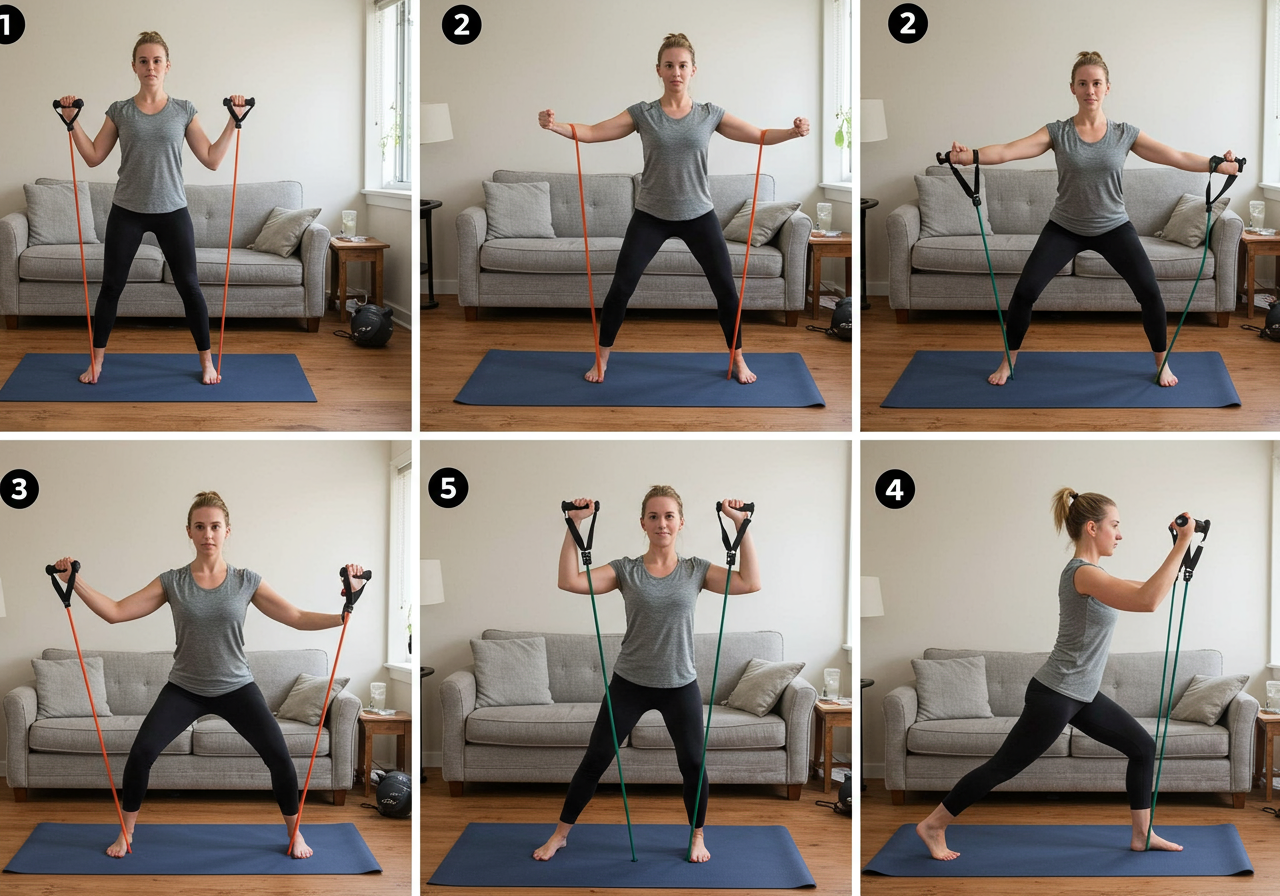
Resistance band exercises can build full‑body strength at home when you progress tension, volume, and control. Do 6–8 compound band moves for 2–4 sets of 8–15 reps, three days weekly, increasing tension gradually.
In this guide, you’ll learn a complete at‑home system: the best band movements, how to structure sessions, weekly progressions from beginner to advanced, and recovery and nutrition that support steady results.
Bands provide variable resistance: tension increases as the band lengthens. That rising curve often matches our natural strength curve and encourages strong contractions through a long range of motion. They’re joint‑friendly, portable, and easy to scale by changing band thickness or shortening the band.
In peer‑reviewed comparisons, when effort and volume are matched, bands can deliver strength and muscle gains similar to free weights. Circuiting band moves also nudges heart rate into aerobic zones, improving work capacity. For new lifters, that combination—strength plus cardio efficiency—is a time saver.
Client experience mirrors the research. Maya, 39, training in her apartment with two bands and a door anchor, reported fewer knee aches and better posture after six weeks. Her notes showed smoother sit‑to‑stands and easier grocery carries. While results vary, this pattern is common in practice.
What I’ve learned coaching hundreds of sessions: bands shine for high‑quality reps, tempo control, and unilateral balance work. My early mistake was using bands only for warm‑ups; once I programmed progressive sets and tracked RPE like any strength plan, results accelerated.
Complete Gear Setup and 45-Minute Session Layout
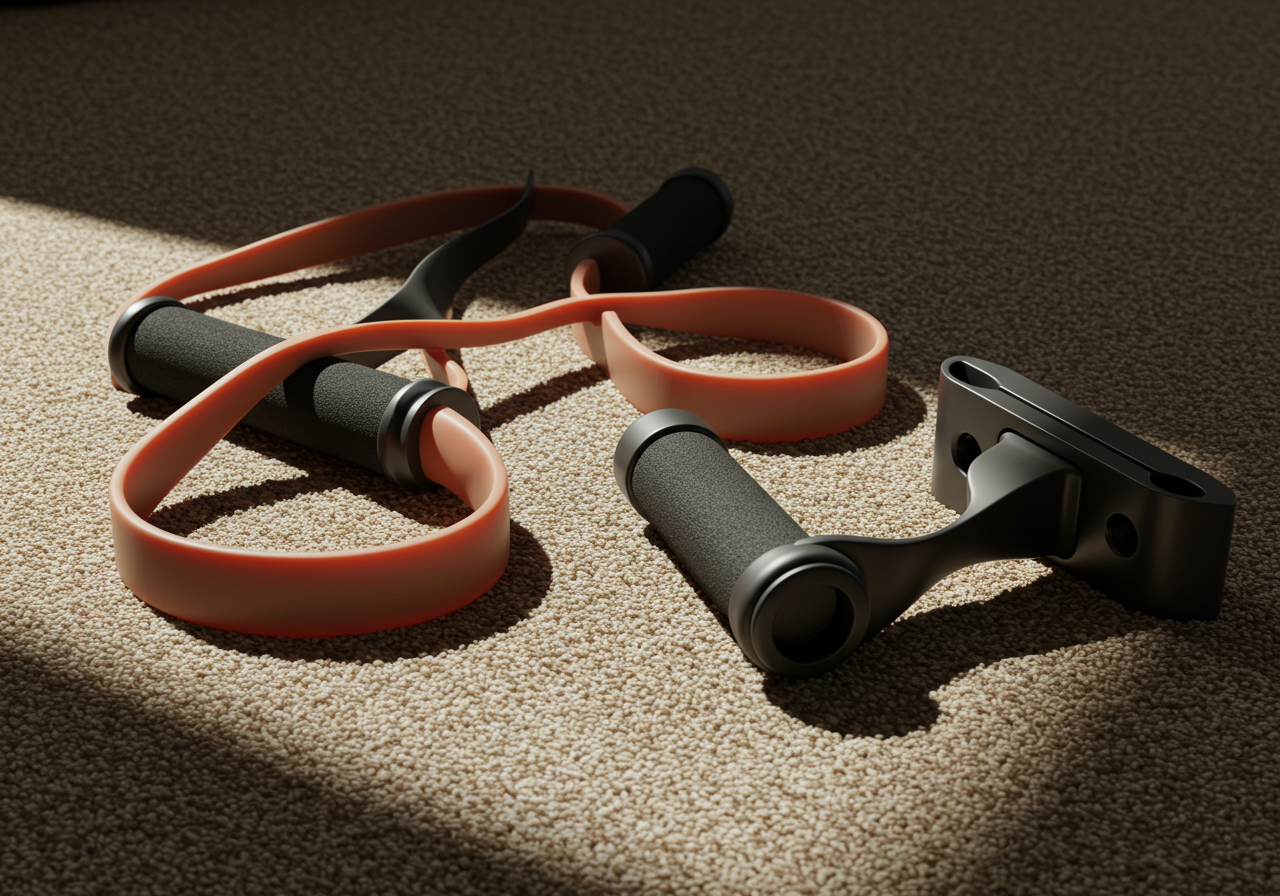
Gear checklist — Light, medium, and heavy loop bands; one long tube band with handles; sturdy door anchor; optional hip band and yoga mat.
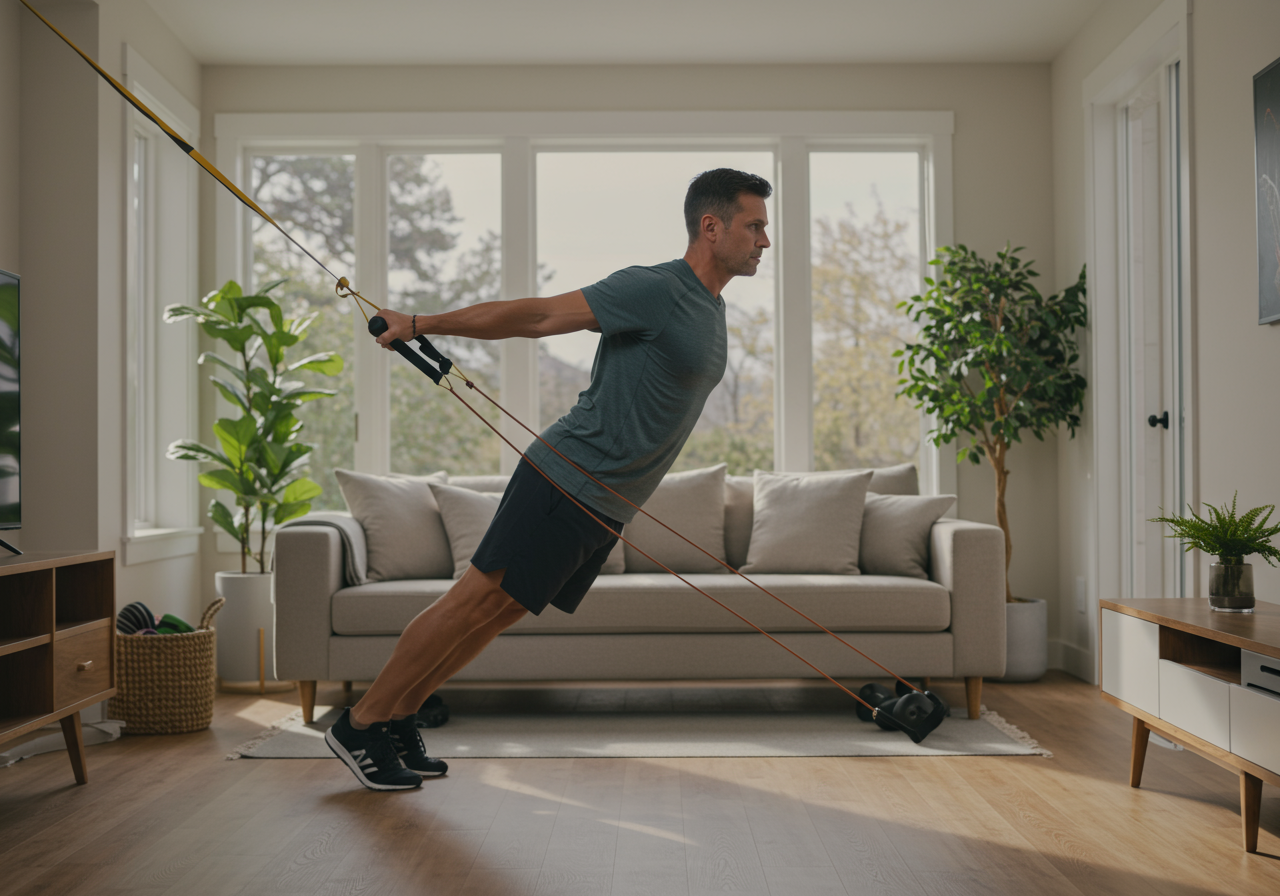
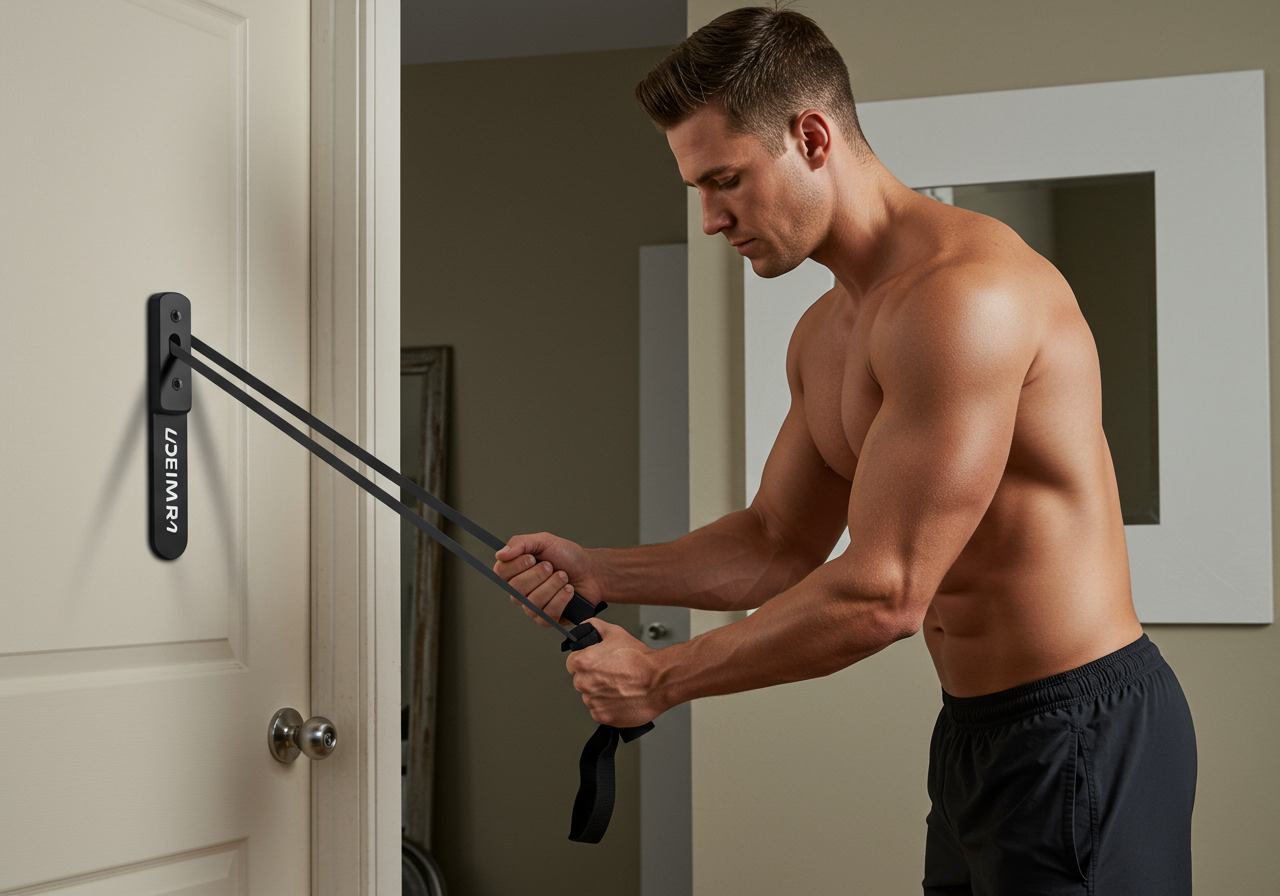
Anchor setup — Use a door that closes toward you. Place the anchor at chest height for presses/rows, hip height for hinges, and high for pulldowns/face pulls. Test with a few gentle reps before loading.
Session layout (35–45 minutes)
Warm‑up (5 minutes): 2 minutes of easy cardio; 10 hip hinges; 10 lateral lunges; 20 band pull‑aparts; 8 controlled scap circles.
Circuit A (3 rounds): Band chest press (8–12, RPE 7), Band row (8–12, RPE 7), Band squat or hip‑anchored goblet squat (8–12, RPE 7). Rest 45–75 seconds after each round.
Circuit B (3 rounds): RDL/hip hinge (8–12, RPE 7–8), Overhead press (8–12), Split squat (8–12/side). Rest 45–75 seconds after each round.
Core & posture (2 rounds): Pallof press (10/side), Face pull or pull‑apart (12–15), Dead bug with band or suitcase hold (30–45 seconds).
Optional finisher (3–5 minutes): 20s work/20s rest — band thrusters, fast rows, or banded marches.
Top resistance band exercises + quick cues
Band Chest Press: Stagger stance, ribs down, press slightly up and out. Pause one count locked out.
Hip‑Anchored Squat: Band at hips, sit between heels, press hips forward to stand.
RDL/Hinge: Band under feet, hands hold ends. Hips back, shins vertical, neutral spine, drive through mid‑foot.
Overhead Press: Brace glutes and abs, press under control, avoid flaring ribs.
Split Squat: Front heel heavy, knee tracks over toes, tall torso.
Face Pull: High anchor, pull to nose/forehead with slight external rotation.
Pull‑Apart: Hands shoulder width, lead with shoulder blades, keep elbows soft.
Pallof Press: Feet hip width, exhale as you press, resist rotation.
Glute Bridge: Band over hips, push knees out slightly, squeeze glutes at the top.
Load selection rule: Pick a band that makes the last 2–3 reps of your target range challenging while form stays smooth (RPE 7–8). If reps feel easy, shorten the band or step farther from the anchor.
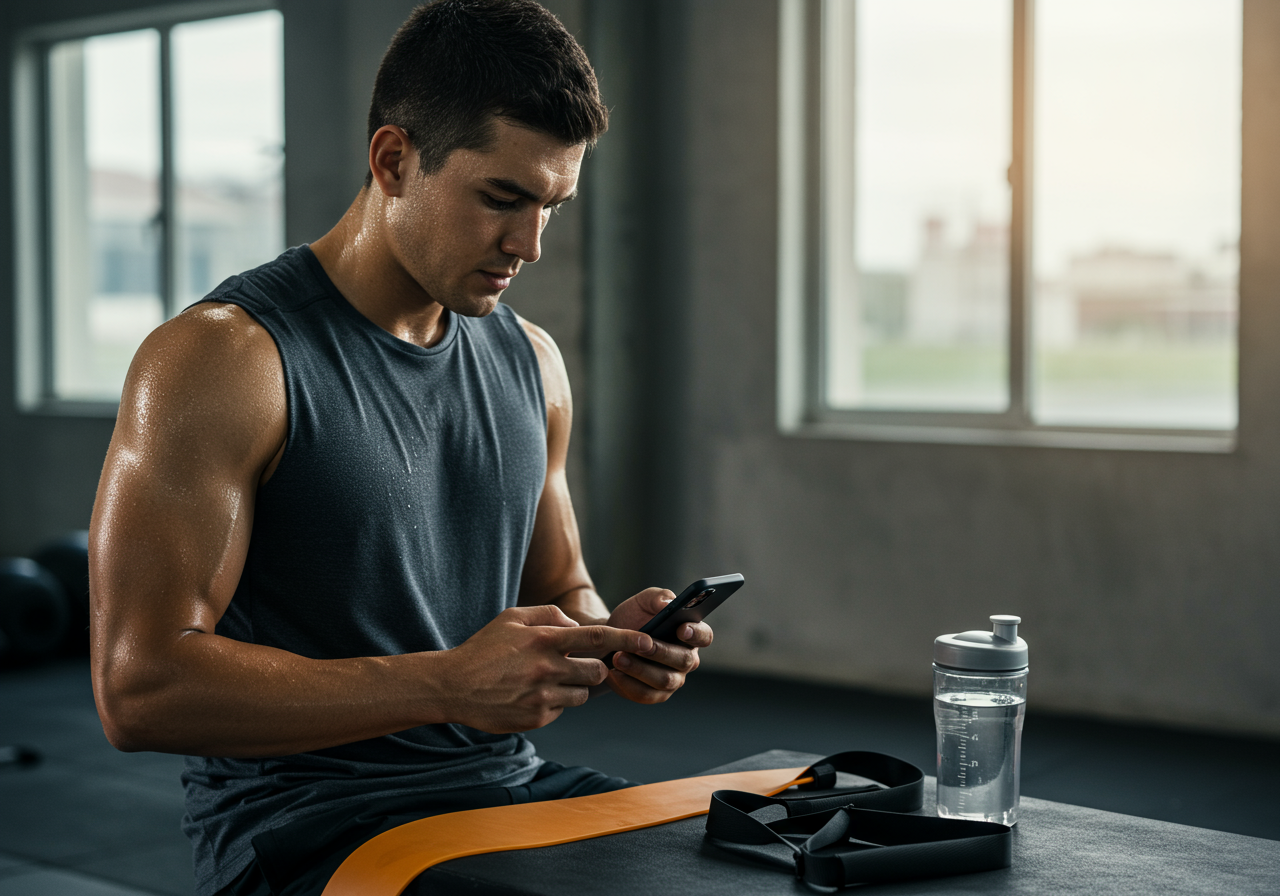
Real session example (from my log): 38 minutes total. Circuit A average heart rate 120–130 bpm (steady Zone 2), spikes to 150–155 bpm during the finisher. Used a medium loop for presses, heavy loop for rows/RDLs. Tracked RPE and reps in Strong app; HR via Garmin. Over four weeks, I added 2–3 reps per set before moving to a thicker band.
Eight-Week Progression From Light to Heavy Bands
Weekly schedule — 3 days/week (e.g., Mon/Wed/Fri). Repeat the template and climb one progression at a time: reps → band tension → density (rest) → tempo → advanced methods.
Progression snapshot (use as your quick reference)
Caption: 8-week progression targets for sets, reps, RPE, and rest.

Weeks 1–2: 2–3 sets x 8–12 reps @ RPE 6–7; rest 60–90s.

Weeks 3–4: 3 sets x 10–12 reps @ RPE 7; rest 60–75s.

Weeks 5–6: 3–4 sets x 10–15 reps @ RPE 7–8; rest 45–60s.

Weeks 7–8: 4 sets x 8–12 reps @ RPE 8; upgrade band tension or shorten band; rest 45–60s.
Beginner path: Start with the light band. Hit the low end of the range (8–10 reps). When you reach 12 clean reps for all sets at RPE ≤7, upgrade tension. Keep rest on the longer side. Practice slow eccentrics (3 seconds down).
Intermediate path: Use medium band for compound moves. Progress by reps first, then reduce rest by 10–15 seconds per round. Add one unilateral focus set (e.g., extra split squat set) per session.
Advanced path: Heavier bands, tighter setup. Use tempo (3‑1‑1), occasional EMOMs (every minute on the minute) for 5–8 minutes, or contrast sets (slow 6–8 reps then 10 fast band rows). Keep one easier week every 4–6 weeks.
Stalling? Options: switch anchor height, change grip width, add a half‑rep pause, or insert a technique week at RPE 6–7 and higher volume. If pull movements stall, add one extra back‑off set at lighter tension for 15–20 reps.
Conditioning overlay: On non‑lifting days, 20–30 minutes Zone 2 walks or cycles. During band circuits, aim to finish rounds with talkable breathing. If breathless for minutes, rest more or cut one exercise.
References & Further Reading
The following peer-reviewed research and authoritative guidelines support the recommendations in this article:
Frequency & intensity: 3 focused sessions per week. Keep most sets at RPE 7–8. Save RPE 9 for rare push tests. Beginners can keep everything at RPE 6–7 for the first two weeks.
Common mistakes: Standing too close to the anchor (inconsistent tension), losing rib position on presses, and rushing reps. Fix by stepping back an inch or two, bracing lightly, and using a 2–3 second lowering phase.
Safety: Inspect bands for nicks monthly; replace at the first sign of cracking. Face away from the anchor for presses, and always close the door toward the anchor. Protect eyes when stretching bands near face height.
Recovery & nutrition: Most lifters do well with 1.6–2.2 g/kg/day protein, veggies at two meals, and carbs around training. If fat loss is a goal, aim for a small calorie deficit tracked in MyFitnessPal; for muscle, a slight surplus with bodyweight gain of ~0.1–0.25% per week. Hydrate: 500 ml water in the first hour of the day. Consider creatine monohydrate 3–5 g daily and vitamin D per medical advice. Sleep 7–9 hours; a 10–20 minute walk after meals improves recovery.
Monitoring: Log sets/reps/RPE, band color, and rest. Note average heart rate for circuits (Fitbit, Garmin, or Apple Watch). Weekly check: pushups or band press max reps at RPE 8, split squat balance, and a 3‑minute step test for breathing control.
Example client outcome (cautious): After eight weeks, several beginners I coach report doing household lifts more easily and fewer shoulder niggles. A common pattern is +2–4 reps per set on rows and presses with steadier breathing. Individual results vary based on consistency and sleep.
Next steps: Keep this template for 8–12 weeks. When you can hit the top of the rep range across sets at RPE ≤7, progress the band or tempo.
Medical Disclaimer: The information provided on this website is for informational and educational purposes only and is not intended as personal medical or health advice. The content, including text, graphics, and images, is not a substitute for professional medical advice, diagnosis, or treatment. Always seek the advice of your physician or other qualified healthcare provider…
Medical Disclaimer: The information provided on this website is for informational and educational purposes only and is not intended as personal medical or health advice. The content, including text, graphics, and images, is not a substitute for professional medical advice, diagnosis, or treatment. Always seek the advice of your physician or other qualified healthcare provider…
Medical Disclaimer: The information provided on this website is for informational and educational purposes only and is not intended as personal medical or health advice. The content, including text, graphics, and images, is not a substitute for professional medical advice, diagnosis, or treatment. Always seek the advice of your physician or other qualified healthcare provider…
Medical Disclaimer: The information provided on this website is for informational and educational purposes only and is not intended as personal medical or health advice. The content, including text, graphics, and images, is not a substitute for professional medical advice, diagnosis, or treatment. Always seek the advice of your physician or other qualified healthcare provider…
Medical Disclaimer: The information provided on this website is for informational and educational purposes only and is not intended as personal medical or health advice. The content, including text, graphics, and images, is not a substitute for professional medical advice, diagnosis, or treatment. Always seek the advice of your physician or other qualified healthcare provider…
Medical Disclaimer: The information provided on this website is for informational and educational purposes only and is not intended as personal medical or health advice. The content, including text, graphics, and images, is not a substitute for professional medical advice, diagnosis, or treatment. Always seek the advice of your physician or other qualified healthcare provider…