Medical Disclaimer: The information provided on this website is for informational and educational purposes only and is not intended as personal medical or health advice. The content, including text, graphics, and images, is not a substitute for professional medical advice, diagnosis, or treatment. Always seek the advice of your physician or other qualified healthcare provider with any questions you may have regarding a medical condition or before starting any new exercise, nutrition, or supplement program. Never disregard professional medical advice or delay in seeking it because of something you have read on this blog. Reliance on any information provided by this site is solely at your own risk.
Protein, Produce, and Smart Carbs Drive Sustainable Fat Loss
A sustainable fat-loss meal plan can help you lose fat without starving or ditching social meals. Build meals around protein, produce, and smart carbs while matching portions to activity and hunger feedback.
Direct answer: Build meals around protein, produce, and smart carbs, matching portions to your activity and hunger cues.
In this guide, I’ll show you how to set calories without obsession, pick portions that curb cravings, sync food with training, and progress from beginner to advanced while staying energized.
Moderate Deficits and Strength Training Preserve Muscle Mass
Fat loss comes from a consistent energy deficit, but protecting muscle and sanity requires enough protein, fiber, and smart training. Higher protein and high-volume foods increase fullness, which helps adherence. Strength work preserves lean mass so your metabolic rate doesn’t nosedive. Easy aerobic work boosts calorie burn and recovery without crushing hunger.
In practice and in peer-reviewed studies, moderate deficits (roughly 300–500 kcal/day) paired with 1.6–2.2 g/kg protein improve satiety and body composition compared with aggressive cuts. Clients who track simple metrics—waist, weekly weight average, hunger, step count—tend to adjust faster and stick longer.
From my coaching logs: when clients lift 2–3 days/week and add 2–3 Zone 2 cardio sessions, they usually report steadier energy and fewer cravings than with diet-only approaches. Results vary, but the combination is consistently easier to maintain.
Hand Portions and Meal Structure Without Obsessive Counting
1) Set a calm calorie target. Estimate maintenance using body weight (kg) × 30–33 as a quick start, or use a calculator. Subtract 300–500 kcal for a moderate deficit. If you hate counting, skip numbers and use the hand-portion method below.
2) Hit an effective protein range. Aim for 1.6–2.2 g/kg/day. Split across 3–4 meals (20–40 g each). Protein anchors hunger and protects muscle while dieting.
3) Use hand portions (no scale required).
Palm of protein (1–2 palms/meal)
Fist of veggies/fruit (1–3 fists/meal)
Cupped hand of carbs (0.5–1.5 cups/meal, adjust to training)
Thumb of fats (0.5–1 thumb/meal, more for lean meats)
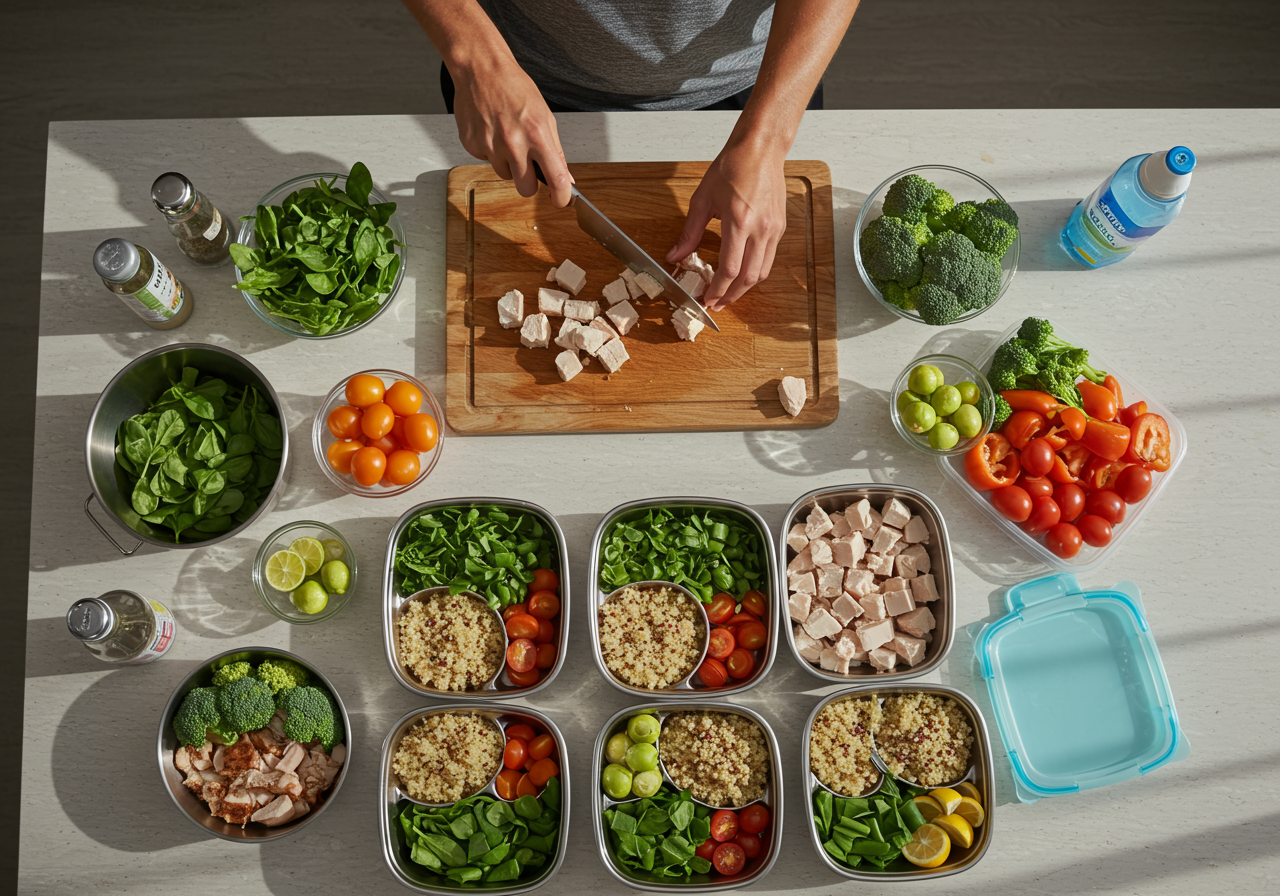
4) Build plates that fill you up. Half the plate produce, a palm or two of lean protein, a small portion of whole carbs, and a thumb of fats. Add broth-based soups or salad to increase volume without many calories.
5) Fuel training, not cravings. For lifting or intervals, add 20–40 g carbs 60–90 minutes pre-workout. Post-workout, eat 20–40 g protein plus some carbs (fruit or rice) to recover without rebounding hunger.
7) Tie food to training. Do 2–3 full-body strength sessions weekly. Add 2–3 Zone 2 cardio sessions (20–45 minutes at conversational pace). Sprinkle 5–10 minutes of mobility most days. On harder training days, use an extra cupped hand of carbs around the workout; on rest days, pull it back if hunger and energy allow.
8) Track simply. Use MyFitnessPal or Cronometer for a week to calibrate. Then shift to hand portions. Log morning weight (weekly average), waist at the navel, steps, and a 1–10 hunger score at dinner. I use a Garmin watch for heart-rate zones and Strava for cardio logs.
Personal note: In a 4-week cut, I averaged 8,500 steps/day, lifted 3x/week, did two 30-minute Zone 2 rides (HR 120–135 bpm), kept protein ~2.0 g/kg, and reduced portions by one carb cupped hand on rest days. Energy stayed stable and sleep remained solid (7.5 hours).
Four-Week Roadmap from Beginner to Advanced Training Phases
Start simple, level up gradually, and adjust every 2 weeks based on trends—not single days.
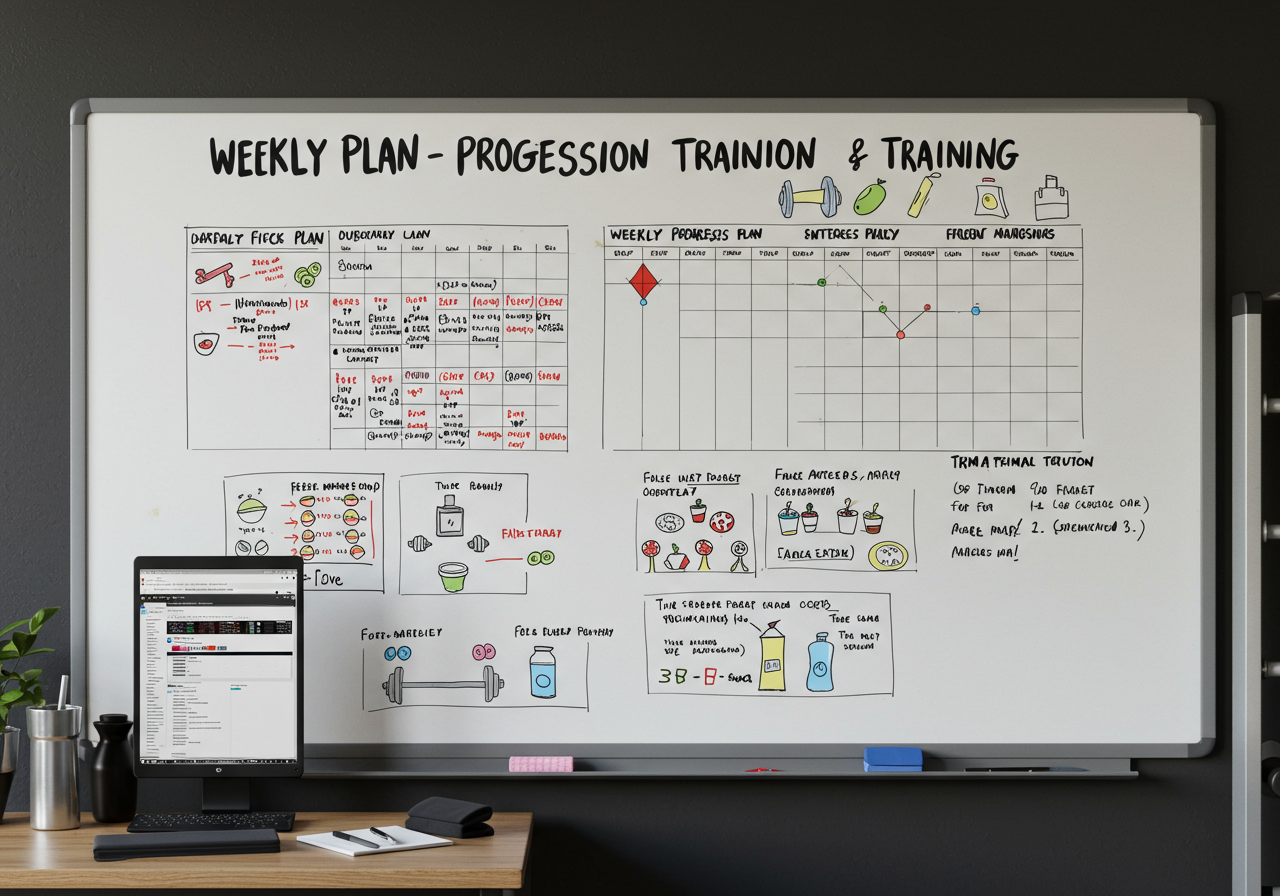
4-week progression roadmap (plain-text table):
Week 1–2 (Beginner): Portions not calories; 2 full-body lifts; 2 x 20–30 min Zone 2; steps 6–8k; protein 1.6 g/kg; 1 thumb fats/meal.

Week 3–4 (Beginner+): Add 1 set to big lifts (RPE 7–8); 2–3 x 25–35 min Zone 2; steps 7–9k; keep carbs pre/post training; reduce liquid calories.

Week 5–6 (Intermediate): 3 full-body lifts; 1 optional interval day (6–8 x 60s easy-hard); 2 x 30–40 min Zone 2; steps 8–10k; protein 1.8–2.2 g/kg.

Week 7–8 (Intermediate+): Slightly smaller carb portions on rest days; deload lift volume if fatigue rises; maintain Zone 2; reassess waist/weight weekly averages.

Week 9–12 (Advanced): Periodize carbs: +1 cupped hand on HIIT/lift days, −1 on rest; 3 lifts with progression (double progression 6–12 reps); 2–3 Zone 2 sessions; optional mobility 10 min daily.
Strength progression: Use double progression. When you can perform all sets at the top of the rep range with good form (e.g., 3×12 at RPE ~8), increase load 2–5% next session.
Cardio zones: Zone 2 = conversational pace (roughly 60–70% of HRmax). Intervals: short bursts near hard but repeatable effort; keep total hard time 6–12 minutes.
Adjustments if progress stalls for 2+ weeks: Add 1,000–1,500 steps daily, trim one cupped hand of carbs on rest days, or add 10 minutes to two cardio sessions. Avoid stacking all changes at once.
Client snapshot (practice-based): Maya, 36, used hand portions, lifted 3x/week, and cycled carbs around workouts. Over 6 weeks, her waist dropped ~4 cm and daily energy improved. Individual results vary, but her adherence notes showed 85% consistency and 7–8 hours of sleep—big drivers of success.
References & Further Reading
The following peer-reviewed research and authoritative guidelines support the recommendations in this article:
Weekly Structure with Strength, Cardio, and Recovery Protocols
Weekly structure: 2–3 strength sessions (45–60 minutes), 2–3 Zone 2 cardio (20–45 minutes), 1 optional interval day, daily 5–10 minutes mobility, steps 7–10k. Rate sessions by RPE 6–8 most days.
Hunger control: Front-load protein and produce. Include a fibrous veg or fruit at every meal. Keep calorie-dense extras (oils, nuts) measured by thumbs.
Recovery: Sleep 7–9 hours, 2–3 liters of water, and aim sodium 2–3 g/day (unless contraindicated). Consider whey protein, creatine 3–5 g/day, and caffeine pre-workout if tolerated.
Plateaus: Verify consistency first. Then bump steps, slightly reduce rest-day carbs, or add 10–15 minutes Zone 2 once or twice weekly.
Motivation: Track weekly wins: waist, strength PRs, meal consistency. Use MyFitnessPal notes or a simple habit checklist.
Safety: Avoid aggressive deficits. If dizziness, sleep disruption, or irritability persist, increase calories by 100–200/day and prioritize protein/produce. If injured, shift focus to upper/lower splits or cycling, and keep protein high.
Common mistakes I made early: Cutting carbs too hard, skipping rest days, and chasing scale weight daily. Fixes: carb periodization around hard training, scheduled deloads, and judging progress on weekly averages.
Next steps: Start with hand portions for 2 weeks. Log morning weight and waist, then refine using one small change at a time.
Medical Disclaimer: The information provided on this website is for informational and educational purposes only and is not intended as personal medical or health advice. The content, including text, graphics, and images, is not a substitute for professional medical advice, diagnosis, or treatment. Always seek the advice of your physician or other qualified healthcare provider…
Medical Disclaimer: The information provided on this website is for informational and educational purposes only and is not intended as personal medical or health advice. The content, including text, graphics, and images, is not a substitute for professional medical advice, diagnosis, or treatment. Always seek the advice of your physician or other qualified healthcare provider…
Medical Disclaimer: The information provided on this website is for informational and educational purposes only and is not intended as personal medical or health advice. The content, including text, graphics, and images, is not a substitute for professional medical advice, diagnosis, or treatment. Always seek the advice of your physician or other qualified healthcare provider…
Medical Disclaimer: The information provided on this website is for informational and educational purposes only and is not intended as personal medical or health advice. The content, including text, graphics, and images, is not a substitute for professional medical advice, diagnosis, or treatment. Always seek the advice of your physician or other qualified healthcare provider…
Medical Disclaimer: The information provided on this website is for informational and educational purposes only and is not intended as personal medical or health advice. The content, including text, graphics, and images, is not a substitute for professional medical advice, diagnosis, or treatment. Always seek the advice of your physician or other qualified healthcare provider…
Medical Disclaimer: The information provided on this website is for informational and educational purposes only and is not intended as personal medical or health advice. The content, including text, graphics, and images, is not a substitute for professional medical advice, diagnosis, or treatment. Always seek the advice of your physician or other qualified healthcare provider…