Staged Plan to Rebuild Without Setbacks or Flare-Ups
Return to training after an injury feels confusing and risky. This guide gives you a staged plan to rebuild strength, cardio, mobility, and skill without flare-ups.
Quick answer: Start with pain-free movement, advance in small steps, and only progress when daily life and training stay symptom-stable for 24–48 hours.
Gradual Load Progression Stimulates Repair Without Re-Injury
Your body heals by adapting to the right dose of stress. After injury, tissues respond best to gradually increased load—enough to stimulate repair, not enough to re-irritate. Cardiovascular fitness also detrains quickly, but low-impact aerobic work restores circulation and helps recovery.
Using a pain scale (0–10) and session RPE gives objective guardrails. In practice and in sports-health guidance, working in the “acceptable discomfort” range (often ≤3/10 that resolves within 24 hours) reduces setbacks while preserving gains. Pairing this with progressive strength (isometrics → eccentrics → full range) and steady aerobic zones helps most people return smoothly.
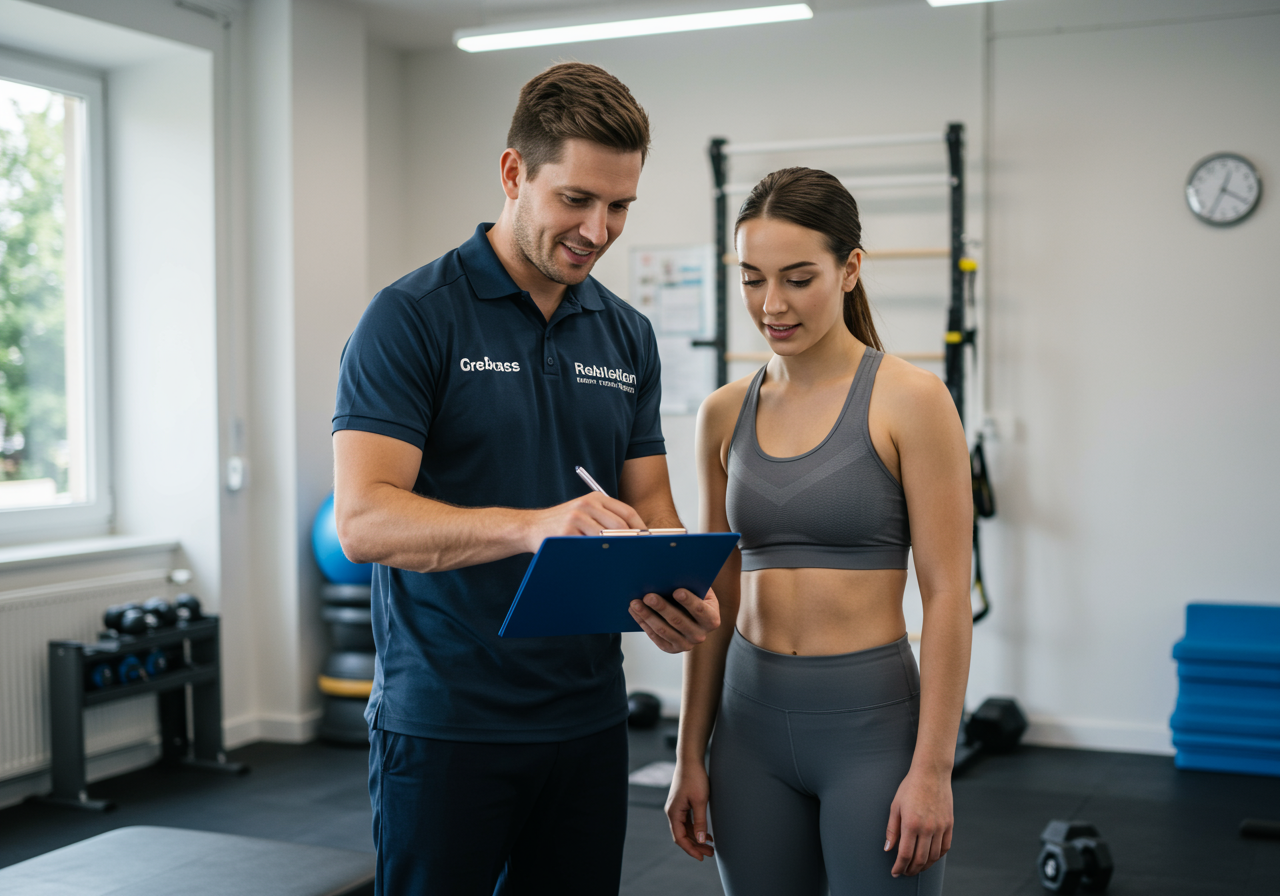
I’ve tested this framework personally after a mild hamstring strain and with clients returning from ankle sprains, low back tweaks, and shoulder irritations. When we advanced only after symptoms stayed settled for 24–48 hours and tracked volume carefully, flare-ups dropped and confidence returned faster.
Traffic-Light Pain Rules and Four-Stage Strength Protocol
Use this staged system across strength, cardio, mobility, and skill. Move forward only when pain and stiffness normalize within 24–48 hours.
1) Clearance and Baseline • Get medical guidance if pain is sharp, worsening, or accompanied by swelling/numbness. Ask what motions or loads to avoid. • Baseline: note pain (0–10), stiffest times of day, movements that are fine vs. aggravating. Record a simple test (e.g., 30-second sit-to-stand count, 5-minute easy walk HR).
2) Pain & Effort Rules (Traffic-Light) • Green: 0–2/10 pain during/after — continue. • Yellow: 3/10 during or mild next-day soreness — keep volume steady; recheck in 24–48 hours. • Red: >3/10 pain during or lingering >48 hours — reduce range, intensity, or skip the trigger exercise.
3) Daily Mobility & Tissue Care (5–10 min) • Gentle range: 1–2 sets of 8–12 controlled reps for the affected area (pain-free arc). • Circulation: 2–3 minutes light cycling, marching, or upper-body ergometer if lower limb is aggravated. • If joint is stiff in the morning, add 60–90 seconds of position-specific holds (e.g., calf stretch, hip flexor lunge), staying under 3/10.
4) Strength Ladder • Stage A — Isometrics: 4–5 x 20–45 sec holds, RPE 4–6, 60–90 sec rest. Example: wall sit for knee, mid-thigh pull for hamstring, side plank for shoulder/scapula. • Stage B — Eccentrics: 3–4 x 6–8 slow lowers (3–5 sec down), assist on the way up. Example: eccentric calf raises using both legs up, one leg down. • Stage C — Controlled Concentric: 3–4 x 8–12 full-range reps at RPE 6–7, emphasizing tempo control. • Stage D — Power/Speed (later): low volume, submaximal intent once pain-free strength and landing mechanics are solid.
5) Cardio Rebuild • Start with low-impact Zone 2 (conversational pace) 10–20 minutes, 3–5x/week. Tools: Garmin/Polar/Apple Watch HR, or talk test if no device. • Increase by 10–15% per week if symptom-stable. For impact sports, begin with bike/row/elliptical, then walk → walk-jog → continuous run.
6) Skill & Return-to-Sport Drills • Rehearse patterns at easier tempos: e.g., shadow swings for tennis, dribble drills for basketball, bodyweight squats for lifters. • Add light external load or speed only after the pattern is pain-free and symmetric.
7) Tracking & Tools • Log sets, reps, RPE, and next-day pain (0–10) in Notes, Google Sheets, or Trainerize. • Cardio: Strava or Garmin Connect for HR and pace trends. • Nutrition: MyFitnessPal or Cronometer to hit protein and energy targets. • Quick check: If next-morning pain jumps ≥2 points, reduce the last progression you added.
Nutrition & Recovery Essentials • Protein: aim 1.6–2.2 g/kg/day; distribute over 3–5 meals. • Calories: usually maintenance to slight surplus during early healing; adjust to goals with your clinician if needed. • Creatine monohydrate (3–5 g/day) and omega‑3s may support training; clear supplements with your provider. • Sleep 7–9 hours; short walks after meals and light mobility speed recovery.
Personal log example (hamstring strain, week 3) • Mon: Bike 35 min Zone 2 (avg HR 134, RPE 5). Isometric mid‑thigh pulls 5 x 30s; glute bridge 3 x 12. • Thu: Eccentric hamstring slides 4 x 6; split squat 3 x 8 each side (RPE 6). Walk‑jog 20 min (1:1). No symptom increase next day.
Client note — Maya, desk‑job runner
“I followed the yellow‑light rule and walked away from any spike. Six weeks later I jogged a 5K without pain. Tracking next‑day soreness kept me honest.”
Six-Week Roadmap from Isometrics to Full Training
Use this roadmap to increase load and complexity. Advance only when exit criteria are met and symptoms remain stable for 24–48 hours.
Progression roadmap from first steps to full training
Week 0–1: Calm & assess; Strength: isometrics 4–5 x 20–45s; Cardio: 10–15 min Zone 2, low impact; Mobility: gentle ranges; Exit: pain ≤2/10. Week 2–3: Build tolerance; Strength: add eccentrics 3–4 x 6–8; Cardio: 15–25 min Zone 2; Skill: pattern drills; Exit: daily tasks symptom‑free. Week 4–5: Controlled strength; Strength: full‑range 3–4 x 8–12 @ RPE 6–7; Cardio: 20–35 min; Skill: light external load; Exit: training pain ≤3/10 that resolves overnight. Week 6–7: Impact/tempo; Strength: add split stance/landing drills; Cardio: introduce strides or short hills; Exit: no next‑day stiffness rise. Week 8–9: Power & intervals; Strength: med‑ball throws, submax jumps; Cardio: 4–6 x 1–2 min moderate intervals; Exit: symmetrical mechanics on video. Week 10+: Return to normal; Strength: periodized loads; Cardio: sport‑specific sessions; Ongoing: deload every 4–8 weeks.
Beginner • 3 days/week total: full‑body strength (30–40 min), cardio (15–25 min), mobility (5–10 min). • Add only one variable each week (more reps or more minutes, not both).
Intermediate • 4 days/week split: lower/upper or push/pull. One light plyometric or tempo run day when cleared. • Progress load by 2.5–5% when RPE ≤6 and technique is crisp.
Advanced • 4–6 days/week with microcycles. Power introduced after full pain‑free range and baseline strength return. Use small jumps in volume and rotate intensities to avoid spikes.
Ten Percent Load Increases and Daily Symptom Tracking
Frequency & intensity • Start with 3–4 short sessions/week. Keep most work at RPE 4–6. One slightly harder day is fine when symptoms are quiet. • Increase weekly load (sets x reps x weight + cardio minutes) by ~10% or less.
Common mistakes • Jumping from isometrics straight to maximal plyometrics. • Adding speed and volume in the same week. • Ignoring next‑day pain spikes or swelling. • Skipping sleep and under‑eating protein.
Monitoring • Daily: morning pain/stiffness (0–10), resting HR, mood, and sleep hours. • Wearables: HRV from Whoop/Oura/Polar can flag fatigue; use trends, not single numbers. • Video form checks for symmetry on squats, landing, and gait.
Troubleshooting • Plateau: hold volume steady 1–2 weeks; vary angles/implements; add a deload. • Motivation dip: switch modality (bike instead of run), set micro‑goals (e.g., +2 minutes Zone 2), train with a partner. • Flare‑up: revert one stage, cut last progression in half, and retest in 48 hours.
Result validation In my coaching practice, clients who followed the 24–48 hour symptom check with gradual load increases experienced fewer setbacks and steadier confidence. Personally, this system returned me to tempo runs and full lower‑body lifting after a hamstring strain without re‑injury.
Next steps • Download a simple tracking sheet and set pain/RPE checkpoints. • If you want a customized rebuild block, subscribe to my newsletter—monthly templates with video demos and load targets.
Align Food Choices with Your Training Goals Learning how to read nutrition labels can supercharge beginner training by aligning food choices with workouts and recovery. This guide gives you an easy system for training, fueling, and tracking. Quick answer: choose clear serving sizes, 15–30 g protein per meal, higher fiber, lower added sugar, and match…
Quick Start A 4-day split, set up correctly, accelerates muscle growth without burning you out. You’ll learn an efficient layout, weekly progressions, and recovery strategies. The most effective 4-day split alternates upper and lower sessions, prioritizes compounds, and progresses load weekly with a deload every 4–6 weeks. Why This Split Works Training each muscle group…
Turn Random Rest Into a Repeatable Recovery System A recovery toolbox turns random rest into a repeatable system for better training results. It uses simple tools, short timers, and checklists to reduce fatigue, protect joints, and keep progress steady. In a few minutes, you will learn how to combine practical tools, reliable timers, and a…
Fast Start Deload weeks convert hard training into reliable progress by lowering fatigue while keeping your movement sharp. In this guide, you’ll learn when to schedule them, how much to cut, and simple templates that protect strength and joints. Plan deload weeks by reducing volume 30–50%, keeping technique sharp, and maintaining intensity around RPE 6–7…
Recovery runs turn tired legs into training momentum. They are easy, conversational-effort jogs placed after hard days to speed repair without adding stress. Do them 24–48 hours after hard workouts at conversational pace to improve blood flow and preserve training quality. In this guide you’ll learn when to choose an easy run versus non‑impact active…
Build Balanced Legs with Single-Leg Training Progressions Single-leg strength exercises fix wobbly knees, even out leg size, and translate to real-world power. This guide shows you the exact routines, weekly progressions, and recovery rules I use with new lifters and busy clients. Train them 2–3 days weekly, progress load and range, and expect steadier knees…