Medical Disclaimer: The information provided on this website is for informational and educational purposes only and is not intended as personal medical or health advice. The content, including text, graphics, and images, is not a substitute for professional medical advice, diagnosis, or treatment. Always seek the advice of your physician or other qualified healthcare provider with any questions you may have regarding a medical condition or before starting any new exercise, nutrition, or supplement program. Never disregard professional medical advice or delay in seeking it because of something you have read on this blog. Reliance on any information provided by this site is solely at your own risk.
Ergonomic Adjustments for Desk Workers can dissolve nagging back, neck, and wrist pain while restoring energy for life outside work.
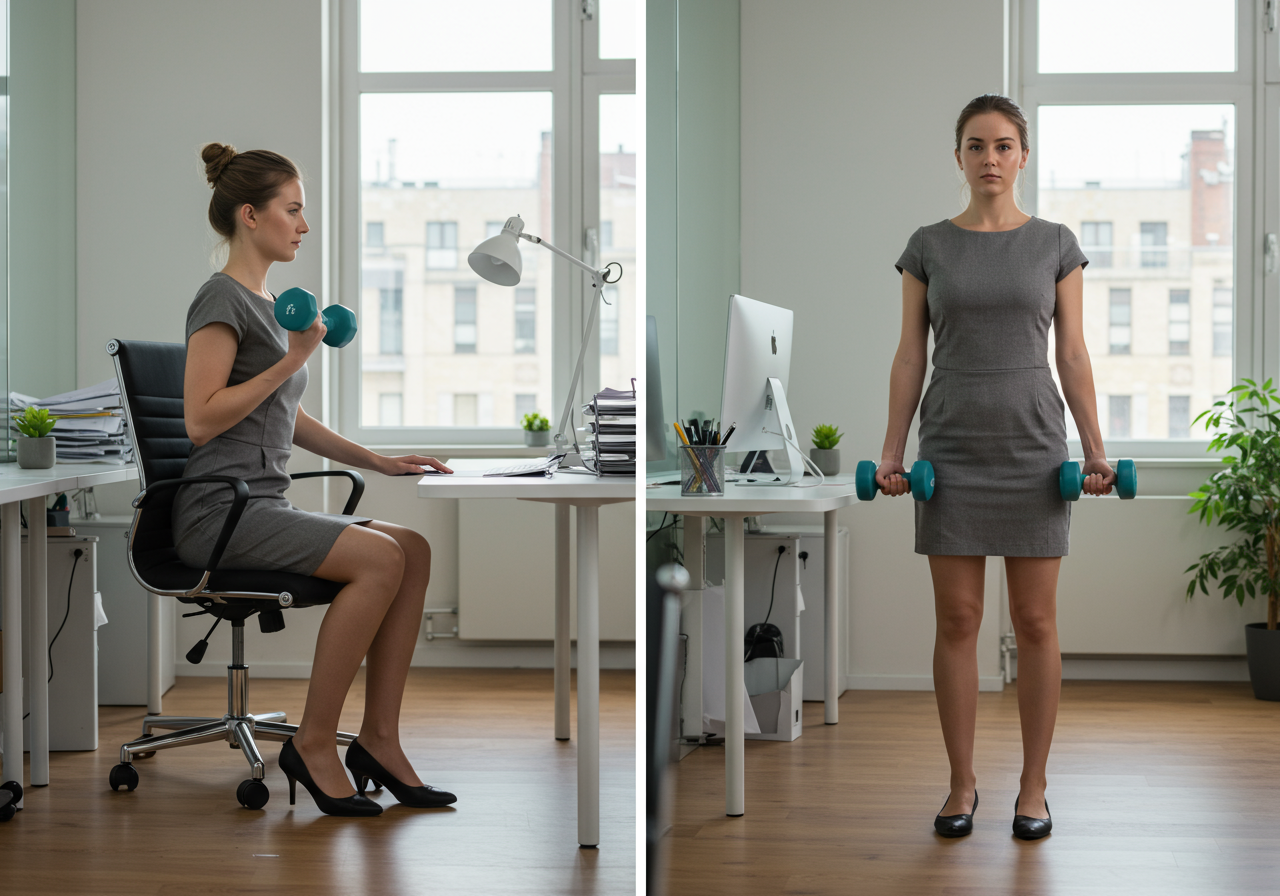
Best desk posture: ears over shoulders, elbows near 90°, hips slightly higher than knees, feet flat, screen top at eye level.
In the next minutes you’ll learn a complete, field-tested system: precise workstation setup, movement breaks, a 15-minute strength circuit, a clear progression, and simple ways to track results.
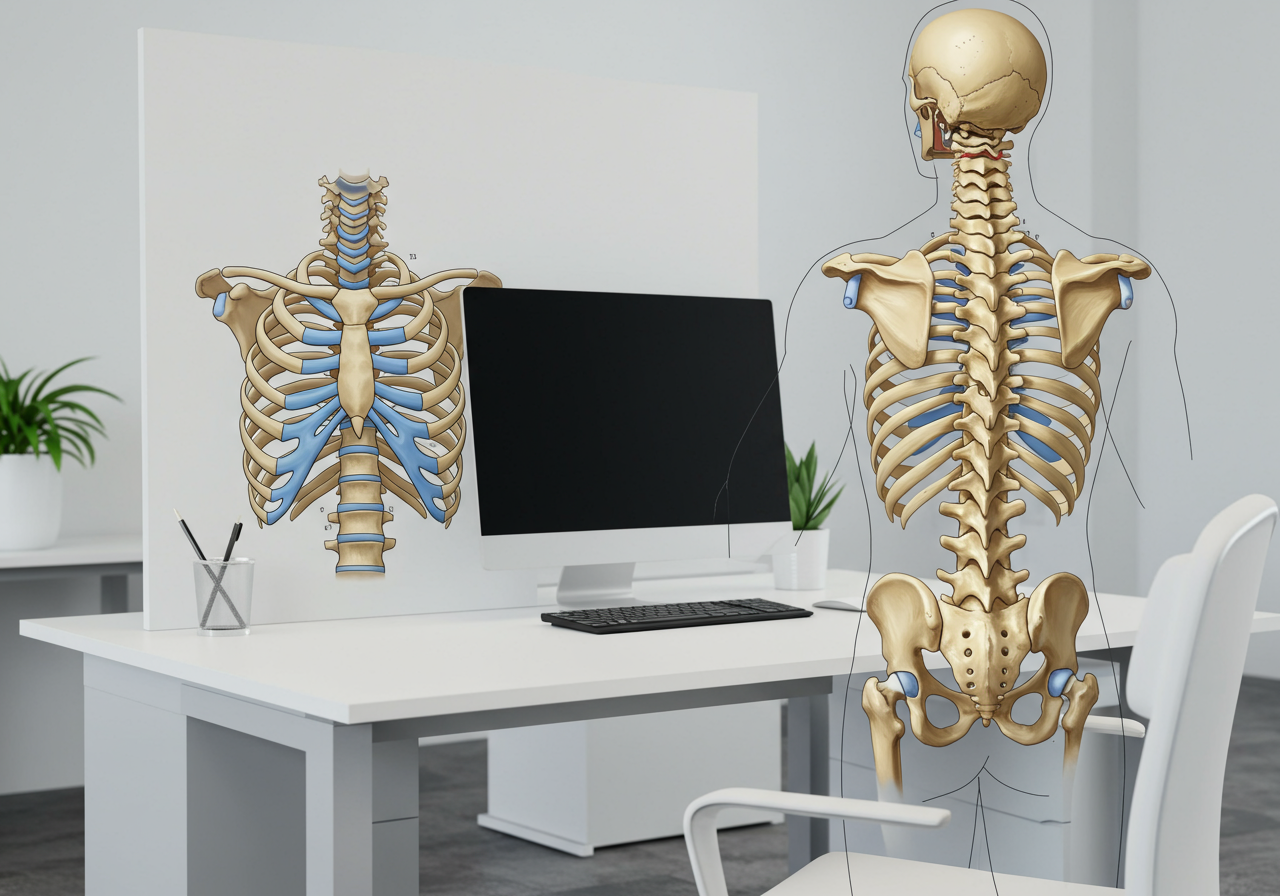
Long sitting loads passive tissues. Collagen “creep” builds during static postures, so necks, hips, and wrists take the strain. Small adjustments redistribute load to stronger muscles and reduce joint shear. Frequent movement restores circulation and interrupts low-grade inflammation.
Peer-reviewed research consistently shows that workstation optimization, micro-breaks, and light strengthening reduce musculoskeletal complaints for office workers. In my coaching practice, clients usually report less stiffness within two weeks and better focus by week four, especially when they combine setup changes with short movement snacks.
Client notes: “My afternoon headaches vanished after the monitor height fix,” Ana (product designer). “Wrist pain dropped after switching to a split keyboard and adding 2-minute breaks,” Jamal (accountant). These are individual results, but they align with what workplace health guidelines recommend.
Step-by-step workstation setup and movement breaks
Workstation essentials (5–10 minutes):
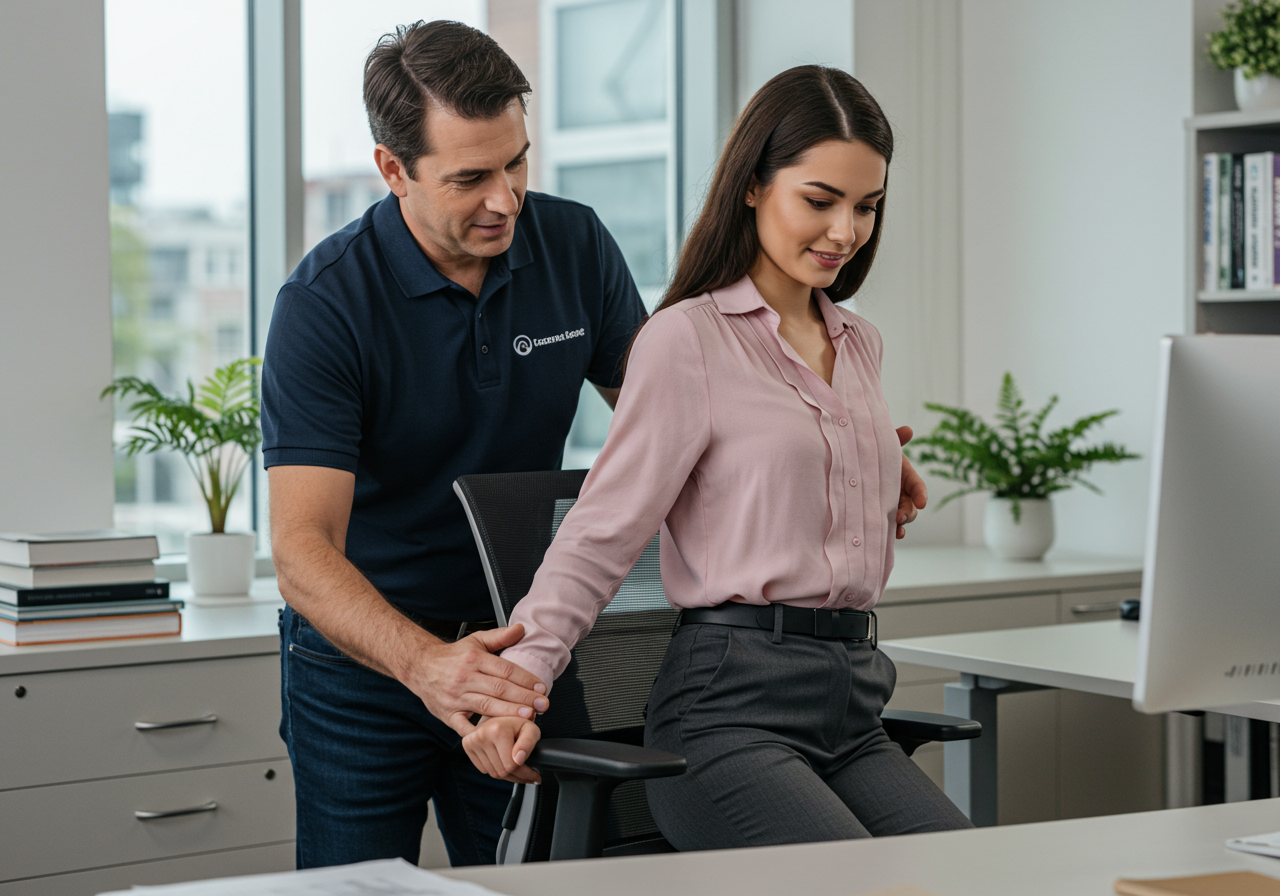
Chair: Set height so hips are slightly higher than knees; maintain a gentle lumbar curve using built-in support or a cushion.
Desk: When forearms rest on the desk, elbows should be near 90°, shoulders relaxed, wrists straight.
Keyboard & mouse: Keep close to the body. If you use a laptop, add an external keyboard/mouse. Consider a split or tented keyboard if wrists ache.
Monitor: Top of screen at eye level; roughly an arm’s length away. Use a riser or a few books if needed.
Feet: Flat on the floor or on a footrest. Avoid leg tucking for long periods.
Lighting: Reduce glare. Angle the screen slightly and use task lighting to avoid eye strain.
Movement-break recipe (repeat 4–8 times/day):
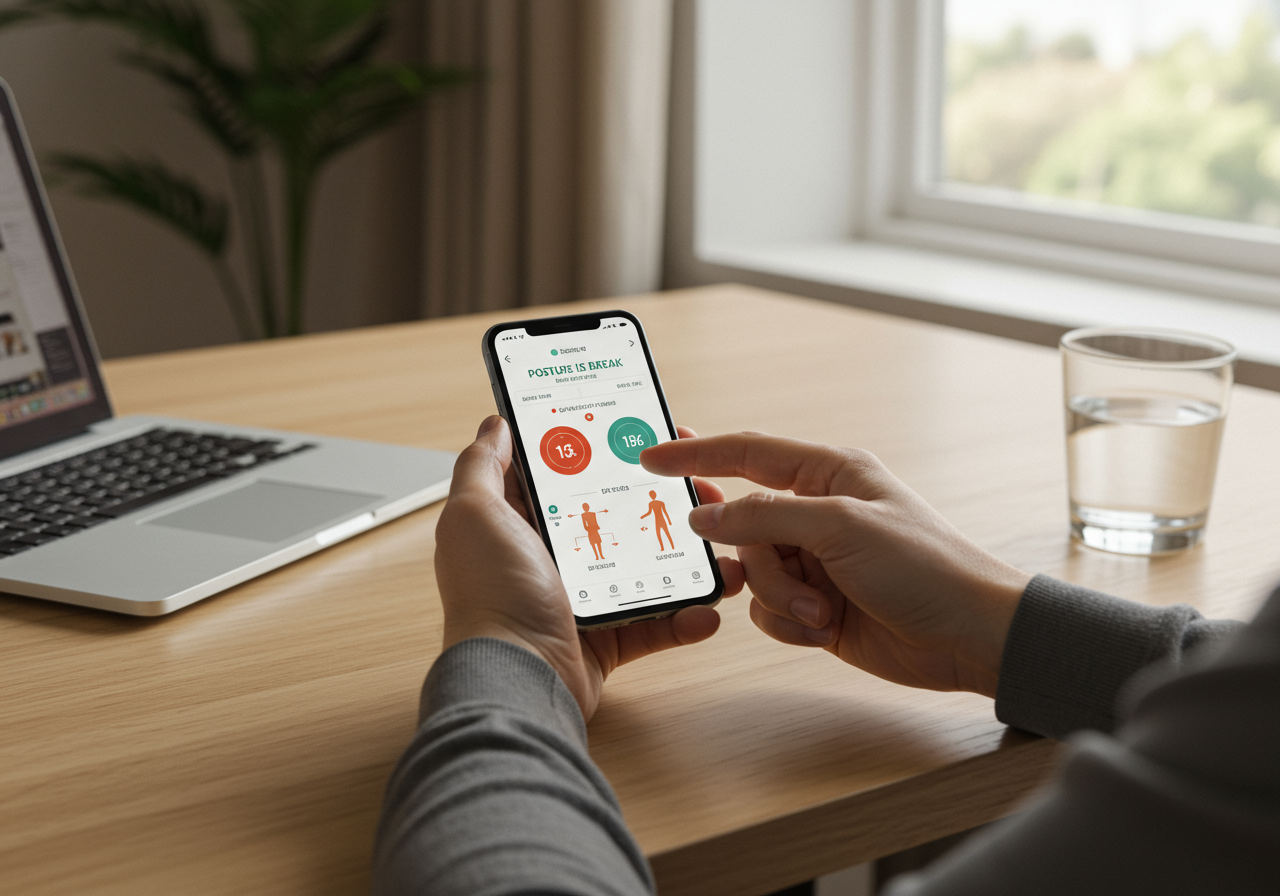
Timer options: Stretchly, Focus To-Do (Pomodoro), Apple Watch stand alerts, or a simple phone timer (25/5 or 50/10 cycles).
Walking snack: 2–5 minutes at an easy pace (heart rate Zone 1–2). Hallway laps or outdoor loops work great.
15-minute strength micro‑workout (2–3x/week):
Warm-up — 2 minutes: March in place + arm circles + cat/cow.
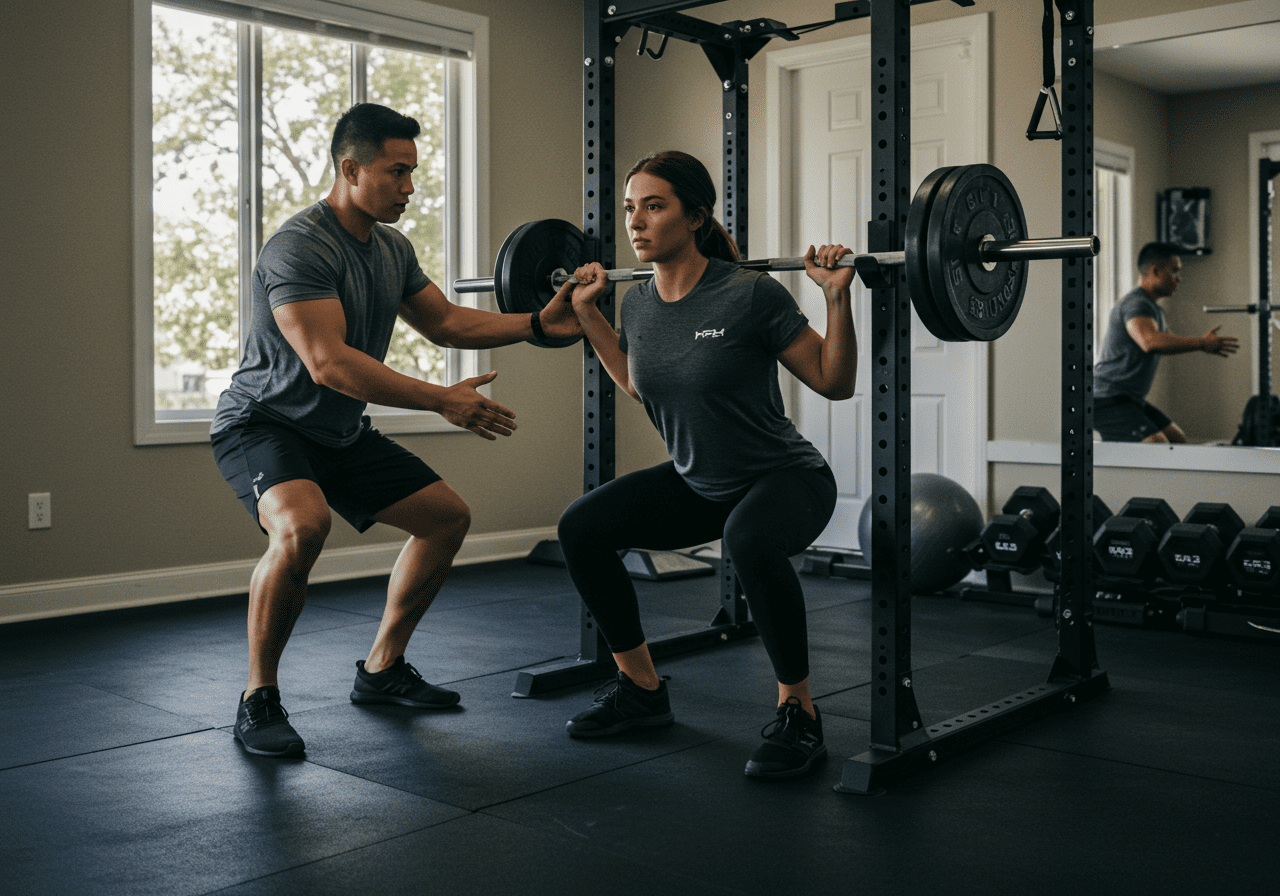
Circuit — 10–12 minutes (2–3 rounds): • Band or dumbbell row x10–12 (posture support) • Wall slides or band pull-aparts x10 (upper back/shoulders) • Split squat x8/side (hips/knees) • Glute bridge x12 (posterior chain) • Dead bug x8/side (core/anti-extension)
Finisher — 1–2 minutes: Farmer carry (one or two dumbbells), brisk but controlled.
Load: Choose a weight that leaves ~2 reps in reserve. Progress when all sets feel stable and breathing stays calm.
Mobility reset (evening, 5 minutes): Thoracic open book x6/side, couch stretch 30 seconds/side, neck side glide x6/side, 90/90 hip switches x8. This helps unwind after screen time.
Tracking: Log discomfort (0–10), break counts, and steps in Notes/Notion/Google Sheets. Wearables like Garmin, Fitbit, or Apple Health can track standing time and short walks. I record brief strength sessions in the Strong app; walks auto-sync to Strava.
Nutrition & recovery: Hydrate throughout the day. Aim for protein around 1.6–2.2 g/kg/day, plenty of colorful produce, and 7–9 hours of sleep. If appropriate for you, 3–5 g creatine monohydrate daily can support strength training. I’ve seen clients recover faster when sleep is prioritized and caffeine is tapered before afternoon.
12-week progression from beginner to advanced
Use this simple ramp-up to build resilience without overloading. Keep movement easy on busy days; add load only when posture and breathing stay smooth.
12‑week progression at a glance (plain‑text table):
Week 1–2: Setup audit; 4–5 micro-breaks/day; strength 2x/week (1–2 rounds); 10 min easy walk daily (Zone 1–2); RPE ~5–6. Week 3–4: Lock monitor/keyboard heights; 5–6 breaks/day; strength 3x/week (2 rounds); 12–15 min total; add farmer carry 2x20 m. Week 5–6: Sit–stand or posture shift every 30–45 min; 6 breaks/day; strength 3x/week (2–3 rounds); split squat load up slightly. Week 7–8: Maintain neutral wrist/neck; 6–7 breaks/day; strength 3x/week (3 rounds); add band pull‑aparts; walk 15–20 min most days. Week 9–10: Add 1 Zone 2 cardio session 20–25 min; keep daily breaks; progress rows/wall slides; carry heavier for same distance. Week 11–12: Hold standards; optional deload in week 12 (reduce sets by ~30%); reassess pain score, monitor height, and keyboard comfort.
Levels: Beginners focus on Weeks 1–4 and consistency. Intermediates continue through Week 8 with modest load bumps (2–5 lb or firmer bands). Advanced users run the full 12 weeks, then cycle back with slightly higher loads or longer carries.
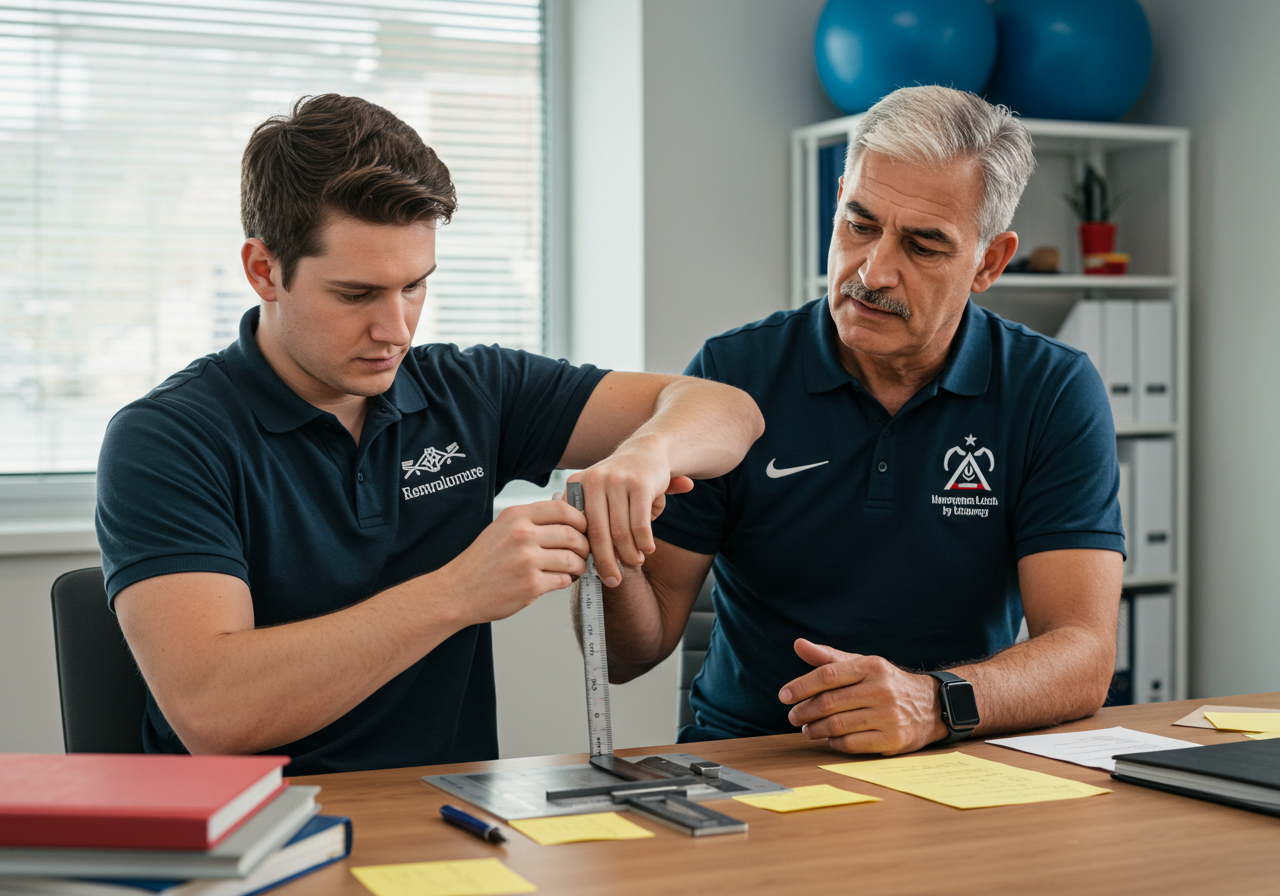
Progress checks: Re-test discomfort scores, neck rotation symmetry, and ability to hold a tall sit with relaxed shoulders for 60 seconds. In similar workplace programs, these markers improve after several weeks when training and breaks stay consistent.
References & Further Reading
The following peer-reviewed research and authoritative guidelines support the recommendations in this article:
Intensity: Keep movement breaks light; strength at RPE 6–8. If form slips or breath feels strained, reduce load or reps.
Common mistakes: Raising the desk without adjusting chair; hunching while standing; keyboards too wide; skipping breaks during meetings. Use camera‑off micro‑moves: ankle pumps, pelvic tilts, chin nods.
Troubleshooting:Plateaus—change one variable: add a break, switch to split squats, or extend walks by 3–5 minutes. Overuse twinges—reduce volume 20–30% for a week; swap to isometrics (wall sits, dead bug holds). Motivation dips—pair breaks with music or a short podcast; track streaks in a habit app.
Safety first: Sharp, radiating, or night pain warrants a licensed clinician. For persistent wrist issues, trial a split keyboard or vertical mouse; if numbness persists, consult a healthcare provider.
Recovery: Protect sleep. Evening mobility plus a short walk after dinner helps downshift. I limit late caffeine and notice fewer neck tightness flares on high‑sleep weeks.
Next steps: Keep what works, test one tweak at a time, and re‑assess every 4 weeks.
Medical Disclaimer: The information provided on this website is for informational and educational purposes only and is not intended as personal medical or health advice. The content, including text, graphics, and images, is not a substitute for professional medical advice, diagnosis, or treatment. Always seek the advice of your physician or other qualified healthcare provider…
Medical Disclaimer: The information provided on this website is for informational and educational purposes only and is not intended as personal medical or health advice. The content, including text, graphics, and images, is not a substitute for professional medical advice, diagnosis, or treatment. Always seek the advice of your physician or other qualified healthcare provider…
Medical Disclaimer: The information provided on this website is for informational and educational purposes only and is not intended as personal medical or health advice. The content, including text, graphics, and images, is not a substitute for professional medical advice, diagnosis, or treatment. Always seek the advice of your physician or other qualified healthcare provider…
Medical Disclaimer: The information provided on this website is for informational and educational purposes only and is not intended as personal medical or health advice. The content, including text, graphics, and images, is not a substitute for professional medical advice, diagnosis, or treatment. Always seek the advice of your physician or other qualified healthcare provider…
Medical Disclaimer: The information provided on this website is for informational and educational purposes only and is not intended as personal medical or health advice. The content, including text, graphics, and images, is not a substitute for professional medical advice, diagnosis, or treatment. Always seek the advice of your physician or other qualified healthcare provider…
Medical Disclaimer: The information provided on this website is for informational and educational purposes only and is not intended as personal medical or health advice. The content, including text, graphics, and images, is not a substitute for professional medical advice, diagnosis, or treatment. Always seek the advice of your physician or other qualified healthcare provider…