Medical Disclaimer: The information provided on this website is for informational and educational purposes only and is not intended as personal medical or health advice. The content, including text, graphics, and images, is not a substitute for professional medical advice, diagnosis, or treatment. Always seek the advice of your physician or other qualified healthcare provider with any questions you may have regarding a medical condition or before starting any new exercise, nutrition, or supplement program. Never disregard professional medical advice or delay in seeking it because of something you have read on this blog. Reliance on any information provided by this site is solely at your own risk.
Protein timing and distribution is the lever most beginners miss. In this guide, I show how to place protein around training to compound your results.
Direct answer: Practical target is 0.3–0.4 g/kg protein per meal, every 3–4 hours, plus 20–40 g within two hours after training.
You will get a full, beginner-friendly training plan (strength, cardio, mobility), a simple way to split protein across your day, and a progression that scales from week one to advanced. I also share real logs, client lessons, and troubleshooting for plateaus.
Even protein distribution beats skewed meals for growth
Total daily protein drives most of your muscle and recovery outcomes. But spacing protein evenly across meals can create more frequent muscle protein synthesis peaks, especially when each meal hits a solid leucine threshold (commonly achieved with 20–40 g of high-quality protein). In peer‑reviewed studies, an even distribution tends to outperform a skewed pattern without raising total calories.
Post‑workout protein supports repair and adaptation. The window is practical rather than tiny; getting a protein‑rich meal within roughly two hours is sufficient for most routines. Older lifters and those on plant‑based diets may need the higher end of per‑meal protein to hit that leucine trigger. Endurance athletes do not blunt adaptations by using protein; if energy is adequate, training responses remain robust.
Bottom line: hit your daily total, then distribute across 4–5 meals, and anchor one feeding within a couple hours after you lift or complete intervals.
Split daily intake into strategic meals around workouts
Step 1 — Set your daily protein: Most lifters do well with 1.6–2.2 g/kg/day. In a calorie deficit, push toward 2.2–2.4 g/kg to protect lean mass.
Step 2 — Split into meals: Eat protein every 3–4 hours. Target ~0.3–0.4 g/kg per meal (20–40 g for many adults). Add a pre‑sleep protein (casein‑rich or cottage cheese) when recovery is a priority.
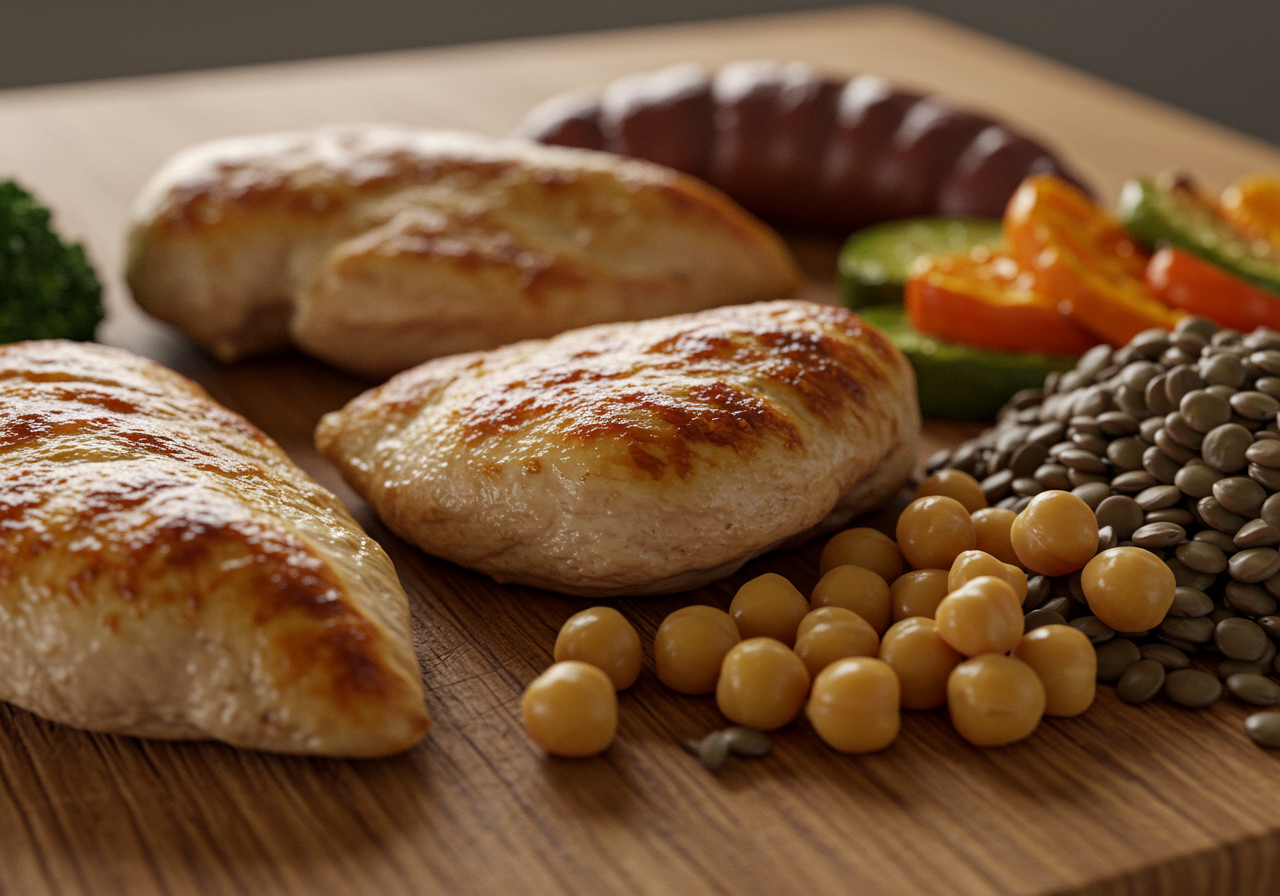
Step 3 — Place protein around training: • If fasted or training early: a small snack (10–20 g whey or soy isolate) can help. • After training: 20–40 g protein from whey, Greek yogurt, eggs, lean meat, tofu/tempeh, or a mixed meal. Add carbs to refuel if the session was taxing or you train again within 24–36 hours.
Step 4 — Build your weekly training so timing matters: • Strength (3x/week): Full body or upper/lower split. Anchor a protein feeding within two hours after. RPE 6–8 for most work sets. • Cardio (2–3x/week): Mix one interval day (Zone 4 efforts) and one longer Zone 2 session. Protein near these sessions still helps recovery. • Mobility (2–3x/week): 10–20 minutes. A normal meal pattern is enough here.
Step 5 — Track and adjust: Log meals in MyFitnessPal or Cronometer. Track sessions with Garmin, Apple Watch, or Polar. If you consistently miss protein at one meal, bump per‑meal doses elsewhere to maintain daily totals.
Caption: Sample daily protein distribution as plain‑text for two body sizes. 70 kg example — target ~140–160 g/day 07:00 Breakfast — ~25 g — Greek yogurt, oats, berries 10:30 Snack — ~20 g — Skyr and fruit 13:00 Lunch — ~30 g — Chicken, rice, vegetables 16:30 Pre‑lift — ~20 g — Whey and banana 18:30 Post‑lift — ~30 g — Beef, potatoes, salad 21:30 Pre‑sleep — ~25 g — Cottage cheese, kiwi
90 kg example — target ~160–200 g/day 08:00 Breakfast — ~35 g — Eggs, toast, avocado 12:00 Lunch — ~40 g — Tofu stir‑fry, rice 15:30 Snack — ~25 g — Protein shake, nuts 18:30 Post‑workout — ~40 g — Turkey bowl, quinoa 22:00 Pre‑sleep — ~25 g — Casein shake
Weekly training template that I use with new clients: • Mon — Strength A (squat, row, hinge), finish with 15–20 min Zone 2. Protein feeding post‑session. • Tue — Mobility 15 min, Intervals: 5×2 min Zone 4 with 2 min easy between. • Wed — Strength B (deadlift, press, split squat). Post‑session protein. • Fri — Strength A repeat or accessories + 6–8 short sprints (10–15 sec). Post‑session protein. • Sat — Zone 2 for 45–60 min + 10 min mobility. • Thu/Sun — Rest or easy walk 20–30 min.
Personal log example (last month): 40‑min Zone 2 ride at ~135 bpm (about 70% HRmax), then 5×3 back squat at RPE 7. I used 25 g whey and a banana within 30 minutes, then a protein‑rich dinner later.
Client note: Ari, a busy nurse, shifted from two large dinners to four meals with ~30 g protein each. Over eight weeks, push‑ups rose from 5 to 12 and her long walk pace improved at the same heart rate. Scale weight barely changed, but her belt tightened by one notch.
Scale from beginner basics to advanced protocols
Beginner weeks 1–4: • Training: 3 strength days, 2 cardio days, 2 short mobility blocks. Keep sets at 2–3 per lift, RPE 6–7. Zone 2 cardio 20–30 min; one short interval day (e.g., 6×1 min). • Protein: 3 meals + 1 snack. Aim ~0.3 g/kg per meal. Post‑workout feeding within two hours. Total daily ~1.6 g/kg. • Tracking: Log protein streaks (goal: 5+ days/week on target). Record best set loads and interval paces.
Intermediate weeks 5–8: • Training: 3–4 strength days; add 1–2 sets on main lifts if recovery is good. Intervals become 5×2 min or 3×4 min at Zone 4. Zone 2 grows to 35–45 min. • Protein: Move to 4–5 feedings, pre‑sleep casein on heavy days. Total daily 1.8–2.2 g/kg. If a meal is missed, increase the next two meals by 5–10 g. • Progress rule: Add 2.5–5% load when last set is ≤RPE 7 and technique is crisp. Keep one lighter week if joints feel beat up.
Advanced weeks 9–12+: • Training: 4 strength days using a main lift focus (e.g., squat/bench/hinge/press), plus 2–3 cardio doses. One long Zone 2 (45–75 min), one VO2 session like 4–6×3 min Zone 4. Deload every 4th week if HRV drops or RPE climbs at the same loads. • Protein: 4–5 feedings of ~0.4 g/kg when cutting or after double sessions. On plant‑based diets, use soy, seitan, or blends to meet per‑meal targets. • Monitoring: Watch morning readiness (HRV if available), session RPE, and a simple performance marker (e.g., 5‑rep deadlift, 20‑min Zone 2 pace at the same heart rate).
Coach outcomes: In client logs, beginners typically add 10–20 kg to big lifts across 8–12 weeks while keeping zone‑2 heart rate steadier at the same pace. Results vary, but distributing protein has consistently helped consistency with recovery meals.
My mistake (lesson learned): I used to cram protein into dinner. Moving to four feedings stopped late‑night overeating and I slept better. Pre‑sleep casein also curbed morning soreness after heavy deadlifts.
References & Further Reading
The following peer-reviewed research and authoritative guidelines support the recommendations in this article:
Avoid common mistakes and troubleshoot plateaus effectively
Frequency and intensity: Start with 3 strength sessions and 2–3 cardio doses weekly. Keep most sets at RPE 6–8. Sprint work is short and sharp; stop before form frays.
Common mistakes to avoid: • Skewed protein (tiny breakfast, huge dinner). Spread it. • Chasing only shakes. Food first; shakes fill gaps. • Under‑salting or low carbs before intervals. Add electrolytes and a small carb source when efforts are hard or long.
Troubleshooting: • Plateaued lifts: Add 5–10 g protein to the two meals that bracket training and ensure sleep hits 7–9 hours. • Low appetite: Use smoothies, Greek yogurt, and higher‑protein snacks. Split meals smaller but more frequent. • Soreness lingering: Reduce weekly set volume by 20% for seven days; keep protein steady.
Safety: If you have kidney disease or medical concerns, consult a healthcare professional before raising protein. Introduce fiber gradually when protein increases. Hydrate, especially in hot weather.
Supplements: Whey or soy isolate is convenient post‑workout; casein before bed; creatine monohydrate (3–5 g/day) pairs well with this plan. Caffeine is fine pre‑workout if it doesn’t disrupt sleep.
Next steps: Log this week in MyFitnessPal, track sessions in Strava or Garmin Connect, and review your streak every Sunday. If you want my printable checklist and example menus.
Quick testimonial: Sam wrote, ‘Switching to four protein hits a day kept me full while cutting. I didn’t lose strength, and my 5k time dropped by 30 seconds.’
Medical Disclaimer: The information provided on this website is for informational and educational purposes only and is not intended as personal medical or health advice. The content, including text, graphics, and images, is not a substitute for professional medical advice, diagnosis, or treatment. Always seek the advice of your physician or other qualified healthcare provider…
Medical Disclaimer: The information provided on this website is for informational and educational purposes only and is not intended as personal medical or health advice. The content, including text, graphics, and images, is not a substitute for professional medical advice, diagnosis, or treatment. Always seek the advice of your physician or other qualified healthcare provider…
Medical Disclaimer: The information provided on this website is for informational and educational purposes only and is not intended as personal medical or health advice. The content, including text, graphics, and images, is not a substitute for professional medical advice, diagnosis, or treatment. Always seek the advice of your physician or other qualified healthcare provider…
Medical Disclaimer: The information provided on this website is for informational and educational purposes only and is not intended as personal medical or health advice. The content, including text, graphics, and images, is not a substitute for professional medical advice, diagnosis, or treatment. Always seek the advice of your physician or other qualified healthcare provider…
Medical Disclaimer: The information provided on this website is for informational and educational purposes only and is not intended as personal medical or health advice. The content, including text, graphics, and images, is not a substitute for professional medical advice, diagnosis, or treatment. Always seek the advice of your physician or other qualified healthcare provider…
Medical Disclaimer: The information provided on this website is for informational and educational purposes only and is not intended as personal medical or health advice. The content, including text, graphics, and images, is not a substitute for professional medical advice, diagnosis, or treatment. Always seek the advice of your physician or other qualified healthcare provider…