Medical Disclaimer: The information provided on this website is for informational and educational purposes only and is not intended as personal medical or health advice. The content, including text, graphics, and images, is not a substitute for professional medical advice, diagnosis, or treatment. Always seek the advice of your physician or other qualified healthcare provider with any questions you may have regarding a medical condition or before starting any new exercise, nutrition, or supplement program. Never disregard professional medical advice or delay in seeking it because of something you have read on this blog. Reliance on any information provided by this site is solely at your own risk.
Strength, Mobility, and Low-Impact Cardio Done Right
Best cross-training workouts for cyclists and runners deliver durability and speed without extra miles. Here you’ll get a clear, tested system to build strength, mobility, and aerobic efficiency.
Direct answer: The best cross-training workouts combine targeted strength, mobility, and low‑impact cardio intervals, scheduled 2–3 times weekly alongside rides or runs.
Cross-Training Cuts Injury Risk and Boosts Economy
Cycling and running stress the same tissues in different ways. Smart cross-training spreads the load, builds stronger connective tissue, and raises your ceiling without pounding your joints.
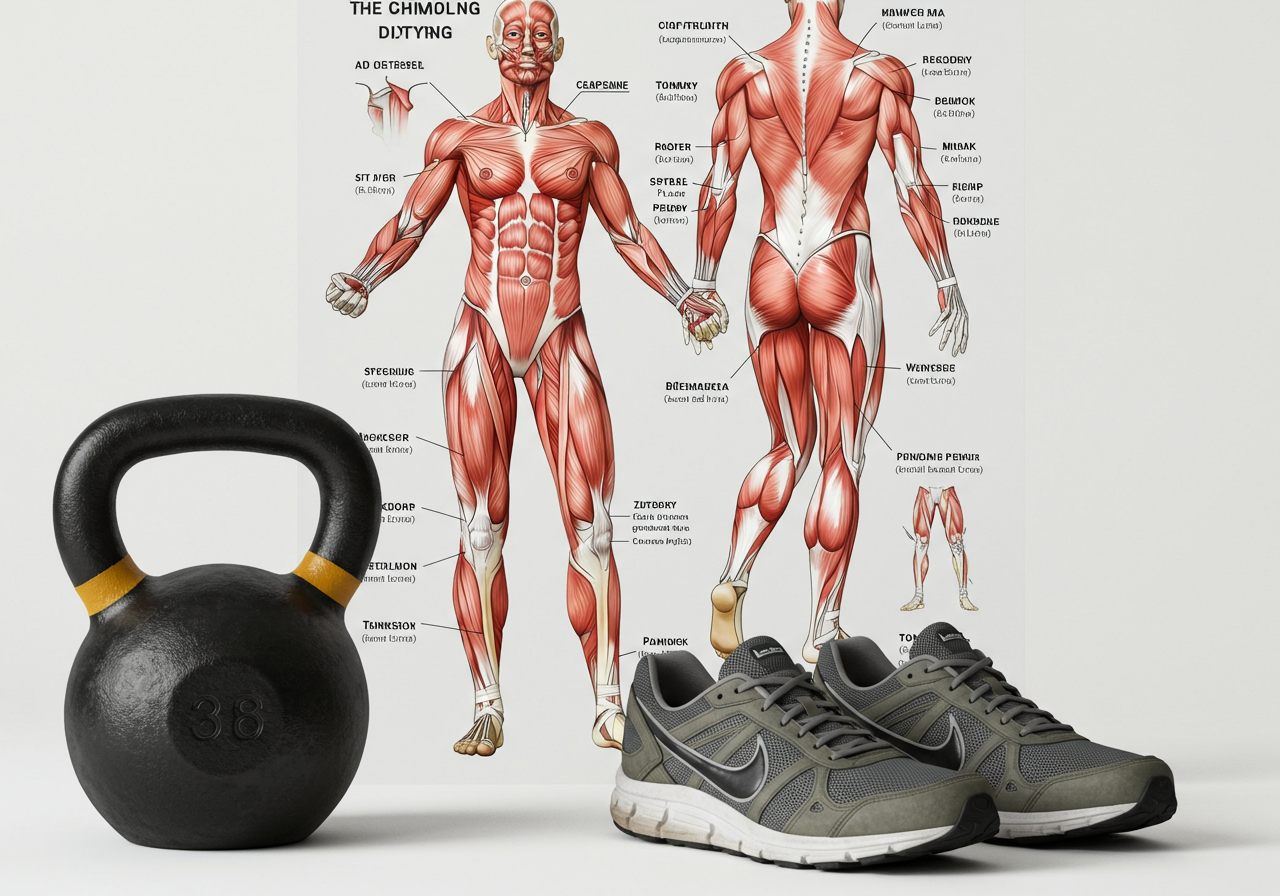
Strength work improves running economy and cycling power by enhancing force production and stiffness in the right places. Mobility restores range so hips and ankles move freely, which reduces compensations. Low‑impact cardio like rowing, pool running, or elliptical keeps your heart and lungs humming while your bones and tendons recover.
In practice, two well-placed strength sessions per week often cut injury risk and steady your pacing late in races. A peer‑reviewed study trend suggests resistance training can improve endurance economy; similar practice reports show fewer overuse flare‑ups when athletes add mobility and low‑impact aerobic work.
From my coaching log: clients who added 2x/week strength plus one low‑impact cardio session typically noted steadier heart rates on long runs/rides and fewer niggles within 4–8 weeks. Individual results vary, but the pattern is consistent.
Session Templates with Warm-Ups and Tracking Tools
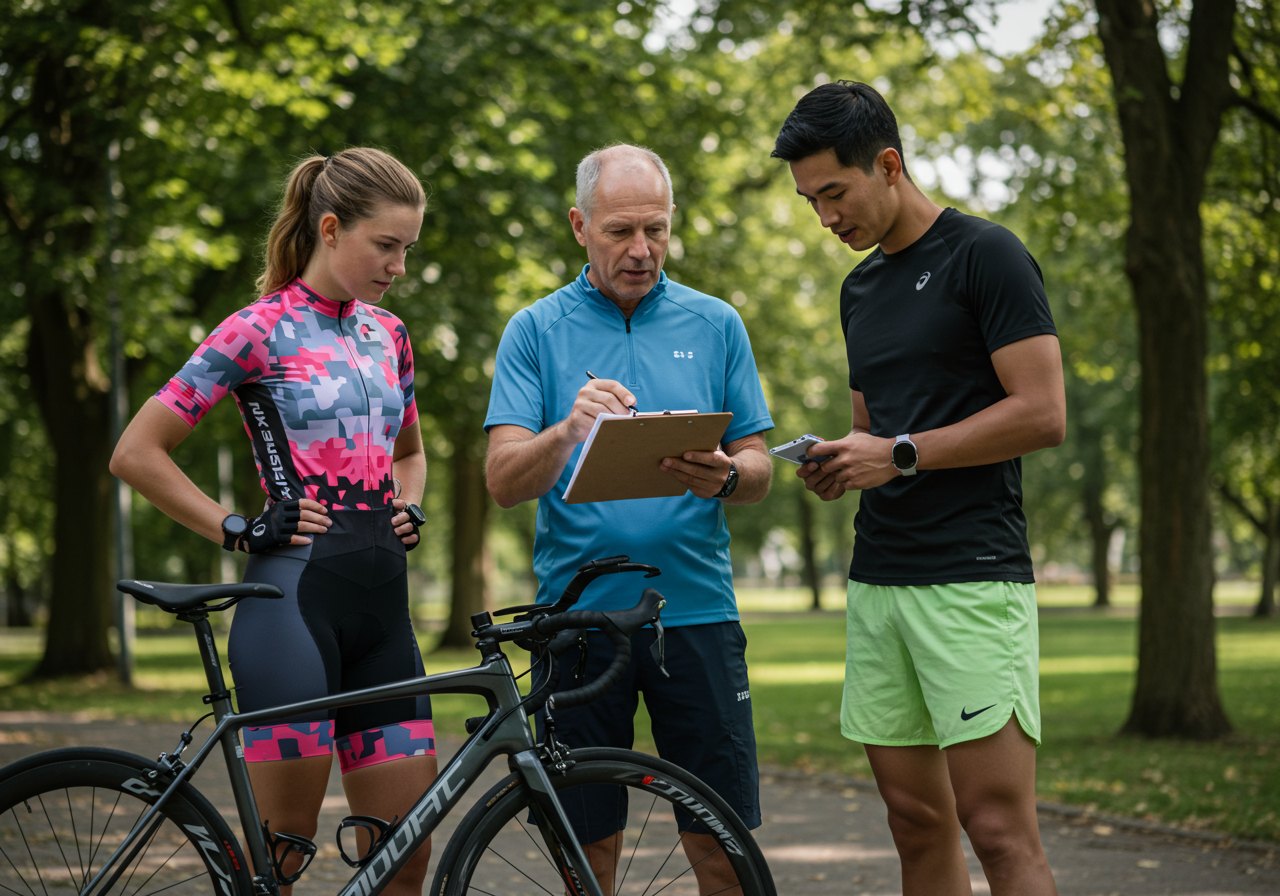
Use these session templates. Track heart rate (HR) with Garmin or Fitbit, log RPE and sets in Strava or TrainingPeaks, and note soreness and sleep in a simple journal.
Warm‑up — 8–10 min 2–3 minutes easy cardio, then dynamic mobility: ankle rocks, hip openers, T‑spine rotations, and 1–2 activation drills (glute bridge, banded lateral walk).
Strength Session A (Lower‑body focus) — 35–45 min
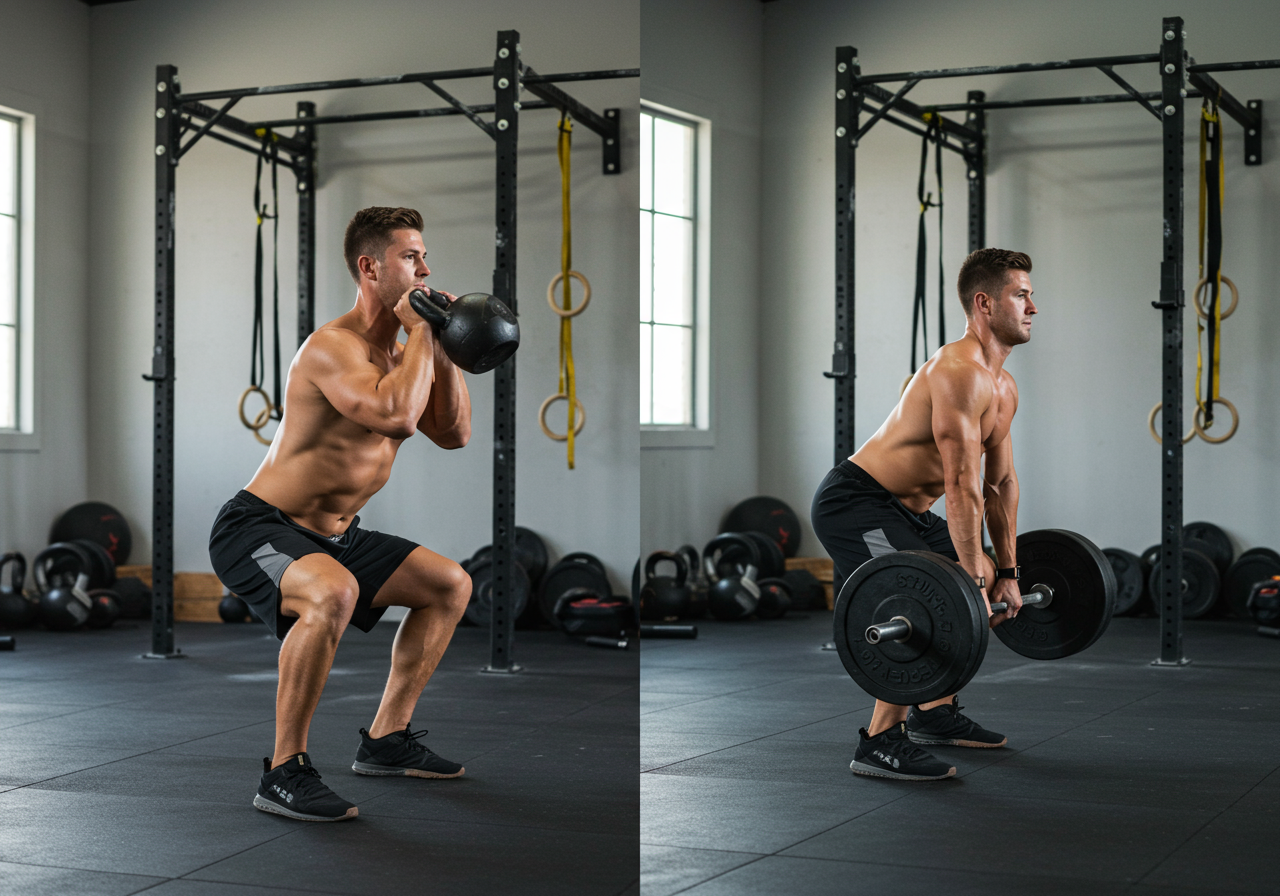
Goblet squat or front squat: 3–4 sets × 5–8 reps @ RPE 6–8, 90–120 s rest.
Single‑leg RDL: 3 × 6–8/side @ RPE 6–7.
Reverse lunge or step‑up: 3 × 6–8/side.
Core: dead bug or plank progressions: 3 × 30–45 s.
Mobility Mini‑Circuit — 10 min 90/90 hip switches, couch stretch, calf wall stretch, thoracic openers. Breathe slow through the nose. Move, don’t mash.
Low‑Impact Cardio Options — 30–45 min
Row or elliptical Zone 2 (easy‑moderate, conversational) for 25–40 min.
Or do 4 × 3 min at upper Zone 3/low Zone 4 with 2 min easy between. Keep cadence smooth.
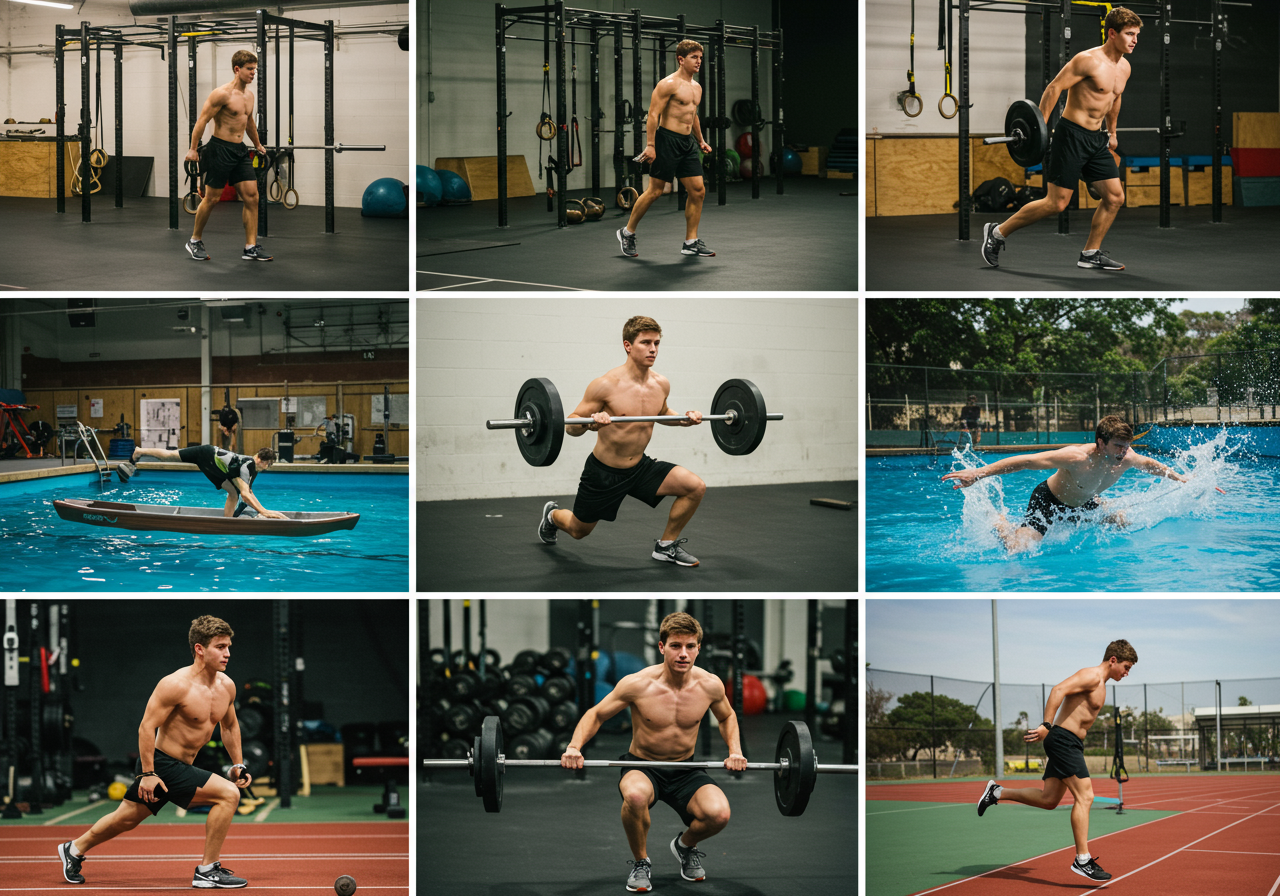
Pool running: 30–40 min steady, or 10 × 1 min hard/1 min easy.
Brick (optional once weekly) Short pairing to build resilience without big stress: 30 min Zone 2 ride + 10 min easy run; or 20–25 min run + 10–15 min machine row. Keep both controlled.
Recovery Add‑ons 5–10 min nasal breathing, legs up the wall, or easy walk after sessions. Aim for 7–9 h sleep. Protein target: about 1.6–2.2 g/kg/day, carbs around training windows, and 3–5 g creatine daily if tolerated. Log food basics in MyFitnessPal for two weeks to calibrate.
Coaching note: I progress load slowly (2.5–5% weekly or 1–2 reps more), stop 1–3 reps shy of failure, and never schedule strength the night before key intervals or long sessions.
Four-Week Blocks from Beginner to Advanced Intensity
Caption: Progression map from foundational work to advanced intensity while protecting recovery.
Beginner Weeks 1–4: 2× strength (30–40 min @ RPE 6–7), 1× low‑impact cardio 30–40 min Zone 2, mobility daily 5–10 min. Keep long ride/run unchanged.
Beginner Weeks 5–8: Progress lifts by small increments, add 1 short brick (30 min Z2 cycle + 10 min easy run). One cardio session becomes 4 × 3 min @ Z3/low Z4 with 2 min easy.
Intermediate Weeks 1–4: 2× strength (one A, one B), 1× cardio intervals (5 × 2–3 min @ Z4, 2 min easy), 1× mobility circuit. Hold long day steady.
Intermediate Weeks 5–8: Add power (3 × 3 box jumps in Session A), increase interval density (6–8 reps total), and upgrade brick (35–45 min Z2 + 12–15 min easy run).
Advanced Weeks 1–4: Strength stays 2× with heavier top sets (3–5 reps @ RPE 7–8), include single‑leg emphasis. Cardio: 2:1 micro‑intervals (e.g., 10 × 1 min @ Z4–Z5, 1 min easy) or pool sprints.
Advanced Weeks 5–8: Rotate VO2 micro‑intervals one week and threshold cruise another; brick becomes tempo split (20 min Z3 ride + 10 min Z2 run). Deload every 4th week by cutting volume ~30–40%.
Testing & checkpoints: After week 4 and week 8, assess: push‑ups in 60 s, 5‑rep goblet squat comfort, a steady 20‑min HR drift on bike or run, and perceived joint freshness. In my own 8‑week block, this approach trimmed my 5K by roughly a minute while keeping bike sessions snappy; clients often report fewer hot spots and steadier pacing by week 6–8.
References & Further Reading
The following peer-reviewed research and authoritative guidelines support the recommendations in this article:
Frequency, Intensity Control, and Recovery Monitoring Tips
Frequency & placement: Start with 2 cross‑training days weekly. Place strength 24–36 h away from key intervals or long days. Keep at least one full rest/very easy day.
Intensity control: Use RPE 6–8 for strength. Cardio intervals stop when form or cadence fades. Zone 2 means you can speak in full sentences.
Common mistakes: Lifting to failure (excess soreness), cramming everything on one day, skipping mobility, and chasing top‑end intervals when sleep and nutrition are off. Fix by trimming 10–20% volume and adding an easy day.
Monitoring: Track morning resting HR and mood, plus HRV if you use HRV4Training or Whoop. If HR is elevated and legs feel heavy for 2–3 days, reduce intensity.
Nutrition & recovery: Protein 1.6–2.2 g/kg/day; carbs around hard sessions (30–60 g/h for rides >90 min); sodium with long, hot workouts. Consider 3–5 g creatine daily, caffeine 1–3 mg/kg pre‑key sessions if tolerated. Prioritize 7–9 h sleep.
Injury troubleshooting: Sore knees running? Swap one run for pool running and keep strength single‑leg and hip‑dominant for a week. Tight back cycling? Add hip flexor and T‑spine mobility, reduce hinge loads briefly, and check bike fit.
Progress tracking: Log sets/reps and RPE in TrainingPeaks; tag sessions in Strava. Watch for: steadier HR in long efforts, improved cadence control, and fewer stop‑and‑stretch moments.
Client notes:
“Two short lift days stopped my calf niggles. I ran my long runs steadier and felt fresher on climbs.” — Maya, half‑marathoner and weekend cyclist
“Adding rower intervals kept my cardio high when my Achilles needed a break. I set a PR the next month.” — Kevin, masters cyclist
Next steps: Start with the beginner block for four weeks, then reassess.
Medical Disclaimer: The information provided on this website is for informational and educational purposes only and is not intended as personal medical or health advice. The content, including text, graphics, and images, is not a substitute for professional medical advice, diagnosis, or treatment. Always seek the advice of your physician or other qualified healthcare provider…
Medical Disclaimer: The information provided on this website is for informational and educational purposes only and is not intended as personal medical or health advice. The content, including text, graphics, and images, is not a substitute for professional medical advice, diagnosis, or treatment. Always seek the advice of your physician or other qualified healthcare provider…
Medical Disclaimer: The information provided on this website is for informational and educational purposes only and is not intended as personal medical or health advice. The content, including text, graphics, and images, is not a substitute for professional medical advice, diagnosis, or treatment. Always seek the advice of your physician or other qualified healthcare provider…
Medical Disclaimer: The information provided on this website is for informational and educational purposes only and is not intended as personal medical or health advice. The content, including text, graphics, and images, is not a substitute for professional medical advice, diagnosis, or treatment. Always seek the advice of your physician or other qualified healthcare provider…
Medical Disclaimer: The information provided on this website is for informational and educational purposes only and is not intended as personal medical or health advice. The content, including text, graphics, and images, is not a substitute for professional medical advice, diagnosis, or treatment. Always seek the advice of your physician or other qualified healthcare provider…
Medical Disclaimer: The information provided on this website is for informational and educational purposes only and is not intended as personal medical or health advice. The content, including text, graphics, and images, is not a substitute for professional medical advice, diagnosis, or treatment. Always seek the advice of your physician or other qualified healthcare provider…