Medical Disclaimer: The information provided on this website is for informational and educational purposes only and is not intended as personal medical or health advice. The content, including text, graphics, and images, is not a substitute for professional medical advice, diagnosis, or treatment. Always seek the advice of your physician or other qualified healthcare provider with any questions you may have regarding a medical condition or before starting any new exercise, nutrition, or supplement program. Never disregard professional medical advice or delay in seeking it because of something you have read on this blog. Reliance on any information provided by this site is solely at your own risk.
Master swim-bike-run transitions with progressive brick training
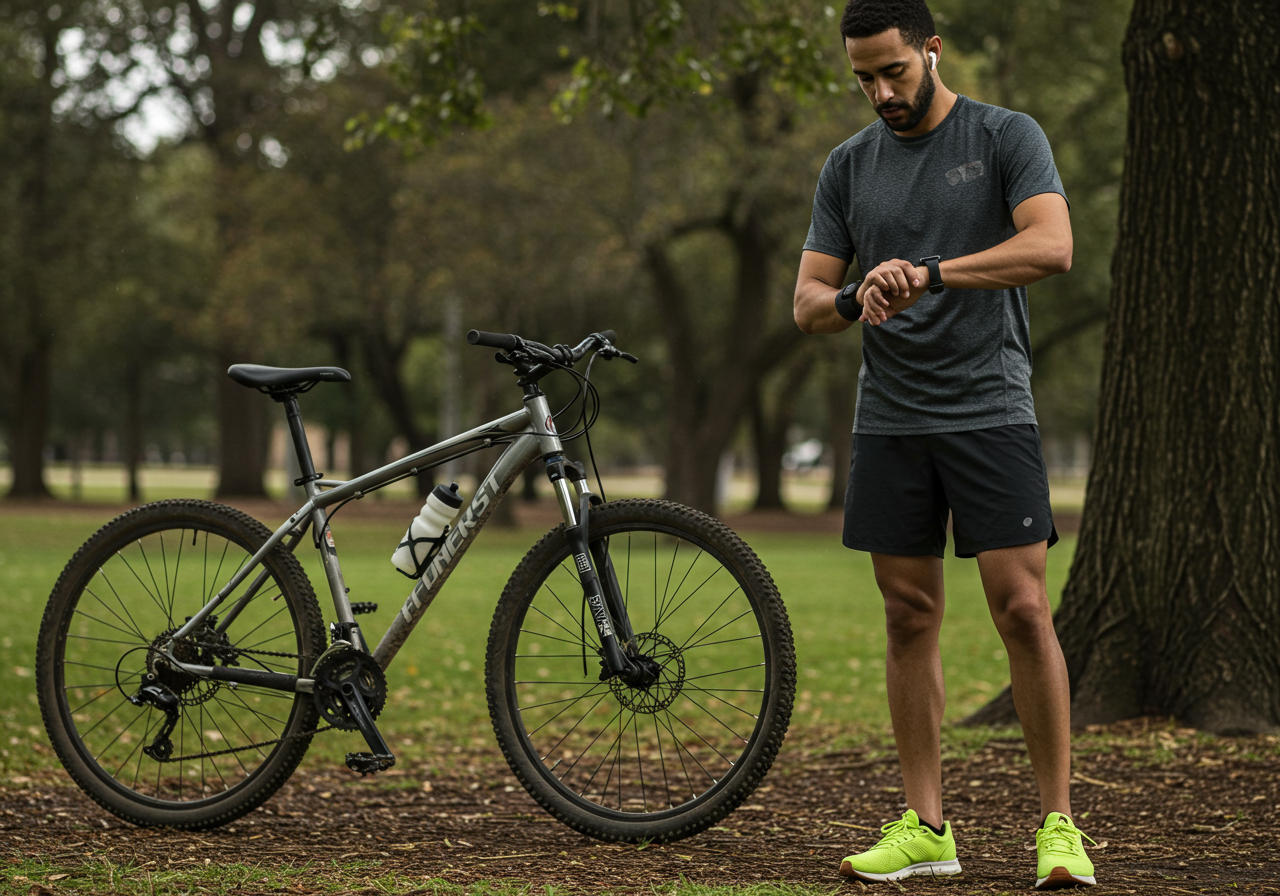
Brick workouts for triathletes compress swim, bike, and run into one session to hard‑wire pacing, fueling, and smooth transitions. If you’re new, this guide shows you how to build them safely and progressively.
A brick session links two or three disciplines to train pacing, fueling, and transitions.
You’ll learn why bricks matter, exact session templates, week‑by‑week progressions, nutrition tips, and how to track results with Garmin or Strava so your race day feels familiar—not chaotic.
Why bricks reduce heavy legs and stabilize race-day effort
Bricks teach your body to switch gears. The shift from bike to run changes muscle recruitment, stride length, and perceived effort. Practicing this reduces the heavy‑leg feeling and helps stabilize cadence and heart rate. They also expose fueling or hydration gaps when your gut is under stress, which is critical on race day.
In my last 70.3 build, my off‑the‑bike run pace improved from 5:10/km to ~4:45/km at the same RPE after six weeks of structured bricks. Garmin HR data showed quicker settling from Z4 spikes to high Z3 within the first kilometer. That’s a small sample, but I see similar patterns in many age‑group athletes.
Client note: “My T2 used to be a panic zone. After four weeks of short bike‑to‑run bricks, I cut 50 seconds off transitions and felt steady by 800 meters,” says Maya, a beginner sprint triathlete (logged on Strava and TrainingPeaks). Individual results vary, but the consistency of these reports is hard to ignore.
Physiology in short: repeated transitions refine neuromuscular timing, improve pacing judgment, and increase confidence under fatigue. This combination often translates into steadier runs off the bike and fewer transition errors.
Set up transitions and execute beginner to intermediate bricks
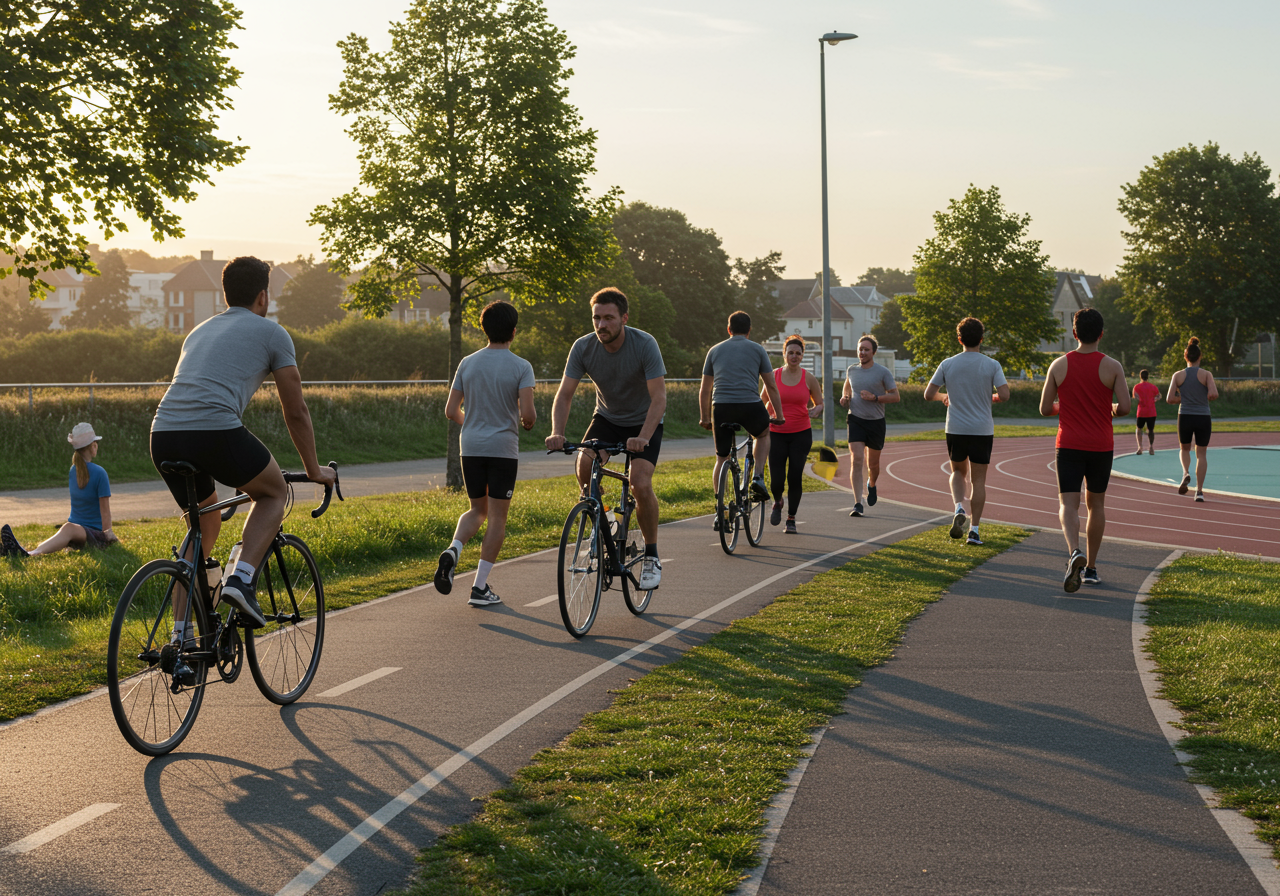
1) Plan your zones and route — Use HR or power. Keep most brick volume in Z2 with short Z3/Z4 race‑effort segments. Pick safe, low‑traffic routes and a flat run start to ease turnover.
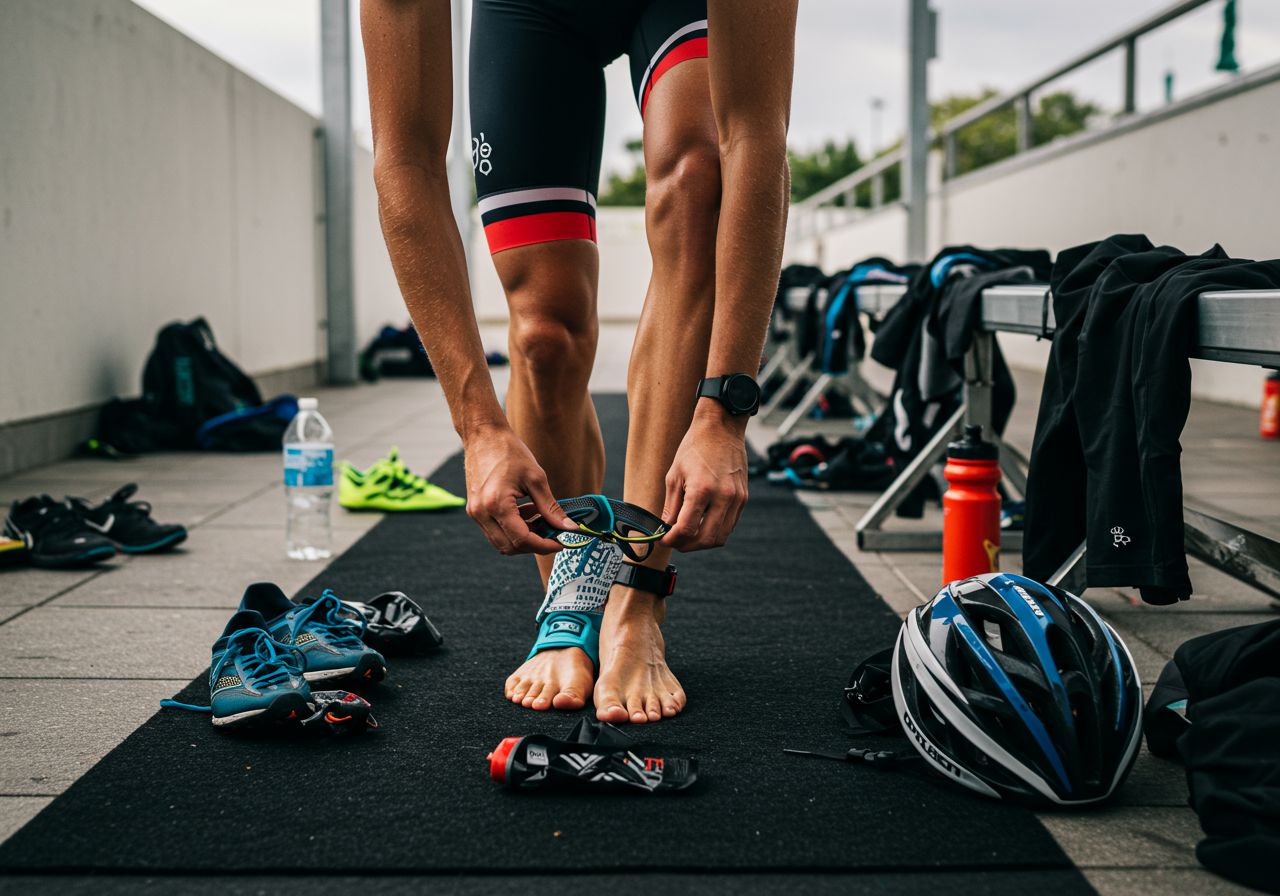
2) Set up a mini transition — Lay out bike shoes, helmet, run shoes, race belt, a small towel, and bottles. Practice the exact order: helmet on first off the swim, helmet off last onto the run.
3) Warm‑up (10–15 min) — Easy spin or drill‑based swim; include 2–3 short pickups. Then a quick dynamic run sequence (leg swings, ankle rolls) if finishing with a run.
4) Execute a simple brick —
Beginner (45–60 min): Bike 30–40 min Z2 with 2×3 min Z3 → 10–15 min run Z2; focus on relaxed cadence.
Intermediate (60–90 min): Swim 800–1200 m steady with 4×50 m fast exits → Bike 45–60 min Z2/low Z3 → Run 15–20 min progressive (first 10 min Z2, last 5–10 min Z3).
Advanced (90–150 min): Swim 1500–2000 m including 6×100 m at Olympic pace with fast exits → Bike 60–90 min with 3×8 min at race power, 3 min easy → Run 20–30 min with 2×6 min at race pace, 2 min easy.
5) Fuel and hydrate — For sessions over 60 minutes, aim for 30–60 g carbs/hour and regular sips of electrolyte drink, adjusted for heat. Practice exactly what you’ll race with.
6) Transition cues — Spin at a higher cadence (90–95 rpm) for the last 3–5 minutes of the bike, stand briefly to open hips, then start the run short and quick to avoid over‑striding.
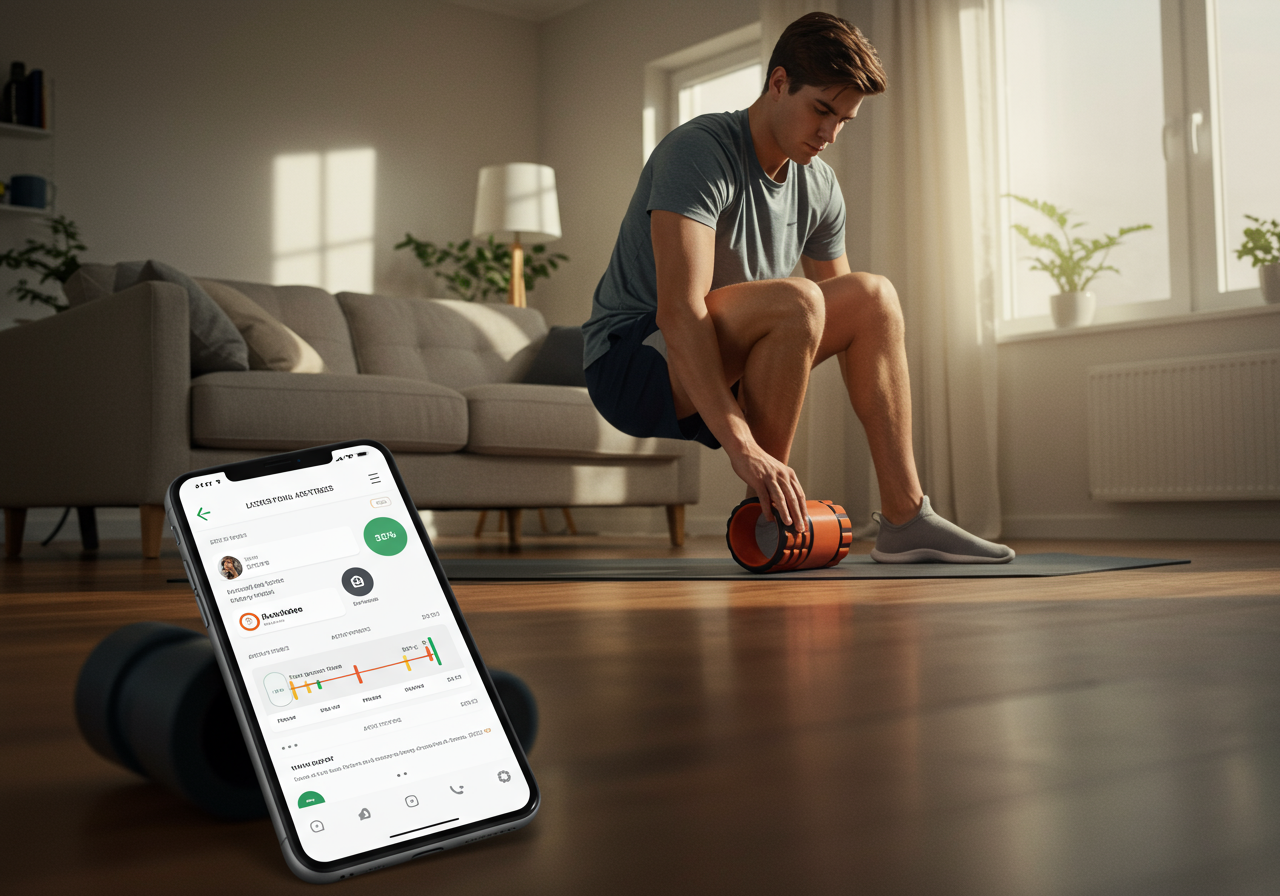
7) Cool down and log — 5–10 min easy. In Garmin or Strava, tag it as a brick and note: HR drift, first‑kilometer run pace, GI comfort, and whether transitions felt smooth. I also track RPE and cadence; these trends tell me when to progress.
Common setup mistakes — Skipping the warm‑up, jumping straight into Z4, new nutrition on hard days, and messy gear layouts that waste time in T2.
Eight-week plan: frequency, duration, and intensity zones
Use this eight‑week outline to scale volume and intensity. Keep most work in Z2, layer short race‑effort bouts, and schedule a lighter week if fatigue spikes.
8‑week progression overview — frequency, duration, and focus.
Week 1: 1 brick — Bike 30 min Z2 → Run 10 min Z2; separate easy swim day; practice simple T2.

Week 2: 1 brick — Bike 35–40 min Z2 with 2×3 min Z3 → Run 12–15 min steady; add short transition jogs after two swims.

Week 3: 2 bricks — Swim 800 m steady → Bike 40 min Z2; second brick Bike 40 min Z2 → Run 15 min; introduce fast‑exit swim drills.

Week 4: 2 bricks — Bike 45 min with 2×5 min Z3 → Run 15–18 min progressive; second brick Swim 1000 m → Bike 30 min easy.

Week 5: 2 bricks — Swim 1200 m with 4×100 m strong → Bike 50–60 min Z2/low Z3 → Run 20 min (last 5 min Z3); second brick short and easy.

Week 6: 2 bricks — Key brick Bike 60–75 min with 3×6 min at race power → Run 20–25 min with 2×4 min race pace; second brick technique‑focused.

Week 7: 1–2 bricks — Simulation: Swim 1500 m → Bike 75–90 min steady → Run 25–30 min steady; keep nutrition identical to race plan.

Week 8: Deload/Test — One short brick Bike 30–40 min easy → Run 10–15 min strides; sharpen transitions; reduce overall volume by ~30%.
Leveling notes — Beginners: cap the run portions to protect calves/Achilles. Intermediates: extend Z3 intervals slightly each week. Advanced: add power targets and brick twice weekly, but keep one aerobic.
Control frequency, intensity, recovery, and troubleshoot plateaus
Frequency — 1 brick/week for beginners, 1–2 for intermediates, 2 (one key, one easy) for advanced. Keep at least one pure technique day per discipline.
Intensity control — Use RPE or zones. Most brick time is Z2 with brief race‑pace bouts. If your first kilometer off the bike spikes >10 bpm vs. bike average, ease the last 5 minutes of the ride next time.
Recovery — Sleep 7–9 hours. Protein ~1.6–2.2 g/kg/day and carbs scaled to training load. I log meals in MyFitnessPal during heavy weeks to prevent underfueling. A 10–15 min easy spin or walk later in the day helps clear stiffness.
Troubleshooting — Plateaus: rotate the primary brick (swap swim+bike vs. bike+run) and change terrain. Overreaching signs: restless sleep, rising resting HR; schedule a deload. Motivation dips: shorten the brick but keep transitions; momentum beats perfection. Niggles: shorten the run portion first and add calf strength and mobility.
Tools I use — Garmin for HR/power, Strava for trend lines and notes, and occasional TrainingPeaks for structured uploads. Watch for: first‑km run pace steadiness, HR recovery within 3–5 minutes, and transition time consistency.
Next steps — Save this plan, adapt the progression to your race distance, and test one simulation brick 3–4 weeks out. Want deeper templates?.
Medical Disclaimer: The information provided on this website is for informational and educational purposes only and is not intended as personal medical or health advice. The content, including text, graphics, and images, is not a substitute for professional medical advice, diagnosis, or treatment. Always seek the advice of your physician or other qualified healthcare provider…
Medical Disclaimer: The information provided on this website is for informational and educational purposes only and is not intended as personal medical or health advice. The content, including text, graphics, and images, is not a substitute for professional medical advice, diagnosis, or treatment. Always seek the advice of your physician or other qualified healthcare provider…
Medical Disclaimer: The information provided on this website is for informational and educational purposes only and is not intended as personal medical or health advice. The content, including text, graphics, and images, is not a substitute for professional medical advice, diagnosis, or treatment. Always seek the advice of your physician or other qualified healthcare provider…
Medical Disclaimer: The information provided on this website is for informational and educational purposes only and is not intended as personal medical or health advice. The content, including text, graphics, and images, is not a substitute for professional medical advice, diagnosis, or treatment. Always seek the advice of your physician or other qualified healthcare provider…
Medical Disclaimer: The information provided on this website is for informational and educational purposes only and is not intended as personal medical or health advice. The content, including text, graphics, and images, is not a substitute for professional medical advice, diagnosis, or treatment. Always seek the advice of your physician or other qualified healthcare provider…
Medical Disclaimer: The information provided on this website is for informational and educational purposes only and is not intended as personal medical or health advice. The content, including text, graphics, and images, is not a substitute for professional medical advice, diagnosis, or treatment. Always seek the advice of your physician or other qualified healthcare provider…