Balance Strength and Cardio with Smart Weekly Structure
To combine strength lifts with endurance, start with a simple 3+2 weekly template that balances intensity and recovery. Do two strength days, two endurance days, and one mixed day while keeping easy volume high and hard efforts brief.
In minutes, you will learn a clear weekly layout, how to sequence lifting and cardio, progression rules for beginners through advanced, and the nutrition and recovery habits that keep gains moving without burnout.
Why Concurrent Training Works Despite Interference Concerns
Strength builds force, bone density, and injury resilience. Endurance improves cardiovascular capacity, mitochondrial density, and recovery between efforts. When blended well, they support each other—think steadier heart rate under load and stronger posture during long efforts.
The concern is the “interference effect.” Heavy cardio near heavy lifting can blunt strength signaling, while max lifting can reduce readiness for intervals. Yet, peer‑reviewed research on concurrent training suggests both qualities can rise together when intensity is distributed smartly, hard sessions are separated, and fueling matches the work.
Sequencing helps: lift before intervals if done same day, or split by 6–8 hours. Keep most endurance in Zone 2 to limit fatigue. In practice with clients tracking on Garmin and Strava, the biggest wins come from consistent easy mileage, two quality lift patterns per week, and brief, well-placed intensity.
Recovery is the glue. Protein supports muscle repair; carbohydrates restore training readiness. Sleep and light movement clear fatigue so you’re ready to push again later in the week.
Build Your 3+2 Template with Proper Sequencing
Warm-up — 5–10 minutes of easy movement, dynamic mobility, and one light ramp set per exercise. For running, begin with brisk walking and drills; for cycling/rowing, spin lightly and add short pickups.
Weekly template (3+2 plan):
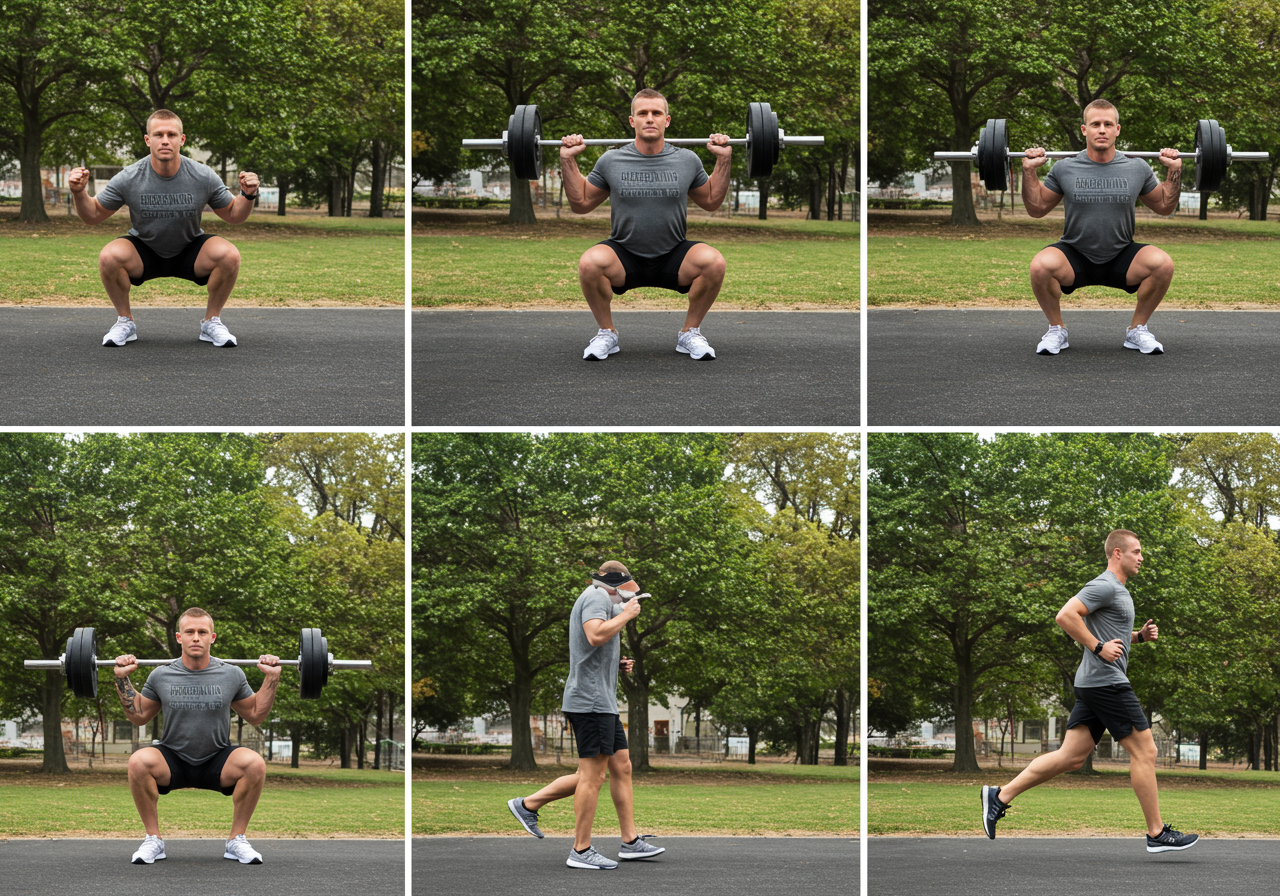
Day 1: Strength A (squat focus) + optional easy 10–15 min Zone 2 finish.
Day 2: Endurance Easy (Zone 2, conversational pace).
Day 3: Strength B (hinge focus) + upper push/pull + core.
Day 4: Rest or mobility (light walk, soft tissue work).
Day 5: Quality Endurance (tempo or intervals) OR Mixed Day depending on level.
Day 6: Mixed Day (if Day 5 was intervals) or Long Easy (Zone 2).
Day 7: Rest or gentle activity.
Strength sessions:
Main patterns: squat or lunge, hinge (deadlift or hip hinge), horizontal push, horizontal pull, vertical push/pull, core carry or plank.
Beginner loads: 3 sets of 6–10 reps at RPE 6–7, leaving 2–4 reps in reserve.
Intermediate: 4 sets of 5–8 at RPE 7–8; top set then backoffs.
Advanced: 3–5 sets across at 75–85% 1RM or RPE 7–8; rotate rep ranges weekly.
Endurance sessions:
Easy day: 30–60 minutes at Zone 2 (roughly nose-breathing pace). If new, start at 20–30 minutes.
Quality day options: tempo (one sustained block at comfortably hard), or intervals like 4×3 minutes hard/3 minutes easy. Keep total hard time modest.
Choose impact wisely: break in with cycling or rowing if running stresses joints.
Mixed day (transition practice):
Example: 3 rounds — kettlebell front squat 6–8, push-up 8–12, 400 m easy jog or 2 minutes bike, then 60 seconds plank. Keep breathing steady.
Keep weights moderate; aim RPE 6–7 to avoid compromising the week.
Fuel and recovery in practice:
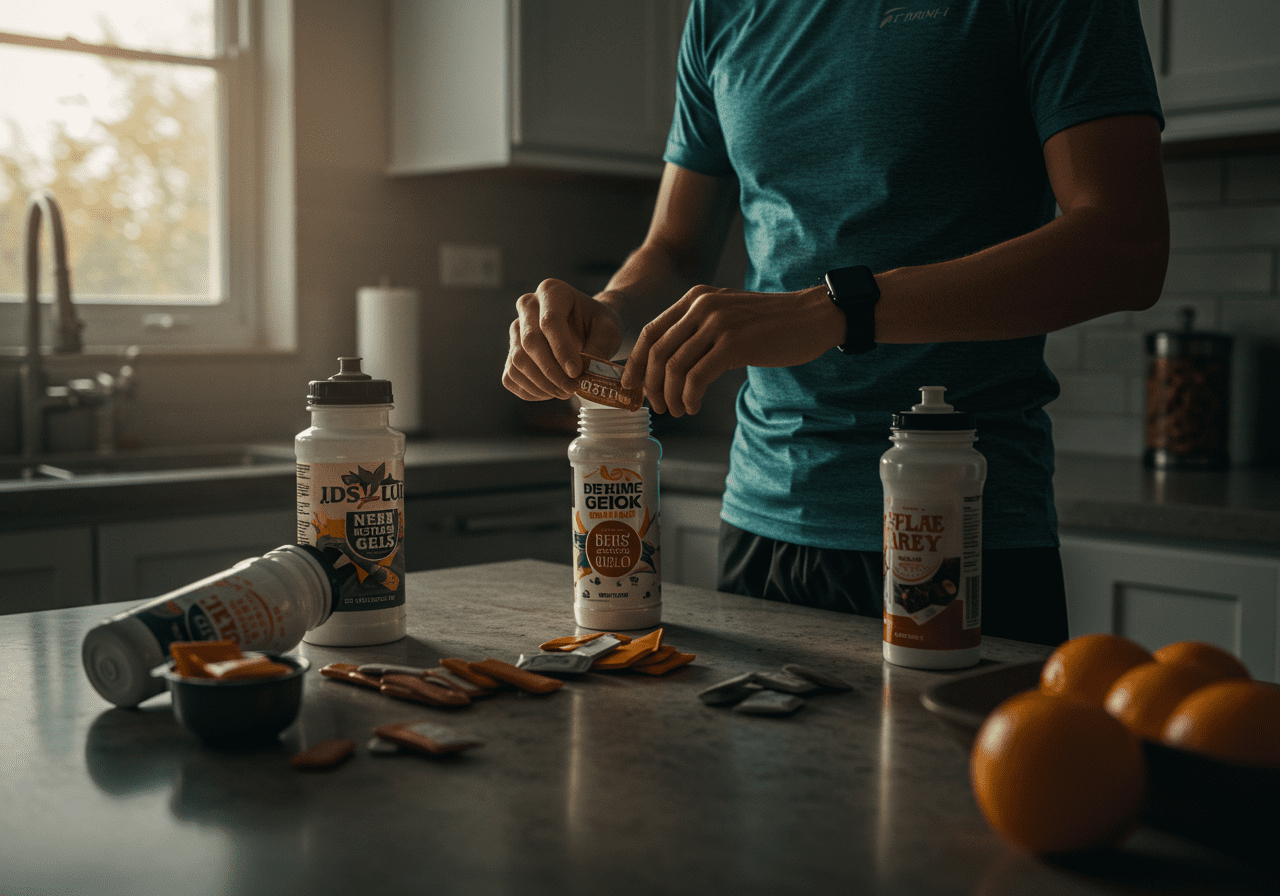
Protein: about 1.6–2.2 g/kg per day; split across 3–4 meals.
Carbs: match volume—lighter days ~3–4 g/kg; heavier weeks ~4–6 g/kg (adjust to body size/goals).
Creatine monohydrate 3–5 g/day is helpful for strength and repeated efforts.
Sleep 7–9 hours; short walks and mobility on rest days speed recovery.
Tracking tools I use with clients:
Garmin or Polar for HR zones; Strava for route and pace trends.
MyFitnessPal for macro awareness; a simple spreadsheet for sets, reps, and RPE.
Client note: “After four weeks, my easy runs felt easier and I added reps on goblet squats without aches.” — Office professional who trained 5 hours/week.
Scale from Beginner Base to Advanced Periodization
Use small, steady steps. Add a little load, a rep, or 5–10 minutes of Zone 2 each week. Keep one easy week every 4–6 weeks to consolidate.
Caption: Weeks, strength focus, and endurance focus to scale from beginner to advanced.

Weeks 1–2 (Beginner Base): Strength 2x/week, 3x8 @ RPE 6; learn patterns. Endurance: 2x30–40 min Zone 2. Mixed: 15–20 min light circuit.

Weeks 3–4: Strength 3x6–8 @ RPE 7; add one accessory per pattern. Endurance: 1x40–50 min Zone 2, 1x strides (6×15–20s). Mixed: 20–25 min.

Weeks 5–6 (Build): Strength 4x5–6 @ RPE 7–8; add top set + backoff. Endurance: 1x50–60 min Zone 2, 1x tempo 10–15 min. Mixed: 20–30 min.

Week 7 (Deload): Strength 2x/week, 2x6 @ RPE 6. Endurance: trim volume by ~30%; keep only easy Zone 2.

Weeks 8–9 (Intermediate Build): Strength: main lift 1 top set @ RPE 8, 2 backoffs −10–15%. Endurance: intervals 4×3 min hard/3 min easy; 40–60 min Zone 2.

Week 10: Strength 3x5 @ RPE 7; Endurance: tempo 2×8–10 min; Long Zone 2 60–75 min if recovery is good.

Week 11 (Advanced Option): Strength emphasis lower body; upper light. Endurance: intervals 5×3–4 min or hill reps. Keep mixed day very easy.

Week 12 (Consolidate/Test): Strength: repeat Week 10 loads aiming 1–2 more reps. Endurance: repeat Week 8 tempo; assess time trial (e.g., 1–3 km) only if fresh.

Beginner tweak: keep intervals as strides; cap long Zone 2 at 45–60 min.

Advanced tweak: when recovered, lift 3x/week by making Day 6 long Zone 2 every other week.
How to choose your level:
Beginner: lifting < 6 months or returning; keep RPE mostly 6–7 and run/walk as needed.
Intermediate: steady training > 6–12 months; introduce one true interval day most weeks.
Advanced: years of training; cycle emphasis blocks (3–4 weeks lift‑heavy, then 3–4 weeks run/ride‑heavy) to push one quality while maintaining the other.
Avoid Stacking Mistakes and Fuel Your Sessions
Frequency and intensity: five training days works for most. Keep roughly 70–80% of endurance time in Zone 2. Limit hard interval sets to one weekly block unless recovery is excellent.
Sequencing: if same day, lift first, then do short intervals or easy cardio. For long runs/rides, separate from heavy lower-body lifting by 24 hours when possible.
Common mistakes:
Stacking HIIT after heavy squats or deadlifts—fatigue compounds and technique degrades.
Under-fueling carbs around hard sessions—performance and recovery stall.
Skipping deloads—small step-backs prevent big step-offs.
Troubleshooting:
Plateau in lifts: reduce interval intensity for 1–2 weeks, add a backoff set, and ensure protein is adequate.
Endurance stalls: add 10–15 minutes to one Zone 2 session, keep lifts at RPE 6–7 temporarily.
Niggles: swap running for cycling/rowing for a week, reduce depth/ROM temporarily, and add single-leg strength.
Motivation dips: set a micro-goal (e.g., 5-rep PR or 3 km time trial) every 4–6 weeks.
Recovery checklist: 7–9 hours sleep, a walk on rest days, two servings of fruit and three of vegetables daily, creatine 3–5 g/day if tolerated, electrolytes in hot weather.
Progress tracking: log sets/reps/RPE and total weekly Zone 2 minutes. Watch resting heart rate and HRV on wearables (Garmin Body Battery, Oura, or Polar). Rising fatigue plus slower easy pace signals a need to back off.
Outcome snapshot: in practice cohorts following this layout, lifters typically add a rep or two at the same load within four weeks and see modest improvements in easy pace or sustainable power. One client summarized it well: “I feel strong on hills and steady under the bar.”
Next steps: start with the 12-week outline above, schedule a deload in Week 7, and review logs weekly. If you want my printable checklist and zone calculator, subscribe to the newsletter.
5K to 10K is achievable with a simple, repeatable system that grows your aerobic base and resilience. To move from 5K to 10K, extend your long run 0.5–1 mile weekly and keep most mileage easy in Zone 2. In the next few minutes, you’ll get a coach-tested framework: weekly structure, milestone checkpoints, beginner-to-advanced progressions, fueling…
Align Food Choices with Your Training Goals Learning how to read nutrition labels can supercharge beginner training by aligning food choices with workouts and recovery. This guide gives you an easy system for training, fueling, and tracking. Quick answer: choose clear serving sizes, 15–30 g protein per meal, higher fiber, lower added sugar, and match…
Anti-inflammatory foods can meaningfully reduce soreness and speed up recovery when paired with smart training, adequate protein, and sleep. In this guide, I merge a simple training week (strength, cardio, and mobility) with recovery nutrition that lowers unnecessary inflammation. You’ll get meal templates, grocery picks, supplement considerations, and a step-by-step plan to progress from beginner…
Turn Random Rest Into a Repeatable Recovery System A recovery toolbox turns random rest into a repeatable system for better training results. It uses simple tools, short timers, and checklists to reduce fatigue, protect joints, and keep progress steady. In a few minutes, you will learn how to combine practical tools, reliable timers, and a…
Build Athletic Range With Yoga-Based Mobility Training Yoga-based mobility improves athletic performance by building usable range, end-range control, and calm breathing under pressure. Today you’ll learn how to plug it into strength, cardio, and sport practice without losing time or power. Direct answer: Do 10–20 minutes of targeted flows before or after training, three to…
Weekly Training Plan With Built-In Gear Audits A gear audit built into your training prevents injuries and keeps progress steady. This guide gives you a complete weekly plan plus a safety and maintenance checklist. Direct answer: Train 3–4 days weekly; run a 2-minute gear audit before sessions; progress gradually; log sleep, nutrition, and performance. Equipment…