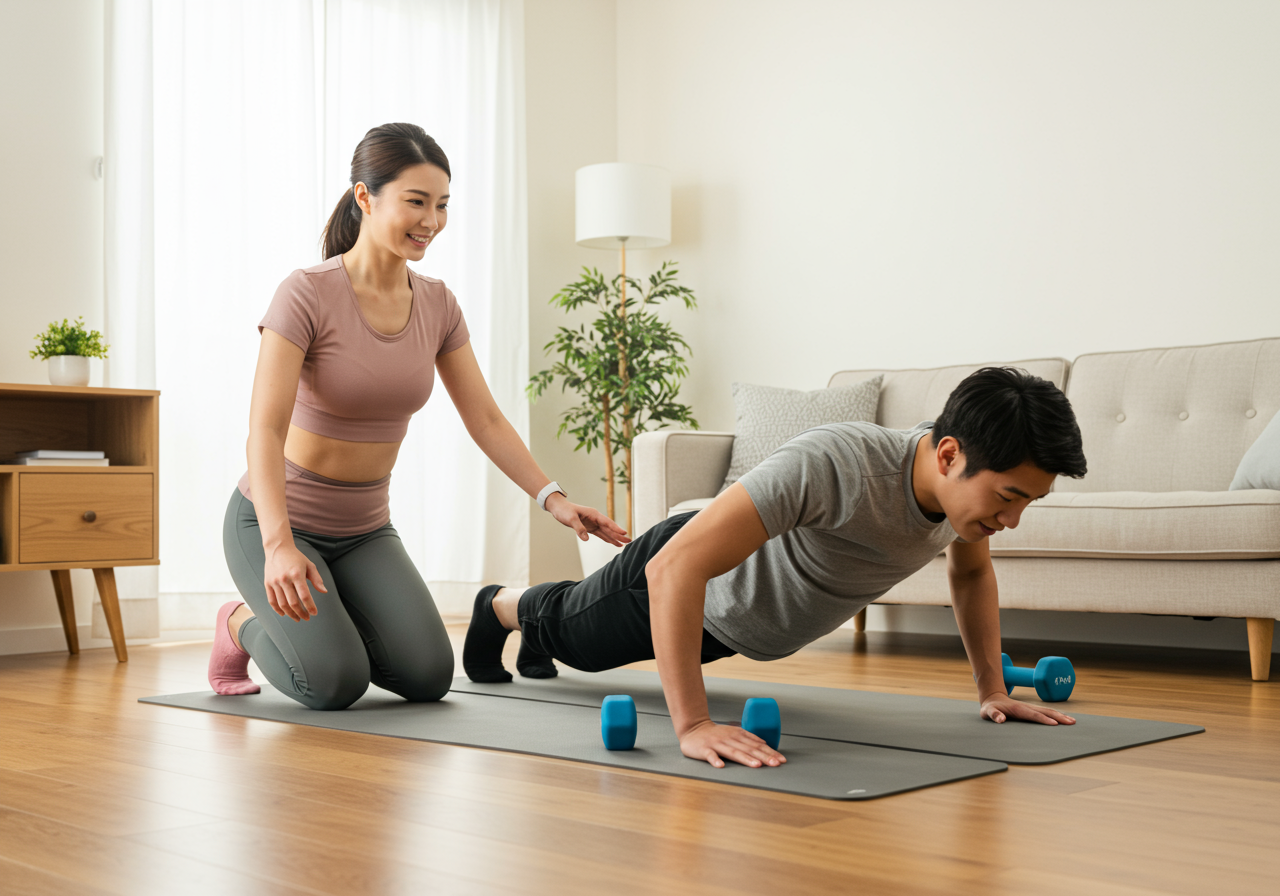
Home Cardio Workouts Without Equipment can reduce body fat, improve conditioning, and fit into busy schedules. In this guide, you’ll learn practical routines, progressions, and how to track results.
Direct answer: Do 20–30 minutes of mixed bodyweight intervals three to five days weekly at moderate to vigorous effort.
Intervals boost heart efficiency and mitochondrial capacity
Consistent home cardio elevates energy expenditure and improves cardiovascular efficiency. Intervals and steady work each help fat loss by increasing total weekly activity and cardiorespiratory fitness. Research generally shows both styles can reduce fat when paired with a sensible calorie deficit.
Physiology in brief: Intervals push your heart to cycle between high and moderate effort, strengthening stroke volume and mitochondrial capacity. Steady work builds an aerobic base, supports recovery, and is easier to sustain. Mixing both improves adherence and keeps joints happier.
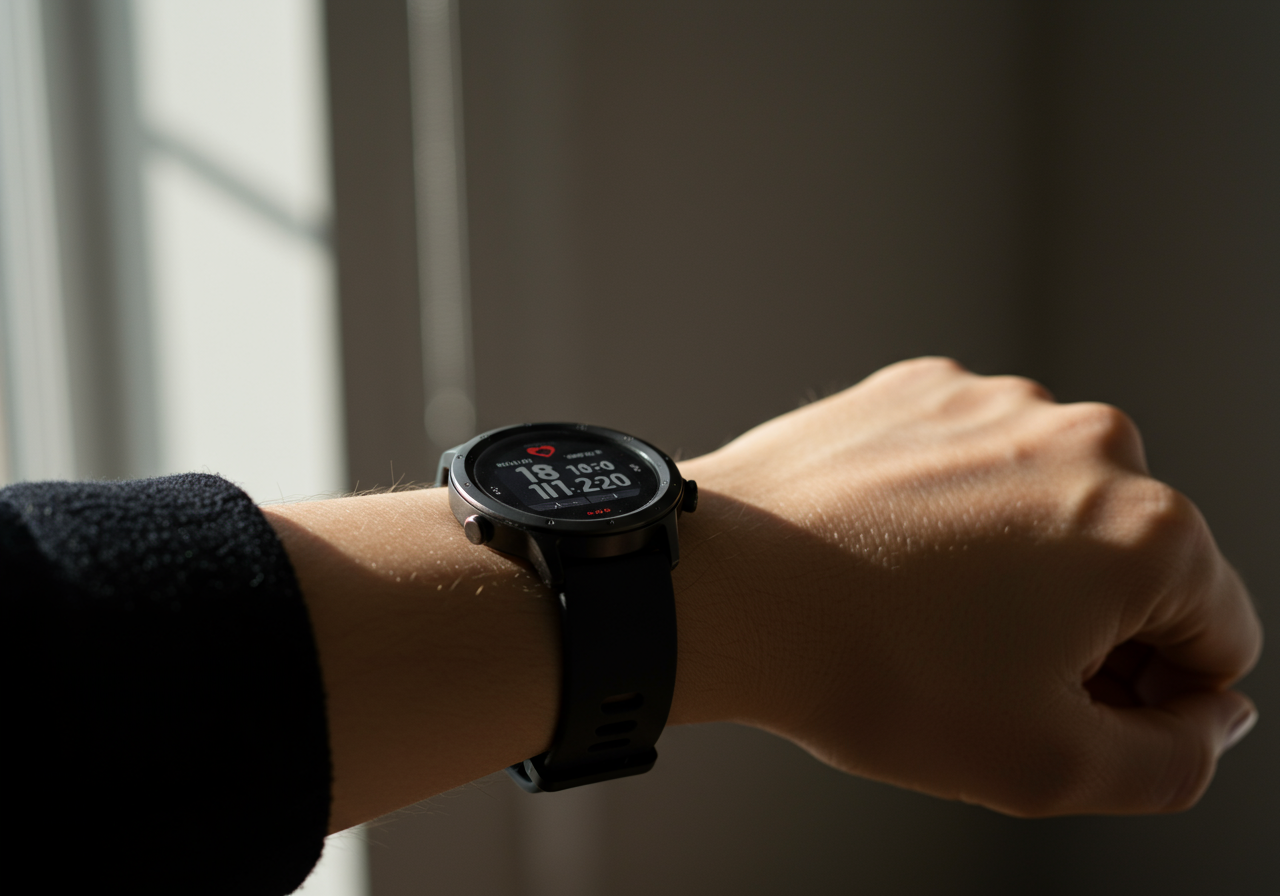
From my own training blocks, 25–30 minute interval sessions (RPE 6–8) showed average heart rates around the mid‑140s bpm on a Garmin, with visible pacing improvements after 3–4 weeks. In practice with clients who also tracked food, most saw modest but steady reductions in waist and body weight over 6–8 weeks. One client, Maya, messaged, “I can finish the circuits without feeling wrecked now—my jeans fit better and my sleep is deeper.” Individual results vary, and nutrition remains the biggest driver.
Warm up, pick moves, choose interval format
Warm-up (5 minutes) — Easy march in place, arm circles, step jacks, and gentle hip hinges until you feel lightly warm and breathing deepens.
Movement menu — Mix low and higher impact to match your joints and flooring.
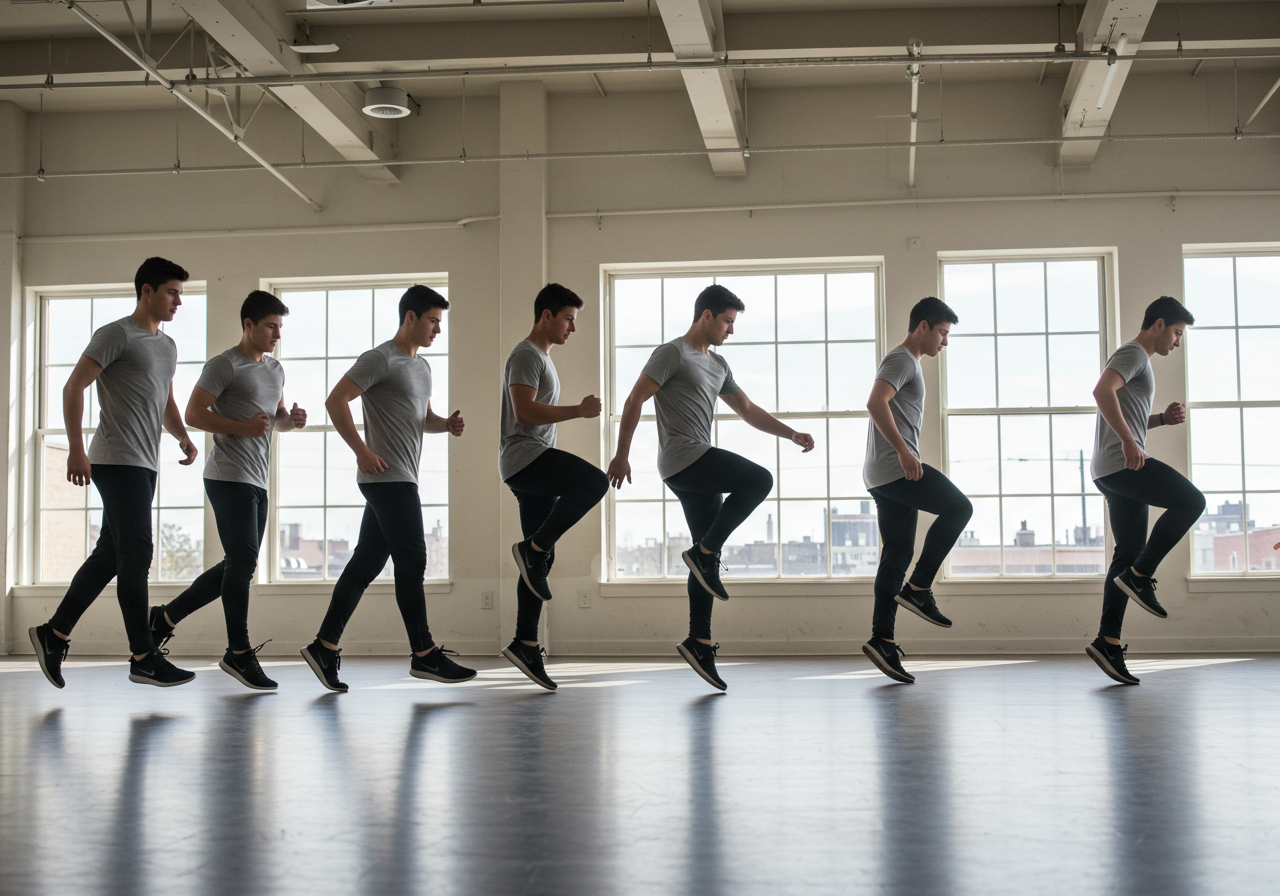
Moderate/high: high knees, skater hops, mountain climbers, squat-to-calf raise, fast toe taps, burpee variations (no push-up if needed).
Interval formats (choose one)
30/30s: 30 seconds work, 30 seconds easy pace x 10–20 rounds.
40/20s: 40 seconds work, 20 seconds easy pace x 8–15 rounds.
EMOM x 12–20: perform a set (e.g., 10–15 reps each of two moves) at the top of each minute, rest the remainder.
Steady mix: 20–35 minutes continuous at a talking pace (Zone 2), swapping movements every 2–3 minutes.
Coaching cues — Land softly, keep posture tall, ribs down while breathing, and drive arms to boost cadence. Rotate through 4–6 movements to spread stress.
Intensity guide — Use RPE 1–10 scale: easy recovery 3–4, steady base 5–6, hard intervals 7–8. If you use heart rate, aim for Zone 2 for base work and brief climbs to Zones 3–4 for intervals.
Cool-down (3–5 minutes) — Walk in place, nasal-breathe, then light calves/hips stretches.
Tracking — Log minutes, interval format, and RPE in a notes app or Strava. Daily steps from a phone or Fitbit help maintain a steady calorie burn. I often pair workouts with MyFitnessPal to watch a modest calorie deficit.
Sample 25-minute session
Warm-up 5 min.
Block A (10 min): 40/20s alternating shadow boxing and step jacks.
Beginner — Favor low-impact options and longer rests; keep RPE 5–6 until week 5. Intermediate — Mix low and moderate impact, add a second interval day by week 6. Advanced — Shorten easy phases, add movement combos (e.g., 20s high knees + 20s fast toe taps).
Milestones to watch — Lower RPE at same pace, more rounds completed at steady breathing, and consistent weekly minutes. If pace stalls two weeks in a row, reduce volume 20% for 5–7 days, then resume.
Frequency & intensity — Start with 3 sessions/week and build to 4–5. Keep most work at conversational pace, with 1–2 interval blocks on non-consecutive days.
Common mistakes — Going too hard too soon, no warm-up, monotony, and ignoring joint feedback. Rotate moves, vary formats, and respect RPE.
Monitoring — Track weekly minutes, average RPE, and step count. Optional: resting heart rate upon waking and waist measurement each week. I export sessions to Strava; it keeps me honest about consistency.
Nutrition for fat loss — A modest deficit (about 300–500 kcal/day for many adults) usually works without crushing energy. Protein around 1.6–2.2 g/kg body weight supports satiety. Stay hydrated; caffeine pre‑workout is optional if tolerated. If you prefer, log meals in MyFitnessPal to spot patterns.
Recovery — Sleep 7–9 hours, include light mobility between sessions, and take an easy week every 4–8 weeks. If you’re sore or stressed, swap intervals for a base session.
Troubleshooting — Plateau: add a steady 10–15 min walk daily or trim 100–150 kcal from snacks. Overtraining signs: poor sleep, elevated resting HR, irritability—reduce volume for a week. Joint niggles: switch to low-impact moves and softer flooring; keep ranges smaller.
Client note — Tom wrote after week 6, “Intervals used to wipe me out. Now I finish feeling energized, and my belt is on a tighter notch.” Consistency plus gentle progression wins.
Next steps — Keep this system for 8–12 weeks, then retest pace over a 10‑minute continuous set. If you want a downloadable calendar and trackers, subscribe—I send templates compatible with Google Sheets and Garmin/Fitbit exports.
Align Food Choices with Your Training Goals Learning how to read nutrition labels can supercharge beginner training by aligning food choices with workouts and recovery. This guide gives you an easy system for training, fueling, and tracking. Quick answer: choose clear serving sizes, 15–30 g protein per meal, higher fiber, lower added sugar, and match…
Anti-inflammatory foods can meaningfully reduce soreness and speed up recovery when paired with smart training, adequate protein, and sleep. In this guide, I merge a simple training week (strength, cardio, and mobility) with recovery nutrition that lowers unnecessary inflammation. You’ll get meal templates, grocery picks, supplement considerations, and a step-by-step plan to progress from beginner…
5K to 10K is achievable with a simple, repeatable system that grows your aerobic base and resilience. To move from 5K to 10K, extend your long run 0.5–1 mile weekly and keep most mileage easy in Zone 2. In the next few minutes, you’ll get a coach-tested framework: weekly structure, milestone checkpoints, beginner-to-advanced progressions, fueling…
Blend Treadmill Control with Outdoor Running Specificity Treadmill vs Outdoor Running can be trained together with one plan. You will learn how to split sessions, match effort, and progress every week. Quick answer: blend 1–2 treadmill workouts for control and 2–3 outdoor runs for real‑world specificity to improve faster and safer. Precision Indoors, Real-World Resistance…
Fast Start Deload weeks convert hard training into reliable progress by lowering fatigue while keeping your movement sharp. In this guide, you’ll learn when to schedule them, how much to cut, and simple templates that protect strength and joints. Plan deload weeks by reducing volume 30–50%, keeping technique sharp, and maintaining intensity around RPE 6–7…
Balance Strength and Cardio with Smart Weekly Structure To combine strength lifts with endurance, start with a simple 3+2 weekly template that balances intensity and recovery. Do two strength days, two endurance days, and one mixed day while keeping easy volume high and hard efforts brief. In minutes, you will learn a clear weekly layout,…