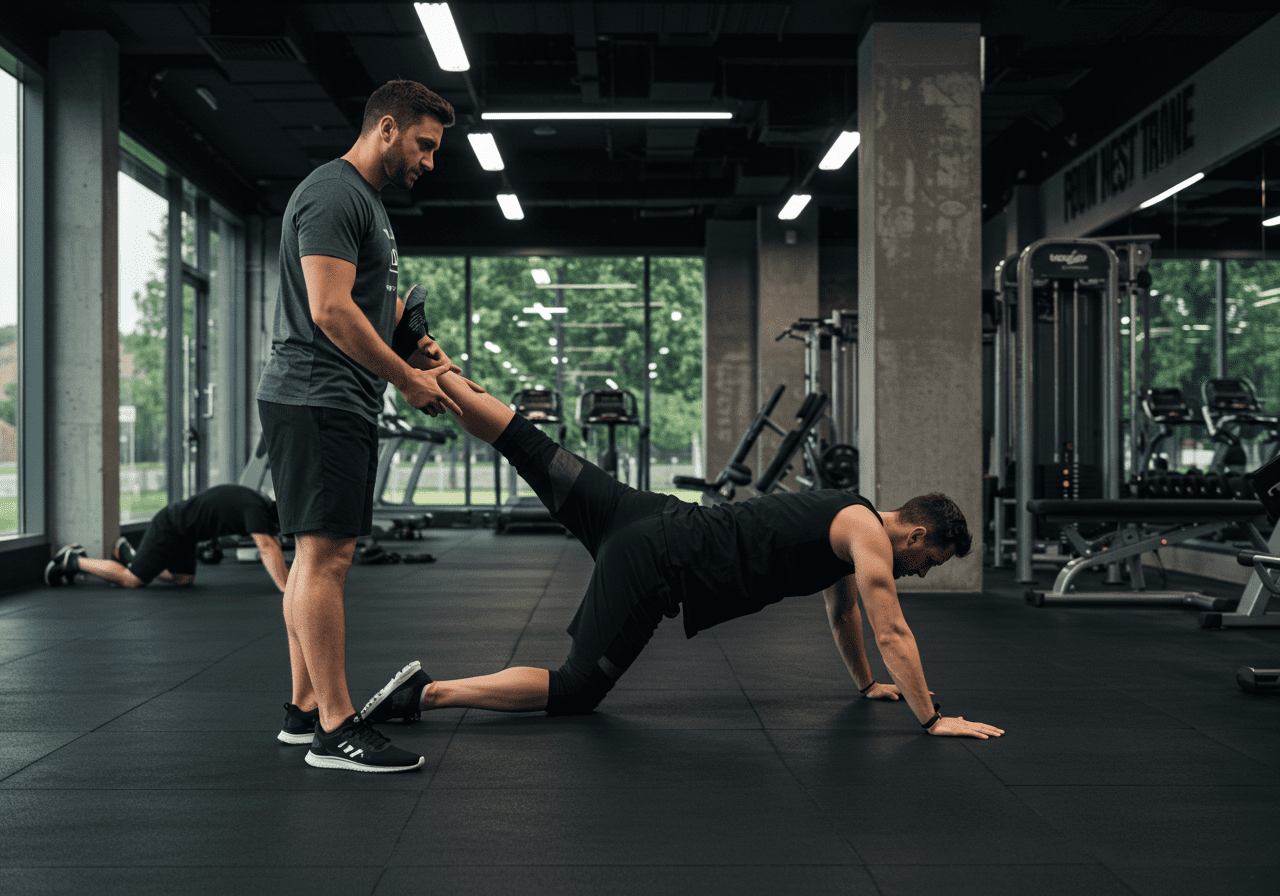
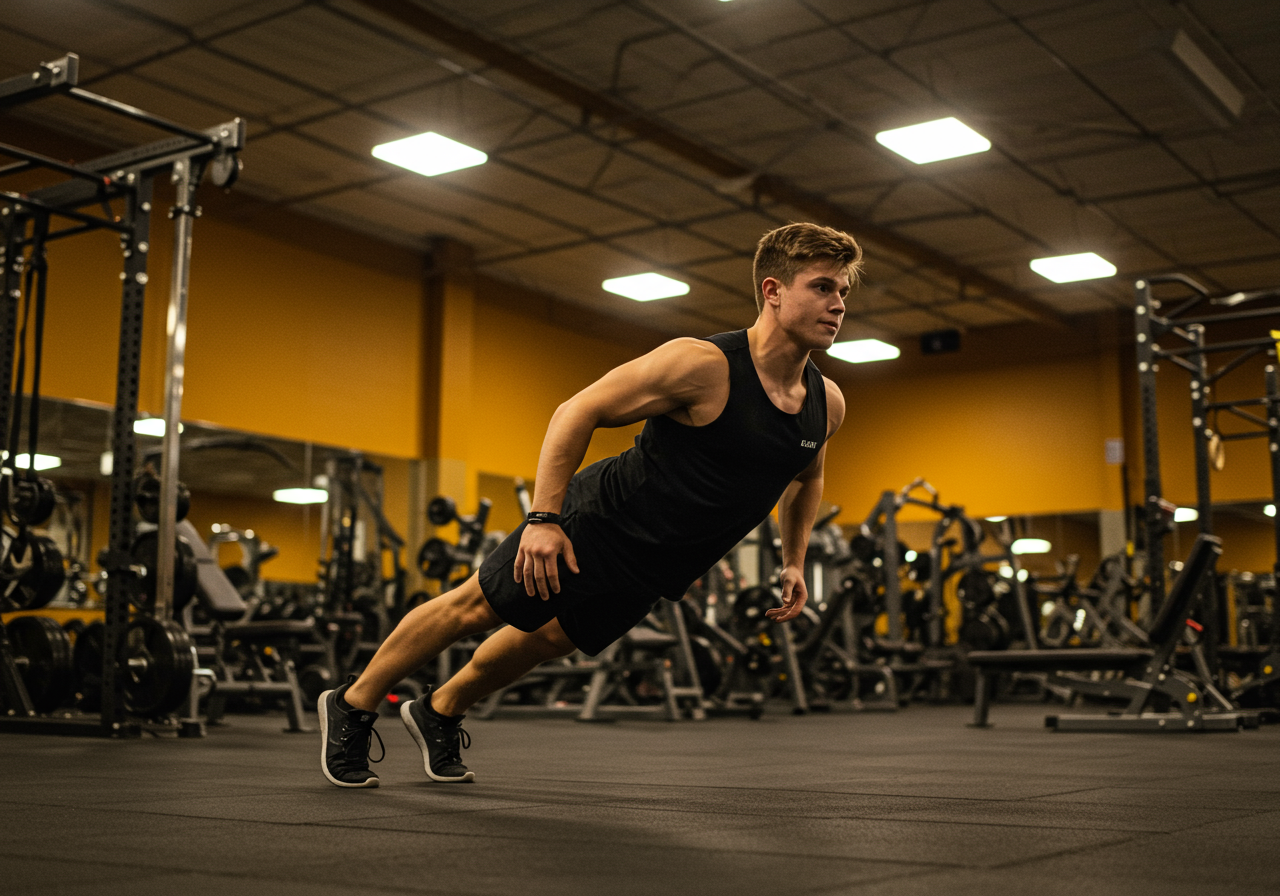
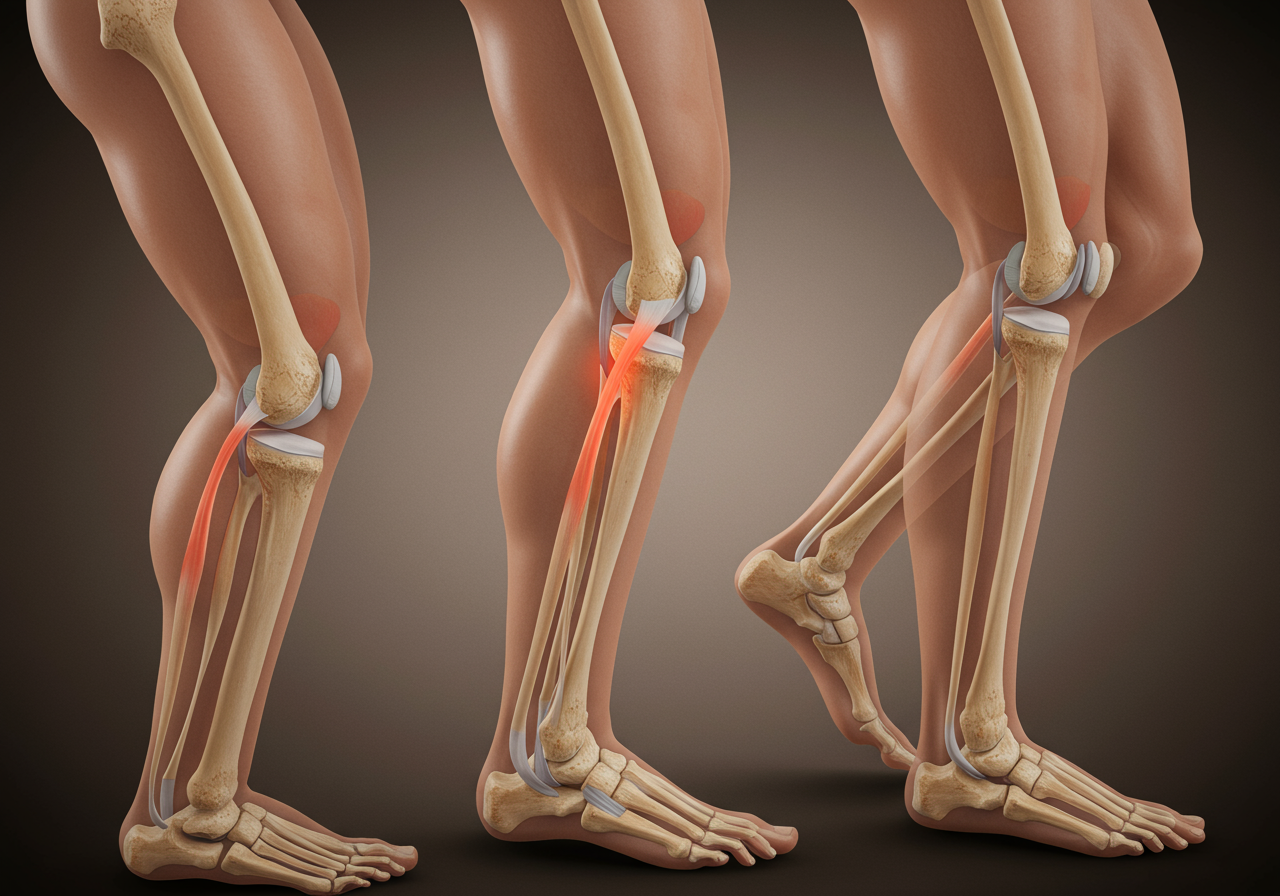
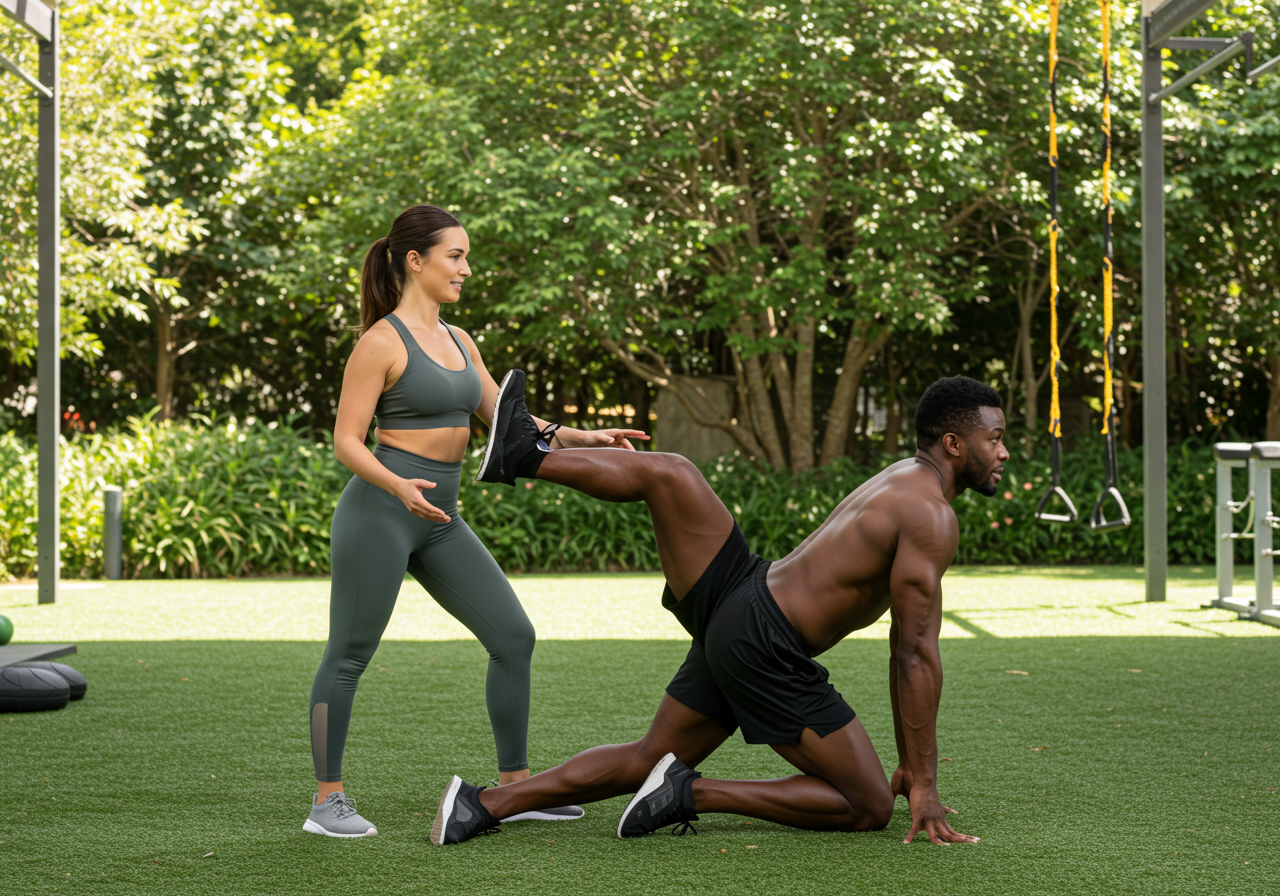
Mobility drills prepare joints for better performance
Mobility warm-up sets your joints and nervous system for better movement, strength, and cardio performance. Quick answer: pair short mobility drills with activation, then rehearse the day’s pattern.
In a few minutes, you will learn an easy sequence I use with new clients: breathing reset, joint prep, mobility–activation pairs, and pattern rehearsal for lifting, running, or cycling.
Dynamic movement outperforms static stretching before training
Mobility plus activation warms synovial fluid, raises tissue temperature, and tunes the nervous system. Dynamic range-of-motion work tends to improve short-term performance more reliably than long static holds, especially before strength or sprint efforts.
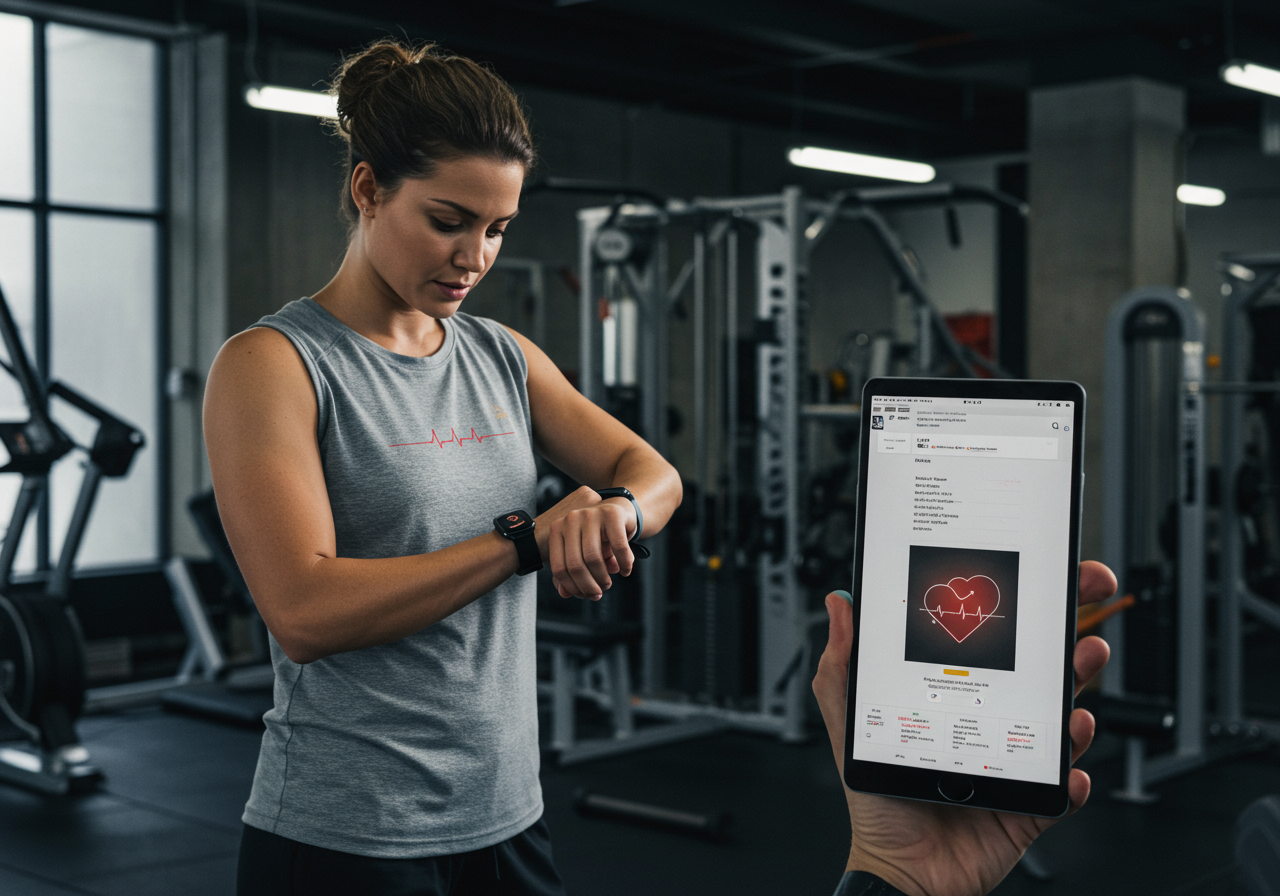
Practically, this sequence reduces the awkward first set, steadies technique, and may lower perceived exertion. On my Garmin, I keep warm-ups in Zone 1–2 and start working sets when breathing feels calm and positions feel centered. With clients, I notice smoother depth and fewer compensations; where outcomes are tracked, session RPE often trends lower without sacrificing load.
A desk day creates stiffness, especially hips, T-spine, and ankles. The routine below targets those areas while teaching your body the exact shapes it needs for today’s lift or run.
Eight-minute flow from breathing to pattern rehearsal
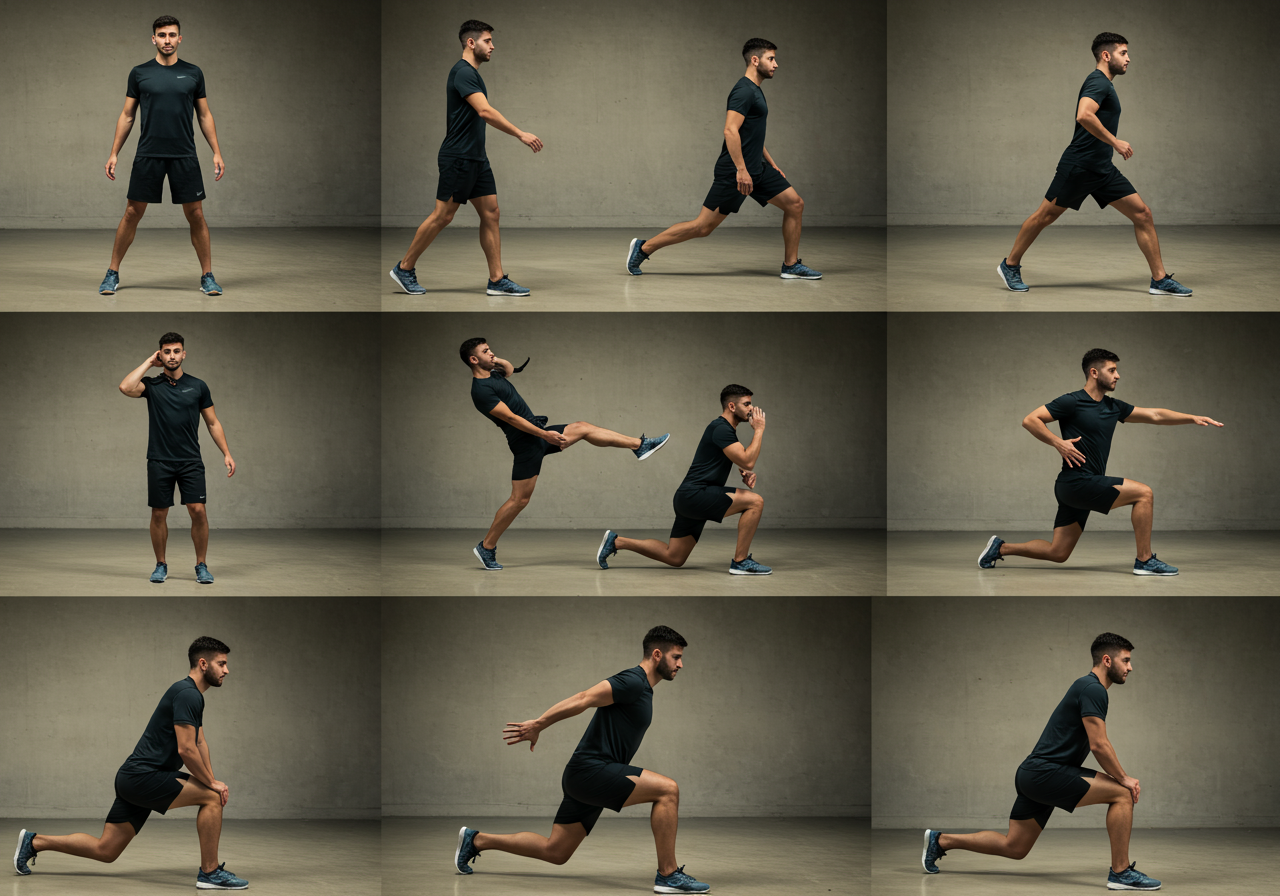
Use this 8–12 minute flow before strength, conditioning, or sport. Keep breathing nasal when possible; move smooth, not rushed.
Pulse (2 minutes) — Easy bike, row, jog, or jump rope to reach a light sweat (HR Zone 1–2).
Breathe + Stack (60–90 seconds) — Crocodile or 90/90 breathing; exhale to bring ribs over pelvis, keep neck long.
Joint Circles (2 minutes) — Slow CARs for neck, shoulders, hips, and ankles (3–5 each direction), no pinching; shrink the circle if needed.
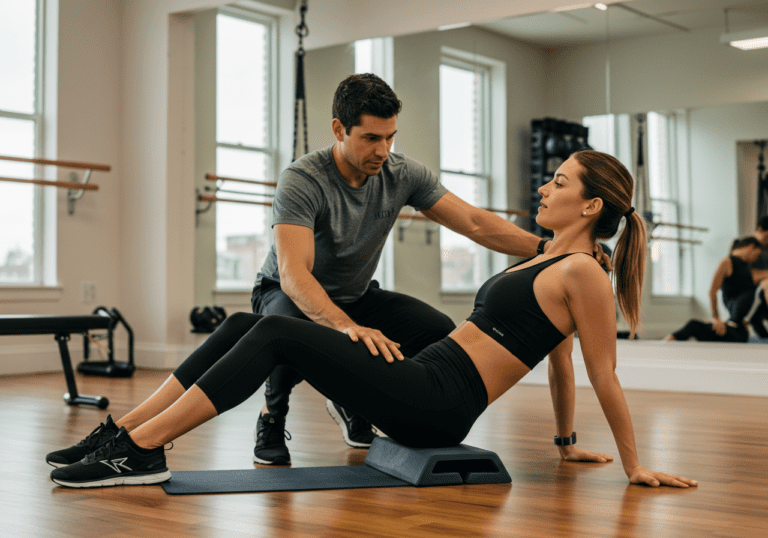
Hips: adductor rockbacks → glute bridge or mini-band walks
Thoracic: open-books → band pull-aparts
Pattern Rehearsal (2–3 sets) — Match your main session:
Squat day: squat-to-stand → light goblet squats
Hinge day: hip hinge with dowel → kettlebell RDL
Upper day: prone Y/T/W → light band press/row
Run day: A-skips or marching → 2–3 relaxed strides
Optional Power Primer (1–2 sets) — Low-amplitude pogo jumps, med-ball chest pass, or kettlebell swing technique reps (stop well before fatigue).
Finish when movement feels smooth and stable, and your first working set would register ~RPE 4 or lower.
Caption: One-page 10-minute template for different training days.
Phase | Time | Examples

1) Pulse | 2:00 | Easy row, bike, or jog (Zone 1–2)

2) Breathe & Stack | 1:00–1:30 | 90/90 breathing with reach

3) Joint Circles | 2:00 | Neck, shoulders, hips, ankles (3–5 each)

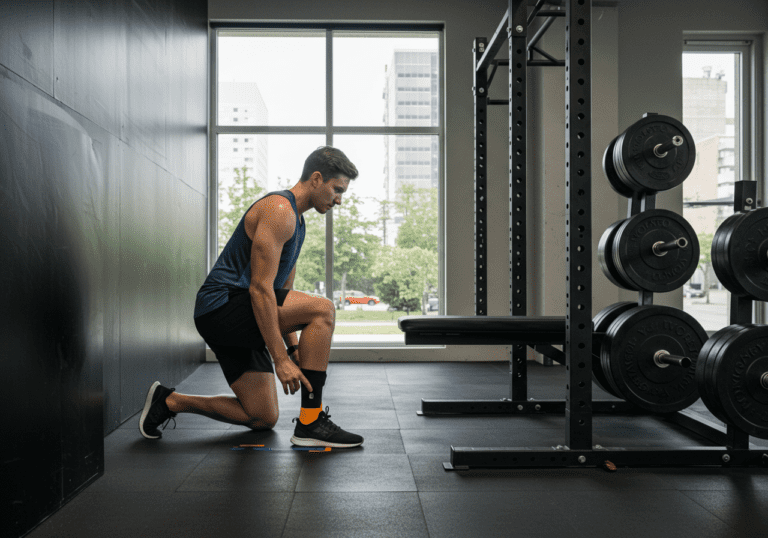
4) Mobility → Activation | 3:00–4:00 | Ankle rocks → calf raises; adductor rockbacks → glute bridges; open-books → band pull-aparts

5) Pattern Rehearsal | 2:00–3:00 | Goblet squats, dowel hinges, band press/rows, A-skips/strides

6) Optional Power | 0:30–1:00 | Light pogos or med-ball tosses
Tools I use: mini-bands, a light band, a dowel, and a timer. I log sessions in Strava or Garmin; reps/sets in Strong or a simple notes app.
Scale from simple pairs to single-leg tempo work
Beginner (Weeks 1–4) — Keep it simple and repeatable. Aim for 8 minutes total. One mobility–activation pair is enough. Rehearse one pattern. Stop when positions feel organized and breathing is calm.
Early-Intermediate (Weeks 5–8) — Extend to 10 minutes. Add a second mobility–activation pair that matches your session. Begin introducing a single low-intensity power primer on strength days. For runs, include 2–3 short strides.
Intermediate (Weeks 9–12) — Keep 10–12 minutes. Progress from bilateral to split-stance or single-leg where appropriate (e.g., rear-foot-elevated split-squat patterning). Use tempo (3-second eccentrics) on activation to sharpen control.
Advanced (Ongoing) — Choose mobility pairs based on your daily readiness. On heavy lifts, include one crisp med-ball throw or jump; on speed days, add a short build-up sprint. Keep the warm-up submaximal and finish still feeling fresh.
Coaching note: I track readiness with a quick overhead squat or hinge screen and how easily the first warm-up set moves. If stiffness persists after two cycles, I swap the drill or reduce range until pain-free.
Client snapshot: “Three weeks of this and my knees don’t bark during squats anymore. First sets feel like my third sets used to.” — L., beginner lifter
Markers to watch: HR stays Zone 1–2; breathing through the nose most of the time; first working set feels technical, not grinding. I log RPE in Strong and check consistency over sessions.
Keep warm-ups easy and match drills to session
Frequency — Use this before every lift or run. On off-days, do a 5-minute micro warm-up to break up sitting (ankle rocks, adductor rockbacks, band pull-aparts).
Intensity — Keep effort easy. If you’re sweating and can still speak in full sentences, you’re right where you should be. Activation should never approach failure.
Common mistakes — Rushing breathing; turning mobility into static holds; doing power primers too hard; using so many drills that you sap energy for training.
Troubleshooting – Plateau or stiffness lingers: Cut range, slow tempo, add one set of pattern rehearsal instead of another stretch. – Knee discomfort: Emphasize ankle rocks and terminal knee extensions; keep knees tracking over toes with controlled depth. – Low motivation: Set a 10-minute timer and do just steps 1–3; momentum usually carries you into the rest. – Overtraining signals: If HR spikes in warm-up and RPE feels high, shorten to essentials and lower training volume that day.
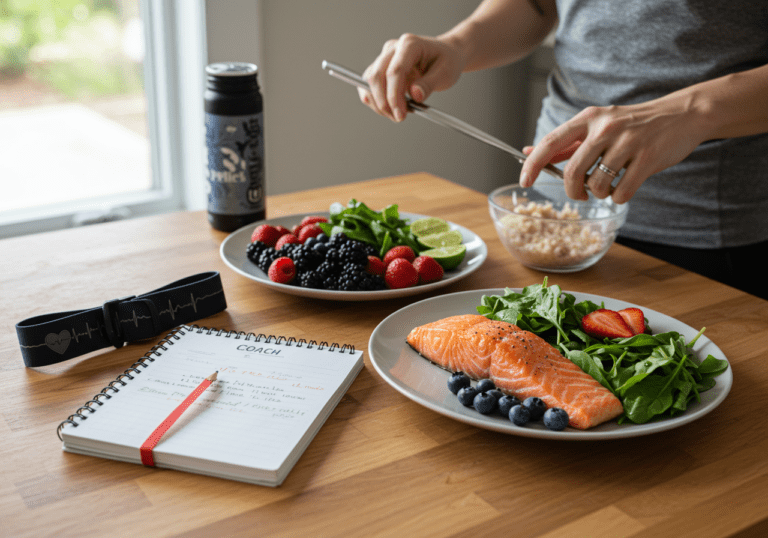
Recovery & nutrition — Arrive hydrated, especially if you train early. A small pre-session snack (e.g., yogurt or banana) can smooth energy. For lifters, daily protein around 1.6–2.2 g/kg supports tissue recovery. Sleep is the mobility multiplier; protect 7–9 hours. Creatine is optional; it doesn’t replace good habits.
Monitoring — I note HR zone, drill choices, and first-set RPE. Apps I’ve used: Garmin/Polar for HR, Strava for runs, Strong/MyFitnessPal for training and nutrition logs.
Next steps — Save the template, print it, and run it for two weeks. Adjust drills to match your session. If you want a video walk-through, subscribe and I’ll send the playlist.
Build Smart Sessions Without Burning Out or Injury Crossfit cardio WODs can supercharge your engine while protecting your joints when planned well. In this guide, you’ll learn how to build sessions, scale movements, use heart-rate zones, and progress without burnout. Do 2–3 short cardio WODs weekly, progress minutes or reps slowly, and cap intensity using…
Start Strong Cycling Workout Plan for Endurance and Power Gains: here’s a simple path to ride longer, push harder, and recover better. Direct answer: Do 3–5 rides weekly—2 base, 1 threshold, 1 power/sprints, plus optional skills; progress volume or intensity every week. In this guide you’ll learn the exact ride types, how to set zones…
Master lactate threshold testing and zone-based training systems Lactate threshold is the anchor metric you’ll use to pace, build endurance, and recover smarter. Here you’ll learn how to test it, interpret it, and train around it. Lactate threshold is the fastest steady pace you can hold for 30–60 minutes; train slightly below and just above…
Clear Plan to Restart Stalled Lifts Fast How to break through a strength plateau starts with a clear plan that adjusts volume, recovery, and technique without guessing. You will learn a simple system that gets lifts moving again. Direct answer: Deload briefly, then raise weekly hard sets 10–20% while improving sleep and technique to restart…
Build Sustainable Speed with Weekly Threshold Sessions Tempo runs are my most reliable tool for lifting sustained race pace without feeling wrecked. If you’re new to structured training, this guide shows you exactly how to build, progress, and measure tempos for safer, faster results. Direct answer: Run 15–30 minutes at comfortably hard threshold once weekly,…
Restore T-Spine Extension for Pain-Free Overhead Lifts Thoracic mobility is the hinge that unlocks safe, powerful overhead lifts. In minutes per day, you can restore extension and rotation and protect your shoulders. Quick answer: Combine breath-led drills, end-range loading, and clean scapular mechanics practiced daily for 8–12 minutes. You’ll learn how to assess your T‑spine,…