Medical Disclaimer: The information provided on this website is for informational and educational purposes only and is not intended as personal medical or health advice. The content, including text, graphics, and images, is not a substitute for professional medical advice, diagnosis, or treatment. Always seek the advice of your physician or other qualified healthcare provider with any questions you may have regarding a medical condition or before starting any new exercise, nutrition, or supplement program. Never disregard professional medical advice or delay in seeking it because of something you have read on this blog. Reliance on any information provided by this site is solely at your own risk.
Three full-body sessions weekly for consistent muscle gain
A 12-week hypertrophy block for beginners can turn scattered workouts into consistent muscle gain, confidence, and better daily energy.
Do three full-body sessions weekly, 6–12 reps, stop 1–3 reps before failure, and add small weight or reps each week.
Across the next pages, you’ll get the exact setup I use with new lifters: exercise picks, weekly progression, nutrition, recovery, and how to troubleshoot plateaus without burning out.
Mechanical tension and RIR training drive hypertrophy
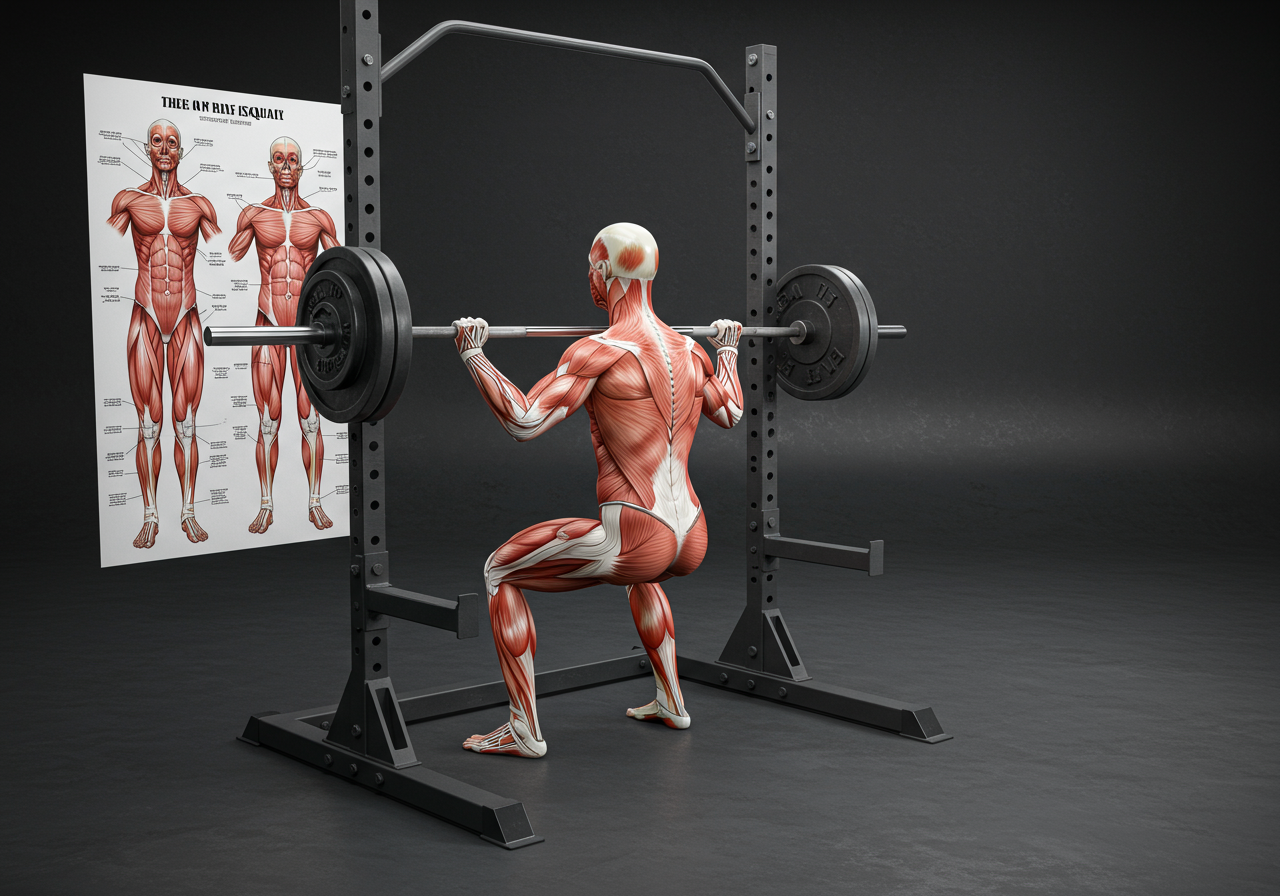
Muscle grows when you combine mechanical tension (challenging loads), enough total work, and repeat exposures with recovery. Beginners respond especially well to a few quality sets in the 6–12 rep zone.
Stopping 1–3 reps in reserve (RIR) keeps technique sharp and fatigue manageable while still recruiting high-threshold muscle fibers. In peer‑reviewed research and practice, this approach reliably outperforms random high-rep burnouts for sustainable growth.
From my coaching logs, beginners who track RIR, keep rest to 60–120 seconds, and progress patiently tend to add reps or small load bumps most weeks. In similar cohorts, steady gains show up in performance first, then measurements. Cardio at easy effort (Zone 2) between lifting days also seems to improve recovery without blunting strength.
Personal note: when I switched new clients from chasing failure to RIR-based progressions, soreness dropped and form improved. Their words: “I finally know when to stop, and I’m still getting stronger.”
Warm-up, main lifts, accessories in 60-75 minutes
Session structure (60–75 minutes):
Warm-up — 5–8 minutes: brisk walk or bike (easy Zone 2), dynamic hips/shoulders, 2–3 ramp-up sets for the first lift.
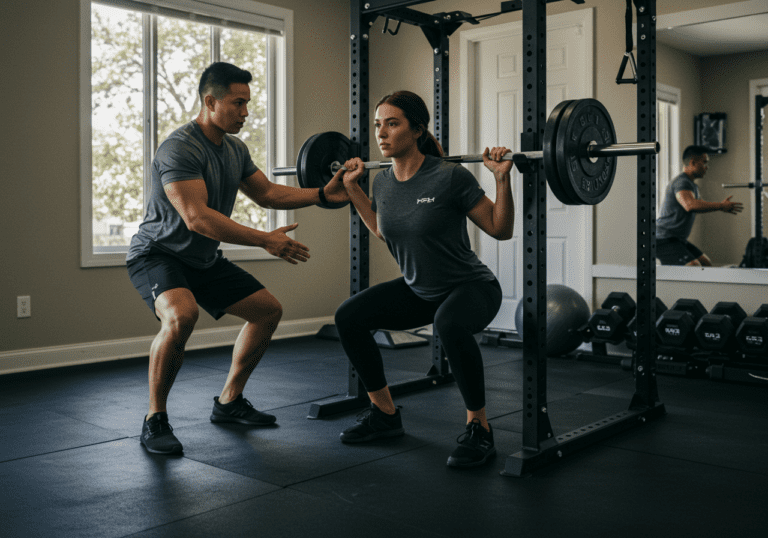
Main lifts — 3–4 movements: squat pattern, hinge, press, row. 3–4 sets of 6–12 reps at RIR 1–3, 60–120 seconds rest.
Accessories — 2–3 movements: single-leg, lateral, core, or arms. 2–3 sets of 10–15 reps at RIR 1–2.
Short finish — optional 5 minutes: carries, light sled, or easy cycling for blood flow.
Exercise menu (pick one per slot and keep consistent for 4–6 weeks):
Squat: goblet squat → back squat or leg press.
Hinge: Romanian deadlift → deadlift or hip thrust.
Horizontal press: push-up → dumbbell or barbell bench press.
Row: chest‑supported row, cable row, or dumbbell row.
Vertical press/pull (rotate in): dumbbell overhead press; lat pulldown or assisted pull-up.
Progression rule (double progression): Keep the load steady until you reach the top of the rep range for all sets at the target RIR. Then increase weight by the smallest available amount next time and repeat.
Cues that work: control the lowering for ~2–3 seconds, pause briefly near the bottom when safe, drive up with intent, and keep 1–3 reps in reserve on your final set.
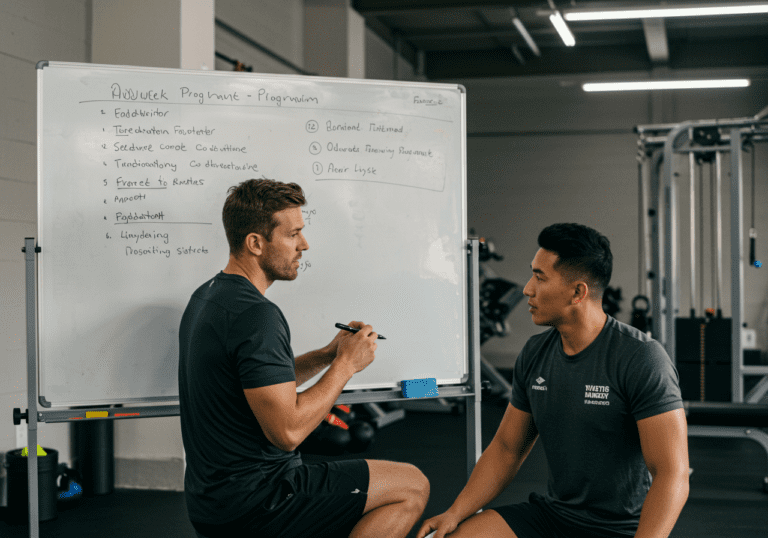
Weekly schedule (example): Mon — Full Body A; Wed — Full Body B; Fri — Full Body A (next week swap A/B order). Tue/Sat: 20–30 minutes Zone 2 walk or bike; daily steps 7–10k.
Nutrition basics: Protein 1.6–2.2 g/kg/day, carbs 3–5 g/kg on training days (lower on rest days if needed), fats 0.6–1.0 g/kg. Many beginners do well with a slight calorie surplus (~5–10%) for muscle gain; adjust based on weekly trends. Creatine monohydrate 3–5 g daily is well-supported. Hydrate and add sodium if you sweat heavily.
Recovery checklist: sleep 7–9 hours, two low-stress walks per week, light mobility on rest days. If a session’s RPE spikes or form degrades, trim a set rather than grinding.
Tracking tools I use with clients: Strong or HeavySet for sets/RIR; MyFitnessPal for protein; Apple Watch/Garmin for HR and steps; weekly photos and tape measurements (waist, thigh, upper arm) under consistent conditions.
Real-world example: My last beginner session ran 65 minutes, average HR sat in low Zone 2 during accessories, and we added a small plate to rows after the client achieved 12, 12, 11 reps the prior week at RIR 2.
Twelve weeks from learning form to rep PRs
Quick reference for weekly focus and set/rep targets.
Weeks 3–4: Aim for 3×10–12; if all sets hit top reps at RIR 1–2, add small load.
Weeks 5–6: 4×6–10 on main lifts; accessories 3×12–15; rest 90–120s.
Weeks 7–8: Keep sets same; beat total reps or add a microload; maintain RIR 1–2 on final sets.
Week 9 (Deload): Cut volume ~30–50%; keep RIR 3; focus on perfect form and easy cardio.
Weeks 10–11: Resume week‑7 loads; target small rep PRs across sets; accessories steady.
Week 12: Repeat week‑1 selection; aim to outperform week‑1 by a few reps at the same RIR.
Beginner → Intermediate → Advanced tracks:
Beginner: machines/free weights mix; 3 days/week; 8–12 reps; RIR 2–3. Goal: consistent form and logging.
Intermediate: bias free weights; 3–4 main lifts/session; 3–4 sets; occasional top set at RIR 0–1 with back-off work at RIR 2–3.
Advanced (optional by week 10–12): add one intensity technique per week max (e.g., myo-rep cluster on last accessory set) and drop a set elsewhere to manage fatigue.
Plateau fixes (use only one at a time): microload with fractional plates; swap one variation (e.g., goblet → front squat); add a set to the first lift; or increase rest to 120 seconds.
On-the-road swap: bodyweight session — split squats, push-ups, hip hinges with bands, backpack rows, side planks; 3 rounds of 10–15 reps at RIR 1–2.
Avoid chasing failure and monitor overtraining signals
Common mistakes: chasing failure every set, changing exercises weekly, skipping warm-ups, and ignoring sleep and protein. Use RIR to self-regulate and save your best effort for the final working set.
Overtraining signals: rising RPE for the same loads, flattening motivation, poor sleep, or nagging joint ache. If two signs persist for a week, deload or cut one set per lift.
Injury-aware adjustments: favor machine presses and supported rows if shoulders get cranky; reduce ROM temporarily for squats and hinges; keep RIR at 3 until discomfort subsides. Seek professional care for persistent pain.
Validating your results: in week 12, retest a week‑1 lift at the same RIR and see if you can perform more reps with equal or better form. Track tape measurements and photos taken under the same conditions. In similar beginner groups, meaningful progress typically appears first in rep PRs, then in visible changes.
Client feedback, anonymized: “I stopped guessing. The RIR notes told me when to push and when to hold back.” Another noted, “Lifting three times weekly felt doable. My sleeves fit better, and steps plus walks kept me fresh.”
Next steps: save this plan in your logging app, schedule sessions as calendar events, and review progress each Sunday for 10 minutes. If you want my printable template and video demos.
Medical Disclaimer: The information provided on this website is for informational and educational purposes only and is not intended as personal medical or health advice. The content, including text, graphics, and images, is not a substitute for professional medical advice, diagnosis, or treatment. Always seek the advice of your physician or other qualified healthcare provider…
Medical Disclaimer: The information provided on this website is for informational and educational purposes only and is not intended as personal medical or health advice. The content, including text, graphics, and images, is not a substitute for professional medical advice, diagnosis, or treatment. Always seek the advice of your physician or other qualified healthcare provider…
Medical Disclaimer: The information provided on this website is for informational and educational purposes only and is not intended as personal medical or health advice. The content, including text, graphics, and images, is not a substitute for professional medical advice, diagnosis, or treatment. Always seek the advice of your physician or other qualified healthcare provider…
Medical Disclaimer: The information provided on this website is for informational and educational purposes only and is not intended as personal medical or health advice. The content, including text, graphics, and images, is not a substitute for professional medical advice, diagnosis, or treatment. Always seek the advice of your physician or other qualified healthcare provider…
Medical Disclaimer: The information provided on this website is for informational and educational purposes only and is not intended as personal medical or health advice. The content, including text, graphics, and images, is not a substitute for professional medical advice, diagnosis, or treatment. Always seek the advice of your physician or other qualified healthcare provider…
Medical Disclaimer: The information provided on this website is for informational and educational purposes only and is not intended as personal medical or health advice. The content, including text, graphics, and images, is not a substitute for professional medical advice, diagnosis, or treatment. Always seek the advice of your physician or other qualified healthcare provider…